
Lynn Brunelle
Author of Camp Out!: The Ultimate Kids' Guide
About the Author
Image credit: Amazon.com
Series
Works by Lynn Brunelle
Big Science for Little People: 52 Activities to Help You & Your Child Discover the Wonders of Science (An Official Geek Mama Guide) (2016) 57 copies, 2 reviews
Turn This Book Into a Beehive!: And 19 Other Experiments and Activities That Explore the Amazing World of Bees (2018) 47 copies, 1 review
Why Did I Buy This Book?: Over 500 Puzzlers, Teasers, and Challenges to Boost Your Brainpower (2009) 19 copies
Mama Gone Geek: Calling On My Inner Science Nerd to Help Navigate the Ups and Downs of Parenthood (2014) 13 copies
Earthquake!: The 1906 San Francisco Nightmare (X-Treme Disasters That Changed America) (2005) 10 copies
The World Almanac for Kids Puzzler Deck: Vocabulary & Wordplay, Ages 9-11, Grades 4-5 (2007) 8 copies
The World Almanac for Kids Puzzler Deck: World History & Geography, Ages 11-13, Grades 6-7 (2007) 7 copies
The World Almanac for Kids Puzzler Deck: Geography & The 50 States, Ages 7-9, Grades 2-3 (2008) 2 copies
Tagged
Common Knowledge
- Gender
- female
- Places of residence
- Bainbridge Island, Washington, USA
- Map Location
- USA
Members
Reviews

A massive blue whale, the largest creature on earth, closes her eyes after ninety years of life, and slowly dies. Floating to the surface at first, she then begins to fall, sinking far into the depths of the Pacific Ocean, until she eventually lands on the dark ocean floor. Here her body will create a unique ecosystem, one which will sustain communities of deep sea creatures for one hundred years to come. In four phases—the mobile scavenger phase, the enrichment opportunist phase, the show more sulfophilic phase, and the reef phase—the blue whale's body is slowly broken down and consumed, with some of the final nutrients eventually carried to the surface through upwelling, there to nourish another blue whale. The book concludes with extensive back matter, giving more information about blue whales, ecosystems and the phases of a whale fall, as well as lists of further resources...
Published in 2024, Life After Whale: The Amazing Ecosystem of a Whale Fall is the second picture book I have read devoted to this subject, following upon the 2023 Whale Fall: Exploring an Ocean-Floor Ecosystem from author Melissa Stewart and illustrator Ron Dunlavey. As it happens, I read the two books back to back, and enjoyed both, although I did prefer this one, overall. Unlike that other book, which presented a briefer and far simpler narrative, the text here goes into more detail, both about the life of the blue whale, and about the four stages of the whale fall. Author Lynn Brunelle's text is both engaging and informative, presenting fascinating facts while also capturing the sense of wonder that these creatures can evoke. The accompanying artwork from Caldecott medalist and honoree Jason Chin, done in watercolor and gouache, is just gorgeous! Highly recommended to all young marine biologists, perhaps in conjunction with the Brunelle/Dunlavey title. show less
Published in 2024, Life After Whale: The Amazing Ecosystem of a Whale Fall is the second picture book I have read devoted to this subject, following upon the 2023 Whale Fall: Exploring an Ocean-Floor Ecosystem from author Melissa Stewart and illustrator Ron Dunlavey. As it happens, I read the two books back to back, and enjoyed both, although I did prefer this one, overall. Unlike that other book, which presented a briefer and far simpler narrative, the text here goes into more detail, both about the life of the blue whale, and about the four stages of the whale fall. Author Lynn Brunelle's text is both engaging and informative, presenting fascinating facts while also capturing the sense of wonder that these creatures can evoke. The accompanying artwork from Caldecott medalist and honoree Jason Chin, done in watercolor and gouache, is just gorgeous! Highly recommended to all young marine biologists, perhaps in conjunction with the Brunelle/Dunlavey title. show less
This book offers a treasure trove of extraordinary facts about the blue whale - at over 85 feet long, the largest animal ever seen on earth.
But this account has a twist. It begins with the end of the giant whale’s life, and describes the entirely new ecosystem that results from its passing. The whale carcasses, or “whale falls” provide an extensive and changing supply of food for organisms in the sea.
The body slides down into the depths of the ocean, eventually landing on the seafloor show more over a mile below, kicking up a tiny cloud of “marine snow,” or microscopic bits of dead animals and plants that look like snow when disturbed.
Most creatures near the bottom of the ocean survive primarily on this marine snow, but when a dead whale body arrives, this rich new buffet attracts over 400 different species of deep-sea creatures. Brunelle points out:
“The whale body becomes the foundation for an ecosystem tangled with food chains and webs, interlocking the lives of thousands of creatures.”
She reviews the phases of whale fall ecosystems and how the trail of chemicals emitted by the body sends signals across miles of open water to alert hungry scavengers. She describes the behaviors of hagfish, sleeper sharks, rattail fish, king crabs, and others:
“After a few weeks pass, the carcass is a busy city.”
Creatures that feed on the flesh during the mobile scavenger phase are eventually replaced by creatures that feed on bone as part of the enrichment opportunist phase.
A third phase is called the sulfophilic, or sulfur-loving, phase, and will last over a century, as the flurry of activity is on the microscopic scale.
A fourth phase actually occurs in the middle of the sulfophilic phase, and is called the reef phase. During this time, chemicals from the bones move upward, carrying nutrients that feed algae and other plankton, which in turn feed krill, which in turn feed hungry whales, and the cycle begins anew.
Back matter by the author, who is a four-time Emmy Award-winning writer for “Bill Nye the Science Guy,” gives more detailed information about blue whales and about ecosystems, as well as sources for additional research.
The watercolor illustrations by Jason Chin show his dedication to research and scientific accuracy. He reported in an interview that he “geeked out on whale anatomy and did a lot of whale skeleton drawings to prepare.” He also said that he employed sfumato, a painting technique for softening the transition between colors, which affects focus and perspective, in order to give a sense of depth and scale to the living whale and the huge ocean in which it lives.
Evaluation: I continue to be amazed by all that is missed by people who don’t even think to look at children’s books because they don’t have kids or grandkids. There is such a wealth of information and visual stimulation there! And this book has something extra: an affirmation of life and the cycles that involve all life forms, always turning us into something new. In fact, whale fall is a wonderful example of the physics law of conservation of mass, which holds that mass can neither be created nor destroyed, although it may be rearranged in space, or the entities associated with it may be changed in form. Perhaps this book will inspire some kids to take a deeper look into physics as well as biology. This extraordinary effort by Brunelle and Chin will not disappoint, and offers a lot of material for discussion. show less
But this account has a twist. It begins with the end of the giant whale’s life, and describes the entirely new ecosystem that results from its passing. The whale carcasses, or “whale falls” provide an extensive and changing supply of food for organisms in the sea.
The body slides down into the depths of the ocean, eventually landing on the seafloor show more over a mile below, kicking up a tiny cloud of “marine snow,” or microscopic bits of dead animals and plants that look like snow when disturbed.
Most creatures near the bottom of the ocean survive primarily on this marine snow, but when a dead whale body arrives, this rich new buffet attracts over 400 different species of deep-sea creatures. Brunelle points out:
“The whale body becomes the foundation for an ecosystem tangled with food chains and webs, interlocking the lives of thousands of creatures.”
She reviews the phases of whale fall ecosystems and how the trail of chemicals emitted by the body sends signals across miles of open water to alert hungry scavengers. She describes the behaviors of hagfish, sleeper sharks, rattail fish, king crabs, and others:
“After a few weeks pass, the carcass is a busy city.”
Creatures that feed on the flesh during the mobile scavenger phase are eventually replaced by creatures that feed on bone as part of the enrichment opportunist phase.
A third phase is called the sulfophilic, or sulfur-loving, phase, and will last over a century, as the flurry of activity is on the microscopic scale.
A fourth phase actually occurs in the middle of the sulfophilic phase, and is called the reef phase. During this time, chemicals from the bones move upward, carrying nutrients that feed algae and other plankton, which in turn feed krill, which in turn feed hungry whales, and the cycle begins anew.
Back matter by the author, who is a four-time Emmy Award-winning writer for “Bill Nye the Science Guy,” gives more detailed information about blue whales and about ecosystems, as well as sources for additional research.
The watercolor illustrations by Jason Chin show his dedication to research and scientific accuracy. He reported in an interview that he “geeked out on whale anatomy and did a lot of whale skeleton drawings to prepare.” He also said that he employed sfumato, a painting technique for softening the transition between colors, which affects focus and perspective, in order to give a sense of depth and scale to the living whale and the huge ocean in which it lives.
Evaluation: I continue to be amazed by all that is missed by people who don’t even think to look at children’s books because they don’t have kids or grandkids. There is such a wealth of information and visual stimulation there! And this book has something extra: an affirmation of life and the cycles that involve all life forms, always turning us into something new. In fact, whale fall is a wonderful example of the physics law of conservation of mass, which holds that mass can neither be created nor destroyed, although it may be rearranged in space, or the entities associated with it may be changed in form. Perhaps this book will inspire some kids to take a deeper look into physics as well as biology. This extraordinary effort by Brunelle and Chin will not disappoint, and offers a lot of material for discussion. show less
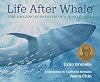
My third book about whale falls in three months is the best, bringing a dignity and majesty to the whale, lending a sort of beauty to its decay amidst some rather ugly scavengers, and ending on a circle of life aspect that carries us back up out of the depths.
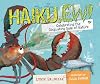
“Haiku, Ew!” by Lynn Brunelle is a fun and educational book that celebrates the some disgusting aspects of nature through haiku poems!
The book features hilarious haiku poems about everyday animals, each highlighting a different aspect of nature’s grossness. From flamingos that cool themselves by pooping on their legs to butterflies emerging from oozy caterpillar soup, these pages are both entertaining and informative. Lynn Brunelle accompanies these poems with additional facts that show more will both delight and disgust readers in all classrooms or libraries. I would highly recommend this book to any teacher looking for a fun way to engage students in either science or poetry! show less
The book features hilarious haiku poems about everyday animals, each highlighting a different aspect of nature’s grossness. From flamingos that cool themselves by pooping on their legs to butterflies emerging from oozy caterpillar soup, these pages are both entertaining and informative. Lynn Brunelle accompanies these poems with additional facts that show more will both delight and disgust readers in all classrooms or libraries. I would highly recommend this book to any teacher looking for a fun way to engage students in either science or poetry! show less
Lists
Awards


You May Also Like


Associated Authors
Statistics
- Works
- 37
- Members
- 860
- Popularity
- #29,750
- Rating
- 4.2
- Reviews
- 20
- ISBNs
- 54
- Languages
- 1