
Vicki Cobb (1938–2023)
Author of Science Experiments You Can Eat
About the Author
Vicki Cobb's Science Experiments You Can Eat has stood the test of time, filling the minds-and stomachs-of kids for more than forty years. Now with revised and updated material that includes clever new procedures, many new experiments, and vital information on nutrition, a whole new generation of show more readers can devour this cornucopia of food for thought. show less
Series
Works by Vicki Cobb
Why Can't You Unscramble an Egg? and other not such dumb questions about matter (1990) 124 copies, 4 reviews
We Dare You!: Hundreds of Science Bets, Challenges, and Experiments You Can Do at Home (2008) 72 copies, 3 reviews
Vicki Cobb's Why Do I Dry Off?: STEM Kids Discover the Science of Evaporation (STEM Play) (2020) 3 copies, 1 review
Vicki Cobb's Why Can I Suck Through a Straw?: Smart Answers to STEM Questions (STEM Play) (2019) 2 copies
Vicki Cobb's Why Does My Ice Cream Melt?: Smart Answers to STEM Questions (STEM Play) (2019) 2 copies
I fall down 1 copy
Tagged
Common Knowledge
- Canonical name
- Cobb, Vicki
- Legal name
- Trachtenberg, Vicki Linda Wolf Cobb
- Other names
- Wolf, Vicki Linda (birth)
- Birthdate
- 1938-08-19
- Date of death
- 2023-01-08
- Gender
- female
- Education
- University of Wisconsin (transferred)
Barnard College (BS|Zoology)
Columbia Teachers College (MA|Secondary Education) - Occupations
- laboratory researcher
science teacher
children's book author - Awards and honors
- Eve Gordon Award for Contribution to Children's Science Literature
SLMSSENY Award for Outstanding Contributions to Children's Literature. - Short biography
- [from Harper Collins Publishers website]
Vicki Cobb is the author of many award-winning science books for young people. With degrees from Barnard College and Columbia University Teachers College, Vicki enjoyed an early career as a science teacher. She now devotes all her time to writing and speaking to teachers, children, and librarians all over the country. She frequently writes for the Huffington Post and is also the founder and president of iNK Think Tank, an organization dedicated to getting high-quality nonfiction books into classrooms. To find out what recent science experiment Vicki has been cooking up, visit her online at www.vickicobb.com. - Nationality
- USA
- Birthplace
- Brooklyn, New York, USA
- Places of residence
- Brooklyn, New York, New York, USA
White Plains, New York, USA
Manchester, Vermont, USA - Place of death
- New York, New York, USA
- Burial location
- Sharon Gardens Cemetery, Valhalla, Westchester County, New York, USA
- Associated Place (for map)
- New York, USA
Members
Reviews
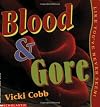
This is an attractive nonfiction book from some years back, apparently geared towards older children, maybe even young adults. It certainly requires prior knowledge about the human body, as the author is not particularly adept at filling in information that many younger readers require. A few basic details on cell components, for example, or a brief explanation about what an electron actually is (since she does talk about how a scanning electron microscope works.) Honestly? The material (as show more is) would likely be over the heads of most in the target audience.
The title is evidently intended to entice a certain kind type of kid. Yes, “blood” and array of other tissues, organs, and structures are covered, but there’s no gore whatsoever. We’re talking blood components here: red blood cells, white blood cells (one variety only: the macrophage) and platelets. There are sections dedicated to the skin, bone, muscle, nerves, villi in the small intestine and goblet cells in the large, as well as lung tissue.
Many scanning electron microscope images are included—some showing structures magnified millions of times. They’re quite fascinating, but no labels are provided, and it’s sometimes hard to appreciate what the author is talking about without them.
Cobb’s discussion of muscles and how they contract is muddled and particularly hard to follow. A statement about supportive cells in the brain, astrocytes, forming that organ’s white matter is just flat-out wrong. (It’s the axons of nerve cells with their whitish myelin sheaths that make up the brain’s white matter.) My point here? There wasn’t sufficient commitment to clarity and accuracy.
The positives: there are a fair number of interesting facts; Cobb does use analogies effectively; and you do get to see some parts of the body up close (as promised in the subtitle “like you’ve never seen.”): the enamel of teeth, the cartilage at the end of your femur, the papillae on your tongue, and so on.
This could’ve been a very fine book. show less
The title is evidently intended to entice a certain kind type of kid. Yes, “blood” and array of other tissues, organs, and structures are covered, but there’s no gore whatsoever. We’re talking blood components here: red blood cells, white blood cells (one variety only: the macrophage) and platelets. There are sections dedicated to the skin, bone, muscle, nerves, villi in the small intestine and goblet cells in the large, as well as lung tissue.
Many scanning electron microscope images are included—some showing structures magnified millions of times. They’re quite fascinating, but no labels are provided, and it’s sometimes hard to appreciate what the author is talking about without them.
Cobb’s discussion of muscles and how they contract is muddled and particularly hard to follow. A statement about supportive cells in the brain, astrocytes, forming that organ’s white matter is just flat-out wrong. (It’s the axons of nerve cells with their whitish myelin sheaths that make up the brain’s white matter.) My point here? There wasn’t sufficient commitment to clarity and accuracy.
The positives: there are a fair number of interesting facts; Cobb does use analogies effectively; and you do get to see some parts of the body up close (as promised in the subtitle “like you’ve never seen.”): the enamel of teeth, the cartilage at the end of your femur, the papillae on your tongue, and so on.
This could’ve been a very fine book. show less
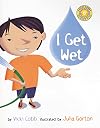
This is the perfect book for hands on activities with water. In this book, the readers learn what water is, the shape of water, and why water does what it does. I feel Vicki Cobb told this story in such a simple way for children, and the illustrations make the story super interesting. I love how the text of the book is not like most books. The text is formed into the shape of water droplets, in the illustrations, and much more. Overall, this is a great science book that is very informative show more and has many activities that will show the reader ways to experiment with water on their own. show less

Face the Wind, asks its young readers to think like scientists, as it leads them through experiments and observations about wind. Cobb's simple text and Gorton's dynamic illustrations invite participation.
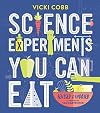
Mix of science and snacks! Many interesting things to make inside this book. What is really interesting is that it focuses on the scientific aspect of food. Very engaging for younger readers. Also, it will help to engage young readers that may not be as interested in science or struggle with the sciences.
Lists
Awards


You May Also Like


Associated Authors
Statistics
- Works
- 103
- Members
- 5,288
- Popularity
- #4,708
- Rating
- 3.9
- Reviews
- 210
- ISBNs
- 278
- Languages
- 2
- Favorited
- 1

