
Perry Miller (1) (1905–1963)
Author of The American Puritans: Their Prose and Poetry
For other authors named Perry Miller, see the disambiguation page.
Series
Works by Perry Miller
The Great Awakening: Documents Illustrating the Crisis and Its Consequences (1967) — Editor — 77 copies
Major Writers of America II: Dickinson, Mark Twain, James, Adams, Crane, Dreiser, O'Neill, Frost, Anderson, Fitzgerald, (1962) 23 copies
Margaret Fuller, American Romantic: Selections from Her Writings and Correspondence (1970) — Editor — 21 copies
Declension in a Bible commonwealth 2 copies
Raven & the Whale 1 copy
Associated Works
Walden and On the Duty of Civil Disobedience (1854) — Afterword, some editions — 8,726 copies, 59 reviews
The Sketch Book of Geoffrey Crayon, Gent. (1819) — Afterword, some editions — 1,736 copies, 23 reviews
A Sense of History: The Best Writing from the Pages of American Heritage (1985) — Contributor — 490 copies, 4 reviews
Tagged
Common Knowledge
- Canonical name
- Miller, Perry
- Legal name
- Miller, Perry Gilbert Eddy
- Other names
- Miller, Perry G. E.
- Birthdate
- 1905-02-25
- Date of death
- 1963-12-09
- Gender
- male
- Education
- University of Chicago (BA|1928|Ph.D|1931)
- Occupations
- professor
intellectual historian - Organizations
- Harvard University
Office of Strategic Services (WWII)
Bread Loaf School of English - Awards and honors
- Pulitzer Prize (History, 1966)
American Academy of Arts & Sciences (1943)
American Philosophical Society (1956) - Relationships
- Miller, Charles (brother)
- Cause of death
- acute pancreatitis
stroke - Nationality
- USA
- Birthplace
- Chicago, Illinois, USA
- Places of residence
- Chicago, Illinois, USA (birth)
Cambridge, Massachusetts, USA - Place of death
- Cambridge, Massachusetts, USA
- Associated Place (for map)
- Massachusetts, USA
Members
Reviews
The Life Of The Mind In America: From the Revolution to the Civil War―A Pulitzer Prize Winner by Perry Miller
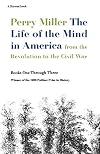
Summary: The first three books of an intellectual history of the influences that shaped the American mind.
American intellectual historian Perry Miller is most famous for his work on New England intellectual history, particularly that of the Puritans. In the year of his death (1963), Miller proposed to his publisher an ambitious project under the title of this book. It was a proposal consisting of ten books including a Prologue:
Prologue: The Sublime in America
Book I: The Evangelical Basis
Book show more II The Legal Mentality
Book III: Tension: Technology and Science
Book IV: The Battlefield of Democracy: education
Book V: Freedom and Association: Political Economy and Association
Book VI: Philosophy
Book VII: Theology
Book VIII: Nature
Book IX: The Self
Tragically, Miller was an alcoholic, struggling to recover until the assassination of John F. Kennedy, after which he basically drank himself to death, passing on December 10 of that year. He had completed only the first two books, and an outlined plan for the third. The Prologue was never written, which would have been interesting. His wife Elizabeth published his work posthumously, in 1965. It was awarded the Pulitzer Prize in History in 1966. We are left thinking, “If only…”
Book I explore the influence of revivalism in America. Most significant in this section is Miller’s account of how revivalism undermined the sectarian character of early American Protestantism, contributing both to a common evangelical mind and to the separation of church and state. A corollary to the latter is the rise of the voluntary spirit in American Christianity. Finally he traces the movement of revivals from rural settings like Cane Ridge to the urban setting of New York City in 1858 on the eve of the Civil War.
Book II then traces the parallel development of law. In this case, Miller offers an account that moves from a common sense approach and a reliance upon English common law to an increasing codification of civil and criminal law. In addition, he traces that transformation of the profession from reading Blackstone under an attorney’s tutelage to the rise of legal education. The growth of the nation exposed the inadequacies and contradictions in the English traditions of common law, equity, and civil law. Ultimately, this led to codification efforts.
Finally, Miller only completed chapter one of Book III. Above all, in this section, Miller traces out the transition of science from a contemplative study of the handiwork of God to the technological advances of the time. But what happens to God? Advances in geology anticipate the Darwinian controversies to follow. However we also glimpse a shift of finding the sublime in heavenly glories to the experience of technological wonders.
Although the work is dense, one senses the breadth of Miller’s own intellectual reach. It would have been fascinating to see Miller parse out his understanding of the American quest for the sublime in the other projected books. However, I wonder if this might have underscored the contradictions inherent in the tensions with which our nation has struggled. In addition, Miller’s decision to lead with the significance of revivals is striking. He stands apart from the intellectual squeamishness to deal with the importance of religion in the American experience, from which many are only now awakening. Thus, it doesn’t surprise me to find the book still in print sixty years after publication. show less
American intellectual historian Perry Miller is most famous for his work on New England intellectual history, particularly that of the Puritans. In the year of his death (1963), Miller proposed to his publisher an ambitious project under the title of this book. It was a proposal consisting of ten books including a Prologue:
Prologue: The Sublime in America
Book I: The Evangelical Basis
Book show more II The Legal Mentality
Book III: Tension: Technology and Science
Book IV: The Battlefield of Democracy: education
Book V: Freedom and Association: Political Economy and Association
Book VI: Philosophy
Book VII: Theology
Book VIII: Nature
Book IX: The Self
Tragically, Miller was an alcoholic, struggling to recover until the assassination of John F. Kennedy, after which he basically drank himself to death, passing on December 10 of that year. He had completed only the first two books, and an outlined plan for the third. The Prologue was never written, which would have been interesting. His wife Elizabeth published his work posthumously, in 1965. It was awarded the Pulitzer Prize in History in 1966. We are left thinking, “If only…”
Book I explore the influence of revivalism in America. Most significant in this section is Miller’s account of how revivalism undermined the sectarian character of early American Protestantism, contributing both to a common evangelical mind and to the separation of church and state. A corollary to the latter is the rise of the voluntary spirit in American Christianity. Finally he traces the movement of revivals from rural settings like Cane Ridge to the urban setting of New York City in 1858 on the eve of the Civil War.
Book II then traces the parallel development of law. In this case, Miller offers an account that moves from a common sense approach and a reliance upon English common law to an increasing codification of civil and criminal law. In addition, he traces that transformation of the profession from reading Blackstone under an attorney’s tutelage to the rise of legal education. The growth of the nation exposed the inadequacies and contradictions in the English traditions of common law, equity, and civil law. Ultimately, this led to codification efforts.
Finally, Miller only completed chapter one of Book III. Above all, in this section, Miller traces out the transition of science from a contemplative study of the handiwork of God to the technological advances of the time. But what happens to God? Advances in geology anticipate the Darwinian controversies to follow. However we also glimpse a shift of finding the sublime in heavenly glories to the experience of technological wonders.
Although the work is dense, one senses the breadth of Miller’s own intellectual reach. It would have been fascinating to see Miller parse out his understanding of the American quest for the sublime in the other projected books. However, I wonder if this might have underscored the contradictions inherent in the tensions with which our nation has struggled. In addition, Miller’s decision to lead with the significance of revivals is striking. He stands apart from the intellectual squeamishness to deal with the importance of religion in the American experience, from which many are only now awakening. Thus, it doesn’t surprise me to find the book still in print sixty years after publication. show less
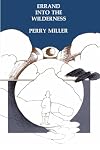
Perry Miller's "Errand Into the Wilderness" more than any other book I've read in a long time makes you realize sometimes how little education our educational institutions actually provide. Think of the Puritans. The word conjures up images of earnest, hard-working folk bedecked in golden buckles and ruffles eager to spread their moral superiority to anyone within earshot. We think of their biggest accomplishment as managing to survive disease and pestilence for so long, despite their show more backward ways. The history we know of the Puritans is a history of events - things they did, their names, their travels. Miller's fascinating book opens up Puritan history for those interested in intellectual history - a history of ideas, theology, and polity. And what a fascinating world he uncovers.
While the main focus here is Puritanism, Miller does occasionally do a bit of wandering; some of the latter essays explore Emerson and the formation of American nationalist ideology. There are ten essays, all of which are full of the enticing, meaty history of ideas, so I won't be able to cover all the ground of the book here, though I would like to give a short précis of some of those essays which I thought to be the most impressive.
The book's title comes from one Samuel Danforth, whose sermon "A Brief Recognition of New England's Errand into the Wilderness" sets the existential, searching tone whose tenor can be found in each one of these essays. In the title essay, Miller notes the dual meaning of the word "errand." It can mean a task done by an inferior for a superior, or it can refer to the task alone, the very action itself. The first generation of Puritans to set foot on North American soil never thought of themselves as Americans. They were just Englishmen and Englishwomen whose task was to see to it that the "errand" of the Reformation could be enacted on Earth. In other words, they saw themselves very much performing an errand in the first sense. After the English Civil War had failed to turn the heads of the world to their glorious City on a Hill, they were left with a vast wilderness. These essays are how the Puritans fashioned a sense of meaning, and eventually, in time, American identity, out of those very raw ingredients whose presence still make themselves felt in American life - Calvinist theology, a sense of community, and profound intolerance.
"The Marrow of Puritan Divinity" is one of the longest, and best, essays in the collection. It covers the shift from strict fundamentalist Calvinism to covenantal theology that took place sometime within the early part of the seventeenth century. In 1550, strict Calvinism was still acceptable. The Scientific Revolution was still far off, and the abject nature of human beings was still de rigueur. The absolute and capricious power of God could still accept or reject human souls according to His whim. By 1650, however, the unscientific worldview that would allow this kind of God had, in some respects, given away. Theology had better learn to justify the ways of God to man or else risk losing some of its influence. Some of the first important Puritan theologians - including Cotton, Hooker, Shepard, and Bulkley - began to constitute a new school that broke from Calvinism in one important way: the incorporation of covenantal theology. No longer, according to these theologians, did you have to believe in God despite his mercurial nature as you used to. Now when you professed a belief in God, you and He entered into a covenant - he turned into a God who was capable of making and keeping a promise. "He has become a God chained - by His own consent, it is true, but nevertheless a God restricted and circumscribed - a God who can be counted upon, a God who can be lived with. Man can always know where God is and what he intends" (63). In a lot of ways this essay forms the ideological core of the book, since Miller will discuss in the later essays many of the ways in which the covenant was absolutely essential in understanding Puritan civil society, church, and state. In fact, Winthrop's constitutional ideas were based upon the idea of men coming together and forming an earthly covenant.
In "Nature and the National Ego," Miller again uses the trope of the wilderness and connects it to Emerson and American identity writ large. He says that, in contrast to Europe's "Nature" (which is effeminate, inferior, derivative), America has founded itself the original, masculine quintessence of the wilderness. To support this idea, he points out that many Americans intellectuals in the nineteenth century began to worry about the possible effects of industrialization and the encroachment of "civilization," fearing that its appearance might be proportional to the uniquely American identity that might they might have to cede. He goes so far as to say that "if there be such a thing as an American character, it took shape under the molding influence of the conceptions of Nature and civilization" (210).
Both chronologically and ideologically, these are the two essays that couch the rest of this wonderful collection. I would recommend these essays for anyone in search of an alternate view to the prevailing idea of America as being originally founded on religious tolerance and individualism, or anyone excited by old-fashioned American intellectual history. This is some of the best of its kind. show less
While the main focus here is Puritanism, Miller does occasionally do a bit of wandering; some of the latter essays explore Emerson and the formation of American nationalist ideology. There are ten essays, all of which are full of the enticing, meaty history of ideas, so I won't be able to cover all the ground of the book here, though I would like to give a short précis of some of those essays which I thought to be the most impressive.
The book's title comes from one Samuel Danforth, whose sermon "A Brief Recognition of New England's Errand into the Wilderness" sets the existential, searching tone whose tenor can be found in each one of these essays. In the title essay, Miller notes the dual meaning of the word "errand." It can mean a task done by an inferior for a superior, or it can refer to the task alone, the very action itself. The first generation of Puritans to set foot on North American soil never thought of themselves as Americans. They were just Englishmen and Englishwomen whose task was to see to it that the "errand" of the Reformation could be enacted on Earth. In other words, they saw themselves very much performing an errand in the first sense. After the English Civil War had failed to turn the heads of the world to their glorious City on a Hill, they were left with a vast wilderness. These essays are how the Puritans fashioned a sense of meaning, and eventually, in time, American identity, out of those very raw ingredients whose presence still make themselves felt in American life - Calvinist theology, a sense of community, and profound intolerance.
"The Marrow of Puritan Divinity" is one of the longest, and best, essays in the collection. It covers the shift from strict fundamentalist Calvinism to covenantal theology that took place sometime within the early part of the seventeenth century. In 1550, strict Calvinism was still acceptable. The Scientific Revolution was still far off, and the abject nature of human beings was still de rigueur. The absolute and capricious power of God could still accept or reject human souls according to His whim. By 1650, however, the unscientific worldview that would allow this kind of God had, in some respects, given away. Theology had better learn to justify the ways of God to man or else risk losing some of its influence. Some of the first important Puritan theologians - including Cotton, Hooker, Shepard, and Bulkley - began to constitute a new school that broke from Calvinism in one important way: the incorporation of covenantal theology. No longer, according to these theologians, did you have to believe in God despite his mercurial nature as you used to. Now when you professed a belief in God, you and He entered into a covenant - he turned into a God who was capable of making and keeping a promise. "He has become a God chained - by His own consent, it is true, but nevertheless a God restricted and circumscribed - a God who can be counted upon, a God who can be lived with. Man can always know where God is and what he intends" (63). In a lot of ways this essay forms the ideological core of the book, since Miller will discuss in the later essays many of the ways in which the covenant was absolutely essential in understanding Puritan civil society, church, and state. In fact, Winthrop's constitutional ideas were based upon the idea of men coming together and forming an earthly covenant.
In "Nature and the National Ego," Miller again uses the trope of the wilderness and connects it to Emerson and American identity writ large. He says that, in contrast to Europe's "Nature" (which is effeminate, inferior, derivative), America has founded itself the original, masculine quintessence of the wilderness. To support this idea, he points out that many Americans intellectuals in the nineteenth century began to worry about the possible effects of industrialization and the encroachment of "civilization," fearing that its appearance might be proportional to the uniquely American identity that might they might have to cede. He goes so far as to say that "if there be such a thing as an American character, it took shape under the molding influence of the conceptions of Nature and civilization" (210).
Both chronologically and ideologically, these are the two essays that couch the rest of this wonderful collection. I would recommend these essays for anyone in search of an alternate view to the prevailing idea of America as being originally founded on religious tolerance and individualism, or anyone excited by old-fashioned American intellectual history. This is some of the best of its kind. show less

Some really interesting nuggets here, buried in page upon page of lackluster minutiae. As a non-historian, I'll leave method quibbles and questions of datedness aside, and say that I'd have much preferred something operating at a bit higher level of synthesis and taking in more than just theological and liturgical writings of Mass. Bay's ruling class. Miller brings us up to the edge of some pretty fascinating territory regarding the inner life of Puritans, the seeming contradictions their show more thought bridged between religious ecstasy and logical punctiliousness. Still, it all seems very stuck on paper, in terms both of its sources and the lack of lightness, or illumination, in its prose. show less
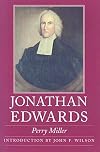
Being an avid reader of reformed theology my most favorite period of historical Calvinistic theology is the age of the English-speaking Protestantism in the 16th and 17th centuries called Puritanism. My favorite American puritan is Jonathan Edwards and with that I read almost anything that has to do with him as the subject matter. With that I read another biography of the puritan pastor Jonathan Edwards by Perry Miller. Perry Miller (1905–63) taught at Harvard University for more than show more thirty years and helped to found modern study of the Puritans. Miller’s study of Puritanism was unique, especially since he was an atheist and had focused most of his academic career in the study of literature.
Biography material is only a small portion of this work which is what the author refers to as external biography. There is an analysis of Edward’s thoughts and writing is what makes for a majority of the book. By no means is the history of Edwards ignored as the pages are full of facts about his family, culture, conflicts and his community. Some of the major issues faced in his lifetime are discussed in depth such as the history of Revivalism in America and The Halfway Controversy.
Edwards (1703–58) is considered the most preeminent theologians in the 18th century American colonies, deeply involved in the religious revival known as the Great Awakening. He was also the first American Puritan, or Calvinist, to recognize the challenges to traditional views of the world posed by figures like John Locke and Isaac Newton. Miller notes on how Edwards read Locke in his college years and was influenced by Locke’s method of argument & study of matters as he argued against Arminianism.
Miller admires Edwards, but not in agreement with the primitive theology and philosophy of Edwards. Yet he argues Edwards was advance in his knowledge of science and Psychology. Thus he is a pivotal figure as American thought evolved from heavily religious beginnings toward populism and a new rationalism in the young nation. His many books include Freedom of the Will, Religious Affections, and Original Sin; although he is probably best known for a legendary sermon he titled “Sinners in the Hands of an Angry God.” He challenges readers to understand Edwards as an intellectual philosopher who, living in his own time and place, wrestled with issues relevant to the modern world. In conclusion it is a great read for anyone who wants additional study and viewpoints on Edwards thought and American Puritanism. show less
Biography material is only a small portion of this work which is what the author refers to as external biography. There is an analysis of Edward’s thoughts and writing is what makes for a majority of the book. By no means is the history of Edwards ignored as the pages are full of facts about his family, culture, conflicts and his community. Some of the major issues faced in his lifetime are discussed in depth such as the history of Revivalism in America and The Halfway Controversy.
Edwards (1703–58) is considered the most preeminent theologians in the 18th century American colonies, deeply involved in the religious revival known as the Great Awakening. He was also the first American Puritan, or Calvinist, to recognize the challenges to traditional views of the world posed by figures like John Locke and Isaac Newton. Miller notes on how Edwards read Locke in his college years and was influenced by Locke’s method of argument & study of matters as he argued against Arminianism.
Miller admires Edwards, but not in agreement with the primitive theology and philosophy of Edwards. Yet he argues Edwards was advance in his knowledge of science and Psychology. Thus he is a pivotal figure as American thought evolved from heavily religious beginnings toward populism and a new rationalism in the young nation. His many books include Freedom of the Will, Religious Affections, and Original Sin; although he is probably best known for a legendary sermon he titled “Sinners in the Hands of an Angry God.” He challenges readers to understand Edwards as an intellectual philosopher who, living in his own time and place, wrestled with issues relevant to the modern world. In conclusion it is a great read for anyone who wants additional study and viewpoints on Edwards thought and American Puritanism. show less
Lists
Awards


You May Also Like
Associated Authors
Statistics
- Works
- 35
- Also by
- 4
- Members
- 2,983
- Popularity
- #8,554
- Rating
- 3.9
- Reviews
- 8
- ISBNs
- 57