
Works by Lev Parikian
Into the Tangled Bank: In Which Our Author Ventures Outdoors to Consider the British in Nature (2020) 42 copies, 1 review
Why Do Birds Suddenly Disappear?: 200 birds. 12 months. 1 lapsed birdwatcher. (2018) 18 copies, 2 reviews
Associated Works
Tagged
Common Knowledge
- Birthdate
- 20th century
- Gender
- male
- Occupations
- conductor
writer - Nationality
- UK
- Associated Place (for map)
- UK
Members
Reviews
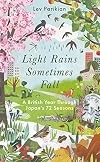
‘’Look beyond and there is a gentle rise, streets populated with lines of houses, a repeating tessellation of London brick. On a good day, with the sun slanting on them from a certain angle, I can see in them - I admit it takes a small leap of the imagination - the contours of a Tuscan hillside town, a configuration of straight lines and angles and light and shade and warmth that does pleasing things to the brain.’’
Let Lev Parikian guide you to the unique vibe of London through the show more seasons dictated by Japanese culture. Let the heavenly beauty of daffodils, peonies, cherry blossoms, and lilies fill your soul with magic. Let woodpeckers, swallows, foxes, crows accompany you. Witness the miracle of the rainbow, the mystery of the mist, the comfort of the spring rain, the arrival of autumn, the cosy atmosphere of winter. Tread the path on which St Swithun and the gods of wind in Japanese mythology meet.
London becomes poetry in Lev Parikian’s book. He narrates the moment he saw a cormorant flying over a cemetery and the reader just stares in awe. The cemetery reflects our society. It becomes the microcosm that should be observed, understood, cherished. And protected.
‘’I do this occasionally, looking at something as if for the first time. It’s a way of finding beauty and interest in the mundane, learning to appreciate the things that form the backdrop to everyday life. And if it serves as a reminder of the fragility of all life on earth, including ours, than that’s no bad thing.’’
Many thanks to Elliott & Thompson and NetGalley for the ARC in exchange for an honest review.
My reviews can also be found on https://theopinionatedreaderblog.wordpress.com/ show less
Let Lev Parikian guide you to the unique vibe of London through the show more seasons dictated by Japanese culture. Let the heavenly beauty of daffodils, peonies, cherry blossoms, and lilies fill your soul with magic. Let woodpeckers, swallows, foxes, crows accompany you. Witness the miracle of the rainbow, the mystery of the mist, the comfort of the spring rain, the arrival of autumn, the cosy atmosphere of winter. Tread the path on which St Swithun and the gods of wind in Japanese mythology meet.
London becomes poetry in Lev Parikian’s book. He narrates the moment he saw a cormorant flying over a cemetery and the reader just stares in awe. The cemetery reflects our society. It becomes the microcosm that should be observed, understood, cherished. And protected.
‘’I do this occasionally, looking at something as if for the first time. It’s a way of finding beauty and interest in the mundane, learning to appreciate the things that form the backdrop to everyday life. And if it serves as a reminder of the fragility of all life on earth, including ours, than that’s no bad thing.’’
Many thanks to Elliott & Thompson and NetGalley for the ARC in exchange for an honest review.
My reviews can also be found on https://theopinionatedreaderblog.wordpress.com/ show less
Into the Tangled Bank: In Which Our Author Ventures Outdoors to Consider the British in Nature by Lev Parikian
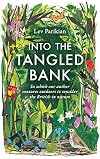
‘’There is nothing like nature to make you feel inadequate.’’
Nature. One of the most sacred words. Our mother, our home and shelter. And yet, how we abuse it. How we take it for granted. How we ignore that we can find traces of its beauty everywhere. From the tiny plant pot resting by our kitchen window to the flowers that try to grow in our balcony, the trees that beautify our made-of-concrete cities and the forests that give us life. In this beautiful book, Lev Parikian explores show more the aspects of Nature that have influenced our lives, the fascinating secrets of its creatures, the pioneers of conservation and the quirky traits of the amateur (and the professional…) birdwatchers.
‘Then I’d walk slowly home, hedgerows to left and right, cow parsleys and nettles jostling for position in the ditch, and just before the bend in the road the trees arching over the lane, meeting in the middle, offering welcome shade and coolth in the heat of those endless summer days of my memory.’’
Through witty, conversational, direct and joyful writing, Lev Parikian guides us into the richness of British nature and the journey - especially to the ones like me who don’t have the opportunity to explore every corner of the UK, no matter how many times I’ve been there - is beautiful beyond words. From that little annoying fly that finds its way into our house and the spiders in our basements and attics to rare birds, dolphins, puffins (I LOVE puffins!!!), sightings of a beluga whale in the Thames, eagles, you name it.
But don’t think for a moment that this book is just ‘’descriptions’’ upon ‘’descriptions.’’ Far from it. There are so many moments of quiet beauty, evident in Chapter 5 (When Nature Changes), a melancholic, eerie, nostalgic, moving account on the relationship between nature and mental health, and in Chapter 10 (Getting Away From It All) where togetherness in nature is celebrated. We travel to beautiful places. The Isle of Skye, the Farne Islands and Skokholm, to name a few. And the Moon. We learn about women pioneers of the field like Etta Lemon and Caroline Herschel, and contemplate on complex issues like the existence of zoos and the imbalance in the demographic of nature lovers.
I mean, come on. Just read this paragraph:
‘’The last pale gleam of sun pokes through the cloud of a late autumn afternoon, lights up the tree-tops in the copse of the far end of the field, flaming the russet and lemon tinges against the glowering backdrop of dark and heavy rain clouds. Muted, compared to the lurid display sometimes on offer at the time of year, but nonetheless possessed of a subdued charm. A soft mist rises from the ground, fields in bare autumn clothes of earth and stubble.’’
Honestly!
I started this book under my very own flimsy-made- but I’m hella proud-of -it canopy in my balcony (and canopies of any kind are simply non-existent in the centre of Athens, let me tell you…) and finished it in our summer house in the mountains of Arcadia, in Peloponnese. Nature is everywhere, its love generously provided. It is time we learned to respect it and cherish it.
‘’A moment to give you hope, to remind you that in the vast gulf between the two extremes of engagement there is more good than ill, that if you chip away, show enough people the magic of a dolphin or a hobby or even the dunnock on the path, the tide will, against all the odds, make a turn for the better.’’
Many thanks to Alison Menzies, Lev Parikian and Elliott & Thompson for the ARC in exchange for an honest review.
My reviews can also be found on https://theopinionatedreaderblog.wordpress.com/ show less
Nature. One of the most sacred words. Our mother, our home and shelter. And yet, how we abuse it. How we take it for granted. How we ignore that we can find traces of its beauty everywhere. From the tiny plant pot resting by our kitchen window to the flowers that try to grow in our balcony, the trees that beautify our made-of-concrete cities and the forests that give us life. In this beautiful book, Lev Parikian explores show more the aspects of Nature that have influenced our lives, the fascinating secrets of its creatures, the pioneers of conservation and the quirky traits of the amateur (and the professional…) birdwatchers.
‘Then I’d walk slowly home, hedgerows to left and right, cow parsleys and nettles jostling for position in the ditch, and just before the bend in the road the trees arching over the lane, meeting in the middle, offering welcome shade and coolth in the heat of those endless summer days of my memory.’’
Through witty, conversational, direct and joyful writing, Lev Parikian guides us into the richness of British nature and the journey - especially to the ones like me who don’t have the opportunity to explore every corner of the UK, no matter how many times I’ve been there - is beautiful beyond words. From that little annoying fly that finds its way into our house and the spiders in our basements and attics to rare birds, dolphins, puffins (I LOVE puffins!!!), sightings of a beluga whale in the Thames, eagles, you name it.
But don’t think for a moment that this book is just ‘’descriptions’’ upon ‘’descriptions.’’ Far from it. There are so many moments of quiet beauty, evident in Chapter 5 (When Nature Changes), a melancholic, eerie, nostalgic, moving account on the relationship between nature and mental health, and in Chapter 10 (Getting Away From It All) where togetherness in nature is celebrated. We travel to beautiful places. The Isle of Skye, the Farne Islands and Skokholm, to name a few. And the Moon. We learn about women pioneers of the field like Etta Lemon and Caroline Herschel, and contemplate on complex issues like the existence of zoos and the imbalance in the demographic of nature lovers.
I mean, come on. Just read this paragraph:
‘’The last pale gleam of sun pokes through the cloud of a late autumn afternoon, lights up the tree-tops in the copse of the far end of the field, flaming the russet and lemon tinges against the glowering backdrop of dark and heavy rain clouds. Muted, compared to the lurid display sometimes on offer at the time of year, but nonetheless possessed of a subdued charm. A soft mist rises from the ground, fields in bare autumn clothes of earth and stubble.’’
Honestly!
I started this book under my very own flimsy-made- but I’m hella proud-of -it canopy in my balcony (and canopies of any kind are simply non-existent in the centre of Athens, let me tell you…) and finished it in our summer house in the mountains of Arcadia, in Peloponnese. Nature is everywhere, its love generously provided. It is time we learned to respect it and cherish it.
‘’A moment to give you hope, to remind you that in the vast gulf between the two extremes of engagement there is more good than ill, that if you chip away, show enough people the magic of a dolphin or a hobby or even the dunnock on the path, the tide will, against all the odds, make a turn for the better.’’
Many thanks to Alison Menzies, Lev Parikian and Elliott & Thompson for the ARC in exchange for an honest review.
My reviews can also be found on https://theopinionatedreaderblog.wordpress.com/ show less
[b:Light Rains Sometimes Fall: A British Year through Japan’s 72 Ancient Seasons|58328666|Light Rains Sometimes Fall A British Year through Japan’s 72 Ancient Seasons|Lev Parikian|https://i.gr-assets.com/images/S/compressed.photo.goodreads.com/books/1627137722l/58328666._SY75_.jpg|91457524] is a charming nature memoir set over a year that begins in February 2020. Thus it is shaped by the pandemic as well as the 72 Japanese micro-seasons that provide the structure. This would have been show more quite a different book without covid; I wonder whether the project would have worked so well in a more precedented year? The fragmentary nature of the 72 short chapters might have lacked continuity without the spatial limitations of lockdown life. I inadvertently chose a very suitable time of year to read this book, as it begins on February 4th. Much as I like winter, during the dispiriting cold of late January it is pleasant to be reminded that greener, lighter, and less frozen days are ahead.
Parikian's writing is notable for memorable descriptions like, 'Old scraggle-beard, the beaky reminder of the dinosaur ancestry of all birds. Pterodactyl in a grey shawl. A heron.' He is an enthusiastic amateur naturalist, who observes the wildlife to be seen and heard in his garden or on walks through his South London neighbourhood. His sense of wonder is infectious:
In a self-deprecating and non-expert tone, Parikian explains how easy and rewarding it is to pay greater attention to the natural world around you:
I also appreciated his acknowledgement of the built environment, particularly hard to ignore in London:
Finally, Parikian's childish love of snow made me smile as I'm just the same. A fall of snow never fails to cheer me up.
[b:Light Rains Sometimes Fall: A British Year through Japan’s 72 Ancient Seasons|58328666|Light Rains Sometimes Fall A British Year through Japan’s 72 Ancient Seasons|Lev Parikian|https://i.gr-assets.com/images/S/compressed.photo.goodreads.com/books/1627137722l/58328666._SY75_.jpg|91457524] is a highly readable, vivid, and persuasive argument for paying closer attention to our surroundings and the wildlife sharing our neighbourhood. Although the structure makes it episodic rather than deeply insightful, it's fun to read and rather inspiring. show less
Parikian's writing is notable for memorable descriptions like, 'Old scraggle-beard, the beaky reminder of the dinosaur ancestry of all birds. Pterodactyl in a grey shawl. A heron.' He is an enthusiastic amateur naturalist, who observes the wildlife to be seen and heard in his garden or on walks through his South London neighbourhood. His sense of wonder is infectious:
If my mind boggles at the thought of bird migration, it throws up its hands and concedes defeat when contemplating the same phenomenon in butterflies. No matter how often I read that ‘the red admiral is a strongly migratory species’, part of me will protest, “But… I mean, how?”
In a self-deprecating and non-expert tone, Parikian explains how easy and rewarding it is to pay greater attention to the natural world around you:
If only it were that simple. There are, inevitably, exceptions.
Moths are nocturnal, except the ones that aren’t; butterflies have brightly coloured wings; except the ones that don’t; moths rest with their wings spread, while butterflies hold them above their back – except for all the ones that behave differently. It’s like learning Russian irregular verbs.
The most reliable distinction seems to be in the antennae.
I also appreciated his acknowledgement of the built environment, particularly hard to ignore in London:
But what I’m really getting at is the landscape, the background, the things that make up our world, whether they’re man-made or ‘natural’, and how they affect our daily existence. The colour of brick, the texture of concrete, the shadows cast by railings on a pavement.
Almost by accident, this exercise in observation has made me see things differently. It started with an idea to chart nature’s gradual changes through a year of small increments. But it’s impossible to do that without taking note of the man-made environment which surrounding it and, for better or worse, assessing it in some way. Which isn’t to say, “Ooh, let’s celebrate the beauty of this slab of concrete.” Concrete has its uses, but give me a singing blackcap any day. It’s just useful to acknowledge it. And if it has a patch of lichen on it, then so much the better.
Finally, Parikian's childish love of snow made me smile as I'm just the same. A fall of snow never fails to cheer me up.
I am a mature adult, nearly fifty-six years on the planet. […] I am, to all outward appearances – or most of them, at least – a ‘grown-up’.
But show me even the prospect of snowfall and my inner eight-year-old bursts out in a giddy cloud of excitement and starts shouting “SNOW SNOW SNOW” at the top of his voice while dancing a manic happy dance.
[b:Light Rains Sometimes Fall: A British Year through Japan’s 72 Ancient Seasons|58328666|Light Rains Sometimes Fall A British Year through Japan’s 72 Ancient Seasons|Lev Parikian|https://i.gr-assets.com/images/S/compressed.photo.goodreads.com/books/1627137722l/58328666._SY75_.jpg|91457524] is a highly readable, vivid, and persuasive argument for paying closer attention to our surroundings and the wildlife sharing our neighbourhood. Although the structure makes it episodic rather than deeply insightful, it's fun to read and rather inspiring. show less
Why Do Birds Suddenly Disappear? 200 birds, 12 months, 1 lapsed birdwatcher: A Year of Atrocious Birdwatching by Lev Parikian
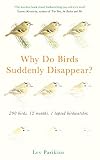
At the age of 12, Lev Parikian was an avid birdwatcher. He had a huge list of birds from the common or garden to the exotic neatly ticked off. Except he hadn't seen some of them, in fact, he had probably only seen half of them. There has been a smidgen over six hundred species recorded as being seen in Britain, and as the bird watching bug bites again after a walk around the park in an attempt to combat middle age spread, Parikian feels that this time he needs a challenge and this time to do show more things properly. So there are rules; there has to be because this time it is serious.
But what sort of target should he go for? A friend of his managed 206 in a single year, but he was an avid bird watcher, 100 would be too easy and 300 would be unrealistic. A lot of birds that have appeared over here are very rare, swept in by the Atlantic storms and take a day or so to re-orientate themselves before disappearing once again. But first, he needs to create a list, because every birder needs a list. Separating the birds into four categories, already seen, will probably see, might see and no chance (one is now extinct after all) and the list has been whittled down from a vast 600 to an unmanageable 200. It should be ok, shouldn't it?
Starting with the ubiquitous blue tit, so begins a very amusing story of trying to track down his 200 ticks. It will take him from the Dorset shorelines to the dramatic west coast of Scotland, the big skies of Norfolk and the waters of the Somerset levels. He has some spectacular finds and spends a lot of the year not seeing any owls at all; there was one here five minutes ago is not what you want to hear. Some of the trips he is accompanied by his wife and son who seem to tolerate his new obsession and he is helped by other bird watchers that are generous with their time, expertise and telescopes. Two hundred birds in one year is a big ask, can he do it? Will he actually see ll the birds? Can he stick to the rules, or will it be a project that will join the other abandoned ones alongside the discarded resolutions on the barely used yoga mat…
Parikian has written a thoroughly enjoyable book that because of his bone-dry wit had me chuckling and laughing out loud at times. I thought that it was written with genuine warmth about his feathered subjects, his cricket and spreadsheet obsession and his love of life in general. There are amusing anecdotes about him learning to become a conductor at the same place that his father worked as well as nostalgic and poignant moments about growing up and losing his father. One to read and enjoy, and maybe make you reach for the binoculars. show less
But what sort of target should he go for? A friend of his managed 206 in a single year, but he was an avid bird watcher, 100 would be too easy and 300 would be unrealistic. A lot of birds that have appeared over here are very rare, swept in by the Atlantic storms and take a day or so to re-orientate themselves before disappearing once again. But first, he needs to create a list, because every birder needs a list. Separating the birds into four categories, already seen, will probably see, might see and no chance (one is now extinct after all) and the list has been whittled down from a vast 600 to an unmanageable 200. It should be ok, shouldn't it?
Starting with the ubiquitous blue tit, so begins a very amusing story of trying to track down his 200 ticks. It will take him from the Dorset shorelines to the dramatic west coast of Scotland, the big skies of Norfolk and the waters of the Somerset levels. He has some spectacular finds and spends a lot of the year not seeing any owls at all; there was one here five minutes ago is not what you want to hear. Some of the trips he is accompanied by his wife and son who seem to tolerate his new obsession and he is helped by other bird watchers that are generous with their time, expertise and telescopes. Two hundred birds in one year is a big ask, can he do it? Will he actually see ll the birds? Can he stick to the rules, or will it be a project that will join the other abandoned ones alongside the discarded resolutions on the barely used yoga mat…
Parikian has written a thoroughly enjoyable book that because of his bone-dry wit had me chuckling and laughing out loud at times. I thought that it was written with genuine warmth about his feathered subjects, his cricket and spreadsheet obsession and his love of life in general. There are amusing anecdotes about him learning to become a conductor at the same place that his father worked as well as nostalgic and poignant moments about growing up and losing his father. One to read and enjoy, and maybe make you reach for the binoculars. show less
Lists
Awards


You May Also Like
Associated Authors
Statistics
- Works
- 6
- Also by
- 1
- Members
- 150
- Popularity
- #138,699
- Rating
- 4.3
- Reviews
- 6
- ISBNs
- 15