
Adolf Rudnicki (1912–1990)
Author of Cronache del ghetto
About the Author
Works by Adolf Rudnicki
Wieczna pamięć 1 copy
Pył miłosny 1 copy
Souviens-toi 1 copy
Ascent to Heaven 1 copy
50 opowiadań 1 copy
Wybór opowiadań 1 copy
I topi e altri racconti 1 copy
Tagged
Common Knowledge
- Other names
- Hirschhorn, Aron (born as)
- Birthdate
- 1912-02-19
- Date of death
- 1990-11-14
- Gender
- male
- Occupations
- novelist
essayist
resistance fighter
Holocaust survivor
short story writer
memoirist - Organizations
- Polish Army (WWII)
Polish Resistance - Short biography
- Adolf Rudnicki was born Aron Hirschhorn to a Jewish family in Żabno, Poland. His father Itshe Hirschhorn was a rabbi. After attending a trade school, he worked as a bank clerk. He began his literary career in 1930 with the publication of his short novel "Death of the Operator" in the current events journal Kurier Poranny. He gained popularity in Poland with his novels Rats (1932), Solders (1933), The Unloved (1937) and Summer (1938).
Mobilized by the Polish Army in 1939 at the start of World War II, he fought in the September campaign and was taken prisoner by the Germans, but managed to escape. He went to Lwów (present-day Lviv, Ukraine) in the Soviet-occupied zone of Poland and wrote for a Communist periodical. When the Nazis occupied Lwów in 1941, he returned to Warsaw under a false identity and was active in the Resistance movement. He joined the Polish Home Army in 1944 and took part in the Warsaw Uprising. After the war, he lived for a few years in Łódź and was the editor of the journal Kuźnica. He published a cycle of short stories and novels, including Żywe i martwe morze (The Dead and the Living Sea, 1952), Flight from Jasna Polana (1949), The Golden Windows (1963), and The Merchant of Łódź (1963) focused on Jewish suffering and resistance. They were collectively known as The Epoch of the Ovens, a term that entered the Polish vocabulary as a metaphorical name for the Holocaust. After 1953, Rudnicki began publishing weekly essays on a wide range of topics, which were later collected in a series of volumes called The Blue Pages (1956-1958). After the anti-Semitic campaign of the Communist government in Poland in 1968, he moved to Paris, where he married and had a son. He returned to Poland in the 1980s and lived in Warsaw until his death.
He also wrote memoirs and an autobiographical volume, Krakowskie Przedmieście, Full of Desserts (1986). - Nationality
- Poland
- Birthplace
- Żabno, nr Tarnów, Poland
- Places of residence
- Żabno nr Tarnów, Poland
Warsaw, Poland
Lwów, Poland
Łódź, Poland
Paris, France - Place of death
- Warsaw, Poland
- Burial location
- Cmentarz Wojskowy na Powązkach, Warsaw, Poland
- Associated Place (for map)
- Poland
Members
Reviews
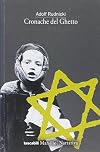
Adolf Rudnicki rimane, in un ideale archivio del Novecento letterario, quale supremo cronista dell'orrore, quale costruttore di un'impervia, lacerante testimonianza. Il più bel libro sullo sterminio degli ebrei nel ghetto di Varsavia e sull'ideologia nazista è un libro sul terrore. Dove il terrore è evocato non soltanto in termini contenutistici, narrativi, aneddotici, bensì e soprattutto in termini formali. Ogni racconto è mantenuto sul filo del rasoio fra caos e labirinto, tanto che show more si insinua il sospetto che il caos abbia una sua logica. (Cesare Garboli) show less
Les huit nouvelles qui composent ce recueil sont consacrées à la vie des Juifs polonais sous l'occupation allemande. Rudnicki s'est fait le chroniqueur du meurtre de ces millions d'hommes commis au xxe siècle. Il a raconté leur histoire, leur héroïsme, leur peur, il s'est efforcé de comprendre le comportement des bourreaux et d'expliquer le mutisme des témoins. Il a fait revivre avec lyrisme et poésie les traditions et l'atmosphère à jamais perdue des petites bourgades juives show more polonaises d'avant-guerre. show less
Jun 7, 2011French
Persecuzione, eroismo, viltà: stati d’animo estremi nel Ghetto di Varsavia.
"Adolf Rudnicki rimane, in un ideale archivio del Novecento letterario, quale supremo cronista dell’orrore, quale costruttore di un’impervia, lacerante testimonianza. [...] Il più bel libro sullo sterminio degli ebrei nel ghetto di Varsavia e sull’ideologia nazista è un libro sul terrore. Dove il terrore è evocato non soltanto in termini contenutistici, narrativi, aneddotici, bensì e soprattutto in show more termini formali. Ogni racconto è mantenuto sul filo del rasoio fra caos e labirinto, tanto che si insinua il sospetto che il caos abbia una sua logica." cesare garboli show less
"Adolf Rudnicki rimane, in un ideale archivio del Novecento letterario, quale supremo cronista dell’orrore, quale costruttore di un’impervia, lacerante testimonianza. [...] Il più bel libro sullo sterminio degli ebrei nel ghetto di Varsavia e sull’ideologia nazista è un libro sul terrore. Dove il terrore è evocato non soltanto in termini contenutistici, narrativi, aneddotici, bensì e soprattutto in show more termini formali. Ogni racconto è mantenuto sul filo del rasoio fra caos e labirinto, tanto che si insinua il sospetto che il caos abbia una sua logica." cesare garboli show less
Statistics
- Works
- 25
- Members
- 53
- Popularity
- #303,172
- Rating
- 4.0
- Reviews
- 3
- ISBNs
- 13
- Languages
- 2