
About the Author
Works by Jon Ward
Camelot's End: Kennedy vs. Carter and the Fight that Broke the Democratic Party (2019) 116 copies, 3 reviews
The Feast of Devereux Manor 1 copy
Associated Works
Tagged
Common Knowledge
- Gender
- male
Members
Reviews
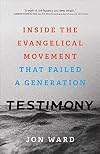
TESTIMONY is not the kind of book I usually gravitate toward, but I found it to be a fairly compelling read. Author Jon Ward was raised in the artificial bubble of an evangelical sect which tried mightily to keep its members apart from the everyday world with its many evils and temptations. He was the oldest of seven children, and his father was, for a time, a pastor in the Covenant Life Church, an outlier Evangelical organization in DC and the surrounding Maryland suburbs. Ward pretty much show more toed the strict line of his religious sect throughout his childhood, adolescence and even into his early twenties, noting -
"The call to surrender to God was used to strong-arm me and my peers into accepting, without question, what we were told by adults. Throw in the notion that if you do not surrender you may burn in hell, and that keeps most kids in line."
As he grew older, Ward was confused about what constituted masculinity, commenting -
"In our church, men were trained to be docile and submissive to the men who were leaders, and the leaders exercised influence by bending over backward to appear the most humble ... Many evangelical churches encouraged men to be assertive and dominant. We kept those without power - especially women - in places of subservience, but we did it nicely, with big smiles and lots of Christian words."
Although his church overtly discouraged higher education, Ward managed to finish college, but remained mostly under the church's heavy thumb, belonging to religious youth groups and young men's study groups, the latter of which encouraged intimate discussion about how often they "stumbled" from being pure and chaste. Ward is quite frank about how emotionally and sexually stunted he was, well into his early twenties, being almost terrified of women and the temptations they represented. Years later he was not surprised when he learned of sexual abuse of children by the youth pastors of his church. On this he comments -
"Amid all the controversy, one pattern emerged: pastors had encouraged church members not to involve the police in sex abuse cases because they wanted to resolve all issues within the church, in an environment that they controlled."
Ward does not shy away from the political connections of the evangelical churches either, discussing frankly how they quickly latched on to abortion as the only important issue and aligning themselves staunchly with the GOP. And so, in 2016 it wasn't long before it all "boiled down to whether Trump was for it or against it."
There is much here too about the leadership of Ward's church and its various changes and infighting for power. Somewhere along the way Jon Ward became disenchanted with the Covenant Life Church and managed to break free of the cult-like atmosphere of his youth. He became a journalist, first with small-fry newspapers, and later he worked, variously, for Tucker Carlson, Ruppert Murdoch, and The Washington Times, before landing his present job with YahooNews. He is appalled at what has happened in our country since Trump came into prominence and how many so-called Christians have supported him, turning a blind eye to his lies and treachery. And he is also heartsick at how friends and families have turned against each other in the present era, feeling it in his own family too.
I could not help but notice as I read Ward's story how much of what he says about evangelicals applies equally to the Catholic Church - the brainwashing, private schools, the "our-church-is-the-only-true-church" teaching, guilt, the sexual abuse (and covering up of same), making abortion the only issue that matters, white supremacy, and even in its support of Trump and current criticism of Biden.
Jon Ward is a fine writer who has come a long way in his search for what it means to be a true Christian and a good person, and his TESTIMONY gives one much to think about. I will recommend it to anyone who is still wrestling with questions of faith and matters of right vs. wrong.
- Tim Bazzett, author of the memoir, BOOKLOVER show less
"The call to surrender to God was used to strong-arm me and my peers into accepting, without question, what we were told by adults. Throw in the notion that if you do not surrender you may burn in hell, and that keeps most kids in line."
As he grew older, Ward was confused about what constituted masculinity, commenting -
"In our church, men were trained to be docile and submissive to the men who were leaders, and the leaders exercised influence by bending over backward to appear the most humble ... Many evangelical churches encouraged men to be assertive and dominant. We kept those without power - especially women - in places of subservience, but we did it nicely, with big smiles and lots of Christian words."
Although his church overtly discouraged higher education, Ward managed to finish college, but remained mostly under the church's heavy thumb, belonging to religious youth groups and young men's study groups, the latter of which encouraged intimate discussion about how often they "stumbled" from being pure and chaste. Ward is quite frank about how emotionally and sexually stunted he was, well into his early twenties, being almost terrified of women and the temptations they represented. Years later he was not surprised when he learned of sexual abuse of children by the youth pastors of his church. On this he comments -
"Amid all the controversy, one pattern emerged: pastors had encouraged church members not to involve the police in sex abuse cases because they wanted to resolve all issues within the church, in an environment that they controlled."
Ward does not shy away from the political connections of the evangelical churches either, discussing frankly how they quickly latched on to abortion as the only important issue and aligning themselves staunchly with the GOP. And so, in 2016 it wasn't long before it all "boiled down to whether Trump was for it or against it."
There is much here too about the leadership of Ward's church and its various changes and infighting for power. Somewhere along the way Jon Ward became disenchanted with the Covenant Life Church and managed to break free of the cult-like atmosphere of his youth. He became a journalist, first with small-fry newspapers, and later he worked, variously, for Tucker Carlson, Ruppert Murdoch, and The Washington Times, before landing his present job with YahooNews. He is appalled at what has happened in our country since Trump came into prominence and how many so-called Christians have supported him, turning a blind eye to his lies and treachery. And he is also heartsick at how friends and families have turned against each other in the present era, feeling it in his own family too.
I could not help but notice as I read Ward's story how much of what he says about evangelicals applies equally to the Catholic Church - the brainwashing, private schools, the "our-church-is-the-only-true-church" teaching, guilt, the sexual abuse (and covering up of same), making abortion the only issue that matters, white supremacy, and even in its support of Trump and current criticism of Biden.
Jon Ward is a fine writer who has come a long way in his search for what it means to be a true Christian and a good person, and his TESTIMONY gives one much to think about. I will recommend it to anyone who is still wrestling with questions of faith and matters of right vs. wrong.
- Tim Bazzett, author of the memoir, BOOKLOVER show less
 This review was written for LibraryThing Early Reviewers.
Summary: A national journalist who grew up in an influential evangelical movement describes his separation from this movement as he witnessed its embrace of control and power, both within churches, and in increasingly authoritarian politics, at the expense of both truth and character.
Jon Ward is a national correspondent with Yahoo News who has covered the White House as well as several presidential campaigns. He is also the child of parents who came to faith in the Jesus Movement revival of show more the early 1970’s. That caught my attention. The Jesus Movement was significant in the spiritual journeys of both my wife and myself. And the words “the Evangelical Movement that Failed a Generation” in the subtitle are deeply troubling to me. I’ve written about the spiritual ideals and vision for society of evangelicals of my generation, and am deeply chagrined with how so much of this has unraveled. We failed our children.
Ward was born in 1977, several years after the wave of the Jesus Movement swept through the country. In its wake, a number of independent churches formed, many charismatic, believing in the baptism and gifts of the Spirit and worship expressing ecstatic emotion. He grew up in one such church in the Maryland suburbs of DC. His church, initially called the Gathering of Believers was pastored by C. J. Mahaney and Larry Tomczak. Ward’s father was also a pastor for a time until he was asked to step down, for reasons later found to be suspect.
He describes the Christian culture of the time, the music, personalities like Keith Green, who tragically died young, going to early pro-life rallies, the first connections of pro-life and Republican politics, a mission trip to South America, doing skits and getting people to pray. He describes the growing sense of being in a culture war, books like This Present Darkness that framed things as spiritual warfare. He describes the distrust of the intellect, learning how to feel and what to believe, but not having any understanding of why or any sense of engaging with the culture. It was an enclosed, insular life in church and Christian schools and Christian music. The church became Covenant Life Church. Larry Tomczak was forced out and moved the Cleveland. He describes people being slain in the Spirit and his own experience of being prayed for, feeling nothing, except C.J. Mahaney gently pushing him backward. He went along and fell–and began to wonder. Yet he eagerly wanted to please God and his leaders and around 1998 went on a trip with Mahaney to one of Louie Giglio’s Passion Conferences, being groomed for leadership, along with Josh Harris.
Then Mahaney took a right turn into the New Calvinism. This was also the time of the purity movement and “accountability” groups. By this time, Ward was a student at the University of Maryland and felt he was suffocating. It was time to get out. Teaching for a couple years, he pursued writing, getting a job with the Washington Times. He was a part of Chuck Colson’s Centurions course, and for the first time, was challenged to a faith with intellectual heft. While he left Covenant Life, on its way to becoming Sovereign Grace Ministries, he followed developments in the church of his parents–two streams. One was Mahaney, a thinker, gifted speaker, and increasingly exerting control over the churches within the movement. The other was Lou Engle, a culture warrior, seeing politics and spiritual warfare as conflict, violent if necessary. He describes both the scandals around Mahaney’s use of power, and later, Sovereign Grace’s cover up of sexual abuses, even while sharing the platform with Al Mohler at Together for the Gospel conferences.
By 2013, he is working for Yahoo News as a national correspondent. Because of his background, he covers Republican politics and the deepening alliance between evangelicals focused on abortion and sexuality issues, even as the party turned toward Donald Trump. Meanwhile, he is growing in his awareness of the grievances of Blacks, getting to know the work of Bryan Stephenson and others, and how the racial fault lines of the country were being exploited, giving encouragement to the White Supremacist movements and the tragedy at Charlottesville. He recounts watching people he cared about, even most of his family, become radicalized by this movement. ignoring flaws of character, outright lies, racist rhetoric and more, simply to advance pro-life and pro-American values. He painfully describes his pleas with his father, only grudgingly heard after January 6.
As the book ends, as disheartened as he is by political developments and the failings of the churches in which he grew up, exacerbated by the pandemic, he also describes a deepening Christian life, learning to pursue the way of the cross rather than the way of acclaim or power. He believes this is what the church needs to be about. He decries the attack on truth, and the complicity of those who should believe in truth. He argues, from his experience as a journalism, that we are in desperate need of nuance in a world the reduces things to soundbites. Many of the things we confront are complicated and good solutions are achieved by people who do the hard work of listening, who achieve workable compromises. He believes in the role of evangelicals who have followed neither the C.J. Mahaney’s down theologically precise, narrow roads nor the Lou Engles who frame things as a black and white battle. They are those who forgo dominance for repentance, seek reconciliation rather than race wars with Blacks, and seek to rebuild rather than tear down institutions.
This, for me was a powerful “testimony” in two ways. One was in how it traced the diversion through its weakest elements, of a genuine movement of God through the Jesus Movement. The anti-intellectualism, the framing of the church as a persecuted minority in a spiritual battle created the foundations for the political captivity of evangelicals in the Trump era. While many of us traveled different roads than Jon Ward, we recognize the landscape.
The other is in its call for the remnant who did not bow to these things to Christian faithfulness in this time–to repentance, to the way of the cross, to relational healing and racial justice and reconciliation, and to institutional and intellectual renewal. Only God knows if the tide can be turned–indeed he controls the tides of history. But we cannot sit around and feel sorry for ourselves–there is still work to be done!
________________________________
Disclosure of Material Connection: I received a complimentary review copy of this book from the publisher. show less
Jon Ward is a national correspondent with Yahoo News who has covered the White House as well as several presidential campaigns. He is also the child of parents who came to faith in the Jesus Movement revival of show more the early 1970’s. That caught my attention. The Jesus Movement was significant in the spiritual journeys of both my wife and myself. And the words “the Evangelical Movement that Failed a Generation” in the subtitle are deeply troubling to me. I’ve written about the spiritual ideals and vision for society of evangelicals of my generation, and am deeply chagrined with how so much of this has unraveled. We failed our children.
Ward was born in 1977, several years after the wave of the Jesus Movement swept through the country. In its wake, a number of independent churches formed, many charismatic, believing in the baptism and gifts of the Spirit and worship expressing ecstatic emotion. He grew up in one such church in the Maryland suburbs of DC. His church, initially called the Gathering of Believers was pastored by C. J. Mahaney and Larry Tomczak. Ward’s father was also a pastor for a time until he was asked to step down, for reasons later found to be suspect.
He describes the Christian culture of the time, the music, personalities like Keith Green, who tragically died young, going to early pro-life rallies, the first connections of pro-life and Republican politics, a mission trip to South America, doing skits and getting people to pray. He describes the growing sense of being in a culture war, books like This Present Darkness that framed things as spiritual warfare. He describes the distrust of the intellect, learning how to feel and what to believe, but not having any understanding of why or any sense of engaging with the culture. It was an enclosed, insular life in church and Christian schools and Christian music. The church became Covenant Life Church. Larry Tomczak was forced out and moved the Cleveland. He describes people being slain in the Spirit and his own experience of being prayed for, feeling nothing, except C.J. Mahaney gently pushing him backward. He went along and fell–and began to wonder. Yet he eagerly wanted to please God and his leaders and around 1998 went on a trip with Mahaney to one of Louie Giglio’s Passion Conferences, being groomed for leadership, along with Josh Harris.
Then Mahaney took a right turn into the New Calvinism. This was also the time of the purity movement and “accountability” groups. By this time, Ward was a student at the University of Maryland and felt he was suffocating. It was time to get out. Teaching for a couple years, he pursued writing, getting a job with the Washington Times. He was a part of Chuck Colson’s Centurions course, and for the first time, was challenged to a faith with intellectual heft. While he left Covenant Life, on its way to becoming Sovereign Grace Ministries, he followed developments in the church of his parents–two streams. One was Mahaney, a thinker, gifted speaker, and increasingly exerting control over the churches within the movement. The other was Lou Engle, a culture warrior, seeing politics and spiritual warfare as conflict, violent if necessary. He describes both the scandals around Mahaney’s use of power, and later, Sovereign Grace’s cover up of sexual abuses, even while sharing the platform with Al Mohler at Together for the Gospel conferences.
By 2013, he is working for Yahoo News as a national correspondent. Because of his background, he covers Republican politics and the deepening alliance between evangelicals focused on abortion and sexuality issues, even as the party turned toward Donald Trump. Meanwhile, he is growing in his awareness of the grievances of Blacks, getting to know the work of Bryan Stephenson and others, and how the racial fault lines of the country were being exploited, giving encouragement to the White Supremacist movements and the tragedy at Charlottesville. He recounts watching people he cared about, even most of his family, become radicalized by this movement. ignoring flaws of character, outright lies, racist rhetoric and more, simply to advance pro-life and pro-American values. He painfully describes his pleas with his father, only grudgingly heard after January 6.
As the book ends, as disheartened as he is by political developments and the failings of the churches in which he grew up, exacerbated by the pandemic, he also describes a deepening Christian life, learning to pursue the way of the cross rather than the way of acclaim or power. He believes this is what the church needs to be about. He decries the attack on truth, and the complicity of those who should believe in truth. He argues, from his experience as a journalism, that we are in desperate need of nuance in a world the reduces things to soundbites. Many of the things we confront are complicated and good solutions are achieved by people who do the hard work of listening, who achieve workable compromises. He believes in the role of evangelicals who have followed neither the C.J. Mahaney’s down theologically precise, narrow roads nor the Lou Engles who frame things as a black and white battle. They are those who forgo dominance for repentance, seek reconciliation rather than race wars with Blacks, and seek to rebuild rather than tear down institutions.
This, for me was a powerful “testimony” in two ways. One was in how it traced the diversion through its weakest elements, of a genuine movement of God through the Jesus Movement. The anti-intellectualism, the framing of the church as a persecuted minority in a spiritual battle created the foundations for the political captivity of evangelicals in the Trump era. While many of us traveled different roads than Jon Ward, we recognize the landscape.
The other is in its call for the remnant who did not bow to these things to Christian faithfulness in this time–to repentance, to the way of the cross, to relational healing and racial justice and reconciliation, and to institutional and intellectual renewal. Only God knows if the tide can be turned–indeed he controls the tides of history. But we cannot sit around and feel sorry for ourselves–there is still work to be done!
________________________________
Disclosure of Material Connection: I received a complimentary review copy of this book from the publisher. show less
Evangelicalism grew popular in the 1980s-1990s, yet many, like myself and Jon Ward, were wounded by a movement that seemed more self-interested and self-absorbed than interested in bettering the real world. Ward’s memoir/”testimony” (a common term in evangelical religion) conveys this culture clearly. A pastor’s son, he describes how some of his one-time evangelical heroes fell in notable ways in the lead-up to and during the Trump administration. Ward himself has built a notable show more career in political journalism over this time and laments that his evangelical faith has not moved with him. Instead, he writes about how his faith has moved in other directions, more deeply rooted in the Christian traditions.
Ward’s central prism on Christianity today is built around love of God, love of neighbor, and caring for those less fortunate. When one reads the Biblical narrative in its totality, that squares up very closely with emphases across the Torah, the Prophets, the Gospels, and Paul’s letters. Ward sees these as central to evangelicalism’s center, yet he criticized evangelical leaders for being drawn away by the lure of power. Further, he criticizes the movement itself for having a hostile take on intellectualism. Personally, all of this squares very closely with my experiences in the evangelical world.
For those not connected with evangelical religion, this book might not be as interesting. It alludes to many people and nuances that might not be familiar with those on the outside. Normally, readers might dismiss these as details of another religion that do not deserve public notice. Nonetheless, I contend these deserve to be exposed and explained precisely because evangelicals eye national and international dominance so ambitiously. For these very reasons, Ward’s factual account deserves consideration by those outside the movement.
Ward does not deeply enter into the realm of Christian theology and thought. Most of his accounts read like newspaper articles, not the writings of Christian clergy. Thus, he does not explain evangelical theology to the masses, though he does cite many who have made it their task to do so. Most of his citations come from Internet articles of journalism, not from published books. This is unfortunate because evangelical ideas also need a proper analysis. He does, however, analyze evangelical culture, particularly through the lens of the charismatic movement. Still, this movement is not explained in depth through its modern history.
Even evangelicals outside the charismatic movement will resonate with Ward’s experiences of emotional highs with ineluctable returns to reality. As documented in this book, he has turned to a more liturgical worship with a simpler – yet intense – appreciation of so-called Christian basics. Those who are recovering from an evangelical upbringing (like myself) will appreciate this memoir by a fellow journeyman. Because of evangelicals’ intense focus on political power, this book has political and national resonances as well. Ward’s writings should not be dismissed as mere religious ramblings; indeed, the rise of Trump has taught us all of evangelical dangers. Ward shows us where this movement received its foundation and shows its inherent weaknesses, which led to a national bifurcation along political lines. Thus, his “testimony” should be heard by all Americans as a way to reestablish a healthy social fabric. show less
Ward’s central prism on Christianity today is built around love of God, love of neighbor, and caring for those less fortunate. When one reads the Biblical narrative in its totality, that squares up very closely with emphases across the Torah, the Prophets, the Gospels, and Paul’s letters. Ward sees these as central to evangelicalism’s center, yet he criticized evangelical leaders for being drawn away by the lure of power. Further, he criticizes the movement itself for having a hostile take on intellectualism. Personally, all of this squares very closely with my experiences in the evangelical world.
For those not connected with evangelical religion, this book might not be as interesting. It alludes to many people and nuances that might not be familiar with those on the outside. Normally, readers might dismiss these as details of another religion that do not deserve public notice. Nonetheless, I contend these deserve to be exposed and explained precisely because evangelicals eye national and international dominance so ambitiously. For these very reasons, Ward’s factual account deserves consideration by those outside the movement.
Ward does not deeply enter into the realm of Christian theology and thought. Most of his accounts read like newspaper articles, not the writings of Christian clergy. Thus, he does not explain evangelical theology to the masses, though he does cite many who have made it their task to do so. Most of his citations come from Internet articles of journalism, not from published books. This is unfortunate because evangelical ideas also need a proper analysis. He does, however, analyze evangelical culture, particularly through the lens of the charismatic movement. Still, this movement is not explained in depth through its modern history.
Even evangelicals outside the charismatic movement will resonate with Ward’s experiences of emotional highs with ineluctable returns to reality. As documented in this book, he has turned to a more liturgical worship with a simpler – yet intense – appreciation of so-called Christian basics. Those who are recovering from an evangelical upbringing (like myself) will appreciate this memoir by a fellow journeyman. Because of evangelicals’ intense focus on political power, this book has political and national resonances as well. Ward’s writings should not be dismissed as mere religious ramblings; indeed, the rise of Trump has taught us all of evangelical dangers. Ward shows us where this movement received its foundation and shows its inherent weaknesses, which led to a national bifurcation along political lines. Thus, his “testimony” should be heard by all Americans as a way to reestablish a healthy social fabric. show less
This review was written for LibraryThing Early Reviewers.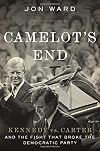
Two flawed men.
Kennedy, carrying the heavy legacy of his patriot martyred brothers, a narcissist womanizer and drunkard yet developing into the 'conscious of his party." And Carter, a devout Christian, a political maverick, a man whose wide grin disguised a bulldog tenacity.
I could see it coming. As author Jon Ward unfolded the story of the 1980 presidential election campaign, I got to the 'ah ha' point of understanding the inevitability of the Democrats losing to the Republican candidate show more Ronald Reagan.
Incumbent President Carter had lost credibility. He was unable to end crippling inflation--do I remember that inflation! 15 1/2% interest rate on our first house! He had done nothing to end high unemployment. The Iran hostage crisis just went on and on. The punitive oil prices caused shortages and the shortages led to riots and violence. Carter had believed that politics could be used for Christian purposes to alleviate suffering. But he never played well with others--Hunter S. Thompson declared him 'one of the three meanest men' he had ever met.
Teddy Kennedy hoped to 'save the soul' of the Democratic party. A deeply troubled man burdened by the Kennedy legacy, the last son standing, he felt he had to run. But he was haunted by one night, a car, a bridge, and a dead woman at Chappaquiddick. Kennedy did the unthinkable, challenging an incumbent president from his own party. He wanted national health care, a stimulation bill, to end the arms race.
Reagan, sixty-nine-years-old, a conservative who had provided Hollywood names to the House UnAmerican Committee, declared for states rights. Carter misjudged him as a lightweight. But Reagan had ease and charm where Carter looked like a coiled snake ready to bite.
Third-party candidate John Anderson had also thrown his hat into the ring.
The working people abandoned the Democratic Party. Carter's own church, the Southern Baptists, abandoned the Democratic Party. The Republicans had found the golden ticket: attracting working-class white Christian voters into the party of rich businessmen. Carter had lackluster support, and even after the convention, Teddy was getting cheers.
Even after Carter won his party's nomination, Kennedy didn't give him his wholehearted support.
The failed president later won the Nobel Peace Prize and his work with Habitat for Humanity is a mene going around social media as an example of presidential values. At the senator's death, Carter admitted Kennedy was one of the "best senators." They redeemed themselves in later life, becoming better people. But in 1980, they managed to cost the Democrats the White House.
Ward's book was a revealing, engrossing read. I ended up taking copious notes. I enjoyed the book on many levels: recalling the social and political climate in the lates 70s and how it affected me; as portraits of two Democratic icons; as a step-by-step retelling of a pivotal political contest; and for addressing the political issues that are still relevant today.
I received a free book from the publisher through Goodreads in exchange for a fair and unbiased review. show less
Kennedy, carrying the heavy legacy of his patriot martyred brothers, a narcissist womanizer and drunkard yet developing into the 'conscious of his party." And Carter, a devout Christian, a political maverick, a man whose wide grin disguised a bulldog tenacity.
I could see it coming. As author Jon Ward unfolded the story of the 1980 presidential election campaign, I got to the 'ah ha' point of understanding the inevitability of the Democrats losing to the Republican candidate show more Ronald Reagan.
Incumbent President Carter had lost credibility. He was unable to end crippling inflation--do I remember that inflation! 15 1/2% interest rate on our first house! He had done nothing to end high unemployment. The Iran hostage crisis just went on and on. The punitive oil prices caused shortages and the shortages led to riots and violence. Carter had believed that politics could be used for Christian purposes to alleviate suffering. But he never played well with others--Hunter S. Thompson declared him 'one of the three meanest men' he had ever met.
Teddy Kennedy hoped to 'save the soul' of the Democratic party. A deeply troubled man burdened by the Kennedy legacy, the last son standing, he felt he had to run. But he was haunted by one night, a car, a bridge, and a dead woman at Chappaquiddick. Kennedy did the unthinkable, challenging an incumbent president from his own party. He wanted national health care, a stimulation bill, to end the arms race.
Reagan, sixty-nine-years-old, a conservative who had provided Hollywood names to the House UnAmerican Committee, declared for states rights. Carter misjudged him as a lightweight. But Reagan had ease and charm where Carter looked like a coiled snake ready to bite.
Third-party candidate John Anderson had also thrown his hat into the ring.
The working people abandoned the Democratic Party. Carter's own church, the Southern Baptists, abandoned the Democratic Party. The Republicans had found the golden ticket: attracting working-class white Christian voters into the party of rich businessmen. Carter had lackluster support, and even after the convention, Teddy was getting cheers.
Even after Carter won his party's nomination, Kennedy didn't give him his wholehearted support.
The failed president later won the Nobel Peace Prize and his work with Habitat for Humanity is a mene going around social media as an example of presidential values. At the senator's death, Carter admitted Kennedy was one of the "best senators." They redeemed themselves in later life, becoming better people. But in 1980, they managed to cost the Democrats the White House.
Ward's book was a revealing, engrossing read. I ended up taking copious notes. I enjoyed the book on many levels: recalling the social and political climate in the lates 70s and how it affected me; as portraits of two Democratic icons; as a step-by-step retelling of a pivotal political contest; and for addressing the political issues that are still relevant today.
I received a free book from the publisher through Goodreads in exchange for a fair and unbiased review. show less
You May Also Like
Associated Authors
Statistics
- Works
- 5
- Also by
- 1
- Members
- 217
- Popularity
- #102,845
- Rating
- 3.9
- Reviews
- 14
- ISBNs
- 13
