
Jeffrey Toobin
Author of The Nine: Inside the Secret World of the Supreme Court
About the Author
Jeffrey Toobin has been a staff writer at The New Yorker since 1993 and is also the legal analyst for ABC News. He received his A.B. from Harvard College and is a magna cum laude graduate of Harvard Law School. Toobin lives in New York City with his wife and two children. (Publisher Provided) show more Jeffrey Toobin was born in New York City in 1960. In 1982, he graduated magna cum laude with a Bachelor of Arts degree in classics, and earned a Truman Scholarship. In 1986, he graduated from Harvard Law School magna cum laude with a J.D. Toobin is the bestselling author of The Nine, Too Close to Call, A Vast Conspiracy, The Run of His Life and American Heiress. He is a staff writer at The New Yorker and the senior legal analyst at CNN. (Bowker Author Biography) show less
Image credit: flickr user eschipul
(cropped by uploader)
(cropped by uploader)
Works by Jeffrey Toobin
American Heiress: The Wild Saga of the Kidnapping, Crimes and Trial of Patty Hearst (2016) 671 copies, 46 reviews
A Vast Conspiracy: The Real Story of the Sex Scandal That Nearly Brought Down a President (1999) 306 copies, 2 reviews
Too Close to Call: The Thirty-Six-Day Battle to Decide the 2000 Election (2001) 240 copies, 1 review
Summary and Analysis of American Heiress: The Wild Saga of the Kidnapping, Crimes and Trial of Patty Hearst (2016) 2 copies
The Obama White House and the Supreme Court: from The Oath (Kindle Single) (A Vintage Short) (2016) 2 copies, 1 review
Associated Works
Tagged
Common Knowledge
- Canonical name
- Toobin, Jeffrey
- Legal name
- Toobin, Jeffrey Ross
- Birthdate
- 1960-05-21
- Gender
- male
- Education
- Harvard University (BA|1982)
Harvard Law School (JD|1986) - Occupations
- lawyer
journalist - Organizations
- The New Yorker
ABC
CNN - Awards and honors
- Emmy (2000)
- Relationships
- Sanders, Marlene (mother)
- Nationality
- USA
- Birthplace
- New York, New York, USA
- Places of residence
- New York, New York, USA
- Map Location
- New York, USA
Members
Reviews
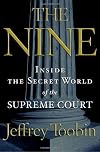
Entertaining read with an overall focus on personalities of the Court and the attempt of the Right, beginning around the time of Reagan's election and the founding of the Federalist Society, to take control of the Court and wrench it in their direction, which showed signs at the time of the book's publication following the 2007 term of finally coming to fruition.
Thanks to this intense effort, it seems impossible to credit that we will ever again be surprised by a Supreme Court justice's show more views on Constitutional issues, as once could happen. A Republican President today would not be allowed by his base to nominate someone like Sandra Day O'Connor, a favorite subject of this book, whose rulings on contentious issues were based not so much on any specific judicial philosophy as by a political interest in finding the "center" of an issue, guided by her usually unerring sense of where a majority of the American people were on it.
This led her, along with Souter and Kennedy, all Republican appointees, to shock the Republican base when they upheld Roe v. Wade, another favorite subject of this book, in the Casey decision, when it seemed more probable that it would be overturned. While O'Connor was driven by public opinion, Kennedy comes across as driven by an eagerness to be the center of attention, and to be dramatic.
There's lots of other good stuff in the book, such as how Ruth Bader Ginsburg believes the Constitution protects a woman's right to have an abortion under a different theory than Roe v. Wade, the Court's various rulings on church and state issues, how the dynamics on the Right doomed the Harriet Miers nomination when once she would have easily been confirmed, and profiling the smooth and ultra-competent poster boy of the Right, John Roberts, whose right-wing bonafides ironically only Miers seemed to have much doubt about.
While the last chapter comes close to concluding that the Right has finally won with Alito replacing O'Connor, giving them a solid 5-4 majority over the liberals, an afterword published to an edition a year later pulls back a bit on this theory, noting that Roberts was giving small signs of hesitation about the Court's shift to the right.
Later, of course, Roberts would provide the deciding vote in ruling Obamacare, the issue that most infuriated the Right since Roe, Constitutional. So, perhaps, the Court and its justices can continue to surprise us. Long may they frustrate the Right's ambitions. show less
Thanks to this intense effort, it seems impossible to credit that we will ever again be surprised by a Supreme Court justice's show more views on Constitutional issues, as once could happen. A Republican President today would not be allowed by his base to nominate someone like Sandra Day O'Connor, a favorite subject of this book, whose rulings on contentious issues were based not so much on any specific judicial philosophy as by a political interest in finding the "center" of an issue, guided by her usually unerring sense of where a majority of the American people were on it.
This led her, along with Souter and Kennedy, all Republican appointees, to shock the Republican base when they upheld Roe v. Wade, another favorite subject of this book, in the Casey decision, when it seemed more probable that it would be overturned. While O'Connor was driven by public opinion, Kennedy comes across as driven by an eagerness to be the center of attention, and to be dramatic.
Kennedy relished his public role and sought out the opinions that would make the newspapers. Seated at his keyboard typing furiously, Kennedy always labored most closely on the sections of opinions that might be quoted in the New York Times.Souter, the ringleader of the effort to save Roe, was altogether different: shy, reclusive, cautious, with a strong respect for Court precedent. Also a famous bachelor.
Over the years, practically everyone Souter knew in Washington, including First Lady Barbara Bush, tried to fix him up. None succeeded. One of his fellow justices once prevailed on Souter to take a woman out to dinner, and she reported back that she thought the evening had gone very well - until the end. Souter took her home, told her what a good time he had, then added: "Let's do this again next year."This 'betrayal' infuriated Antonin Scalia, who is often and easily infuriated, and who writes the most withering and insulting dissents of any justice. Not that his ultra-aggressive behavior often does him much good.
But by the time of Casey it was clear that Scalia's zest, passion, and intelligence did not translate into the most important thing one member of a court of nine could have - influence... [Kennedy] came to be repelled by Scalia's dogmatism.The most extreme member of the court however is not Scalia, but rather Clarence Thomas. Thomas, seemingly forever embittered and angry by his difficulty during his confirmation process, stands unique among the justices in his entirely retro beliefs, wishing to turn back the clock completely to the pre-New Deal days, invalidating such now basic programs and laws as Social Security, a minimum wage, work hours and safety conditions, etc. If the founders didn't themselves know about it or explicitly advocate it, he believes, it's not Constitutional, despite the fact that over 200 years have passed.
Probably the greatest contrast between Thomas and his colleagues was that he fundamentally did not believe in stare decisis, the law of precedent... That no justice had expressed views like his for decades - and that his approach would invalidate much of the work of the contemporary federal government - disturbed Thomas not at all... At an appearance at a New York synagogue in 2005, Scalia was asked to compare his own judicial philosophy with that of Thomas. "I am an originalist," Scalia said, "but I am not a nut."O'Connor tended to view people, events, happenings, as either "attractive" or "unattractive". By the end of her stay on the Court, she found that the GOP of her day was pretty much gone, replaced by the fiercely ideological and right-wing GOP of George W. Bush and Dick Cheney, which she found appallingly "unattractive". Her replacement on the Court by Samuel Alito, a lawyer and judge raised professionally in the Federalist Society whose right-wing ideology could not be doubted, represents this new era.
There's lots of other good stuff in the book, such as how Ruth Bader Ginsburg believes the Constitution protects a woman's right to have an abortion under a different theory than Roe v. Wade, the Court's various rulings on church and state issues, how the dynamics on the Right doomed the Harriet Miers nomination when once she would have easily been confirmed, and profiling the smooth and ultra-competent poster boy of the Right, John Roberts, whose right-wing bonafides ironically only Miers seemed to have much doubt about.
While the last chapter comes close to concluding that the Right has finally won with Alito replacing O'Connor, giving them a solid 5-4 majority over the liberals, an afterword published to an edition a year later pulls back a bit on this theory, noting that Roberts was giving small signs of hesitation about the Court's shift to the right.
Later, of course, Roberts would provide the deciding vote in ruling Obamacare, the issue that most infuriated the Right since Roe, Constitutional. So, perhaps, the Court and its justices can continue to surprise us. Long may they frustrate the Right's ambitions. show less
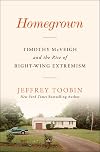
I have wanted to read a thorough account of McVeigh and the 1995 Oklahoma City bombing and this one may be the definitive book on this horrific event. It was the worst terrorist attack on US soil, until 9/11, killing 168 people, many of them children. Jeffrey Toobin has quickly become one of my favorite narrative nonfiction authors. His book on Patty Hearst is also fantastic. What he effectively does, in Homegrown, is that he links this bombing with Trump and the January 6 Capital attacks, show more mapping out the rise of nationalism and right-wing media, which has led to many violent incidents and mass shootings over the past two decades. It is a meticulous and terrifying read. I am not a proponent of the death penalty, but I have no problem making an exception for McVeigh. show less
American Heiress: The Wild Saga of the Kidnapping, Crimes and Trial of Patty Hearst by Jeffrey Toobin
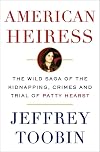
This review is from: American Heiress: The Wild Saga of the Kidnapping, Crimes and Trial of Patty Hearst (Kindle Edition).
I remember the kidnapping of Patty Hearst very clearly. I was 14 years old, and even though I lived in NYC I was terrified. I wrote about it in my diary and followed it on the news. It was riveting. My parents were liberal and anti-war and although we talked about the politics of the SLA and all of the issues connected to that time I was mostly focused on Patty Hearst's show more horrible ordeal.
Jeffrey Toobin's American Heiress goes deep into the details of Patty Hearst's kidnapping and he crafts a compelling and breathtaking narrative of that time. His profiles of the SLA were especially knowledgeable and it deepened my understanding of who they were, individually and collectively. It is the best account I have read about the kidnapping and beautifully and densely written.
And yet, I was disturbed by Mr. Toobin's conclusions. Although he tries to act as if he maintained his neutrality it seems pretty clear that he believes that Ms. Hearst was a willing accomplice. He does not even consider that Ms Hearst may have suffered from PTSD. With all of the the meticulous, peer reviewed research that we now have about the impact of traumatic events on the brain it seen negligent that he did not examine it as a possible reason for her actions. Yes, Mr Toobin did talk about the Stockholm Syndrome but that is old data. Over these past decades we have learned so much more about PTSD and trauma especially as it pertains to sexual abuse and rape. I was so disappointed that this is never looked at in his book. If he did, he might have come to a different, and more complex, conclusion.
Equally disturbing to me was the ending section of his book, his last zing when notes that Patty is now more like her mother which is supposed to be bad since Mrs. Hearst is viewed as staid, rich, spoiled and entitled. I am hard pressed to see how he came up with that idea. And what does it even mean? Patty was a teenager when she was kidnapped, a time when many adolescent daughters are typically trying to separate from their mothers and hold some contempt for them. This often changes when teenage girls become adults as they grow to appreciate their mothers (women's) life. How exactly does Mr. Toobin know the inner workings of their relationship after she came home and how it might have changed Mrs. Hearst as a person and as a mother? Why assume that both Patty and her mother are still locked in their old, old dance. Finally, what if Patty is like her mother. So what? Again, we have absolutely no idea what this even means but his judgement seems flip and cold.
So, excellent writing, beautiful and dense descriptions yet his lack of empathy for Ms. Hearst is quite disturbing.
Thank you to Edelweiss and Penguin Random House for allowing me to review this book for an honest opinion. show less
I remember the kidnapping of Patty Hearst very clearly. I was 14 years old, and even though I lived in NYC I was terrified. I wrote about it in my diary and followed it on the news. It was riveting. My parents were liberal and anti-war and although we talked about the politics of the SLA and all of the issues connected to that time I was mostly focused on Patty Hearst's show more horrible ordeal.
Jeffrey Toobin's American Heiress goes deep into the details of Patty Hearst's kidnapping and he crafts a compelling and breathtaking narrative of that time. His profiles of the SLA were especially knowledgeable and it deepened my understanding of who they were, individually and collectively. It is the best account I have read about the kidnapping and beautifully and densely written.
And yet, I was disturbed by Mr. Toobin's conclusions. Although he tries to act as if he maintained his neutrality it seems pretty clear that he believes that Ms. Hearst was a willing accomplice. He does not even consider that Ms Hearst may have suffered from PTSD. With all of the the meticulous, peer reviewed research that we now have about the impact of traumatic events on the brain it seen negligent that he did not examine it as a possible reason for her actions. Yes, Mr Toobin did talk about the Stockholm Syndrome but that is old data. Over these past decades we have learned so much more about PTSD and trauma especially as it pertains to sexual abuse and rape. I was so disappointed that this is never looked at in his book. If he did, he might have come to a different, and more complex, conclusion.
Equally disturbing to me was the ending section of his book, his last zing when notes that Patty is now more like her mother which is supposed to be bad since Mrs. Hearst is viewed as staid, rich, spoiled and entitled. I am hard pressed to see how he came up with that idea. And what does it even mean? Patty was a teenager when she was kidnapped, a time when many adolescent daughters are typically trying to separate from their mothers and hold some contempt for them. This often changes when teenage girls become adults as they grow to appreciate their mothers (women's) life. How exactly does Mr. Toobin know the inner workings of their relationship after she came home and how it might have changed Mrs. Hearst as a person and as a mother? Why assume that both Patty and her mother are still locked in their old, old dance. Finally, what if Patty is like her mother. So what? Again, we have absolutely no idea what this even means but his judgement seems flip and cold.
So, excellent writing, beautiful and dense descriptions yet his lack of empathy for Ms. Hearst is quite disturbing.
Thank you to Edelweiss and Penguin Random House for allowing me to review this book for an honest opinion. show less
American Heiress: The Wild Saga of the Kidnapping, Crimes and Trial of Patty Hearst by Jeffrey Toobin
American Heiress by Jeffrey Toobin is a 2016 Doubleday publication.
In 1974, I was too young to understand the constant news coverage of the Patty Hearst kidnapping. I do have memories of the story making headlines for what seemed like forever. But, I honestly had no interest in the debate surrounding her guilt or innocence.
As I got older, I developed a curiosity about the case and hoped to find a book on the subject that would not have an agenda attached to it, or was slanted in some way. I show more wanted an in depth analysis of the events, told in a journalistic manner, which is hard to find. There have been countless books, TV documentaries, movies based on actual events, all telling their own version of events.
When I saw how highly rated and well received this book was, I thought this was probably my best chance of learning the real and unbiased facts surrounding the bizarre kidnapping of Patricia Hearst and the aftermath of it.
It may be impossible to write such a book without having already formed an opinion, or for one to develop once the task has begun. Despite his best efforts to keep to the facts in the case, the author’s personal opinion of Patricia is obvious.
Despite that, the book seems to have been meticulously researched, is very well organized, and is told with a clear, strong voice that commands the reader’s attention from start to finish.
For those, like myself, who were not old enough to remember the details of the case, or the climate in the 1970’s. This book will take you back to an era of violence and conflict that in our consciousness, we seem to have forgotten all about. In fact, only a month or so ago, I wrote a book review in which I expressed the opinion that the sixties were turbulent and violent, but once the seventies arrived, things settled down and the violence soon tapered off.
Toobin immediately challenges that concept, pointing out various politically motivated crimes, Watergate, serial killers and assassination attempts on the President, Jim Jones, as well as factions like the Zebra killers. The seventies was not all about dancing under mirror balls after all. In fact, it was one of the most violent decades to date. So, I stand corrected.
So, not only is this book about the Hearst kidnapping, but is also about the state our country was in during the seventies, which apparently was rather bleak.
I was shocked by some of the names that cropped up in this book, those associated with the Hearst family, but also those associated in some ways the SLA ,(Symbionese Liberation Army), of which I had never heard a thing about before now.
The transformation of Patricia Hearst, from being a nineteen year old college student, sheltered and perhaps naïve, only moderately rebellious against her parents, to a gun toting bank robber, spouting off extremist rhetoric, and back again, was shocking, jarring, and amazing.
The transformations she went through are very curious and the general consensus is that she was brainwashed and suffered from ‘Stockholm Syndrome.’
It’s impossible to argue with the facts, and the fact is, Patricia was taken by force, at gunpoint, while she was quite young. Living a pampered, perhaps slightly isolated life, she may have been easily molded by these extremist radicals, but there is enough doubt, based on the facts presented in this book to give one pause.
Although we live through the events of Patricia’s captivity, the trial, the aftermath and fallout of this eighteen month ordeal, in the end, Patricia Heart remains an enigma. It is my understanding that she in no way participated in or endorsed this book, and still lives a relatively quiet life, never again causing controversy or exhibiting any hint of violence.
Yet, I have to wonder if she’s ever expressed or felt remorse or guilt for her role in the deaths of innocent people. I must say, that by the end of the book, the author had me convinced he was right about Patty. But, it is up to you, once you’ve read this accounting of events to make that decision for yourself.
Overall, this is a very thought provoking book, which will appeal to history buffs, as well as true crime readers.
4.5 stars show less
In 1974, I was too young to understand the constant news coverage of the Patty Hearst kidnapping. I do have memories of the story making headlines for what seemed like forever. But, I honestly had no interest in the debate surrounding her guilt or innocence.
As I got older, I developed a curiosity about the case and hoped to find a book on the subject that would not have an agenda attached to it, or was slanted in some way. I show more wanted an in depth analysis of the events, told in a journalistic manner, which is hard to find. There have been countless books, TV documentaries, movies based on actual events, all telling their own version of events.
When I saw how highly rated and well received this book was, I thought this was probably my best chance of learning the real and unbiased facts surrounding the bizarre kidnapping of Patricia Hearst and the aftermath of it.
It may be impossible to write such a book without having already formed an opinion, or for one to develop once the task has begun. Despite his best efforts to keep to the facts in the case, the author’s personal opinion of Patricia is obvious.
Despite that, the book seems to have been meticulously researched, is very well organized, and is told with a clear, strong voice that commands the reader’s attention from start to finish.
For those, like myself, who were not old enough to remember the details of the case, or the climate in the 1970’s. This book will take you back to an era of violence and conflict that in our consciousness, we seem to have forgotten all about. In fact, only a month or so ago, I wrote a book review in which I expressed the opinion that the sixties were turbulent and violent, but once the seventies arrived, things settled down and the violence soon tapered off.
Toobin immediately challenges that concept, pointing out various politically motivated crimes, Watergate, serial killers and assassination attempts on the President, Jim Jones, as well as factions like the Zebra killers. The seventies was not all about dancing under mirror balls after all. In fact, it was one of the most violent decades to date. So, I stand corrected.
So, not only is this book about the Hearst kidnapping, but is also about the state our country was in during the seventies, which apparently was rather bleak.
I was shocked by some of the names that cropped up in this book, those associated with the Hearst family, but also those associated in some ways the SLA ,(Symbionese Liberation Army), of which I had never heard a thing about before now.
The transformation of Patricia Hearst, from being a nineteen year old college student, sheltered and perhaps naïve, only moderately rebellious against her parents, to a gun toting bank robber, spouting off extremist rhetoric, and back again, was shocking, jarring, and amazing.
The transformations she went through are very curious and the general consensus is that she was brainwashed and suffered from ‘Stockholm Syndrome.’
It’s impossible to argue with the facts, and the fact is, Patricia was taken by force, at gunpoint, while she was quite young. Living a pampered, perhaps slightly isolated life, she may have been easily molded by these extremist radicals, but there is enough doubt, based on the facts presented in this book to give one pause.
Although we live through the events of Patricia’s captivity, the trial, the aftermath and fallout of this eighteen month ordeal, in the end, Patricia Heart remains an enigma. It is my understanding that she in no way participated in or endorsed this book, and still lives a relatively quiet life, never again causing controversy or exhibiting any hint of violence.
Yet, I have to wonder if she’s ever expressed or felt remorse or guilt for her role in the deaths of innocent people. I must say, that by the end of the book, the author had me convinced he was right about Patty. But, it is up to you, once you’ve read this accounting of events to make that decision for yourself.
Overall, this is a very thought provoking book, which will appeal to history buffs, as well as true crime readers.
4.5 stars show less
Lists
Awards


You May Also Like


Associated Authors
Statistics
- Works
- 18
- Also by
- 7
- Members
- 5,514
- Popularity
- #4,519
- Rating
- 4.0
- Reviews
- 170
- ISBNs
- 80
- Languages
- 2
- Favorited
- 7


