
Rhiannon Thomas
Author of Long May She Reign
Series
Works by Rhiannon Thomas
Tagged
Common Knowledge
- Gender
- female
- Nationality
- United Kingdom
- Associated Place (for map)
- United Kingdom
Members
Reviews

Oh, Aurora, you had me, right up till the second you killed ALL the dragons! Why?!! (she asks as she drops to her knees, screaming at the heavens.) All to save your kingdom and your people. Sigh. Sure you saved the one but still...ugh.
My biggest issue with A Wicked Thing was how passive Aurora seemed for the majority of the story. I understood why she was the way she was, but it wasn't all that interesting. Not the case at all in Kingdom of Ashes. The book opens with Aurora on the run, show more hunted by the King, and struggling to control her magic.
I loved the dynamic between Aurora and Finnegan (even if I found him a little too arrogant for my tastes), and I loved discovering the kingdom of Vanhelm along with Aurora. Dragons? Yes, please! Throw in a (not totally unpredictable) mystery surrounding Aurora's magic, Celestine, and the bargain Aurora's mother made -- I thought I was safely on my way to an ending I'd love.
I couldn't stop turning the pages: Aurora facing the first dragon; the rose left on her pillow with the creepy note; descending into the scary, dark cave and facing another dragon; treacheryby Lucas resulting in potentially fatal injuries to Finnegan . As a result Aurora does the one thing she KNOWS she shouldn't do. Strike one. During the trade she partakes of the "thing" rather than fighting to take it away. Strike two. Fast forward to the climax and her answer to saving the kingdom and controlling her magic is to destroy all the dragons ! Strike three. That's when I stopped liking her, stopped caring about the story, and basically wanted her to die. Harsh, I know, but that's how I felt.
After a few days' contemplation, Kingdom of Ashes was better than its predecessor in so many ways that I have to give it a full 4 stars... even though I loathe Aurora for what she chose to do at the end. show less
My biggest issue with A Wicked Thing was how passive Aurora seemed for the majority of the story. I understood why she was the way she was, but it wasn't all that interesting. Not the case at all in Kingdom of Ashes. The book opens with Aurora on the run, show more hunted by the King, and struggling to control her magic.
I loved the dynamic between Aurora and Finnegan (even if I found him a little too arrogant for my tastes), and I loved discovering the kingdom of Vanhelm along with Aurora. Dragons? Yes, please! Throw in a (not totally unpredictable) mystery surrounding Aurora's magic, Celestine, and the bargain Aurora's mother made -- I thought I was safely on my way to an ending I'd love.
I couldn't stop turning the pages: Aurora facing the first dragon; the rose left on her pillow with the creepy note; descending into the scary, dark cave and facing another dragon; treachery
After a few days' contemplation, Kingdom of Ashes was better than its predecessor in so many ways that I have to give it a full 4 stars... even though I loathe Aurora for what she chose to do at the end. show less
(Originally reviewed at thelibraryladies.com.)
Everything about this book description sounded like something that would be right up my alley. And other than a bit of confusion about the genre (fantasy?), I was not disappointed!
Freya is 20-something in line to the throne, but after a mass poisoning, somehow queenship still manages to fall on her shoulders. Now, not only does she, a natural introvert who only wants to work on her science experiments, have to figure out how to rule a country, show more but she needs to unravel the mystery behind the poisoning before she’s next. No killer would set out to put her on the throne, after all!
This was such a simple story, and I loved it for this very reason! Within the framework of a political drama, Freya herself is allowed to shine as the unique heroine she is. Often we’re presented with this archetypal character arc: shy wallflower through plot devices learns she’s super special and beautiful and ends the book as the bad-ass she was truly meant to be, thus shedding all of her original shyness. I’ve never liked or bought this story arc for a character. As an introvert myself, that’s just not how it works, and I’m kind of offended whenever having a quieter disposition is presented as something that must be “overcome” to become the bad-ass warrior in the end. And it has been well-documented on this blog that I love me some bad-ass women characters! But that doesn’t mean that every character should become this!
Freya’s journey is not to become a better person by the end, but to truly appreciate that the changes she brings to the country as a different ruler with different strengths, manners, and priorities is ultimately just what it might need. Mental health is a subject that is brought up a few times in this book, both for Freya who suffers from anxiety attacks and for another noble lady whom Freya quickly befriends who suffers from some form of depression. While neither of these subjects were tackled in any depth, neither character was demonized for the way that they chose to deal with their own mental health and the fact that they each needed to make its management a priority in their own way. For Freya, this meant the comfort of straightforward and logical scientific research.
Given this connection to Freya’s anxiety, I appreciated that her research wasn’t simply set up in the beginning as “oh, here’s a special thing about her to make her stand apart from all the other fantasy YA heroines but doesn’t actually play any part in the story” but as an aspect of Freya’s character that is continually reinforced throughout the story. Not only does she use her knowledge and abilities to solve the mystery, but we see how she will continue to make room for this important aspect of herself as a ruler going forward. Science is her retreat and her method for calming her mind, and I loved that this was so fully embraced. Further, the characters who are important to her embrace this as well. Not only appreciating that Freya is always going to make scientific research a priority in her life and one that they will have to live aside, but actually joining her and learning from her.
These side characters were also key to my enjoyment of the novel. The cast is a manageable size, both small enough that I felt like I was able to get to know many of them well, but also large enough to hold up the mystery itself with several viable suspects. Many of them were also delightfully written in shades of grey. There are few obviously “good” characters, like Freya’s best friend from the beginning (Yay for female friendships! There were several in this book, and I loved that ultimately these relationships were given more attention than the romantic story line, which is fairly minimal, all told) and, obviously, her cat whom she adores (she risks her life to save the cat at one point which I completely understand!) But several characters on her much-reduced council are presented with their own compelling reasons for either wanting to support her rule or work quietly against it. Freya’s own father is set up as a bit of a grey character. He clearly loves his daughter, but his ambition is what lead to his rise in court from a lowly merchant, and Freya questions where this ambition could ultimately lead. With all of this, I was truly surprised by who the culprit ultimately turned out to be.
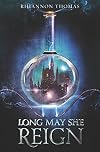
I typically try to avoid reading many other reviews for books before I write my own, but with this one I did want to see what other reviewers were doing when slotting this book in a genre. It is presented as a fantasy novel, but for the life of me I can’t really understand why. Sure, it’s set in an imaginary kingdom…but that’s it. There is no magic that is referenced, no creatures that don’t exist in our world, nothing really. And I feel like this was a bit of a failing in its marketing. This book is more a political/historical YA novel, and by setting it up as a YA fantasy (a genre that is booming beyond belief right now), I feel like a lot of readers came out of it disappointed. As I love these genres as well, I wasn’t perturbed by it. But both the description and cover make it seem like this is somehow a fantasy novel, and for readers who are mostly there for the magic and romance that is usually found in YA fantasy…you’re kind of setting the book up to fail by not targeting the correct audience. Sure, publishers want the extra bang for their buck that comes from jumping on a popular genre bandwagon, but is it worth the backlash when readers discover the truth? I never like this type of marketing tomfoolery, as I feel like this is a strong novel for what it is and that’s now being undercut due to these silly tactics.
But if you are a reader who enjoys YA political/historical novels that focus in on science rather than magic, definitely check this one out! show less
Everything about this book description sounded like something that would be right up my alley. And other than a bit of confusion about the genre (fantasy?), I was not disappointed!
Freya is 20-something in line to the throne, but after a mass poisoning, somehow queenship still manages to fall on her shoulders. Now, not only does she, a natural introvert who only wants to work on her science experiments, have to figure out how to rule a country, show more but she needs to unravel the mystery behind the poisoning before she’s next. No killer would set out to put her on the throne, after all!
This was such a simple story, and I loved it for this very reason! Within the framework of a political drama, Freya herself is allowed to shine as the unique heroine she is. Often we’re presented with this archetypal character arc: shy wallflower through plot devices learns she’s super special and beautiful and ends the book as the bad-ass she was truly meant to be, thus shedding all of her original shyness. I’ve never liked or bought this story arc for a character. As an introvert myself, that’s just not how it works, and I’m kind of offended whenever having a quieter disposition is presented as something that must be “overcome” to become the bad-ass warrior in the end. And it has been well-documented on this blog that I love me some bad-ass women characters! But that doesn’t mean that every character should become this!
Freya’s journey is not to become a better person by the end, but to truly appreciate that the changes she brings to the country as a different ruler with different strengths, manners, and priorities is ultimately just what it might need. Mental health is a subject that is brought up a few times in this book, both for Freya who suffers from anxiety attacks and for another noble lady whom Freya quickly befriends who suffers from some form of depression. While neither of these subjects were tackled in any depth, neither character was demonized for the way that they chose to deal with their own mental health and the fact that they each needed to make its management a priority in their own way. For Freya, this meant the comfort of straightforward and logical scientific research.
Given this connection to Freya’s anxiety, I appreciated that her research wasn’t simply set up in the beginning as “oh, here’s a special thing about her to make her stand apart from all the other fantasy YA heroines but doesn’t actually play any part in the story” but as an aspect of Freya’s character that is continually reinforced throughout the story. Not only does she use her knowledge and abilities to solve the mystery, but we see how she will continue to make room for this important aspect of herself as a ruler going forward. Science is her retreat and her method for calming her mind, and I loved that this was so fully embraced. Further, the characters who are important to her embrace this as well. Not only appreciating that Freya is always going to make scientific research a priority in her life and one that they will have to live aside, but actually joining her and learning from her.
These side characters were also key to my enjoyment of the novel. The cast is a manageable size, both small enough that I felt like I was able to get to know many of them well, but also large enough to hold up the mystery itself with several viable suspects. Many of them were also delightfully written in shades of grey. There are few obviously “good” characters, like Freya’s best friend from the beginning (Yay for female friendships! There were several in this book, and I loved that ultimately these relationships were given more attention than the romantic story line, which is fairly minimal, all told) and, obviously, her cat whom she adores (she risks her life to save the cat at one point which I completely understand!) But several characters on her much-reduced council are presented with their own compelling reasons for either wanting to support her rule or work quietly against it. Freya’s own father is set up as a bit of a grey character. He clearly loves his daughter, but his ambition is what lead to his rise in court from a lowly merchant, and Freya questions where this ambition could ultimately lead. With all of this, I was truly surprised by who the culprit ultimately turned out to be.
I typically try to avoid reading many other reviews for books before I write my own, but with this one I did want to see what other reviewers were doing when slotting this book in a genre. It is presented as a fantasy novel, but for the life of me I can’t really understand why. Sure, it’s set in an imaginary kingdom…but that’s it. There is no magic that is referenced, no creatures that don’t exist in our world, nothing really. And I feel like this was a bit of a failing in its marketing. This book is more a political/historical YA novel, and by setting it up as a YA fantasy (a genre that is booming beyond belief right now), I feel like a lot of readers came out of it disappointed. As I love these genres as well, I wasn’t perturbed by it. But both the description and cover make it seem like this is somehow a fantasy novel, and for readers who are mostly there for the magic and romance that is usually found in YA fantasy…you’re kind of setting the book up to fail by not targeting the correct audience. Sure, publishers want the extra bang for their buck that comes from jumping on a popular genre bandwagon, but is it worth the backlash when readers discover the truth? I never like this type of marketing tomfoolery, as I feel like this is a strong novel for what it is and that’s now being undercut due to these silly tactics.
But if you are a reader who enjoys YA political/historical novels that focus in on science rather than magic, definitely check this one out! show less

Imagine waking up one day to find that your family is long dead, you've been asleep for a hundred years, and you're now expected to marry the complete stranger who just woke you up by kissing you. That's Aurora's life in a nutshell. While she slept, the kingdom moved on, power changing hands in dramatic and tempestuous ways while Aurora slumbered in the sealed tower, visited only occasionally by princes hoping to wake her with a kiss. Rodric, the one who finally achieves this feat, is the show more sweet but unexciting son of the current rulers, who plan to use Aurora's waking to solidify their political position. He's not the only prince on hand, though, as Prince Finnegan, heir to a neighboring kingdom, pays a visit to welcome (and flirt with) Aurora. Finnegan is everything Rodric is not: dashing, adventurous, charming. Meanwhile, revolution is brewing among the common people, as Aurora learns when she sneaks out of the castle in disguise. She meets a handsome revolutionary who makes her question the current king's rule and his treatment of the common people. But Aurora is a figurehead, a puppet -- and, thanks to her overprotective parents who locked her up due to her curse, that's all she's ever been. Can she change things by stepping away from the fairy-tale ending with Rodric -- or would she be better off trying to change things by staying with him and working at making things better when she is his queen?
I liked this Sleeping Beauty retelling, but I didn't love it. There's plenty of good stuff in terms of court intrigue, and some of the plot twists did surprise me. On the other hand, I think some readers will find that the pacing lags as Aurora spends a great deal of time trying to decide what to do. In my opinion, this suits her character and her circumstances, but readers looking for a fast and gripping read might disagree. Also, it's obvious from the somewhat inconclusive ending that this will be the first book in a series. Will I read on? Perhaps, if I come across the sequel and I'm in the mood to see what becomes of Aurora. Do I recommend this? Yes, but probably only to devoted fans of the genre, not to those who are trying out fairy tale retellings for the first time. show less
I liked this Sleeping Beauty retelling, but I didn't love it. There's plenty of good stuff in terms of court intrigue, and some of the plot twists did surprise me. On the other hand, I think some readers will find that the pacing lags as Aurora spends a great deal of time trying to decide what to do. In my opinion, this suits her character and her circumstances, but readers looking for a fast and gripping read might disagree. Also, it's obvious from the somewhat inconclusive ending that this will be the first book in a series. Will I read on? Perhaps, if I come across the sequel and I'm in the mood to see what becomes of Aurora. Do I recommend this? Yes, but probably only to devoted fans of the genre, not to those who are trying out fairy tale retellings for the first time. show less

Freya was never meant to be queen. She's 23rd in line to the throne, and despises court life. She'd rather be in her laboratory, making scientific discoveries. However, when the entire court is poisoned in one fell swoop at an event she only missed because she left early, she finds herself on the throne. Can she become a successful queen? Her first task, she decides, is solving the mystery of who would want to kill the whole court. Is she next on their list?
I went into this expecting show more fantasy, and was surprised at the mystery element, and at Freya's obsession with science. Both are a plus, just unexpected. There's really not a lot of fantasy to this story, just that it's set in a muddled kind of European-style world with kings and queens and castles, and a pantheon of gods that may or may not be real in-world. There are also beakers and pipettes and papers that can be used to test acid, and clearly the lines of succession include women as well as men. The naming conventions are a mishmash, not really tied to any specific linguistic lineage. For instance, seeing that the main character's name is Freya, you might expect Norse roots, but there are none that I could detect -- and then, the king's illegitimate son is named Fitzroy, and that has Anglo-Norman roots. All of the worldbuilding is like that, and it gives the book a generic flavor over all.
There's a bit of YA angst -- no love triangle, thank goodness, and some strong female friendships. Freya does some impulsive things and makes some dumb mistakes. I didn't love it and I didn't hate it, but I don't really see myself recommending it. show less
I went into this expecting show more fantasy, and was surprised at the mystery element, and at Freya's obsession with science. Both are a plus, just unexpected. There's really not a lot of fantasy to this story, just that it's set in a muddled kind of European-style world with kings and queens and castles, and a pantheon of gods that may or may not be real in-world. There are also beakers and pipettes and papers that can be used to test acid, and clearly the lines of succession include women as well as men. The naming conventions are a mishmash, not really tied to any specific linguistic lineage. For instance, seeing that the main character's name is Freya, you might expect Norse roots, but there are none that I could detect -- and then, the king's illegitimate son is named Fitzroy, and that has Anglo-Norman roots. All of the worldbuilding is like that, and it gives the book a generic flavor over all.
There's a bit of YA angst -- no love triangle, thank goodness, and some strong female friendships. Freya does some impulsive things and makes some dumb mistakes. I didn't love it and I didn't hate it, but I don't really see myself recommending it. show less
Lists
Awards

You May Also Like


Statistics
- Works
- 7
- Members
- 864
- Popularity
- #29,636
- Rating
- 3.4
- Reviews
- 47
- ISBNs
- 31
- Languages
- 2