
Henry Farrell (2)
Author of Underground Empire: How America Weaponized the World Economy
For other authors named Henry Farrell, see the disambiguation page.
Works by Henry Farrell
Associated Works
Tagged
Common Knowledge
- Gender
- male
- Education
- University College Dublin (M.A.|Politics)
Georgetown University (Ph.D.|Government|2000) - Nationality
- Ireland
- Associated Place (for map)
- Ireland
Members
Reviews
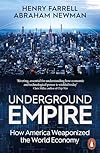
Although it is now only February, I expect that this book will be top of my list of most important books read in 2026. The authors explain how the current construction of the internet and financial networks has provided America with an unprecedented ability to snoop on everyone in the world but also to invoke financial punishments on friends and foes alike. The book has become more prescient in recent months as Europe realizes that it is essential to extract itself from America's technical show more and financial web.
The first chapters deals with the evolution of the global internet and explains that the network's practice of including vast interconnection points on US soil has allowed the US to eavesdrop on all internet connections. The authors explain that this was not some deliberate scheme of the US government but was, instead, the result of some very logical business and technical decisions made by the companies that built the global internet networks. Although the exploitation of the networks for eavesdropping began earlier, the authors contend the nobody was too bothered about this until Edward Snowden's revelations made the extent of the eavesdropping so apparent.
The next chapters then look at the financial networks like SWIFT and how US control over so much of the global financial network was used to attack Huawei. The authors provide a very detailed account of how the US acted in this case. All of this resulted in China exploring counter strategies. Unfortunately for China, they found that developing alternate networks was not easy. Similarly, the dependence of the EU on these networks is also discussed in detail.
Russia's invasion of Ukraine caused Europe and the US to exploit more possibilities for sanctions and financial controls targeting Russia. Although these measures were targeted at Russia, Europe began to realize how vulnerable they were as well. In addition, the dependence on Russian oil and gas were revealed as critical vulnerabilities. The sanctions placed against Iran during the first Trump administration showed how easily the US could force Europe to act against what they saw as their own best interests. This led Europe to consider how they could develop some type of strategic autonomy; however, Europe did not make much progress. Europe also found that free trade was slowly dying as well.
One fascinating chapter describes the dilemmas facing US firms like Microsoft who wanted to faithfully serve their global customers but were being coopted by the US government to exert controls over non-American entities. The crypto industry is also discussed in detail.
The use of America's control of the internet and financial networks during the past few years has resulted in many nations and companies pushing back as much as they can and exploring ways to become more independent. Nations are also developing counter-measure strategies that they can use against the US. The authors see the danger of a spiral of economic confrontation that could have catastrophic consequences. Because the book was published in 2023, before the escalations of Trump's second term, the authors express confidence that nations could develop a international framework similar to the framework developed to control nuclear weapons. Reading this book in 2026, makes their optimism seem naive. An updated edition of this book would be very welcome. show less
The first chapters deals with the evolution of the global internet and explains that the network's practice of including vast interconnection points on US soil has allowed the US to eavesdrop on all internet connections. The authors explain that this was not some deliberate scheme of the US government but was, instead, the result of some very logical business and technical decisions made by the companies that built the global internet networks. Although the exploitation of the networks for eavesdropping began earlier, the authors contend the nobody was too bothered about this until Edward Snowden's revelations made the extent of the eavesdropping so apparent.
The next chapters then look at the financial networks like SWIFT and how US control over so much of the global financial network was used to attack Huawei. The authors provide a very detailed account of how the US acted in this case. All of this resulted in China exploring counter strategies. Unfortunately for China, they found that developing alternate networks was not easy. Similarly, the dependence of the EU on these networks is also discussed in detail.
Russia's invasion of Ukraine caused Europe and the US to exploit more possibilities for sanctions and financial controls targeting Russia. Although these measures were targeted at Russia, Europe began to realize how vulnerable they were as well. In addition, the dependence on Russian oil and gas were revealed as critical vulnerabilities. The sanctions placed against Iran during the first Trump administration showed how easily the US could force Europe to act against what they saw as their own best interests. This led Europe to consider how they could develop some type of strategic autonomy; however, Europe did not make much progress. Europe also found that free trade was slowly dying as well.
One fascinating chapter describes the dilemmas facing US firms like Microsoft who wanted to faithfully serve their global customers but were being coopted by the US government to exert controls over non-American entities. The crypto industry is also discussed in detail.
The use of America's control of the internet and financial networks during the past few years has resulted in many nations and companies pushing back as much as they can and exploring ways to become more independent. Nations are also developing counter-measure strategies that they can use against the US. The authors see the danger of a spiral of economic confrontation that could have catastrophic consequences. Because the book was published in 2023, before the escalations of Trump's second term, the authors express confidence that nations could develop a international framework similar to the framework developed to control nuclear weapons. Reading this book in 2026, makes their optimism seem naive. An updated edition of this book would be very welcome. show less
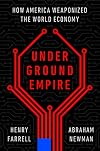
I have been reading about the way America uses sanctions and other means to browbeat other countries. I wasn't aware that the US government bullies businesses to align with its security and geopolitical interests.
This book is a simple demonstration of the silent battle that takes place underground, far from the public eye. A complex web of activities seethes below the surface, forcing countries and corporations to comply with a malevolent empire.
The authors did not delve deep into the show more possible repercussions of this behaviour. Will the trade and technology wars become real wars? show less
This book is a simple demonstration of the silent battle that takes place underground, far from the public eye. A complex web of activities seethes below the surface, forcing countries and corporations to comply with a malevolent empire.
The authors did not delve deep into the show more possible repercussions of this behaviour. Will the trade and technology wars become real wars? show less
This tells how the US has weaponized the economy through the internet connections that run through the US.
I found this book eye-opening. I did not know anything about how the internet has choke holds in certain areas where the information is gathered then forwarded. The United States has a lot of these hub areas, and the government has used them to spy on people, businesses, and counties. I learned a lot. I found it interesting how a country or business can quickly become a "persona non show more gratis" to the whole world with a threat by the US. There are court cases about the spying. Other countries, China in particular, are trying to find ways past these US choke holds but so far have not been able to come up with a new network.
This book was written simply enough that someone with no knowledge or understanding of the internet and spying could easily understand it. I found by the end of a paragraph I could grasp an idea, sometimes re-reading the paragraph so it made sense. I think all people need to read this. Fascinating! show less
I found this book eye-opening. I did not know anything about how the internet has choke holds in certain areas where the information is gathered then forwarded. The United States has a lot of these hub areas, and the government has used them to spy on people, businesses, and counties. I learned a lot. I found it interesting how a country or business can quickly become a "persona non show more gratis" to the whole world with a threat by the US. There are court cases about the spying. Other countries, China in particular, are trying to find ways past these US choke holds but so far have not been able to come up with a new network.
This book was written simply enough that someone with no knowledge or understanding of the internet and spying could easily understand it. I found by the end of a paragraph I could grasp an idea, sometimes re-reading the paragraph so it made sense. I think all people need to read this. Fascinating! show less
Henry Farrell and Abraham Newman are professors of political science, and writers interested in institutions and in international politics.
Underground Empire (2023) is a reasonably short but book but a complicated book about complicated ideas. It is very informative.
Underground Empire describes the communications infrastructure over which internet traffic passes as an invisible empire which is within the USA or controlled by American corporations as an empire.
It mainly discusses the history show more of the use of economic sanctions by the US government against foreign governments, companies, and financial institutions, and individuals. Underground Empire also discusses the role of the use of US currency in international trade, banking institutions vulnerable to US sanctions in the movement of money, and the ability of the USA to search internet traffic passing though the USA or over US assets on the Internet.
It cites The Economic Weapon (2022) by Nicholas Mulder in support of the idea that American sanctions have become a weapon to advance the interests of the USA against the interests of other states in international relations. The authors note that foreign governments, businesses and individuals may be entitled to some measure of due process under American law but have little recourse in the American courts and have no effective recourse in international law or international trade law.
Underground Empire discusses the movement of information on the Internet, and surveillance of "foreign" information by the US government, and the reluctance of US politicians to limiting to give up this method of gathering information - or even to admit that the US government uses it.
The history of the use of sanctions includes the USA's campaign(s) against the Chinese company Huawei which included restrictions of the sale of intellectual property used to design and manufacture semi-conductors (computer chips), pressure on Taiwanese chip manufacturers, international criminal proceedings in the USA, and extradition proceedings in Canada. The USA used sanctions against Russia and Russian persons after the Russian invasion of Ukraine in 2022.
Underground Empire discusses efforts by other national governments to avoid surveillance and the use of economic institutions that are subject to American sanctions. The book notes that American policy makers were able to manage American interests during the Cold War after starting to plan strategically by dealing with the Soviet Union as "another powerful actor with its own interests that America had to live with."
The book has some observations on the difference between American assumptions about the number of nuclear weapons the Soviet Union had, and the real numbers. The book mades the point that the Soviet Union and the USA were economically independent during the Cold War, while the are numerous economic interdependencies in the modern world in trade and supply chains, which makes the use of sanctions much riskier than American policy makers realize.
The USA seems to unable to shift in its thinking about the Interests of China, Russia, Europe and other states or to make the first move to starting international discussion of rules about national economic security or international communications over the internet.
In part, American policy has to contend with efforts by American business interests to avoid policies that would conscript businesses into fighting climate change and the efforts by some business people seek to secede from American government, carve out privately governed areas and create private digital currency. In part, Americans have used the internet to reinforce their sense of knowledge, competence, independence, confidence and entitlement to have their way.. show less
Underground Empire (2023) is a reasonably short but book but a complicated book about complicated ideas. It is very informative.
Underground Empire describes the communications infrastructure over which internet traffic passes as an invisible empire which is within the USA or controlled by American corporations as an empire.
It mainly discusses the history show more of the use of economic sanctions by the US government against foreign governments, companies, and financial institutions, and individuals. Underground Empire also discusses the role of the use of US currency in international trade, banking institutions vulnerable to US sanctions in the movement of money, and the ability of the USA to search internet traffic passing though the USA or over US assets on the Internet.
It cites The Economic Weapon (2022) by Nicholas Mulder in support of the idea that American sanctions have become a weapon to advance the interests of the USA against the interests of other states in international relations. The authors note that foreign governments, businesses and individuals may be entitled to some measure of due process under American law but have little recourse in the American courts and have no effective recourse in international law or international trade law.
Underground Empire discusses the movement of information on the Internet, and surveillance of "foreign" information by the US government, and the reluctance of US politicians to limiting to give up this method of gathering information - or even to admit that the US government uses it.
The history of the use of sanctions includes the USA's campaign(s) against the Chinese company Huawei which included restrictions of the sale of intellectual property used to design and manufacture semi-conductors (computer chips), pressure on Taiwanese chip manufacturers, international criminal proceedings in the USA, and extradition proceedings in Canada. The USA used sanctions against Russia and Russian persons after the Russian invasion of Ukraine in 2022.
Underground Empire discusses efforts by other national governments to avoid surveillance and the use of economic institutions that are subject to American sanctions. The book notes that American policy makers were able to manage American interests during the Cold War after starting to plan strategically by dealing with the Soviet Union as "another powerful actor with its own interests that America had to live with."
The book has some observations on the difference between American assumptions about the number of nuclear weapons the Soviet Union had, and the real numbers. The book mades the point that the Soviet Union and the USA were economically independent during the Cold War, while the are numerous economic interdependencies in the modern world in trade and supply chains, which makes the use of sanctions much riskier than American policy makers realize.
The USA seems to unable to shift in its thinking about the Interests of China, Russia, Europe and other states or to make the first move to starting international discussion of rules about national economic security or international communications over the internet.
In part, American policy has to contend with efforts by American business interests to avoid policies that would conscript businesses into fighting climate change and the efforts by some business people seek to secede from American government, carve out privately governed areas and create private digital currency. In part, Americans have used the internet to reinforce their sense of knowledge, competence, independence, confidence and entitlement to have their way.. show less
Lists
Awards


You May Also Like
Associated Authors
Statistics
- Works
- 8
- Also by
- 2
- Members
- 169
- Popularity
- #126,056
- Rating
- 3.8
- Reviews
- 4
- ISBNs
- 51
- Languages
- 5