

Sarah Maria Griffin
Author of Spare and Found Parts
About the Author
Works by Sarah Maria Griffin
Strange Is the Light 3 copies
Tagged
Common Knowledge
- Birthdate
- 1988
- Gender
- female
- Education
- Dún Laoghaire Institute of Art, Design and Technology
NUI Galway - Occupations
- reporter
- Awards and honors
- European Science Fiction Awards Chrysalis Award (2017)
- Nationality
- Ireland
- Birthplace
- Dublin, Ireland
- Places of residence
- Dublin, Ireland
- Associated Place (for map)
- Dublin, Ireland
Members
Reviews
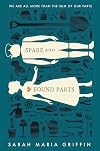
"From my heart and from my hand and / Why don't people understand my intention?"
(Full disclosure: I received an electronic ARC for review through Edelweiss.)
There are three rules:
1. The sick in the Pale, the healed in the Pasture.
2. Contribute, at all cost.
3. All code is blasphemy.
###
It came together at her will, and a cocktail of delight and pride swelled inside her. She would hold this hand. She would be held by this hand.
###
“I am your maker,” you say. I open my eyes again and ... show more love. Yes, this is love. Your hand is wrapped around mine. This is what it is to be alive.
###
-- 3.5 stars --
Nell Crane's life is tick-tick-ticking away around her. There is the audible, literal tick: the sound of her robotic heart beating. The sound that sustains her life - at least for now - but also sets her apart from her peers. Though almost all of the residents of the Pale are missing limbs, Nell is the only one whose deformity is hidden on the inside. And, unlike the biomechanical prostheses worn by her peers, the failure of Nell's augmentation could mean her death.
There's also the metaphorical tick of time, spelled out in painful detail for Nell by her once-beloved (now insufferable) Nan. All citizens of Black Water City are expected to contribute to the city's progress in some way. Instead of traditional schooling, kids take on apprenticeships; by their late teen years, they're expected present a contribution to the city council; marry a compatible someone and help with his or her project; move out to the Pasture; or do manual labor on Kate, the city's answer to the Statue of Liberty. Contributions run the gamut, from nightclubs and bakeries to boost morale, to more practical projects, like health care and scientific advancements.
Nell's parents did both: Kate is her late mother's baby, Nell's other sister; and Dr. Julius Crane invented the prosthetic limbs that everyone so proudly wears today. Their legacy is the albatross wrapped tightly around Nell's neck, slowly but surely strangling her. How can she - a cranky, moody loner - possibly live up to the Sterling-Crane family name?
The answer comes in a plastic mannequin hand, washed up on the shore of the Livia River; in a herd of ancient elephants, genetically altered to have an impossibly long life span; and in contraband electronic music, recovered in secret in the Lighthouse. Nell will build her own boy, out of spare and found (or should I say scavenged and stolen?) parts. He will be her contribution - and her only friend. He will communicate with the long-dead computers and share his knowledge with the citizens of Black Water City. A sentient computer in boy form, he will show them that there's nothing to fear in letters and number and code. Together, they just might change the world.
So this is a really interesting book. The plot's a lot more complicated than I'd expected, in ways both good and bad.
Nell's a misanthropic little firecracker. While I both liked and could identify with her, I didn't entirely understand why her particular biomechanical part would single her out for such fear and ridicule. If anything, the fact that you can't see her synthetic part should make Nell a little more normal; healed and fit for the Pasture, no? Or maybe it was the obtrusive ticking and long, angry scar that was really the issue?
I absolutely loved the interactions between Nell and Io; these scenes made the book for me. The bulk of the story is written in third-person/present tense, but these chapters are interspersed with much shorter scenes that challenge the reader to live difference episodes of Nell's life as Nell; to see things from her perspective, in the most fundamental sense. ("The first thing is you are ten years old. Your last summer in the Pasture is rose and tender until it is sour and wrong.")
These chapters are a wonderful surprise, but things get even better when the focus shifts to Nell's android, Io. As exciting a challenge as it is to be asked to live another person's life, imagine experiencing the world as another being: a newly born sentient computer. Io is all kinds of awesome, and his childlike wonder as he processes this new world around him is charming AF. Seriously, I just wanted to hug and squeeze and dance with him. ("Let's hear it for the boy / Let's give the boy a hand / Let's hear it for my baby / You know you go to understand.")
Music, in case you haven't guessed as much, is a large part of the story. The death of the computers meant the death of a culture - or many of them, depending on what happened outside of Nell's little island - including music. The very first computer Io reads is a "music box" containing a hundred thousand songs (give or take), which Io can play back for Nell. Though she loves these strange electronic songs, Nell's ignorance (like Io's wonder) is just the cutest:
“What is that song?” she ventured, hesitant to interrupt. Io turned to her, a mottled scrubber in his left hand and a rough brown mug in his right, dripping soapsuds, tiny bubbles, iridescent in the light streaming into the kitchen.
He cocked his head a little and replied, “‘Life on Mars,’ David Bowie, track four, side A, Hunky Dory, 1974.”
Nell was dumbstruck for a moment, then couldn't help laughing. "I have no idea what you just said. That is the longest song name I have ever heard!"
It's not entirely accurate to say that Io is Nell's first and only friend; there's also Ruby Underwood, who lives across the way, and Oliver Kelly, who apprenticed with Dr. Julian Crane alongside Nell (and much to her annoyance) and has propositioned her some nineteen times in the interim. Okay, so Oliver isn't a friend, though I guess he could be (in the theoretical sequel, anyway). But he hangs around a lot and generally makes a nuisance of himself.
Though Nell is steadfast in her rejection of Oliver, I worried for most of the book that she would cave by story's end and the two would live happily ever after (gag!)...thus reinforcing the popular tropes that stalking is romantic; "no" means "yes" (or, at the very least, "ask again later"); and it's perfectly fine for dudes to ignore a woman's wishes. All of which contributes to rape culture and exists on the same continuum as more "harmful" transgressions, including sexual assault.
THANKFULLY, Nell and Oliver do not end up together (though there's a great twist that really throws this effed up dynamic into stark relief). Major bonus points to Griffin for that.
What I didn't like: the world-building, which is hella confusing. The story takes place one hundred-odd years in the future, in the wake of a rather weird and puzzling apocalypse. Apparently the vast majority of humans became too reliant on computers - which were just becoming sentient - so another group of people (the world governments, maybe?) sent out a electromagnetic pulse to kill the machines (the "Turn")? And then there was some sort of an epidemic that poisoned the environment and caused birth defects in humans? And the animals are mostly all gone too? Except for elephants, who somehow survive on a small island even though they require vast spaces to roam and travel up to thirty miles a day? (But I digress.) And we can't resurrect computers due to possible aftershocks? Huh?
Also, there's a Pasture for healthy, healed, and mystical people (healed? do some people spontaneously regrow limbs?) and the Pale for manual laborers and those sporting "gross" computer parts. Yet there isn't any resentment among the worker drones ... who are basically maginalized by the Pasture peeps for their disabilities? Does not pass the smell test.
http://www.easyvegan.info/2016/10/05/spare-and-found-parts-by-sarah-maria-griffi... show less
(Full disclosure: I received an electronic ARC for review through Edelweiss.)
There are three rules:
1. The sick in the Pale, the healed in the Pasture.
2. Contribute, at all cost.
3. All code is blasphemy.
###
It came together at her will, and a cocktail of delight and pride swelled inside her. She would hold this hand. She would be held by this hand.
###
“I am your maker,” you say. I open my eyes again and ... show more love. Yes, this is love. Your hand is wrapped around mine. This is what it is to be alive.
###
-- 3.5 stars --
Nell Crane's life is tick-tick-ticking away around her. There is the audible, literal tick: the sound of her robotic heart beating. The sound that sustains her life - at least for now - but also sets her apart from her peers. Though almost all of the residents of the Pale are missing limbs, Nell is the only one whose deformity is hidden on the inside. And, unlike the biomechanical prostheses worn by her peers, the failure of Nell's augmentation could mean her death.
There's also the metaphorical tick of time, spelled out in painful detail for Nell by her once-beloved (now insufferable) Nan. All citizens of Black Water City are expected to contribute to the city's progress in some way. Instead of traditional schooling, kids take on apprenticeships; by their late teen years, they're expected present a contribution to the city council; marry a compatible someone and help with his or her project; move out to the Pasture; or do manual labor on Kate, the city's answer to the Statue of Liberty. Contributions run the gamut, from nightclubs and bakeries to boost morale, to more practical projects, like health care and scientific advancements.
Nell's parents did both: Kate is her late mother's baby, Nell's other sister; and Dr. Julius Crane invented the prosthetic limbs that everyone so proudly wears today. Their legacy is the albatross wrapped tightly around Nell's neck, slowly but surely strangling her. How can she - a cranky, moody loner - possibly live up to the Sterling-Crane family name?
The answer comes in a plastic mannequin hand, washed up on the shore of the Livia River; in a herd of ancient elephants, genetically altered to have an impossibly long life span; and in contraband electronic music, recovered in secret in the Lighthouse. Nell will build her own boy, out of spare and found (or should I say scavenged and stolen?) parts. He will be her contribution - and her only friend. He will communicate with the long-dead computers and share his knowledge with the citizens of Black Water City. A sentient computer in boy form, he will show them that there's nothing to fear in letters and number and code. Together, they just might change the world.
So this is a really interesting book. The plot's a lot more complicated than I'd expected, in ways both good and bad.
Nell's a misanthropic little firecracker. While I both liked and could identify with her, I didn't entirely understand why her particular biomechanical part would single her out for such fear and ridicule. If anything, the fact that you can't see her synthetic part should make Nell a little more normal; healed and fit for the Pasture, no? Or maybe it was the obtrusive ticking and long, angry scar that was really the issue?
I absolutely loved the interactions between Nell and Io; these scenes made the book for me. The bulk of the story is written in third-person/present tense, but these chapters are interspersed with much shorter scenes that challenge the reader to live difference episodes of Nell's life as Nell; to see things from her perspective, in the most fundamental sense. ("The first thing is you are ten years old. Your last summer in the Pasture is rose and tender until it is sour and wrong.")
These chapters are a wonderful surprise, but things get even better when the focus shifts to Nell's android, Io. As exciting a challenge as it is to be asked to live another person's life, imagine experiencing the world as another being: a newly born sentient computer. Io is all kinds of awesome, and his childlike wonder as he processes this new world around him is charming AF. Seriously, I just wanted to hug and squeeze and dance with him. ("Let's hear it for the boy / Let's give the boy a hand / Let's hear it for my baby / You know you go to understand.")
Music, in case you haven't guessed as much, is a large part of the story. The death of the computers meant the death of a culture - or many of them, depending on what happened outside of Nell's little island - including music. The very first computer Io reads is a "music box" containing a hundred thousand songs (give or take), which Io can play back for Nell. Though she loves these strange electronic songs, Nell's ignorance (like Io's wonder) is just the cutest:
“What is that song?” she ventured, hesitant to interrupt. Io turned to her, a mottled scrubber in his left hand and a rough brown mug in his right, dripping soapsuds, tiny bubbles, iridescent in the light streaming into the kitchen.
He cocked his head a little and replied, “‘Life on Mars,’ David Bowie, track four, side A, Hunky Dory, 1974.”
Nell was dumbstruck for a moment, then couldn't help laughing. "I have no idea what you just said. That is the longest song name I have ever heard!"
It's not entirely accurate to say that Io is Nell's first and only friend; there's also Ruby Underwood, who lives across the way, and Oliver Kelly, who apprenticed with Dr. Julian Crane alongside Nell (and much to her annoyance) and has propositioned her some nineteen times in the interim. Okay, so Oliver isn't a friend, though I guess he could be (in the theoretical sequel, anyway). But he hangs around a lot and generally makes a nuisance of himself.
Though Nell is steadfast in her rejection of Oliver, I worried for most of the book that she would cave by story's end and the two would live happily ever after (gag!)...thus reinforcing the popular tropes that stalking is romantic; "no" means "yes" (or, at the very least, "ask again later"); and it's perfectly fine for dudes to ignore a woman's wishes. All of which contributes to rape culture and exists on the same continuum as more "harmful" transgressions, including sexual assault.
THANKFULLY, Nell and Oliver do not end up together (though there's a great twist that really throws this effed up dynamic into stark relief). Major bonus points to Griffin for that.
What I didn't like: the world-building, which is hella confusing. The story takes place one hundred-odd years in the future, in the wake of a rather weird and puzzling apocalypse. Apparently the vast majority of humans became too reliant on computers - which were just becoming sentient - so another group of people (the world governments, maybe?) sent out a electromagnetic pulse to kill the machines (the "Turn")? And then there was some sort of an epidemic that poisoned the environment and caused birth defects in humans? And the animals are mostly all gone too? Except for elephants, who somehow survive on a small island even though they require vast spaces to roam and travel up to thirty miles a day? (But I digress.) And we can't resurrect computers due to possible aftershocks? Huh?
Also, there's a Pasture for healthy, healed, and mystical people (healed? do some people spontaneously regrow limbs?) and the Pale for manual laborers and those sporting "gross" computer parts. Yet there isn't any resentment among the worker drones ... who are basically maginalized by the Pasture peeps for their disabilities? Does not pass the smell test.
http://www.easyvegan.info/2016/10/05/spare-and-found-parts-by-sarah-maria-griffi... show less
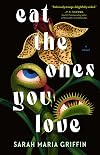
Shell Pine is thirty-three, back in her childhood bedroom in Northside Dublin, and thoroughly humiliated by life. She's lost her graphic design job, ended a seven-year relationship with her fiancé Gav, and moved back in with her parents and younger sisters. During a dispiriting trip to the Woodbine Crown — a crumbling, condemned shopping mall that should have closed years ago but somehow keeps limping along — she spots a HELP NEEDED sign in the window of a florist shop. She goes in. She show more gets the job. The florist is Neve — beautiful, magnetic, obsessed with her craft in a way that's slightly unnerving. Shell is instantly smitten. What Shell doesn't know is that Neve belongs to Baby: a sentient orchid who has wound his vines through the entire structure of the Woodbine Crown, watching everything, feeling everything, and occasionally eating people. Baby narrates much of the novel — which is as strange and wonderful as it sounds. Described as Little Shop of Horrors meets The Ruins, set in suburban Irish millennial malaise. Blurbed by VE Schwab. Irish debut author's first adult novel after decorated YA career.
[May contain spoilers]
Baby's relationship with Neve functions as an extended metaphor for an abusive controlling relationship — he is possessive, obsessive, and frames his consumption of people as love. He has infiltrated Neve so deeply she can barely separate herself from him. Shell's growing connection with Neve threatens Baby's hold, and he starts making plans for Shell too — the body horror involves the plant literally growing inside people, a creeping physical transformation that mirrors emotional possession. The ending is genuinely unsettling rather than triumphant — there is feminist action taken against Baby, but Griffin refuses a clean resolution, leaving readers to sit with something uncomfortable. The mall itself is essentially a character — Baby as the nervous system of a dying retail ecosystem, both exploiting and grieving it.
What I think: This is lyrical, atmospheric, genuinely original body horror with a queer love story at its centre and a brilliant central conceit in Baby as narrator. It's short and sharp at under 300 pages. The Irish slang and setting give it real texture. Some readers found the abuse allegory complicated by Baby being gendered, and the ending divisive. show less
[May contain spoilers]
Baby's relationship with Neve functions as an extended metaphor for an abusive controlling relationship — he is possessive, obsessive, and frames his consumption of people as love. He has infiltrated Neve so deeply she can barely separate herself from him. Shell's growing connection with Neve threatens Baby's hold, and he starts making plans for Shell too — the body horror involves the plant literally growing inside people, a creeping physical transformation that mirrors emotional possession. The ending is genuinely unsettling rather than triumphant — there is feminist action taken against Baby, but Griffin refuses a clean resolution, leaving readers to sit with something uncomfortable. The mall itself is essentially a character — Baby as the nervous system of a dying retail ecosystem, both exploiting and grieving it.
What I think: This is lyrical, atmospheric, genuinely original body horror with a queer love story at its centre and a brilliant central conceit in Baby as narrator. It's short and sharp at under 300 pages. The Irish slang and setting give it real texture. Some readers found the abuse allegory complicated by Baby being gendered, and the ending divisive. show less
4.5 stars! When this comes out, I predict that it’s going to be a massive hit! Eat the Ones You Love is for fans of deliciously “weird” books, such as Mona Awad’s Bunny. I also think readers who enjoy the Netflix series You will appreciate this, too!
Rather than being a non-stop horror-fest, Eat the Ones You Love is primarily an exploration of human relationships, both platonic and romantic, with some unsettling body horror thrown in. There are very few actual plant-eating-human show more scenes. Instead, it’s very thoughtful and contemplative, laced with a creepiness that doesn’t let up.
Sara Maria Griffin’s writing is so enjoyable to read, she could honestly write about paint drying and I would be fully invested. And, because Griffin is an Irish author, it’s also very Irish! As an American reader, I learned so many words that were new to me, which I loved.
Griffin took a big risk and did something really unusual that I’ve never come across before in a book. She inserts a first person perspective inside a third person narrative! I think it’s a huge part of why this book is so fantastic. The story begins ordinarily enough, written in third person and introducing us to Shell, the main character. And then the second chapter hits and WHAM - we’re hearing from Baby, the shop’s all-knowing plant monster, who is more mobile than you would think. He’s everywhere - even able to observe Shell through a bouquet of flowers! So creepy! A really sinister first person (or should I say first plant?) perspective!
Baby’s voice continues to interject into the third person perspective throughout the rest of the book. Just when you start to relax into the story, Baby’s all knowing “I” pops up to put you on edge yet again. (It always happened when I least expected it, and it always made me jump, sometimes even exclaiming out loud.) Like a virus that invades but lies dormant, Baby is always present, lurking under the surface - both of the narrative AND the dilapidated shopping mall setting.
Eat the Ones You Love is an exploration of its themes, rather than a moralizing tale that takes a certain position. Consent and coercion in relationships comes to mind, as does codependency and addiction. I usually like a clear message that I can perceive by the time I come to the end of the books I read. So when I finished Eat the Ones You Love, I felt a little let down by the ending. Upon reflection, though, I realized I couldn’t stop thinking about it, and that was almost certainly because Griffin was careful not to be too heavy handed with its messaging.
Thank you to the publishers and Goodreads for the physical ARC of this book! show less
Rather than being a non-stop horror-fest, Eat the Ones You Love is primarily an exploration of human relationships, both platonic and romantic, with some unsettling body horror thrown in. There are very few actual plant-eating-human show more scenes. Instead, it’s very thoughtful and contemplative, laced with a creepiness that doesn’t let up.
Sara Maria Griffin’s writing is so enjoyable to read, she could honestly write about paint drying and I would be fully invested. And, because Griffin is an Irish author, it’s also very Irish! As an American reader, I learned so many words that were new to me, which I loved.
Griffin took a big risk and did something really unusual that I’ve never come across before in a book. She inserts a first person perspective inside a third person narrative! I think it’s a huge part of why this book is so fantastic. The story begins ordinarily enough, written in third person and introducing us to Shell, the main character. And then the second chapter hits and WHAM - we’re hearing from Baby, the shop’s all-knowing plant monster, who is more mobile than you would think. He’s everywhere - even able to observe Shell through a bouquet of flowers! So creepy! A really sinister first person (or should I say first plant?) perspective!
Baby’s voice continues to interject into the third person perspective throughout the rest of the book. Just when you start to relax into the story, Baby’s all knowing “I” pops up to put you on edge yet again. (It always happened when I least expected it, and it always made me jump, sometimes even exclaiming out loud.) Like a virus that invades but lies dormant, Baby is always present, lurking under the surface - both of the narrative AND the dilapidated shopping mall setting.
Eat the Ones You Love is an exploration of its themes, rather than a moralizing tale that takes a certain position. Consent and coercion in relationships comes to mind, as does codependency and addiction. I usually like a clear message that I can perceive by the time I come to the end of the books I read. So when I finished Eat the Ones You Love, I felt a little let down by the ending. Upon reflection, though, I realized I couldn’t stop thinking about it, and that was almost certainly because Griffin was careful not to be too heavy handed with its messaging.
Thank you to the publishers and Goodreads for the physical ARC of this book! show less
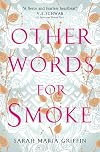
Screams into the endless void about how this brilliant book with a theme of obsession is my current obsession. When I first finished reading it on a Saturday night in March, I started re-reading it again the next morning.
I am not okay.
No really, I love this book. [hi look at me being a mess on twitter 32 times]
I first heard about Other Words for Smoke when I attended an Waterstones Q+A Event of Sarah Maria Griffin and Christina Henry. Hearing these two talk was so much fun and I knew I’d show more have to read some of Sarah’s work because she had me awe-struck ok.
I reached out that night to Lydia about a review copy of OWFS and the rest is history. I’m history. I’m dead.
It’s like returning home, there’s a comfort I find in this book. I don’t think I’ll ever tire of it.
OWFS follows twins, Rossa and Mae, as they spend two summers with their Great-Aunt Rita, her teen ward Bevan, and a larger than life cat Bobby. In a house that is strange than meets the eye with a Sweet James, an owl living in the walls demanding his hunger be quenched.
There are two main sections to the book; the first Summer where the twins are 14 and get sent to avoid family disrupt. And the second Summer when the twins are 17 and return to Rita’s to escape their family divorce, older and more prepared to face the different type of horror that Rita’s house holds.
There are also some inbetween chapters which give us background development and the history of Rita, Audrey, Bobby, and James. As well as some key scenes from the twins in their years between the two summers.
(Its in this part that there is forced outing which I wasn’t a fan of, but its addressed and I’m happy with how Mae stood up for herself)
Rita is the best authority figure I’ve read about. She’s both motherly and caring but also a power to be fearer. She nurtures Mae’s exploration with magic and tarot reading, she helps shape Rossa into a more confident being.
Rossa is the character I struggle most to talk about as realistically, I think I’m most like him. Or I would be in that house, faced with that danger and horror. I can’t see me ever being brave, I can see me struggle to keep a float, wanting to keep my sister safe, but not having the courage to face it. And feeling a bit of an outsider to the others in the house who’ve all formed a strong bond.
I think he is at his strongest when he’s not at ends with Mae. The two together have a great dynamic together in the book and I lived for the two supporting each other through the toughest times, and their sibling banter.
Bevan’s blonde hair and “her unfair, impossible legs” help Mae develop the strongest and ever-consuming of crush’s. Mae’s chapters were honestly my favourite to read because SMG has nailed down that First Crush obsession, how it engulfs your every fibre, and you want to do everything to leave a good impression – even allow them to pierce your ears, which terrifies you.
Bobby is a good soul whilst Mae battles with all these feelings engulfing her. He is larger than life, and more than what he seems. But his secret is something earned when the twins are ready and it takes Rossa a little longer to be welcomed into the coven.
Bevan is also a storm. Mae knows this, accepts it, and both loves and fears her. Bevan is ready to set the world on fire with her anger, confidence, and naivety. Her misplaced trust in Sweet James for a share of his power and “affection” is the moving force of the plot for OWFS.
You can’t read this book and not pick up on how Sweet James is a representation of toxic relationships. He manipulates and controls Bevan to cause harm to others, and later hopes she can set him free from his chains. He is nothing to be desired.
I found it very therapeutic to be able to reflect on how abusive he is as an outsider, whilst reading about how enticed and dependant Bevan is on him and his power. How broken she is when he’s stolen away. It really is terrifying.
But I wouldn’t have wanted their relationship to have been portrayed any differently as they really hooked you in. To be honest, all the characters do in this book.
The only character I haven’t spoken about yet is the queer and forever young Audrey. Her path is one we are introduced too in the second half of the book mostly. Her role is so very important, not only because it contextualises the story with the Magdalene laundries, but also she’s very interwoven with Rita and the separate paths they are both on to be hopefully be together.
I really could talk about my love for this book all day, in fact in real time I have. But honestly this is the perfect blend of fantasy and horror which I’ve been highly recommending to everyone who will listen.
I’m almost done with my second reread (I had to limit myself) and I will be annotating Beth’s copy later on. I also have my another copy going around my USA friends who’re annotating it for me.
Like I said this is pretty much my life right now.
This review probably isn’t good enough. I don’t do my intense feelings enough justice. I don’t do Sarah’s amazing writing justice.
Please read this book. Also, message me when you do.
I am not okay.
No really, I love this book. [hi look at me being a mess on twitter 32 times]
I first heard about Other Words for Smoke when I attended an Waterstones Q+A Event of Sarah Maria Griffin and Christina Henry. Hearing these two talk was so much fun and I knew I’d show more have to read some of Sarah’s work because she had me awe-struck ok.
I reached out that night to Lydia about a review copy of OWFS and the rest is history. I’m history. I’m dead.
It’s like returning home, there’s a comfort I find in this book. I don’t think I’ll ever tire of it.
OWFS follows twins, Rossa and Mae, as they spend two summers with their Great-Aunt Rita, her teen ward Bevan, and a larger than life cat Bobby. In a house that is strange than meets the eye with a Sweet James, an owl living in the walls demanding his hunger be quenched.
There are two main sections to the book; the first Summer where the twins are 14 and get sent to avoid family disrupt. And the second Summer when the twins are 17 and return to Rita’s to escape their family divorce, older and more prepared to face the different type of horror that Rita’s house holds.
“How strange was this mutual, silent agreement that maybe something was badly wrong in Rita’s house, that they’d seen something awful there that they couldn’t quite name, but somehow they felt more able to manage that wrong than their parents.”
There are also some inbetween chapters which give us background development and the history of Rita, Audrey, Bobby, and James. As well as some key scenes from the twins in their years between the two summers.
(Its in this part that there is forced outing which I wasn’t a fan of, but its addressed and I’m happy with how Mae stood up for herself)
Rita is the best authority figure I’ve read about. She’s both motherly and caring but also a power to be fearer. She nurtures Mae’s exploration with magic and tarot reading, she helps shape Rossa into a more confident being.
“…if this thing was evil, then he was good, and he must be able to overcome it. He just had to find the courage – he knew it was in their somewhere, but he couldn’t grasp it.”
Rossa is the character I struggle most to talk about as realistically, I think I’m most like him. Or I would be in that house, faced with that danger and horror. I can’t see me ever being brave, I can see me struggle to keep a float, wanting to keep my sister safe, but not having the courage to face it. And feeling a bit of an outsider to the others in the house who’ve all formed a strong bond.
I think he is at his strongest when he’s not at ends with Mae. The two together have a great dynamic together in the book and I lived for the two supporting each other through the toughest times, and their sibling banter.
“A troupe of sunflowers, standing tall and there – there suddenly like a jewel on the lawn, Bevan sprawled out under the sun on a tartan blanket, her flat stomach to the sky. Her legs a hundred miles of tan.
Oh no.”
Bevan’s blonde hair and “her unfair, impossible legs” help Mae develop the strongest and ever-consuming of crush’s. Mae’s chapters were honestly my favourite to read because SMG has nailed down that First Crush obsession, how it engulfs your every fibre, and you want to do everything to leave a good impression – even allow them to pierce your ears, which terrifies you.
Bobby is a good soul whilst Mae battles with all these feelings engulfing her. He is larger than life, and more than what he seems. But his secret is something earned when the twins are ready and it takes Rossa a little longer to be welcomed into the coven.
“Love is the realest thing, Mae. The world around you will become realer the more you feel it. Doesn’t music sound better already? Isn’t there more meaning? There’s a reasons you had that song on loop. It’s deepened.”
Bevan is also a storm. Mae knows this, accepts it, and both loves and fears her. Bevan is ready to set the world on fire with her anger, confidence, and naivety. Her misplaced trust in Sweet James for a share of his power and “affection” is the moving force of the plot for OWFS.
You can’t read this book and not pick up on how Sweet James is a representation of toxic relationships. He manipulates and controls Bevan to cause harm to others, and later hopes she can set him free from his chains. He is nothing to be desired.
I found it very therapeutic to be able to reflect on how abusive he is as an outsider, whilst reading about how enticed and dependant Bevan is on him and his power. How broken she is when he’s stolen away. It really is terrifying.
“…and you thought you understood all the way that he could scare you, bargain with you.”
But I wouldn’t have wanted their relationship to have been portrayed any differently as they really hooked you in. To be honest, all the characters do in this book.
The only character I haven’t spoken about yet is the queer and forever young Audrey. Her path is one we are introduced too in the second half of the book mostly. Her role is so very important, not only because it contextualises the story with the Magdalene laundries, but also she’s very interwoven with Rita and the separate paths they are both on to be hopefully be together.
I really could talk about my love for this book all day, in fact in real time I have. But honestly this is the perfect blend of fantasy and horror which I’ve been highly recommending to everyone who will listen.
I’m almost done with my second reread (I had to limit myself) and I will be annotating Beth’s copy later on. I also have my another copy going around my USA friends who’re annotating it for me.
Like I said this is pretty much my life right now.
This review probably isn’t good enough. I don’t do my intense feelings enough justice. I don’t do Sarah’s amazing writing justice.
Please read this book. Also, message me when you do.
“You lonesome?” she asked absently.show less
“Are you? replied the cat.”
Lists
Awards


You May Also Like


Associated Authors
Statistics
- Works
- 7
- Members
- 647
- Popularity
- #39,005
- Rating
- 3.5
- Reviews
- 22
- ISBNs
- 27