
Derek Hayes (1) (1947–)
Author of Historical Atlas of the United States: With Original Maps
For other authors named Derek Hayes, see the disambiguation page.
About the Author
Derek Hayes trained as a geographer at the University of Hull in England and the University of British Columbia, and he has long been a lover and collector of antique maps.
Image credit: www.derekhayes.ca/
Works by Derek Hayes
Historical Atlas of the Pacific Northwest: Maps of Exploration and Discovery: British Columbia, Washington, Oregon, Alaska, Yukon (1999) 91 copies, 3 reviews
First Crossing: Alexander Mackenzie, His Expedition Across North America, and the Opening of the Continent (2001) 41 copies
Historical Atlas of the North Pacific Ocean: Maps of Discovery and Scientific Exploration, 1500-2000 (2001) 40 copies, 1 review
Tagged
Common Knowledge
- Canonical name
- Hayes, Derek
- Birthdate
- 1947
- Gender
- male
- Education
- University of Hull
University of British Columbia - Occupations
- Geographer
- Nationality
- Canada
- Places of residence
- White Rock, British Columbia, Canada
- Associated Place (for map)
- British Columbia, Canada
Members
Reviews
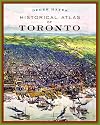
This is a superb collection of maps documenting the entire history of the city of Toronto. Starting with a First Nation map drawn on birchbark and the first European map of the area, the Huron Map drawn by a French explorer in 1641 to a contemporary satellite image, carefully researched maps portray the history of the city in a uniquely visual way. Although most maps speak to themselves, they are accompanied by just the right amount of text to place them into context. The author is also show more thankfully generous in his definition of what a map is, allowing him to use birds eye views, drawings and photographs to better illustrate the transformation of the city.
New to the city myself (and, admittedly, rather a map geek too), I have learned a great deal just by browsing this excellent book. Names, geographical features, road layouts make much more sense to me now that I learned how they came to be. For example, I realized that a street in my neighborhood called "Indian Road" is so named because it follows an ancient path used by the Mississauga Nation long before the first settlers came to the shores of Lake Ontario. As the settlement, then the city grew, it spread its network of roads around this ancient path, connecting modern urban design with age-old wisdom. It's easy to forget how much a city grows organically. Studying historical maps is a great way to bring that fact back to life. show less
New to the city myself (and, admittedly, rather a map geek too), I have learned a great deal just by browsing this excellent book. Names, geographical features, road layouts make much more sense to me now that I learned how they came to be. For example, I realized that a street in my neighborhood called "Indian Road" is so named because it follows an ancient path used by the Mississauga Nation long before the first settlers came to the shores of Lake Ontario. As the settlement, then the city grew, it spread its network of roads around this ancient path, connecting modern urban design with age-old wisdom. It's easy to forget how much a city grows organically. Studying historical maps is a great way to bring that fact back to life. show less
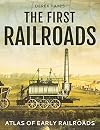
A nicely done and copiously illustrated book on early railroads. First, what it isn’t: this is not about early railroad locomotives – although there’s some information about them, the main focus is on railroad routes, design, and engineering. Next, author Derek Hayes starts very early indeed, considering anything that incorporated some sort of fixed guideway to facilitate moving cargo on land., and thus going all the way back to the dioklos across the isthmus of Corinth in 600BC, which show more had ruts cut in the stone to guide some sort of wagon or sled. A later sit was the Reißzug in Salzburg built in 1496; this was an inclined plane that hauled food and supplies from the river to the Hohensalzburg Castle on the heights above. Originall using sleds hauled by horse- or man-power, it eventually incorporated wheeled carts running on rails pulled by a stationary engine in the castle. It’s still in use, suggesting it’s the world’s oldest continuously operating railway.
England had many early guideways like this; the country had an extensive network of canals but many of the coal mines were on slopes not reachable by canals. Thus the collieries installed guideways with carts running on wooden rails from the minehead to the canal; they were hauled back up by horses. Hayes has tracked down so many of these that we don’t get to what nowadays would be considered a “railroad” – a locomotive running on metal rails – until about two thirds into the book. Hayes notes that there was a synergistic connection between locomotives and rails – it wasn’t practical to build a steam-powered locomotive until rails were developed that could stand the weight of the engine and load. There was also a competition between plate rails – which had a L-shape, so the flange was on the rail – and “edge” rails, where the flanges were on the wheels of the train. The plate rails had the advantage that a wagon could run on either rails or roads; however they could easily be jammed by debris on the track and required 30% more tractive effort than edge rails, which won out.
The railroad industry took off quickly – despite objections by landowners who didn’t want them crossing their estates. The early steam railroads developed on the colliery-to-canal theme, bringing goods to and from a town to a port; however, with the Liverpool to Manchester route it was discovered that passengers would pay to ride (paintings of some of the colliery railroads show people perched precariously on coal cars).
As noted there’s not much on locomotive design. All the first locomotives had vertical cylinders with connecting rods turning cranks on the drive wheels. The cylinders operated in unison, leading to a pounding effect that put a lot of demand on the rails until they were replaced by diagonal and horizontal cylinders. One thing that puzzled me when looking at pictures of early locomotives is the boilers often appear to be made from wood; instead the builders went with wooden covers over iron boilers to cut down on corrosion.
The last few pages cover early railroad development in other countries; the first locomotive in the United States was imported from England, although the Americans quickly began to build their own, as did the Germans, Austrians, Russians, and other Europeans.
Quite informative; multiple illustrations on every page. A long and tightly spaced bibliography. Recommended for those interested in transportation and infrastructure history. show less
England had many early guideways like this; the country had an extensive network of canals but many of the coal mines were on slopes not reachable by canals. Thus the collieries installed guideways with carts running on wooden rails from the minehead to the canal; they were hauled back up by horses. Hayes has tracked down so many of these that we don’t get to what nowadays would be considered a “railroad” – a locomotive running on metal rails – until about two thirds into the book. Hayes notes that there was a synergistic connection between locomotives and rails – it wasn’t practical to build a steam-powered locomotive until rails were developed that could stand the weight of the engine and load. There was also a competition between plate rails – which had a L-shape, so the flange was on the rail – and “edge” rails, where the flanges were on the wheels of the train. The plate rails had the advantage that a wagon could run on either rails or roads; however they could easily be jammed by debris on the track and required 30% more tractive effort than edge rails, which won out.
The railroad industry took off quickly – despite objections by landowners who didn’t want them crossing their estates. The early steam railroads developed on the colliery-to-canal theme, bringing goods to and from a town to a port; however, with the Liverpool to Manchester route it was discovered that passengers would pay to ride (paintings of some of the colliery railroads show people perched precariously on coal cars).
As noted there’s not much on locomotive design. All the first locomotives had vertical cylinders with connecting rods turning cranks on the drive wheels. The cylinders operated in unison, leading to a pounding effect that put a lot of demand on the rails until they were replaced by diagonal and horizontal cylinders. One thing that puzzled me when looking at pictures of early locomotives is the boilers often appear to be made from wood; instead the builders went with wooden covers over iron boilers to cut down on corrosion.
The last few pages cover early railroad development in other countries; the first locomotive in the United States was imported from England, although the Americans quickly began to build their own, as did the Germans, Austrians, Russians, and other Europeans.
Quite informative; multiple illustrations on every page. A long and tightly spaced bibliography. Recommended for those interested in transportation and infrastructure history. show less
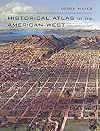
This is a beautiful atlas. The author and compiler, Derek Hayes, also did the book design and layout, and the results show. I was enthralled with the turn of every page whether looking at maps of natural forms or urban streets, whether panoramic or close-up. Also included are advertsing piees where the map is a major feauture as well as a good cross section of railroad maps. A book I would like to buy. Note, the cover is an 1891 overview of Salt Lake City.
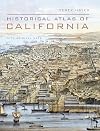
What a tremendous atlas and historical resource! This book from Derek Hayes brings together a wealth of maps covering California - from ancient to modern. The book is beautifully layed out and a joy to read.
Lists
Awards

Historical Atlas of Canada: Canada's History Illustrated with Original Maps (Finalist – Bill Duthie Booksellers’ Choice Award – 2003)
Historical Atlas of British Columbia and the Pacific Northwest (Winner – Bill Duthie Booksellers’ Choice Award – 2000)


You May Also Like


Associated Authors
Statistics
- Works
- 23
- Members
- 937
- Popularity
- #27,411
- Rating
- 4.2
- Reviews
- 12
- ISBNs
- 55