
C. J. Brightley
Author of The King's Sword (Erdemen Honor) (Volume 1)
About the Author
Series
Works by C. J. Brightley
Children of Wrath 2 copies
The Silent Prince 1 copy
Associated Works
Tagged
Common Knowledge
Members
Reviews
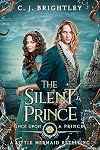
This lovely twist on The Little Mermaid was surprising in so many ways. I appreciated how the whiny mermaid (I detest Disney's rendition) was exchanged for a vain merman. He knew he was beautiful and that his voice was lovely and any human would be lucky to fall for him. Except then, he falls for her for real.
The princess was even more delightful. Having an ailing father meant she was carrying the weight of the kingdom on her shoulders, even planning her own marriage alliance. She did so show more with such grace and acceptance, even when it was clear this wasn't what she would have chosen if she didn't love her kingdom so much.
From licking soap to marveling at legs to disavowing inconveniences like needing to breathe air and dry skin and even feeling confusion over why male height matters to humans, the story had a level of realism mostly missing from mer stories. It will make you laugh and wish it didn't end so soon. I'm excited for more books to be written in this beautiful world.
I received an ARC from the author and have reviewed it willingly. show less
The princess was even more delightful. Having an ailing father meant she was carrying the weight of the kingdom on her shoulders, even planning her own marriage alliance. She did so show more with such grace and acceptance, even when it was clear this wasn't what she would have chosen if she didn't love her kingdom so much.
From licking soap to marveling at legs to disavowing inconveniences like needing to breathe air and dry skin and even feeling confusion over why male height matters to humans, the story had a level of realism mostly missing from mer stories. It will make you laugh and wish it didn't end so soon. I'm excited for more books to be written in this beautiful world.
I received an ARC from the author and have reviewed it willingly. show less
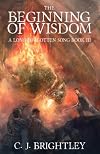
The story continues exactly where book two left off. Colonel Grenedor is listening to the wrong voices and persecuting Christians. More fae have experienced redemption. And Aria is struggling with her own desires to be better to be more and maybe even to believe in the God that Owen and Bartok and others have staked their lives on.
What stood out to me in this segment of the story was how each of the fae responded to grace. While it was similar to humans--some accepted it and others show more didn't--those who experienced grace changed drastically, choosing to enact that grace toward others, especially others who didn't deserve it. And more often than not, it started a chain reaction.
I hated watching Aria struggle. I kept thinking, just believe already! How can you not believe after everything you've seen? And yet, she didn't stop caring for others or listening to those who did believe. She didn't reject people just because she was confused but kept an open mind. And she grew as a result.
And then there is still Petro. I don't know what Petro is or what he does. Even with a pretty big reveal at the end, he is a great mystery, but even more fascinating the more we find out. He's something like an angel turned semi-mad scientist experimenting on humans but in non-lethal ways because angel, but also a bit more detached and dangerous than I would expect an angel to be. Hopefully, book four will reveal all.
This has been an incredibly wonderful and unexpected series. I can't wait for CJ to finish the finale. show less
What stood out to me in this segment of the story was how each of the fae responded to grace. While it was similar to humans--some accepted it and others show more didn't--those who experienced grace changed drastically, choosing to enact that grace toward others, especially others who didn't deserve it. And more often than not, it started a chain reaction.
I hated watching Aria struggle. I kept thinking, just believe already! How can you not believe after everything you've seen? And yet, she didn't stop caring for others or listening to those who did believe. She didn't reject people just because she was confused but kept an open mind. And she grew as a result.
And then there is still Petro. I don't know what Petro is or what he does. Even with a pretty big reveal at the end, he is a great mystery, but even more fascinating the more we find out. He's something like an angel turned semi-mad scientist experimenting on humans but in non-lethal ways because angel, but also a bit more detached and dangerous than I would expect an angel to be. Hopefully, book four will reveal all.
This has been an incredibly wonderful and unexpected series. I can't wait for CJ to finish the finale. show less
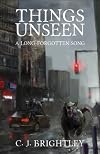
Things Unseen begins with a mundane account of a college student struggling to do research and write her papers. Then it gets weird from there. She sees a young man that few others can see. A monster attacks that no one has heard of. Fae are real. And the government has placed trackers in...everyone?
Initially due to curiosity and later conviction, Aria follows the young man and learns there's more to everything going on around her than she could have ever imagined. Like many heroines, she is show more with a choice. Will she choose to go back to life as usual, or will she risk everything for truth and love?
I said earlier that this was nothing at all what I expected. The character types and archetypes in this book aren't typical of a dystopian story. The fae almost seem like angels, the way their powers work and don't. And I have no idea what Petro is. The book also delves into the human need to know everything but questions is that good for us? I struggled with that. Because as a human, and probably as an American, I want to know things, I think I have the right to know things, to be able to make decisions for myself after being given all the information. And yet, I know that knowledge can be used to enact great evil, so perhaps there is a point where we need to relinquish our insatiable need to know and choose who we will trust. I may change my mind tomorrow, though. I'm still processing this.
There is also much of good versus evil. You may detest someone, or you may find their methods incongruent with your worldview, but they still might not be evil...possibly, even good. It's a lot to wrestle with. And I'm looking forward to mysteries that will unfold in book two and, probably, a lot more questions.
Note: This book ends on a bit of a cliffhanger, and the author has said the story doesn't resolve until book four. I think it's still worth the read for the questions that begin to be asked in this book. show less
Initially due to curiosity and later conviction, Aria follows the young man and learns there's more to everything going on around her than she could have ever imagined. Like many heroines, she is show more with a choice. Will she choose to go back to life as usual, or will she risk everything for truth and love?
I said earlier that this was nothing at all what I expected. The character types and archetypes in this book aren't typical of a dystopian story. The fae almost seem like angels, the way their powers work and don't. And I have no idea what Petro is. The book also delves into the human need to know everything but questions is that good for us? I struggled with that. Because as a human, and probably as an American, I want to know things, I think I have the right to know things, to be able to make decisions for myself after being given all the information. And yet, I know that knowledge can be used to enact great evil, so perhaps there is a point where we need to relinquish our insatiable need to know and choose who we will trust. I may change my mind tomorrow, though. I'm still processing this.
There is also much of good versus evil. You may detest someone, or you may find their methods incongruent with your worldview, but they still might not be evil...possibly, even good. It's a lot to wrestle with. And I'm looking forward to mysteries that will unfold in book two and, probably, a lot more questions.
Note: This book ends on a bit of a cliffhanger, and the author has said the story doesn't resolve until book four. I think it's still worth the read for the questions that begin to be asked in this book. show less
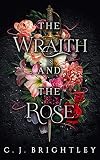
Based on The Scarlet Pimpernel, both novel and 1982 adaptation (why are authors who write retellings so obsessed with that version?), The Wraith and the Rose blends faux Victorian/Gilded Age society with a magical fairy kingdom. Instead of aristocrats being saved from the guillotine, the Wraith (or the Rose, as the fair folk call him) is rescuing human children from enslavement by the Fair King and his ambassador, the Chauvelin-esque Lord Willowvale. Drawn into the war between the two worlds show more is Miss Lilybeth Hathaway, the daughter of a lowly baronet, who falls in love with the Wraith's alter ego, Theo Overton.
Unfortunately, perhaps because I don't usually read fantasy themed fiction, I don't think I ever really warmed to the characters or the alternate take on the Scarlet Pimpernel. The human element of Orczy's novel - the romance, mistrust and lack of communication between a husband and wife - fell flat because I never really understood what Theo saw in Lily! Instead of Marguerite, captivating yet wholly human, Lily is ridiculously pure and innocent - Orczy would have called her a 'child', like Suzanne! Theo is her first romance, and their sudden courtship of dances and dinner with the parents leads straight into a rushed wedding. But instead of the Blakeneys' passionate whirlwind romance, there are shades of Crimson Peak, with Theo coldly calling his new wife 'my love' and asking what he can do to please her, while simultaneously believing that his child bride is capable of duplicity and dealing with the enemy. Lily does not have a trace of agency until the last part of the book - at least Marguerite had fun at parties and ruled over Blakeney Manor! And although Theo is good as the Wraith, very commanding and stubborn, his guise in society as a charming but foolish fop is soon dropped, bar Willowvale calling him a nincompoop every now and again.
I actually preferred Willowvale, who is wonderfully insidious like a true villain yet also strangely sympathetic, and the 'veil' which connects the human world to the fairy kingdom was terrifying and would be amazing to see on screen, but didn't really understand why the fairy kingdom needed to make human children dance for them. Too Brothers Grimm for my taste.
Also the whole book could have been about 200 pages shorter with fewer repetitive descriptions - characters constantly blinking in surprise, and dear lord, the final chapters after Theo and Lily kiss and make up! I soon lost interest, even with direct references to The Scarlet Pimpernel - “I wish you were the kind of man a woman could come to if she were in trouble".
An interesting twist on a favourite novel, but not for me, I'm afraid - I need a spunkier heroine and a masked hero with a bit more wit! show less
Unfortunately, perhaps because I don't usually read fantasy themed fiction, I don't think I ever really warmed to the characters or the alternate take on the Scarlet Pimpernel. The human element of Orczy's novel - the romance, mistrust and lack of communication between a husband and wife - fell flat because I never really understood what Theo saw in Lily! Instead of Marguerite, captivating yet wholly human, Lily is ridiculously pure and innocent - Orczy would have called her a 'child', like Suzanne! Theo is her first romance, and their sudden courtship of dances and dinner with the parents leads straight into a rushed wedding. But instead of the Blakeneys' passionate whirlwind romance, there are shades of Crimson Peak, with Theo coldly calling his new wife 'my love' and asking what he can do to please her, while simultaneously believing that his child bride is capable of duplicity and dealing with the enemy. Lily does not have a trace of agency until the last part of the book - at least Marguerite had fun at parties and ruled over Blakeney Manor! And although Theo is good as the Wraith, very commanding and stubborn, his guise in society as a charming but foolish fop is soon dropped, bar Willowvale calling him a nincompoop every now and again.
I actually preferred Willowvale, who is wonderfully insidious like a true villain yet also strangely sympathetic, and the 'veil' which connects the human world to the fairy kingdom was terrifying and would be amazing to see on screen, but didn't really understand why the fairy kingdom needed to make human children dance for them. Too Brothers Grimm for my taste.
Also the whole book could have been about 200 pages shorter with fewer repetitive descriptions - characters constantly blinking in surprise, and dear lord, the final chapters after Theo and Lily kiss and make up! I soon lost interest, even with direct references to The Scarlet Pimpernel - “I wish you were the kind of man a woman could come to if she were in trouble".
An interesting twist on a favourite novel, but not for me, I'm afraid - I need a spunkier heroine and a masked hero with a bit more wit! show less
Awards
You May Also Like
Associated Authors
Statistics
- Works
- 25
- Also by
- 2
- Members
- 193
- Popularity
- #113,336
- Rating
- 3.5
- Reviews
- 9
- ISBNs
- 42