
Ilyasah Shabazz
Author of X: A Novel
About the Author
Image credit: By Slowking4 - Own work, GFDL 1.2, https://commons.wikimedia.org/w/index.php?curid=35041253
Works by Ilyasah Shabazz
Tagged
Common Knowledge
- Other names
- SHABAZZ, Ilyasah
- Birthdate
- 1962-07-22
- Gender
- female
- Education
- The Masters School
State University of New York, New Paltz
Fordham University - Occupations
- motivational speaker
- Relationships
- Malcolm X (father)
Shabazz, Betty (mother)
Shabazz, Qubilah (sister)
Shabazz, Malikah (sister)
Shabazz, Malaak (sister)
Shabazz, Attallah (sister) (show all 7)
Shabazz, Gamilah Lumumba (sister) - Nationality
- USA
- Birthplace
- Queens, New York, USA
- Places of residence
- Westchester County, New York, USA
- Associated Place (for map)
- New York, USA
Members
Reviews
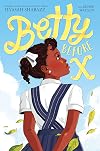
This is a really well done book -- great voice, great pacing, solid history -- altogether a very enjoyable read. There's a lot of faith in here, but even as a reader who does not appreciate the koolaid, I found it to be reasonable, compelling and appropriate. I appreciate the first hand account of 1940s Detroit, the positive activism, the strong bonds of family (chosen and not), and Betty's lively mind and unwillingness to take racism lying down. The lynching scene was shocking, and the show more murder of a 15 year old boy was awful, but both are depressingly important to depict.
The only thing that really threw me is the scene where they are preparing for the large tea party and making Lavender Lemonade. Mrs. Malloy tells them to use manuka honey, and that seems incredibly unlikely -- was New Zealand really exporting raw honey to Detroit in the 1940s? I'd love to hear more if that is true. show less
The only thing that really threw me is the scene where they are preparing for the large tea party and making Lavender Lemonade. Mrs. Malloy tells them to use manuka honey, and that seems incredibly unlikely -- was New Zealand really exporting raw honey to Detroit in the 1940s? I'd love to hear more if that is true. show less
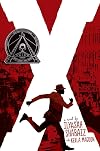
This book is in no way deficient when it comes to textual construction. My criticism stems more from a complete lack of understanding as to why it was written. Malcolm X is a controversial historical figure. With so many people seeking to vilify this complicated man, why would any author (his daughter no less) write a fictional biography that paints him as nothing more than a villain? I've rarely come across a book that featured a more unlikable protagonist. The Malcolm in this book is an show more awful human being. He elicits no sympathy from the reader. After hundreds of pages detailing an endless barrage of crimes, I found myself rooting for the police to finally catch him and throw him in jail. Was that the author's intention? I can't imagine it was, and yet that's how this book was written. It's as if she's saying, to all of her father's critics, "You were right!" show less
You know, at the beginning, I wasn't totally taken by this book. Part of it might have been that the time hopping didn't work for me so much, though I appreciated its purpose, but I've also been pretty overwhelmed by the rest of my life which has provided ample distraction. However, by the time everything was going pretty much in straight chronological order, I was bummed to put it down, and by the end, it was nearly impossible to even pause reading. By the end, I was totally bowled over. show more Shabazz and Magoon paint such a thorough picture of Malcolm's complex youth, and even though it's a fictionalized biography, it gives a deeper context to his life and legacy. It's been a while since I've read such a beautifully crafted character, fact or fiction--there is some incredible artistry going on in the authors' collaboration. I want this to get into as many hands--teens and adults--as possible.
A great effect, as I'm sure is one of the main intentions of this book, is that I really want to read The Autobiography of Malcolm X for real now. I tried reading it several years ago, but I found it difficult to dig in...I was probably too immature. So I read a lot *about* him instead, and watched the movies and documentaries and all, but it's high time get back to it.
Read it. show less
A great effect, as I'm sure is one of the main intentions of this book, is that I really want to read The Autobiography of Malcolm X for real now. I tried reading it several years ago, but I found it difficult to dig in...I was probably too immature. So I read a lot *about* him instead, and watched the movies and documentaries and all, but it's high time get back to it.
Read it. show less
This is an excellent fictionalized biography of Malcolm X's early years, but it's also a great book on the struggles engendered by violence, poverty, racism, even just adolescence. It started slowly, despite the fact that we seemed to be in the midst of a life-and-death chase. I didn't know the characters, so it was hard to care. But right away the beauty of the language caught me. Malcolm, on the run, thinks "I want to slip the skin of this life, to be new and clean again" (5). That show more sentence, and many others like it, kept me reading. And the prose had to work hard for me because the next scene is one from years earlier, another pivotal moment, but, once again, I didn't know the characters or their circumstances and so didn't really care.
After the first twenty or so pages, though, the book started to knit together and became, as a reviewer below says, unputdownable. The violence and poverty of Malcolm's childhood serves to strengthen family ties, so even while the children eat dandelion green soup for dinner, their mother schools them on literature and history. "We could recite passages from Shakespeare and legends about African kingdoms going back thousands of years. We could share facts about the Trans-Atlantic slave trade, the largest forced migration of a people in the history of humankind, and about the great military strategist Queen Nzingah, who defended the nation of Angola against Portug[u]ese invaders" (22).
Family remains central in this book, even as the adolescent Malcolm tries to shed its responsibilities. He works at Roseland, a Boston ballroom that hosts "Negro" nights. His job gives the authors the chance to write about the amazing jazz scene of the interwar era. Swing dancing to Duke Ellington, listening to Billie Holliday sing "Strange Fruit," the reader is almost as seduced by this world as Malcolm is. And so his descent into selling reefer, shoplifting, running numbers, narrated from Malcolm's point of view, seems almost reasonable, even unavoidable.
Alas, the end of the book, when Malcolm is in prison and about to convert to Islam, is rushed. There's none of the detail of the Boston and Harlem scenes. Everything happens too fast and seems arbitrary. By then Malcolm has done some terrible things, profoundly hurt people who've been good to him. He's also been betrayed by the woman he loved. One expects some agony, some soul searching, but the book never delves deep at this point. If you've read Malcolm X on why and how he started to read in prison, you know that it was a gradual, desperate process. In the book it feels like he has nothing better to do. The result is that our protagonist, who has been an introspective, intelligent person, now seems shallow and unreflective and the heretofore irreligious Malcolm's looming conversion feels inexplicable.
Nevertheless, despite the slow start and the much-too-fast end, I highly recommend this book. As others have said, it's being sold as a Young Adult book but works, except for the ending, as a book for older readers, too. I was riveted, moved, hungry for more: I ordered more books by each of the two authors the day I finished this one. show less
After the first twenty or so pages, though, the book started to knit together and became, as a reviewer below says, unputdownable. The violence and poverty of Malcolm's childhood serves to strengthen family ties, so even while the children eat dandelion green soup for dinner, their mother schools them on literature and history. "We could recite passages from Shakespeare and legends about African kingdoms going back thousands of years. We could share facts about the Trans-Atlantic slave trade, the largest forced migration of a people in the history of humankind, and about the great military strategist Queen Nzingah, who defended the nation of Angola against Portug[u]ese invaders" (22).
Family remains central in this book, even as the adolescent Malcolm tries to shed its responsibilities. He works at Roseland, a Boston ballroom that hosts "Negro" nights. His job gives the authors the chance to write about the amazing jazz scene of the interwar era. Swing dancing to Duke Ellington, listening to Billie Holliday sing "Strange Fruit," the reader is almost as seduced by this world as Malcolm is. And so his descent into selling reefer, shoplifting, running numbers, narrated from Malcolm's point of view, seems almost reasonable, even unavoidable.
Alas, the end of the book, when Malcolm is in prison and about to convert to Islam, is rushed. There's none of the detail of the Boston and Harlem scenes. Everything happens too fast and seems arbitrary. By then Malcolm has done some terrible things, profoundly hurt people who've been good to him. He's also been betrayed by the woman he loved. One expects some agony, some soul searching, but the book never delves deep at this point. If you've read Malcolm X on why and how he started to read in prison, you know that it was a gradual, desperate process. In the book it feels like he has nothing better to do. The result is that our protagonist, who has been an introspective, intelligent person, now seems shallow and unreflective and the heretofore irreligious Malcolm's looming conversion feels inexplicable.
Nevertheless, despite the slow start and the much-too-fast end, I highly recommend this book. As others have said, it's being sold as a Young Adult book but works, except for the ending, as a book for older readers, too. I was riveted, moved, hungry for more: I ordered more books by each of the two authors the day I finished this one. show less
 This review was written for LibraryThing Early Reviewers.
Lists
Awards


You May Also Like


Associated Authors
Statistics
- Works
- 8
- Members
- 1,481
- Popularity
- #17,342
- Rating
- 4.0
- Reviews
- 71
- ISBNs
- 47
- Favorited
- 1
