
Takeshi Obata
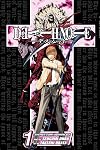
Author of Death Note, Volume 1: Boredom
About the Author
Series
Works by Takeshi Obata
All You Need Is Kill Volume Duplo 2 copies
Hikaru no Go - Vol.2 1 copy
Imagination and Presentation 1 copy
Artist and Manga Artist 1 copy
Ral Ω Grad, Vol. 4: Friend 1 copy
Associated Works
Tagged
Common Knowledge
- Canonical name
- Obata, Takeshi
- Legal name
- 小畑 健
Obata Takeshi - Birthdate
- 1969-02-11
- Gender
- male
- Nationality
- Japan
- Birthplace
- Niigata-shi, Niigata-ken, Honshu, Japan
- Associated Place (for map)
- Honshu, Japan
Members
Reviews
4.5
When I wrote in my review of [b:Battle Royale|57891|Battle Royale|Koushun Takami|http://photo.goodreads.com/books/1331235272s/57891.jpg|2786327] that there were only two manga series I would recommend, it made me realise just how much in need of a review this was. I am not a manga fan, I know some people love it like crazy, but I've tried starting the most commonly loved - Naruto, InuYasha, Fullmetal Alchemist, etc. - and been left believing that I would never appreciate these Japanese show more graphic novels. Death Note was a complete accident which I found one day whilst browsing youtube. I ran into the first episode and watched out of curiosity, then I watched the next and the next until I'd seen the whole thing and knew I had to read the novels too. Both are brilliant. The whole series has only one flaw for me, though quite a big one, and that's why I deducted half a star from the rating. I will talk about this issue later on.
Just so you know, this is going to be a review of the series as a whole because I'm not going to review every single volume, but I promise to leave out any spoilers.
Here goes: Death Note is brilliant. It's incredibly clever and will challenge your views on justice and power, but the challenges it puts your way are far from simple. I guarantee that you will change your mind multiple times during each volume, you will switch sides constantly, you will one minute think Light Yagami is evil and the next you'll think him a hero. This is a very complex moral story about right and wrong, about how power corrupts, and about what is a just punishment for the wicked.
Light Yagami is an over-achieving student who is fed up with the world around him, day by day he hears the news report listing murders and rapes and other atrocities committed by human scum. When one day a Shinigami (Japanese death god) drops his death note into the human realm, Light Yagami picks it up and holds in his hands the power to kill people just by writing their names and picturing their faces whilst doing so. He starts out with the most noble intentions - rid the earth of the foulest criminals - but there's a price to pay for playing god. As people start to realise that somehow someone is murdering criminals and disregarding Japan's law methods, questions about justice begin to arise - is the killer doing the world a favour, or is he showing a complete lack of respect for human rights?
When more people begin to stand in Light's way, he is forced to write the names of more and more individuals - some criminals, some not. The power granted to him begins to change him, force him deeper into his obsession with this god-like role. All the while, Ohba maintains a brilliant pace and throws up many obstacles and challenges. This story will really appeal to people who want something to think about and are sick of reading novels with the same old pattern.
On top of all this, Death Note has possibly my favourite detective of all time. When the Japanese police force realise that they are unqualified to catch the killer, they appeal to L Lawliet for help. Now, I don't want to say too much about L because I could spoil it, but he's intelligent, lovable, brilliant... even if the rest of the story doesn't work for you, I doubt you'll be able to resist loving L Lawliet. And this is one of the things I love most about the series: there's no clear line between good and bad. The novel pits Light and L against one another, they have very different ideas about justice and right and wrong, but the brilliance of it is that you can see it from both points of view, in a way you find yourself on both of their sides. Just amazing.
So why did I knock off half a star? Because of the portrayal of women in Death Note. At the end of the day, this series was made to mainly appeal to young adult males. There's no kickass heroine, very few main female characters appear throughout the whole thing. Plus, the biggest female character is Misa Amane, she is beautiful but useless a lot of the time. She is silly and fickle, and she is mostly regarded with contempt from the other characters. This would probably annoy me more if the rest of the story wasn't so excellent, but it is, it really is.
You should read it. Or watch it. Each episode is only 20 minutes long, why not try out the first and see if it's something you could like: http://www.youtube.com/watch?v=CheI5Dse2jU show less
When I wrote in my review of [b:Battle Royale|57891|Battle Royale|Koushun Takami|http://photo.goodreads.com/books/1331235272s/57891.jpg|2786327] that there were only two manga series I would recommend, it made me realise just how much in need of a review this was. I am not a manga fan, I know some people love it like crazy, but I've tried starting the most commonly loved - Naruto, InuYasha, Fullmetal Alchemist, etc. - and been left believing that I would never appreciate these Japanese show more graphic novels. Death Note was a complete accident which I found one day whilst browsing youtube. I ran into the first episode and watched out of curiosity, then I watched the next and the next until I'd seen the whole thing and knew I had to read the novels too. Both are brilliant. The whole series has only one flaw for me, though quite a big one, and that's why I deducted half a star from the rating. I will talk about this issue later on.
Just so you know, this is going to be a review of the series as a whole because I'm not going to review every single volume, but I promise to leave out any spoilers.
Here goes: Death Note is brilliant. It's incredibly clever and will challenge your views on justice and power, but the challenges it puts your way are far from simple. I guarantee that you will change your mind multiple times during each volume, you will switch sides constantly, you will one minute think Light Yagami is evil and the next you'll think him a hero. This is a very complex moral story about right and wrong, about how power corrupts, and about what is a just punishment for the wicked.
Light Yagami is an over-achieving student who is fed up with the world around him, day by day he hears the news report listing murders and rapes and other atrocities committed by human scum. When one day a Shinigami (Japanese death god) drops his death note into the human realm, Light Yagami picks it up and holds in his hands the power to kill people just by writing their names and picturing their faces whilst doing so. He starts out with the most noble intentions - rid the earth of the foulest criminals - but there's a price to pay for playing god. As people start to realise that somehow someone is murdering criminals and disregarding Japan's law methods, questions about justice begin to arise - is the killer doing the world a favour, or is he showing a complete lack of respect for human rights?
When more people begin to stand in Light's way, he is forced to write the names of more and more individuals - some criminals, some not. The power granted to him begins to change him, force him deeper into his obsession with this god-like role. All the while, Ohba maintains a brilliant pace and throws up many obstacles and challenges. This story will really appeal to people who want something to think about and are sick of reading novels with the same old pattern.
On top of all this, Death Note has possibly my favourite detective of all time. When the Japanese police force realise that they are unqualified to catch the killer, they appeal to L Lawliet for help. Now, I don't want to say too much about L because I could spoil it, but he's intelligent, lovable, brilliant... even if the rest of the story doesn't work for you, I doubt you'll be able to resist loving L Lawliet. And this is one of the things I love most about the series: there's no clear line between good and bad. The novel pits Light and L against one another, they have very different ideas about justice and right and wrong, but the brilliance of it is that you can see it from both points of view, in a way you find yourself on both of their sides. Just amazing.
So why did I knock off half a star? Because of the portrayal of women in Death Note. At the end of the day, this series was made to mainly appeal to young adult males. There's no kickass heroine, very few main female characters appear throughout the whole thing. Plus, the biggest female character is Misa Amane, she is beautiful but useless a lot of the time. She is silly and fickle, and she is mostly regarded with contempt from the other characters. This would probably annoy me more if the rest of the story wasn't so excellent, but it is, it really is.
You should read it. Or watch it. Each episode is only 20 minutes long, why not try out the first and see if it's something you could like: http://www.youtube.com/watch?v=CheI5Dse2jU show less

Playing against Isumi helps Hikaru realize that Sai is now in his Go - if he wants to see Sai, even just a shadow of him, he must play. And so he does, and proceeds to win. There are rumors of a Japan-China-Korea Junior Cup, and players like Akira, Hikaru, and Ochi would be Japan's best chance. Meanwhile, Hikaru has his first match against Akira in two years and four months. Hikaru loses, but it's a good match, and Akira sees Sai in his game, leading Hikaru to say that he might tell him the show more whole story about what happened to him one day. That night, Hikaru dreams of Sai.
Oof. This is technically a slow volume, and I got a bit tired of older dudes talking about the up-and-coming youngsters, but the beginning was great - seeing Hikaru cry and realize he must play in order to see Sai (if I were Isumi, the way Hikaru was acting would have made me assume there was a death in Hikaru's family). So was the ending, with Sai silently passing his fan on to Hikaru.
I loved that Akira could see Sai in Hikaru's playing style but also appreciate Hikaru as his own player. He's no longer chasing after Hikaru because of the player he thinks he is (Sai) but truly seeing him as he is. If I remember right, this is where the anime ended (not counting the special), and it's a nice stopping point for those who liked Hikaru and Akira but also really liked (and really miss) Sai.
(Original review posted on A Library Girl's Familiar Diversions.) show less
Oof. This is technically a slow volume, and I got a bit tired of older dudes talking about the up-and-coming youngsters, but the beginning was great - seeing Hikaru cry and realize he must play in order to see Sai (if I were Isumi, the way Hikaru was acting would have made me assume there was a death in Hikaru's family). So was the ending, with Sai silently passing his fan on to Hikaru.
I loved that Akira could see Sai in Hikaru's playing style but also appreciate Hikaru as his own player. He's no longer chasing after Hikaru because of the player he thinks he is (Sai) but truly seeing him as he is. If I remember right, this is where the anime ended (not counting the special), and it's a nice stopping point for those who liked Hikaru and Akira but also really liked (and really miss) Sai.
(Original review posted on A Library Girl's Familiar Diversions.) show less

A very Isumi-heavy volume. Isumi is trying to gain confidence and experience in China by playing against young Go pros. Although he's initially worried that he might be accomplishing the opposite, he struggles and sticks with it, and the experience pays off. Then it's back to Hikaru, who's still resisting Go to the point of refusing to help his former Go club friends. Isumi comes back to Japan and asks Hikaru for a rematch, during which Hikaru breaks down in tears: "I couldn't find Sai show more anywhere I looked...and now I found him here." (In a move he played against Isumi.)
I hate to say this since I know so many people, particularly professional Go players who've read this series, love him, but Isumi isn't really one of my favorite characters. I suppose it was nice seeing him again, working hard to build up his confidence, and his struggles are likely much more realistic than Hikaru or even Akira's experiences with Go. Still, it was a relief when the volume turned back to Hikaru, despite Hikaru's guilt and grief.
That said, the damage Hikaru was doing to his professional Go career by continuing to forfeit matches made my stomach hurt. Could he catch up to Akira at this rate? Could he be fired at some point, and how many more matches could he forfeit before that happened?
But man, that ending elevated the volume.Isumi tends to come across to me like a "reliable big brother" type, so it was kind of nice that he was the one to see Hikaru break down. While I loved that Hikaru found Sai in his own Go playing style, I still really want Sai back...
(Original review posted on A Library Girl's Familiar Diversions.) show less
I hate to say this since I know so many people, particularly professional Go players who've read this series, love him, but Isumi isn't really one of my favorite characters. I suppose it was nice seeing him again, working hard to build up his confidence, and his struggles are likely much more realistic than Hikaru or even Akira's experiences with Go. Still, it was a relief when the volume turned back to Hikaru, despite Hikaru's guilt and grief.
That said, the damage Hikaru was doing to his professional Go career by continuing to forfeit matches made my stomach hurt. Could he catch up to Akira at this rate? Could he be fired at some point, and how many more matches could he forfeit before that happened?
But man, that ending elevated the volume.
(Original review posted on A Library Girl's Familiar Diversions.) show less
First manga I've read in years (since Akira, actually). Genius Japanese teenager Light(!) acquires a supernatural notebook that causes anyone whose name is written in, and promptly starts offing the world's violent criminals. It's a great concept, though the main protagonist's adversary (an anonymous super-sleuth that goes by the psuedonym "L" who can direct the world's police forces at will) is introduced as subtly as a jackhammer. There are some really clever ideas and plot points on show more display; the introduction of "L" felt rushed and contrived. Still, the mind games between these two are interesting enough for me to seek out the second volume. Hopefully this doesn't do the manga thing of trying to stretch a good idea out to eleventy-billion books. show less
Lists
Manga - Death Note (12)
Manga - Death Note (12)
Books Read in 2008 (12)
Best Fantasy Novels (12)
Asia (3)
Read in 2009 (2)
Ghosts (1)
Awards


You May Also Like


Associated Authors
Statistics
- Works
- 95
- Also by
- 4
- Members
- 32,682
- Popularity
- #593
- Rating
- 4.1
- Reviews
- 437
- ISBNs
- 816
- Languages
- 18
- Favorited
- 3