
Kazuya Minekura
Author of Saiyuki, Volume 1
About the Author
Series
Works by Kazuya Minekura
Minekura Kazuya Gashu wSugar coatx (Minekura Kazuya Gashu wSugar coatx) (in Japanese) (2004) 26 copies
Saiyuki, Vol. 2 (Saiyuki, 3) 22 copies
Saiyuki Reload 9 18 copies
Saiyuki Volume 1 10 copies
salty-dog X (イラスト集) 3 copies
Saiyuki 03 1 copy
Saiyuki Quiz Book 1 copy
最é?Š記 (2) 1 copy
最遊記RELOAD BLAST (3) 1 copy
Jaming 1 copy
最遊記外傳 1 copy
Saiyuki : Requiem 1 copy
Saiyuki 05 1 copy
Saiyuki 06 1 copy
Saiyuki 07 1 copy
Saiyuki 08 1 copy
Saiyuki 09 1 copy
Saiyuki Reload 01 1 copy
Saiyuki Reload 02 1 copy
Saiyuki Gaiden Anthology 1 copy
Saiyuki Requiem [DVD] 1 copy
Saiyuki 1 copy
Saiyuki = [Saiyi] 1 copy
Saiyuki (Volumes 1, 3 & 4) 1 copy
Saiyuki 04 1 copy
峰倉かずや畫集 Backgammon 1 copy
Tagged
Common Knowledge
- Other names
- 峰倉和也
峰倉かずや - Birthdate
- 1975-03-23
- Gender
- female
- Occupations
- manga artist
- Nationality
- Japan
- Birthplace
- Kanagawa Prefecture, Japan
- Places of residence
- Tokyo, Japan
Kanagawa Prefecture, Japan - Associated Place (for map)
- Japan
Members
Reviews
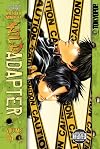
This volume involves Kubota getting mixed up in a murder case and taken in for police questioning whilst Tokito is told to stay away from the apartment without explanation. I was very happy to see the volume moving away from the 'Wild Adapter-related case of the week' pattern the series seemed to be starting with the last two volumes. Such formula can be used to make some very interesting things, but still are a bit lazy and can get stale if over-relied on.
The murder case is unlikely to have show more anything to do with the Wild Adapter drug at all, actually, but is instead the sort of plot used not for overall plot advancement but to force the characters into interesting emotional dilemmas and cause them, particularly Tokito, to reflect on their relationship. It doesn't completely drop our further search into things concerning the WA drug, either, since it allows us a look into how the police (outside Kubota's uncle) view Kubota and his connection to the drug. The police questioning scenes were also refreshing, displaying not a pompous-but-idiotic police questioner as it seem is the usual cliched default for this sort of situation, but allowed the questioner to be antagonistic, a bit rude, not even particularly sympathetic, but still smart enough to keep up with or even beat Kubota in his verbal games.
I do wish the tension in Kubota and Tokito's relationship caused by the incident hadn't been basically resolved by the end of the arc. Besides the fact I like a little tension in relationships (smooth ones being nice in real life, but not so interesting to read about), the series is already a tad in danger of having too much of the 'resent button' feel (in which, despite whatever developments may seem to have happened in a chapter/episode/arc, everything in it has to be 'reset' back to the status quo when the episode ends, allowing the series to go on indefinitely with little complication) in the plot area, with little panning out in the WA investigations. The emotional journeys the characters go through in the arcs are interesting and I will probably enjoy them regardless, but if it plans to press an emotional reset after each arc as well, it will greatly reduce the potential I thought the series had.
Still, the use of the episode 'reset button' is a choice of the author rather than a flaw exactly (though sometimes I suspect the use of it comes from a weakness in the author/lack of effort to brave the difficulty of following an ongoing, continuously developing thread in a character's emotions, which can be even more difficult than plot sometimes). And I'm not really sure they intend to keep using it, either. show less
The murder case is unlikely to have show more anything to do with the Wild Adapter drug at all, actually, but is instead the sort of plot used not for overall plot advancement but to force the characters into interesting emotional dilemmas and cause them, particularly Tokito, to reflect on their relationship. It doesn't completely drop our further search into things concerning the WA drug, either, since it allows us a look into how the police (outside Kubota's uncle) view Kubota and his connection to the drug. The police questioning scenes were also refreshing, displaying not a pompous-but-idiotic police questioner as it seem is the usual cliched default for this sort of situation, but allowed the questioner to be antagonistic, a bit rude, not even particularly sympathetic, but still smart enough to keep up with or even beat Kubota in his verbal games.
I do wish the tension in Kubota and Tokito's relationship caused by the incident hadn't been basically resolved by the end of the arc. Besides the fact I like a little tension in relationships (smooth ones being nice in real life, but not so interesting to read about), the series is already a tad in danger of having too much of the 'resent button' feel (in which, despite whatever developments may seem to have happened in a chapter/episode/arc, everything in it has to be 'reset' back to the status quo when the episode ends, allowing the series to go on indefinitely with little complication) in the plot area, with little panning out in the WA investigations. The emotional journeys the characters go through in the arcs are interesting and I will probably enjoy them regardless, but if it plans to press an emotional reset after each arc as well, it will greatly reduce the potential I thought the series had.
Still, the use of the episode 'reset button' is a choice of the author rather than a flaw exactly (though sometimes I suspect the use of it comes from a weakness in the author/lack of effort to brave the difficulty of following an ongoing, continuously developing thread in a character's emotions, which can be even more difficult than plot sometimes). And I'm not really sure they intend to keep using it, either. show less
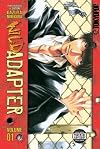
After catching the eye of the head of the Izumo yakuza group, a young man named Makoto Kubota accepts a position as the Izumo youth division leader. Kubota is aloof, almost lethargically casual, lacking in much drive or interest in anything, accepting the position seemingly just because the opportunity presented itself. Opposed to Kubota's appointment is Komiya, the youth group's second in command. Yet as the two work more together, Komiya observes the calm, fearless efficiency with which show more Kubota performs his job, as well as other intricacies of his personality which begin to change his mind. However, a mysterious new drug is emerging on the streets, leaving animal-like corpses from those that dare to try it, and the yakuza are interested in pinning it down...
I came into Wild Adapter knowing it to be of the frequently and intentionally homoerotic sort of manga, and going off what I knew about most manga of this variety, I expected over-the-top dedication and mushiness to emerge, the plot to be disposable and merely an excuse to get the guys working together, and the main attraction to be the fact that (unlike what you get reading yaoi) it least had a non-romance-centered plot, even if paltry, a story that lasted more than a volume or two, and the guys to be a little manlier than some in real BL.
Thus it was with great surprise that I read through the first volume of Wild Adapter to find things like setup to a plot that (despite not having a ton of it revealed yet) seemed like it could hold up an action/drama series decently fine on its own sans the near-romance, effective action sequences, perfect measured pacing, and dialogue more clever and nuanced than anything I'm used to seeing in most manga of any type.
But what sold me entirely—and what sets it apart from a lot of adeptly done crime series of its type—was its completely character driven nature. Here it focuses on its main character, Kubota, and his likability is questionable. He doesn't particularly like people, kills without remorse, doesn't seem to have strong emotions or care about anything. Yet he's not without a sense of humor, and has a childish innocence to him sometimes that makes one wonder, even if he is not to all a likable person as he is now, if there are the startings of something more human and likable in him that just need to be brought out, or that we've yet to see.
So while the nicely handled setting and plot and character introductions come through, the focus of each scene still feels entirely on figuring out Kubota. How he reacts to various things, what little possibly telling personality quirks might be revealed through each scene, be it about beating up rival groups, talking with his crooked cop of an uncle, or using a stick to dig a grave for a cat in the park.
And, to make it to the homoerotic aspect and whole reason I was initially drawn to the series in the first place, the observation is done almost entirely through the eyes of Kubota's second in command, Komiya. To my absolute delight, the homoeroticism wasn't the usual difficult-to-swallow mushy-touchey-feeley between two guys, but in Komiya's fascination with Kubota, his desire to understand him more, his lessening hostility towards him growing into a surprisingly subtly portrayed friendship. While Komiya's turn around and eventual level of dedication did feel a shade too much too soon, this slight blemish is still overwhelmed by the good. There are still moments overtly homoerotic enough that they'd likely grate on those who don't like that sort of thing, but even these don't come off as awkwardly inserted “fanservice moments” to titillate fangirls as they often do in manga like this, and read as natural parts of dialogue and interactions (even if titillate is exactly what they do nonetheless ^_~).
As I got to the end of the volume I started getting the feeling (and then the confirmation in the author's note at the end) that the entire first volume was actually a prologue to the main story. Still, this prologue is not just a throw-away volume to dump some introductions and information on what will turn out to be the back story of WA's true plot starting from volume two, but tells a satisfying and in some ways complete story all its own. It seems Kubota is in some ways considerably changed by the time volume two starts, and a new, as yet barley-introduced character will be his actual costar through the series. The idea was initially a bit jarring and even slightly off-putting, as I'd already started investing and finding things interesting as they were. But taking this volume as a promise of the quality and subtlety we will see in the characterization and building of the relationship between the two mains in the future, I'm sure re-investing after the time jump will not be a problem. show less
I came into Wild Adapter knowing it to be of the frequently and intentionally homoerotic sort of manga, and going off what I knew about most manga of this variety, I expected over-the-top dedication and mushiness to emerge, the plot to be disposable and merely an excuse to get the guys working together, and the main attraction to be the fact that (unlike what you get reading yaoi) it least had a non-romance-centered plot, even if paltry, a story that lasted more than a volume or two, and the guys to be a little manlier than some in real BL.
Thus it was with great surprise that I read through the first volume of Wild Adapter to find things like setup to a plot that (despite not having a ton of it revealed yet) seemed like it could hold up an action/drama series decently fine on its own sans the near-romance, effective action sequences, perfect measured pacing, and dialogue more clever and nuanced than anything I'm used to seeing in most manga of any type.
But what sold me entirely—and what sets it apart from a lot of adeptly done crime series of its type—was its completely character driven nature. Here it focuses on its main character, Kubota, and his likability is questionable. He doesn't particularly like people, kills without remorse, doesn't seem to have strong emotions or care about anything. Yet he's not without a sense of humor, and has a childish innocence to him sometimes that makes one wonder, even if he is not to all a likable person as he is now, if there are the startings of something more human and likable in him that just need to be brought out, or that we've yet to see.
So while the nicely handled setting and plot and character introductions come through, the focus of each scene still feels entirely on figuring out Kubota. How he reacts to various things, what little possibly telling personality quirks might be revealed through each scene, be it about beating up rival groups, talking with his crooked cop of an uncle, or using a stick to dig a grave for a cat in the park.
And, to make it to the homoerotic aspect and whole reason I was initially drawn to the series in the first place, the observation is done almost entirely through the eyes of Kubota's second in command, Komiya. To my absolute delight, the homoeroticism wasn't the usual difficult-to-swallow mushy-touchey-feeley between two guys, but in Komiya's fascination with Kubota, his desire to understand him more, his lessening hostility towards him growing into a surprisingly subtly portrayed friendship. While Komiya's turn around and eventual level of dedication did feel a shade too much too soon, this slight blemish is still overwhelmed by the good. There are still moments overtly homoerotic enough that they'd likely grate on those who don't like that sort of thing, but even these don't come off as awkwardly inserted “fanservice moments” to titillate fangirls as they often do in manga like this, and read as natural parts of dialogue and interactions (even if titillate is exactly what they do nonetheless ^_~).
As I got to the end of the volume I started getting the feeling (and then the confirmation in the author's note at the end) that the entire first volume was actually a prologue to the main story. Still, this prologue is not just a throw-away volume to dump some introductions and information on what will turn out to be the back story of WA's true plot starting from volume two, but tells a satisfying and in some ways complete story all its own. It seems Kubota is in some ways considerably changed by the time volume two starts, and a new, as yet barley-introduced character will be his actual costar through the series. The idea was initially a bit jarring and even slightly off-putting, as I'd already started investing and finding things interesting as they were. But taking this volume as a promise of the quality and subtlety we will see in the characterization and building of the relationship between the two mains in the future, I'm sure re-investing after the time jump will not be a problem. show less
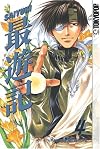
Who was it told me that this was a series that would really dig its claws into you in the fourth volume? Because good lord, were they ever right. The more I read of Hakkai's backstory, the more I gaped at the page. It was really not something I would have ever predicted for him, either in regards to his relationship with his sister (which had me slackjawed for, oh, a good five minutes or so) or in regards to how exactly it is that he became a youkai. Though in fairness, I did not know that show more such a thing was possible - is that something which Minekura came up with herself, or is that a feature of the legend surrounding the original story?
I'm really loving the slowly developing accretion of layers upon layers of character interaction and dynamic. Even small little things are feeding into that, like how Sanzo was able to recognize almost immediately that Goku was an imposter, let alone Sanzo's line about how Hakkai would rather have died than kill him. I'm looking forward to the next volume immensely. show less
I'm really loving the slowly developing accretion of layers upon layers of character interaction and dynamic. Even small little things are feeding into that, like how Sanzo was able to recognize almost immediately that Goku was an imposter, let alone Sanzo's line about how Hakkai would rather have died than kill him. I'm looking forward to the next volume immensely. show less
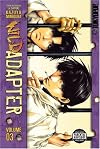
In this volume Kubota learns of a religious cult that could potentially have connections to both the yakuza sect and W.A. so he and Tokito, with the help of a nosey reporter, infiltrate to investigate and find out what's going on.
I liked this one a lot. There is an interesting ambiguousness in the relationship between Tokito and Kubota which could be one of just friends, or not. It is obvious that Kubota consistently puts Tokito's well being before his own and knowing his self-involved show more pre-disposition thanks to volume one, it is a significant change. The plot line of the religious cult seemed to serve more as a vehicle to somewhat advance the overarching story although it was still moderately interesting in and of itself. Again the dark denseness of the panels give this manga a slightly claustrophobic feel which is good for ratcheting up the sense of dread. I'm certainly looking forward to reading more! show less
I liked this one a lot. There is an interesting ambiguousness in the relationship between Tokito and Kubota which could be one of just friends, or not. It is obvious that Kubota consistently puts Tokito's well being before his own and knowing his self-involved show more pre-disposition thanks to volume one, it is a significant change. The plot line of the religious cult seemed to serve more as a vehicle to somewhat advance the overarching story although it was still moderately interesting in and of itself. Again the dark denseness of the panels give this manga a slightly claustrophobic feel which is good for ratcheting up the sense of dread. I'm certainly looking forward to reading more! show less
Awards

You May Also Like


Statistics
- Works
- 130
- Members
- 7,140
- Popularity
- #3,440
- Rating
- 4.2
- Reviews
- 41
- ISBNs
- 259
- Languages
- 7
- Favorited
- 24