
Yun Kōga
Author of Loveless, Volume 1
About the Author
Series
Works by Yun Kōga
Akuma no Riddle, Volume 1 3 copies
Madness000 Tiger & Bunny Fan-Book 2 copies
鵺 2 copies
Birth of Evangelion 2 copies
Crown of Love, Book 1 1 copy
Mind Size 1 copy
Crown of Love, Book 2 1 copy
Loveless, Volumes 1-7 1 copy
Associated Works
Satsubatsu Yuri Anthology: Edge of Lilies (Satsubatsu Federation) (Japanese Edition) — Illustrator; Contributor — 1 copy
Tagged
Common Knowledge
- Canonical name
- Kouga, Yun
- Legal name
- "Yamada, Risa, née Kimura", "山田理沙"
- Birthdate
- 1965-07-06
- Gender
- female
- Nationality
- Japan
- Places of residence
- "Shinagawa-ku, Tokyo, Japan"
- Associated Place (for map)
- Japan
Members
Reviews

According to the creation myth of Salsaroa, when the world began there were eight gods. Salsaroa commanded the other seven, and they all shaped the world. It was a happy time, until one of the seven gods, G, betrayed Salsaroa and was banished to a remote island along with his few human followers.
In this world's present, Father Olivier is a young priest who has left the Order (which he's not actually allowed to do) to seek out the island of G in the hope of getting his wish granted. Suzu, a show more dark elf, is sent by Father Messiah (lol) to bring Father Olivier back. However, by the time she tracks him down, Father Olivier has acquired a traveling companion, a mute slave named Ouri who he was reluctantly forced to accept as a gift. Ouri turns out to be sorcerer with some pretty big secrets, and she has become utterly devoted to Father Olivier.
I got this entirely because of Yun Kouga's name on the cover. I only really have experience with Kouga's Loveless, which is beautiful but, in terms of character relationships, extremely messed up. I thought it might be fun to try one of Kouga's other series. This one ended at around the same time Loveless began, and I can definitely tell that Kouga's artwork has changed over the years - the cover art is in her newer style (which I generally prefer, but those abs and hips are awful), while the interior art more closely resembles Earthian than Loveless. My tastes lean more towards Loveless' artwork, but this wasn't bad, despite occasional confusing moments.
So far, I'm not sure what to make of this. It looks like overarching story is going to be about the reincarnated seven gods and their eternal battle, but I'm not sure who's who or why they're even fighting. At first, I thoughtOuri might be G, but at one point Father Olivier spoke to G in his dreams, so I'm not sure that's really the case. But if Ouri isn't possessed by G (or a reborn version of G), then what's going on, and why do Soushi and Takara want to kill Ouri?
There might also be some sort of "corruption" thread running through the story. Father Olivier seems to have taken a vow of chastity or something, and yet Ouri keeps throwing herself at him. She's kissed him several times and tried to get him to let her into his bed. Add in the new development at the end of this volume, and it looks like Father Olivier is going to spend a lot of time struggling to stay good and virtuous.
I'm glad that the series' RPG-like elements quieted down after the first few chapters - every character was introduced with a basic stat sheet, and every new spell that was cast included an info box explaining how much MP it used, what it did, and its weaknesses (although Kouga already messed that up, because according to Aerial Eyes' description, Suzu should have only been able to use it to find Father Oliver once). Readers weren't even told how much MP each character had, so the MP cost amounts were basically useless.
I already own the second volume, so I'll give this one more chance to win me over.
Extras:
Seven full-color pages and an afterword written by Kouga in 2005, which Wikipedia tells me was about 12 years after the initial release of this volume. Apparently the person on the cover is supposed to be Ouri. Original Ouri and newly drawn cover art Ouri look nothing alike.
(Original review posted on A Library Girl's Familiar Diversions.) show less
In this world's present, Father Olivier is a young priest who has left the Order (which he's not actually allowed to do) to seek out the island of G in the hope of getting his wish granted. Suzu, a show more dark elf, is sent by Father Messiah (lol) to bring Father Olivier back. However, by the time she tracks him down, Father Olivier has acquired a traveling companion, a mute slave named Ouri who he was reluctantly forced to accept as a gift. Ouri turns out to be sorcerer with some pretty big secrets, and she has become utterly devoted to Father Olivier.
I got this entirely because of Yun Kouga's name on the cover. I only really have experience with Kouga's Loveless, which is beautiful but, in terms of character relationships, extremely messed up. I thought it might be fun to try one of Kouga's other series. This one ended at around the same time Loveless began, and I can definitely tell that Kouga's artwork has changed over the years - the cover art is in her newer style (which I generally prefer, but those abs and hips are awful), while the interior art more closely resembles Earthian than Loveless. My tastes lean more towards Loveless' artwork, but this wasn't bad, despite occasional confusing moments.
So far, I'm not sure what to make of this. It looks like overarching story is going to be about the reincarnated seven gods and their eternal battle, but I'm not sure who's who or why they're even fighting. At first, I thought
There might also be some sort of "corruption" thread running through the story. Father Olivier seems to have taken a vow of chastity or something, and yet Ouri keeps throwing herself at him. She's kissed him several times and tried to get him to let her into his bed. Add in the new development at the end of this volume, and it looks like Father Olivier is going to spend a lot of time struggling to stay good and virtuous.
I'm glad that the series' RPG-like elements quieted down after the first few chapters - every character was introduced with a basic stat sheet, and every new spell that was cast included an info box explaining how much MP it used, what it did, and its weaknesses (although Kouga already messed that up, because according to Aerial Eyes' description, Suzu should have only been able to use it to find Father Oliver once). Readers weren't even told how much MP each character had, so the MP cost amounts were basically useless.
I already own the second volume, so I'll give this one more chance to win me over.
Extras:
Seven full-color pages and an afterword written by Kouga in 2005, which Wikipedia tells me was about 12 years after the initial release of this volume. Apparently the person on the cover is supposed to be Ouri. Original Ouri and newly drawn cover art Ouri look nothing alike.
(Original review posted on A Library Girl's Familiar Diversions.) show less
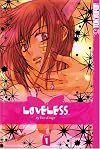
I feel the need, almost, to apologize for being so in love with Loveless. I feel like I should apologize for wide-eyed watching the severely underage romance, the somewhat beautified depictions of abuse, the uncomfortably sexualized terror lurking behind everything.
I will say this: I read this first when I was the protagonist's age, and I loved it then. I love it more with time. The familial and partner abuse depicted strangely and beautifully is just as messy and up-and-down as it is in show more real life. The story is like just about nothing else I have every seen, defies genre, and refuses to pull back from what it wants to be. The world as seen by a adultified child who doesn't know exactly what he is. Best recommended for whom this is not their first trauma rodeo. show less
I will say this: I read this first when I was the protagonist's age, and I loved it then. I love it more with time. The familial and partner abuse depicted strangely and beautifully is just as messy and up-and-down as it is in show more real life. The story is like just about nothing else I have every seen, defies genre, and refuses to pull back from what it wants to be. The world as seen by a adultified child who doesn't know exactly what he is. Best recommended for whom this is not their first trauma rodeo. show less
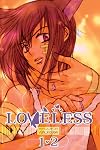
I initially read Yun Kouga's manga series Loveless after it was released in English by Tokyopop. I was surprised by how much I liked it, finding the story to be oddly compelling and engrossing if occasionally confusing. Tokyopop only released the first eight volumes of the ongoing series and so I was exceedingly happy when Viz Media rescued the license. The quality of Viz's release is much better than Tokyopop's, as well. Viz re-released the first eight volumes as two-volume omnibuses based show more on the special limited edition of Loveless published in Japan. The first omnibus, released in 2012, collects the first two volumes of Loveless as well as additional material previously unavailable in English. In Japan, the contents were released between 2002 and 2003. Since July 2013's Manga Moveable Feast focused on Yun Kouga and her work, it was the perfect opportunity for me to revisit Loveless.
Ritsuka Aoyagi is a new student at Yano Jonan Elementary School. Though he can't be bothered with his classmates, the withdrawn sixth grader does his best to at least put up a good front for his teachers. At such a young age, Ritsuka has already been through a lot. His older brother Seimei, who he adored, was brutally murdered and he suffers from physical, mental, and emotional abuse at the hands of his mother. Even Ritsuka's past is obscured--his memories and personality from two years ago are lost, the amnesia brought on by what is assumed to be some sort of trauma. Ritsuka is alone and has nothing that he can claim as his own until he is approached by Soubi Agatsuma, a college student with a mysterious connection to Seimei. For never having met before, Soubi shows an unexpected and disconcerting level of devotion and affection towards Ritsuka, something the younger boy desperately needs but is hesitant to accept.
One of the most peculiar things about Loveless is apparent within the first few pages: many characters have cat ears and tails. Later it is revealed that this is a physical sign that those individuals haven't had sex. It's an admittedly strange addition to the manga but Kouga uses it quite well. The presence or absence of ears and tails impacts characters' interactions and relationships, how they think about and act towards one another. The cat ears and tails also serve another purpose in Loveless, allowing many of Kouga's characters to be particularly expressive. Tails bush out when they're startled; ears fold back when they're upset or perk up when they're attentive. Actually, in general I find Kouga's artwork to be beautifully expressive and emotive. It creates a mood and atmosphere that captures the story's darkness, intimacy, and barely subdued sexuality exceptionally well without being overwhelmingly oppressive.
The beginning of Loveless is a story of intense yearning and loneliness with characters who have been broken, damaged, and twisted. But even when they despair they still cling to hope. Ritsuka has trouble accepting himself and difficulty trusting others; the attention he receives from Soubi is both welcomed and feared. Loveless is also a story about the power of words. In part because of his association with Soubi, Ritsuka is pulled into a world where battles are waged with words and spells are cast that can cause considerable pain and physical damage. Whether he realizes it or not, Ritsuka is already quite familiar with the even more insidious psychological agony caused by words uttered in everyday contexts--such as when his mother continually denies that he is even her son. The first omnibus of Loveless raises more questions than it provides answers, but it does establish an intriguing tale and characters. Even having read it before, I still find Loveless to be a strangely enthralling and compelling manga.
Experiments in Manga show less
Ritsuka Aoyagi is a new student at Yano Jonan Elementary School. Though he can't be bothered with his classmates, the withdrawn sixth grader does his best to at least put up a good front for his teachers. At such a young age, Ritsuka has already been through a lot. His older brother Seimei, who he adored, was brutally murdered and he suffers from physical, mental, and emotional abuse at the hands of his mother. Even Ritsuka's past is obscured--his memories and personality from two years ago are lost, the amnesia brought on by what is assumed to be some sort of trauma. Ritsuka is alone and has nothing that he can claim as his own until he is approached by Soubi Agatsuma, a college student with a mysterious connection to Seimei. For never having met before, Soubi shows an unexpected and disconcerting level of devotion and affection towards Ritsuka, something the younger boy desperately needs but is hesitant to accept.
One of the most peculiar things about Loveless is apparent within the first few pages: many characters have cat ears and tails. Later it is revealed that this is a physical sign that those individuals haven't had sex. It's an admittedly strange addition to the manga but Kouga uses it quite well. The presence or absence of ears and tails impacts characters' interactions and relationships, how they think about and act towards one another. The cat ears and tails also serve another purpose in Loveless, allowing many of Kouga's characters to be particularly expressive. Tails bush out when they're startled; ears fold back when they're upset or perk up when they're attentive. Actually, in general I find Kouga's artwork to be beautifully expressive and emotive. It creates a mood and atmosphere that captures the story's darkness, intimacy, and barely subdued sexuality exceptionally well without being overwhelmingly oppressive.
The beginning of Loveless is a story of intense yearning and loneliness with characters who have been broken, damaged, and twisted. But even when they despair they still cling to hope. Ritsuka has trouble accepting himself and difficulty trusting others; the attention he receives from Soubi is both welcomed and feared. Loveless is also a story about the power of words. In part because of his association with Soubi, Ritsuka is pulled into a world where battles are waged with words and spells are cast that can cause considerable pain and physical damage. Whether he realizes it or not, Ritsuka is already quite familiar with the even more insidious psychological agony caused by words uttered in everyday contexts--such as when his mother continually denies that he is even her son. The first omnibus of Loveless raises more questions than it provides answers, but it does establish an intriguing tale and characters. Even having read it before, I still find Loveless to be a strangely enthralling and compelling manga.
Experiments in Manga show less
It feels like the only personality that Georgia has is her whole “I want to kiss someone bc otherwise it’s weird, tho I find it really disgusting; and I’ve never liked someone either, isn’t that really weird?”.
I get that she’s trying to find out who she is and there’s nothing wrong with that. It’s just kinda boring to read through 400 pages, when the protagonist doesn’t have any other personality except for that. I could’ve as well read through forums about whether show more someone is asexual/aromantic, instead of going through the whole book – because personality-wise it would be the same.
But it’s not just Georgia. Everyone is kinda a flat character and no one really stands out as a person, except for Pip.
And I’m not counting that they love Shakespeare because everyone does in this book, therefore it’s not a special personality trait anymore.
~
Also, where can I get myself a Jason? He’s literally the only guy that doesn’t care for sex. Except Sunil, but then again he’s asexual, so I’m not counting that.
Why can’t there be more guys out there, who are not asexual, but still wouldn’t care about their partner not being interested in sex?
Huh, that’s why it’s fictional.
~
The ending was sweet and made me jealous, but other than that... idk. I guess it was a good book overall, but not really sth I would read again, as everything is just so flat.
~
Also, I’m kinda angry that Rooney realized she loved Georgia, while making out with Pip. Like, couldn’t it be after they finished, after the play? Or before they made out? Bc I literally feel so bad for pip. She should’ve been that special someone for Georgia, or even Jason. But no, it was Rooney.
Like Pip said, Rooney is going to take Georgia away from her. And yes, you can have more than one best friend, but while Pip is just really panicking and worrying about where the f* Rooney has ran off to, Georgia & Rooney are just planning for their future, about how they’re going to grow old together... like, what the actual f?
Are you kidding me? Why does Pip have to suffer like that? Rooney left her literally in the middle of a make out, they were both like half-naked, and she just left without saying anything... Georgia found her and their just fantasizing about their future together? I’m sorry, what now? show less
I get that she’s trying to find out who she is and there’s nothing wrong with that. It’s just kinda boring to read through 400 pages, when the protagonist doesn’t have any other personality except for that. I could’ve as well read through forums about whether show more someone is asexual/aromantic, instead of going through the whole book – because personality-wise it would be the same.
But it’s not just Georgia. Everyone is kinda a flat character and no one really stands out as a person, except for Pip.
And I’m not counting that they love Shakespeare because everyone does in this book, therefore it’s not a special personality trait anymore.
~
Also, where can I get myself a Jason? He’s literally the only guy that doesn’t care for sex. Except Sunil, but then again he’s asexual, so I’m not counting that.
Why can’t there be more guys out there, who are not asexual, but still wouldn’t care about their partner not being interested in sex?
Huh, that’s why it’s fictional.
~
The ending was sweet and made me jealous, but other than that... idk. I guess it was a good book overall, but not really sth I would read again, as everything is just so flat.
~
Also, I’m kinda angry that Rooney realized she loved Georgia, while making out with Pip. Like, couldn’t it be after they finished, after the play? Or before they made out? Bc I literally feel so bad for pip. She should’ve been that special someone for Georgia, or even Jason. But no, it was Rooney.
Like Pip said, Rooney is going to take Georgia away from her. And yes, you can have more than one best friend, but while Pip is just really panicking and worrying about where the f* Rooney has ran off to, Georgia & Rooney are just planning for their future, about how they’re going to grow old together... like, what the actual f?
Are you kidding me? Why does Pip have to suffer like that? Rooney left her literally in the middle of a make out, they were both like half-naked, and she just left without saying anything... Georgia found her and their just fantasizing about their future together? I’m sorry, what now? show less
Lists
You May Also Like


Associated Authors
Statistics
- Works
- 107
- Also by
- 2
- Members
- 5,734
- Popularity
- #4,304
- Rating
- 3.9
- Reviews
- 36
- ISBNs
- 260
- Languages
- 8
- Favorited
- 15