
David Price (17)
Author of Open
For other authors named David Price, see the disambiguation page.
About the Author
Image credit: © 2003 Simon Bruty
Works by David Price
Tagged
Common Knowledge
- Gender
- male
Members
Reviews
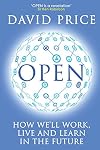
"Open" discusses many fine subjects: collaborative, self-motivated learning; self-organizing, grassroots disaster response teams; better ways of doing business and building schools. These are all good things — when carried out in a positive way. Unfortunately, David Price's embrace of the good is exclusive and unquestioning. The "old ways" of doing business, education, and learning are all obsolete, stifling, and procrustean; the "open learning commons" that is replacing them is infinitely show more superior and inevitable. I found Price's pooh-poohing of traditional practices to be somewhat grating and hyperbolic. It's true that educational systems have lost their way at the moment and are struggling to remain relevant, but to assert that making students sit in rows of desks "reminds students of their relative anonymity, and their place in the hierarchy" is a bit over the top.
A larger problem throughout the book is a near-complete absence of any mention of the negative aspects of the "open" movement. Price picks out success stories to discuss — innovative companies, hurricane relief groups, and experimental schools — but never brings up the times when the same principles that led to those successes led to equally notable failures. He speaks approvingly of the popular uprisings of the "Arab Spring" but fails to note that that same movement has nosedived quite badly over the past year. He recounts the story of an online group's successful location of a car thief, but ignores the fact that the group, by calling the suspect's employer to tell him that the employee in question "wouldn't be coming in to work today" (as he would be under arrest) crosses the line from helping the police to being presumptuous and interfering. He claims that his son taught himself the skills of Tuvan throat singing, which usually takes "years of face-to-face apprenticeship", in a mere three weeks by reading online tutorials — but he doesn't consider that what sounds the same to an amateur may sound very distinct to an experienced singer.
The book's treatment of major tech companies is particularly credulous. Google "have an unambiguous position on going 'open'" (yes, they do, but it's not what you think). "Less than one percent of eBay purchases result in fraud." (I don't know how many purchases eBay handles in a year, but I'll bet that 1% of that figure is a pretty significant number.) And Apple is barely mentioned at all, despite being the antithesis of "open" in many people's opinion. The iPad gets a cameo in a favorable comparison — is something "an iPad or a Sinclair C5" — but the iPad was developed in a "closed" process that flies in the face of many of the principles Price declares are necessary for success.
For these reasons, although I do approve of many of the "open" ideals, I can't consider "Open" very favorably. show less
A larger problem throughout the book is a near-complete absence of any mention of the negative aspects of the "open" movement. Price picks out success stories to discuss — innovative companies, hurricane relief groups, and experimental schools — but never brings up the times when the same principles that led to those successes led to equally notable failures. He speaks approvingly of the popular uprisings of the "Arab Spring" but fails to note that that same movement has nosedived quite badly over the past year. He recounts the story of an online group's successful location of a car thief, but ignores the fact that the group, by calling the suspect's employer to tell him that the employee in question "wouldn't be coming in to work today" (as he would be under arrest) crosses the line from helping the police to being presumptuous and interfering. He claims that his son taught himself the skills of Tuvan throat singing, which usually takes "years of face-to-face apprenticeship", in a mere three weeks by reading online tutorials — but he doesn't consider that what sounds the same to an amateur may sound very distinct to an experienced singer.
The book's treatment of major tech companies is particularly credulous. Google "have an unambiguous position on going 'open'" (yes, they do, but it's not what you think). "Less than one percent of eBay purchases result in fraud." (I don't know how many purchases eBay handles in a year, but I'll bet that 1% of that figure is a pretty significant number.) And Apple is barely mentioned at all, despite being the antithesis of "open" in many people's opinion. The iPad gets a cameo in a favorable comparison — is something "an iPad or a Sinclair C5" — but the iPad was developed in a "closed" process that flies in the face of many of the principles Price declares are necessary for success.
For these reasons, although I do approve of many of the "open" ideals, I can't consider "Open" very favorably. show less
 This review was written for LibraryThing Early Reviewers.
This one was an inspiring and a thought-provoking read. Of course, I'm not in education, so not really in position to start taking on board the suggestions how to approach teaching and learning from this open and sharing angle, and not even a parent to try to push for those approaches for my children.
And I felt that learning and teaching at schools and learning at work were generalised rather simplistically at their worst—but I suspect this is where everybody will use their own show more experiences as a reference. I never hated school and never had major issues in motivating myself to learn about things I wasn't personally that interested in (and after two university degrees in different areas, I hold that the dullest learning module in pretty much anything is the introduction to whatever it is that you just have to push through to get to the exciting and/or useful parts).
What I found most interesting were the areas where the book touched upon organisational learning: I can certainly see a continuum from The Social Life of Information that I read earlier this year, and can see how some of the struggles we've had at my work around processes relate to topics discussed in this book; food for thought certainly. show less
And I felt that learning and teaching at schools and learning at work were generalised rather simplistically at their worst—but I suspect this is where everybody will use their own show more experiences as a reference. I never hated school and never had major issues in motivating myself to learn about things I wasn't personally that interested in (and after two university degrees in different areas, I hold that the dullest learning module in pretty much anything is the introduction to whatever it is that you just have to push through to get to the exciting and/or useful parts).
What I found most interesting were the areas where the book touched upon organisational learning: I can certainly see a continuum from The Social Life of Information that I read earlier this year, and can see how some of the struggles we've had at my work around processes relate to topics discussed in this book; food for thought certainly. show less
This review was written for LibraryThing Early Reviewers.Open by David Price
David Price has put together an eye opener in his discussion of the future of industry and education. As a consulting engineer, I was especially interested in the idea of free research time. We always had to account for every minute of time and show profit from our efforts, but it was often those after-hours bull sessions with peers that led to real innovation. As a pastor of a congregation with varied interests and gifts, I can see the biblical foundation for the commons philosophy that he show more carries throughout the book and will be looking for better ways to implement his suggestions. As the parent of an aspiring math teacher, I am very interested in his view of successful education in the future. And, finally, I found the historical and personal anecdotes to be worth the read, even for those who wouldn't be interested in the book for its technical value. I will be recommending this book to my friends and peers and making use of some of its passages as illustrations in my preaching. show less
This review was written for LibraryThing Early Reviewers.Open by David Price
One of many books that want to tell us that the new communications tools resulting from the Internet will revolutionize bluntly everything. So why not the way we are teaching / learning too?
Of course, the new tools and the fashionable 'openness' have the power to encourage fantastic developments in the business and educational segments - and the author gives a lot of excellent examples of them.
But will this 'openness' convince our power-hungy politicians? Isn't 'openness' the last thing show more these guys want to see around?
However, I'm lamenting. There are plenty of insights that make the book readable. So, try for yourself being open ... show less
Of course, the new tools and the fashionable 'openness' have the power to encourage fantastic developments in the business and educational segments - and the author gives a lot of excellent examples of them.
But will this 'openness' convince our power-hungy politicians? Isn't 'openness' the last thing show more these guys want to see around?
However, I'm lamenting. There are plenty of insights that make the book readable. So, try for yourself being open ... show less
This review was written for LibraryThing Early Reviewers.Statistics
- Works
- 1
- Members
- 74
- Popularity
- #238,153
- Rating
- 3.6
- Reviews
- 14
- ISBNs
- 134
- Languages
- 1
