
Peter Laird
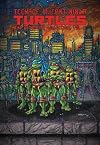
Author of Teenage Mutant Ninja Turtles: The Ultimate Collection, Vol. 1
About the Author
Image credit: Peter Laird, from Comicvine at https://comicvine.gamespot.com/a/uploads/scale_small/3/36052/2691771-peterlaird....
Series
Works by Peter Laird
Teenage Mutant Ninja Turtles: The Ultimate Collection, Vol. 2 (2012) — Author, Script Writer, Illustrator, Annotator — 84 copies, 4 reviews
Teenage Mutant Ninja Turtles: The Ultimate Collection, Vol. 3 (2012) — Author, Script Writer, Illustrator, Annotator — 60 copies, 2 reviews
Teenage Mutant Ninja Turtles: The Ultimate Collection, Vol. 4 (2013) — Author, Script Writer, Illustrator, Cover Artist, Annotator — 51 copies, 1 review
Teenage Mutant Ninja Turtles Adventures (1989) #1 - The Return of Shredder, Part I (1989) — Cover artist — 5 copies
TMNT: Journeys #4 1 copy
TMNT: Journeys #6 1 copy
TMNT: Journeys #7 1 copy
TMNT: Journeys #8 1 copy
TMNT: Journeys #9 1 copy
TMNT: Journeys #5 1 copy
TMNT: Journeys #3 1 copy
TMNT: Journeys #2 1 copy
TMNT: Journeys #1 1 copy
Associated Works
Teenage Mutant Ninja Turtles II: The Secret of the Ooze [1991 film] (1991) — Original characters — 169 copies, 1 review
Teenage Mutant Ninja Turtles: Out of the Shadows [2016 film] (2016) — Original characters — 129 copies
Usagi Yojimbo/Teenage Mutant Ninja Turtles: The Complete Collection (2018) — Author — 27 copies, 2 reviews
Teenage Mutant Ninja Turtles: Mutant Mayhem [2023 film] (2023) — Original characters — 18 copies, 1 review
Teenage Mutant Ninja Turtles Micro-Series #4 - Leonardo (2012) — Cover artist, some editions — 4 copies
Turtle Power: The Definitive History of the Teenage Mutant Ninja Turtles [2014 film] (2014) — Self — 4 copies
Teenage Mutant Ninja Turtles Micro-Series #1 - Raphael (2011) — Cover artist, some editions — 3 copies
Teenage Mutant Ninja Turtles Adventures #9 - Codename: Chameleon (1990) — Cover artist, some editions — 2 copies
Teenage Mutant Ninja Turtles Adventures #38 - United We Stand, Divided We Fall, Part One (1992) — Cover artist, some editions — 2 copies
Rise of the Teenage Mutant Ninja Turtles: The Movie [2022 film] (2022) — Original characters — 1 copy
Teenage Mutant Ninja Turtles: 30th Anniversary Special (2014) — Illustrator; Cover artist, some editions — 1 copy
Tagged
Common Knowledge
- Legal name
- Laird, Peter Alan
- Birthdate
- 1954-01-27
- Gender
- male
- Occupations
- comic book writer
comic book artist - Relationships
- Eastman, Kevin (collaborator)
- Nationality
- USA
- Birthplace
- North Adams, Massachusetts, USA
- Associated Place (for map)
- Massachusetts, USA
Members
Reviews

Well, here it is. The comic that started it all. This graphic novel collects colorized versions of the first three issues of Kevin Eastman and Peter Laird’s original comics that conquered the world with a merchandising empire that no one saw coming, least of all them.
These comics did include some of the differences I’d always been told to expect from the Turtles I’ve known and loved since the cartoons, movies, and video games of my early childhood, but not as many as I expected! True, show more it is a bit more violent, with the Turtles being willing to kill some of their adversaries, but by the second issue Leonardo is already telling his more hotheaded brother Raphael that the Turtles kill only as a last resort.
Oh, that’s the other thing. I was primed to expect the Turtles themselves to be nearly interchangeable, but they actually have much more fully-formed personalities than that even in these earliest days of the comics! Leo was always the honorable leader and Raph was always the hotheaded angy boy, all the way back in issue 1! And Donnie has been the tech guy since at least issue 2, when he tries to hack Baxter Stockman’s computers to solve the Mouser problem.
Issue 1 of the comics does a lot, opening in media res with the turtles fighting the street gang the Purple Dragons. When they soundly defeat them, Master Splinter decides they’re “ready” and tells them the story of their origin as well as the origin of the Shredder. The broad strokes of this origin story will be very familiar to those who have consumed much Turtle media, but there are a few details that change from version to version and I’m not really sure there’s any single version that gets every detail right?
The main areas of divergence are often the exact origin of Splinter and the identity of Shredder. In some versions, Splinter was a pet rat who mimicked his owner’s martial arts movements in his cage and then got transformed into an anthro rat; in other versions, he was himself the martial arts master and got transformed. In the comics, perhaps unsurprisingly, it’s the sillier of the two explanations–the pet rat who learned martial arts by mimicking his master’s movements from his cage.
The other area of divergence is the exact identity of Shredder and the fate of Splinter’s owner, Hamato Yoshi. In the original version in the comics, it is not Oroku Saki (Shredder) who is rivals with Hamato Yoshi. Rather, it is his brother, Oroku Nagi. He is jealous over Yoshi’s greater advancement in the clan they’re both a part of, and also his romance with a woman named Tang Shen. One or both of these conflicts with Yoshi is often transferred to Oroku Saki in later versions, skipping the middleman as it were. In the comic, Nagi tries to kill Yoshi and Shen, but Yoshi kills him in self-defense and flees Japan with his love. It is then that Oroku Saki enters the picture, vowing revenge for his brother’s death and killing Yoshi and Shen in retribution.
The Shredder is presented as a genuinely threatening big bad, but the Turtles face him in a fight to the death in just the first issue of the comics! And that fight to the death does end in a promised death–Shredder’s! “When the evil Shredder attacks, these turtle boys don’t cut him no slack” indeed!
The second issue, as many future iterations will do as well, introduces Baxter Stockman and his Mouser robots as the next villain the Turtles face. It also introduces April O’Neil, but not as a television reporter as you might expect! Instead, she’s Stockman’s lab assistant, but ends up taking issue with his methods and he decides to have her eliminated by his robot army. That’s when she meets the Turtles and, as she usually does in later versions as well, faints. A lot of later versions also use this as an excuse to tell the Turtles’ origin story rather than just having Splinter decide “okay it’s time to do that now” after having apparently not told them anything about where they come from in all the years of raising them like he does in issue 1.
In the third issue, Splinter is missing! This is another classic plot that gets reused in a lot of versions of the story. It’s also necessary for the Turtles to abandon their sewer lair in this story, which is something some other versions retain. They don’t actually find Splinter in this issue, as they spend the whole issue evading the cops before making it to April’s apartment and collapsing in four turtle heaps on her furniture and floor for some much-needed rest.
Speaking of the police, back in the first issue when the cops show up to mop up after their confrontation with the Purple Dragons, Leo narrates, “We do not like to run from those who would be our allies, but they would not understand us.” And I just gotta say, I’m pretty sure that should be your sign that the cops would not be great allies. The fact that you feel threatened because you’re different and you don’t think they would react to that well should tell you just about everything you need to know about them.
Anyway, yeah! These comics are pretty terrific. They were also a lot more similar to all the things I know and love about my turtle boys than I was expecting based on everything I had heard, so that was pretty awesome. show less
These comics did include some of the differences I’d always been told to expect from the Turtles I’ve known and loved since the cartoons, movies, and video games of my early childhood, but not as many as I expected! True, show more it is a bit more violent, with the Turtles being willing to kill some of their adversaries, but by the second issue Leonardo is already telling his more hotheaded brother Raphael that the Turtles kill only as a last resort.
Oh, that’s the other thing. I was primed to expect the Turtles themselves to be nearly interchangeable, but they actually have much more fully-formed personalities than that even in these earliest days of the comics! Leo was always the honorable leader and Raph was always the hotheaded angy boy, all the way back in issue 1! And Donnie has been the tech guy since at least issue 2, when he tries to hack Baxter Stockman’s computers to solve the Mouser problem.
Issue 1 of the comics does a lot, opening in media res with the turtles fighting the street gang the Purple Dragons. When they soundly defeat them, Master Splinter decides they’re “ready” and tells them the story of their origin as well as the origin of the Shredder. The broad strokes of this origin story will be very familiar to those who have consumed much Turtle media, but there are a few details that change from version to version and I’m not really sure there’s any single version that gets every detail right?
The main areas of divergence are often the exact origin of Splinter and the identity of Shredder. In some versions, Splinter was a pet rat who mimicked his owner’s martial arts movements in his cage and then got transformed into an anthro rat; in other versions, he was himself the martial arts master and got transformed. In the comics, perhaps unsurprisingly, it’s the sillier of the two explanations–the pet rat who learned martial arts by mimicking his master’s movements from his cage.
The other area of divergence is the exact identity of Shredder and the fate of Splinter’s owner, Hamato Yoshi. In the original version in the comics, it is not Oroku Saki (Shredder) who is rivals with Hamato Yoshi. Rather, it is his brother, Oroku Nagi. He is jealous over Yoshi’s greater advancement in the clan they’re both a part of, and also his romance with a woman named Tang Shen. One or both of these conflicts with Yoshi is often transferred to Oroku Saki in later versions, skipping the middleman as it were. In the comic, Nagi tries to kill Yoshi and Shen, but Yoshi kills him in self-defense and flees Japan with his love. It is then that Oroku Saki enters the picture, vowing revenge for his brother’s death and killing Yoshi and Shen in retribution.
The Shredder is presented as a genuinely threatening big bad, but the Turtles face him in a fight to the death in just the first issue of the comics! And that fight to the death does end in a promised death–Shredder’s! “When the evil Shredder attacks, these turtle boys don’t cut him no slack” indeed!
The second issue, as many future iterations will do as well, introduces Baxter Stockman and his Mouser robots as the next villain the Turtles face. It also introduces April O’Neil, but not as a television reporter as you might expect! Instead, she’s Stockman’s lab assistant, but ends up taking issue with his methods and he decides to have her eliminated by his robot army. That’s when she meets the Turtles and, as she usually does in later versions as well, faints. A lot of later versions also use this as an excuse to tell the Turtles’ origin story rather than just having Splinter decide “okay it’s time to do that now” after having apparently not told them anything about where they come from in all the years of raising them like he does in issue 1.
In the third issue, Splinter is missing! This is another classic plot that gets reused in a lot of versions of the story. It’s also necessary for the Turtles to abandon their sewer lair in this story, which is something some other versions retain. They don’t actually find Splinter in this issue, as they spend the whole issue evading the cops before making it to April’s apartment and collapsing in four turtle heaps on her furniture and floor for some much-needed rest.
Speaking of the police, back in the first issue when the cops show up to mop up after their confrontation with the Purple Dragons, Leo narrates, “We do not like to run from those who would be our allies, but they would not understand us.” And I just gotta say, I’m pretty sure that should be your sign that the cops would not be great allies. The fact that you feel threatened because you’re different and you don’t think they would react to that well should tell you just about everything you need to know about them.
Anyway, yeah! These comics are pretty terrific. They were also a lot more similar to all the things I know and love about my turtle boys than I was expecting based on everything I had heard, so that was pretty awesome. show less
It's surprising, looking at the original Mirage turtles run, just how insubstantial the "original turtles run" actually is. You have a VERY indie comic parody of Frank Miller, followed by a VERY indie series of screwball sci-fi stories, followed by a (successful) attempt at serious storytelling when the Turtles are run out of NY, a year and a half real-time of goofy, anthology-style guest stories of generally middling entertainment value and wildly varying tone, a (successful) return to show more serious storytelling as they come back to NYC, SEVERAL years more of goofy, anthology-style guest stories of generally middling entertainment value and wildly varying tone, and ending with quite possibly one of the best single story runs in comics with the 'City at War' storyline to end the original Turtles.
This volume, 3, is half and half insubstantial nonsense followed by an actually quite good solo guest spot (Eric Talbot, Issue #18) and the very nice Return to New York arc. The back half is why I read these books. The front half is why people skip most of these books. show less
This volume, 3, is half and half insubstantial nonsense followed by an actually quite good solo guest spot (Eric Talbot, Issue #18) and the very nice Return to New York arc. The back half is why I read these books. The front half is why people skip most of these books. show less

You know, as I continue reading these, what I'm noticing is that while most of the Turtles have more differentiated individual identities than I was told to expect, Mikey doesn't really stand out much at all yet! Which if you've seen literally any onscreen version of the franchise is probably a bit difficult to believe, and I'm not gonna lie it’s kinda freaking me out!
This volume sees the turtle boys locate Splinter just in time to be accidentally teleported to a faraway planet by the show more Krang! Which, by the way, since the 1987 cartoon was my entry point to the franchise (like it was for many people my age), I always thought it was weird that Krang was not an individual but rather a species in several of the more recent adaptations, but it perhaps shouldn't surprise me to learn that that's actually how it originally was in the comics!
The heroic ninja (see what I did there?) turtle boys find themselves in the middle of a war between some militaristic humans called the Federation and the Triceratons! In a fun bit of timing I happen to have just watched this arc in the 2003 show and I can vouch for the fact that while it expands on it a bit it's actually super faithful otherwise, so that's pretty awesome. And yeah I may or may not be super thirsty for the Triceratons so I loved this arc. show less
This volume sees the turtle boys locate Splinter just in time to be accidentally teleported to a faraway planet by the show more Krang! Which, by the way, since the 1987 cartoon was my entry point to the franchise (like it was for many people my age), I always thought it was weird that Krang was not an individual but rather a species in several of the more recent adaptations, but it perhaps shouldn't surprise me to learn that that's actually how it originally was in the comics!
The heroic ninja (see what I did there?) turtle boys find themselves in the middle of a war between some militaristic humans called the Federation and the Triceratons! In a fun bit of timing I happen to have just watched this arc in the 2003 show and I can vouch for the fact that while it expands on it a bit it's actually super faithful otherwise, so that's pretty awesome. And yeah I may or may not be super thirsty for the Triceratons so I loved this arc. show less

Not only did the comics immediately get back on track, they delivered what I consider to be their best stretch. In this three-issue arc, Shredder returns, Leo gets his ass kicked and thrown through a window, and April’s apartment is burned down, forcing the Turtles, April, and Casey Jones to retreat to Casey’s grandmother’s farm house.
That all probably sounds familiar to you since it formed the basis of the plot of the 1990 live-action film, though it was Raph rather than Leo who took show more a ride through the window, and this was Shredder’s first clash with the Turtles rather than his return. There was also an exceptionally faithful adaptation in a three-episode arc towards the late-middle of the 2003 animated series’ first season. I just think this is an exceptionally well-crafted story in every version.
One thing I was surprised about was that in the original comics, this story takes place during Christmas, so Leo is fighting the Foot in the snow rather than in the rain. It does drive home the shock his brothers and April experience quite a bit more when they’re decorating a Christmas tree and cooking dinner before their joyful peace is shattered along with the window Leo is thrown through. I still pretty much always picture important Turtles fights happening on rooftops either at night or in pouring rain, but this was pretty effective all the same. show less
That all probably sounds familiar to you since it formed the basis of the plot of the 1990 live-action film, though it was Raph rather than Leo who took show more a ride through the window, and this was Shredder’s first clash with the Turtles rather than his return. There was also an exceptionally faithful adaptation in a three-episode arc towards the late-middle of the 2003 animated series’ first season. I just think this is an exceptionally well-crafted story in every version.
One thing I was surprised about was that in the original comics, this story takes place during Christmas, so Leo is fighting the Foot in the snow rather than in the rain. It does drive home the shock his brothers and April experience quite a bit more when they’re decorating a Christmas tree and cooking dinner before their joyful peace is shattered along with the window Leo is thrown through. I still pretty much always picture important Turtles fights happening on rooftops either at night or in pouring rain, but this was pretty effective all the same. show less
Lists
Awards


You May Also Like


Associated Authors
Statistics
- Works
- 79
- Also by
- 28
- Members
- 1,224
- Popularity
- #20,979
- Rating
- 3.5
- Reviews
- 31
- ISBNs
- 54
- Languages
- 3
- Favorited
- 1