

Kevin Eastman
Author of Teenage Mutant Ninja Turtles: The Last Ronin
About the Author
Series
Works by Kevin Eastman
Teenage Mutant Ninja Turtles: The Ultimate Collection, Vol. 2 (2012) — Author, Script Writer, Illustrator, Cover Artist, Annotator — 87 copies, 4 reviews
Teenage Mutant Ninja Turtles: The Ultimate Collection, Vol. 3 (2012) — Author, Script Writer, Illustrator, Cover Artist, Annotator — 63 copies, 2 reviews
Teenage Mutant Ninja Turtles: The Ultimate Collection, Vol. 4 (2013) — Author, Script Writer, Illustrator, Cover Artist, Annotator — 52 copies, 1 review
Why The Best Are The Best: 25 Powerful Words That Impact, Inspire, And Define Champions (2018) 13 copies
Teenage Mutant Ninja Turtles (TM) It's a Shell of a Town! (Teenage Mutant Ninja Turtles (Tokyopop)) (2004) 10 copies, 1 review
Teenage Mutant Ninja Turtles Adventures (1989) #1 - The Return of Shredder, Part I (1989) — Cover artist — 5 copies
Teenage Mutant Ninja Turtles Compendium, Vol. 3 (Teenage Mutant Ninja Turtles Compendium, 3) (2022) 5 copies
Tortues Ninja. 1, La malédiction 3 copies
Teenage Mutant Ninja Turtles: The Last Ronin -- The Covers (The Teenage Mutant Ninja Turtles) (2023) 3 copies
Teenage Mutant Ninja Turtles #25 2 copies
Teenage Mutant Ninja Turtles #22 2 copies
Teenage Mutant Ninja Turtles #24 2 copies
Teenage Mutant Ninja Turtles #27 2 copies
Teenage Mutant Ninja Turtles #12 2 copies
TORTUES NINJA N° 2 LES SAUVAGES 2 copies
5 - Attack of Big Macc 2 copies
Teenage Mutant Ninja Turtles The Movie & Teenage Mutant Ninja Turtles Michaelangelo Chistmas Special (1900) 2 copies
Contagem de Corpos 1 copy
Heavy Metal Magazine Vol. 18, No. 2 — Editor — 1 copy
Radically Rearranged Ronin Ragdolls — Author; Layouts — 1 copy
Bodycount (1996) #3 1 copy
Thump'n Guts #1 1 copy
V-Wars #0: FCBD Special 1 copy
Teenage Mutant Ninja Turtles (Ninja Turtles på toppen, Verdens undergang og Vi er bare de bedste) 1 copy
Teenage Mutant Ninja Turtles: 30th Anniversary Special (2014) — Author; Illustrator; Cover artist, some editions — 1 copy
By Kevin B. Eastman - Teenage Mutant Ninja Turtles 2 (Teenage Mutant Ninja Turtles (Yea (1987-08-16) [Paperback] (1987) 1 copy
Želvy Ninja: Menu číslo 2 1 copy
Želvy Ninja: Menu číslo 3 1 copy
Underwhere 1 copy
Leonardo Blind Sight #1 1 copy
Mighty Mutanimals #1 1 copy
Gobbledygook #1 1 copy
Fistful of Blood #1 1 copy
Les Tortues Ninja - TMNT, T2 : La Chute de New York, Première partie (Les Tortues Ninja - TMNT (2)) (French Edition) (2018) 1 copy
Les Tortues ninja - TMNT, T3 : La Chute de New York, Seconde partie (Les Tortues Ninja - TMNT (3)) (French Edition) (2018) 1 copy
Best of Teenage Mutant Ninja Turtles Collection Vol. 3 (Teenage Mutant Ninja Turtles: Best Of) 1 copy
Teenage Mutant Ninja Turtles 1 copy
Associated Works
Teenage Mutant Ninja Turtles II: The Secret of the Ooze [1991 film] (1991) — Original characters — 168 copies, 1 review
Teenage Mutant Ninja Turtles: Out of the Shadows [2016 film] (2016) — Original characters — 129 copies
Teenage Mutant Ninja Turtles/Ghostbusters (2015) — Cover artist, some editions — 60 copies, 1 review
Teenage Mutant Ninja Turtles/Usagi Yojimbo [2017] #1 (2017) — Cover artist, some editions — 30 copies, 1 review
Usagi Yojimbo/Teenage Mutant Ninja Turtles: The Complete Collection (2018) — Illustrator — 27 copies, 2 reviews
Teenage Mutant Ninja Turtles Universe, Vol. 1: The War to Come (2017) — Author — 19 copies, 1 review
Teenage Mutant Ninja Turtles: Mutant Mayhem [2023 film] (2023) — Original characters — 18 copies, 1 review
Teenage Mutant Ninja Turtles Micro-Series #2 - Michelangelo (2015) — Cover artist, some editions — 13 copies
Teenage Mutant Ninja Turtles: Original 1990 Motion Picture Soundtrack (1990) — Cover artist, some editions — 5 copies
Teenage Mutant Ninja Turtles III: Original Motion Picture Soundtrack (1993) — Cover artist, some editions — 5 copies
Teenage Mutant Ninja Turtles Micro-Series #3 - Donatello (2012) — Cover artist, some editions — 4 copies
Turtle Power: The Definitive History of the Teenage Mutant Ninja Turtles [2014 film] (2014) — Self — 4 copies
Elvira: Mistress of the Dark #9 - Vroom Vroom, Witches! (2019) — Cover artist, some editions — 4 copies
Teenage Mutant Ninja Turtles Micro-Series #1 - Raphael (2011) — Cover artist, some editions — 3 copies
Teenage Mutant Ninja Turtles II: The Secret of the Ooze - Original Motion Picture Soundtrack (1991) — Cover artist, some editions — 1 copy
Drawing Blood #4 — Illustrator; Cover artist, some editions — 1 copy
Rise of the Teenage Mutant Ninja Turtles: The Movie [2022 film] (2022) — Original characters — 1 copy
Teenage Mutant Ninja Turtles Micro-Series: Villains #1 - Krang (2013) — Cover artist, some editions — 1 copy
Tagged
Common Knowledge
- Legal name
- Eastman, Kevin Brooks
- Birthdate
- 1962-05-30
- Gender
- male
- Education
- Westbrook High School, Westbrook, Maine, USA
- Occupations
- comic book artist
publisher - Relationships
- Eastman, Julie Strain (wife)
Laird, Peter (collaborator) - Nationality
- USA
- Birthplace
- Springvale, Maine, USA
- Places of residence
- Springvale, Maine, USA (birth)
Northampton, Massachusetts, USA
Scottsdale, Arizona, USA - Associated Place (for map)
- USA
Members
Reviews
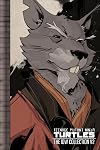
the first arc is very much about getting casey jones out of his living situation with his abusive father. obviously i’m a huge fan of this, even though it was pretty rough at times to see that abuse depicted. and having him not just be rescued, but be explicitly welcomed into splinter and the turtles’ family was amazing. i loved it. also mikey gets to shine when he’s actually given strong beliefs about something, which isn’t something he’s often given.
the alien arc with the show more fugitoid and all that was fine, but i really missed the triceratons in this spot. i’ve just never found the neutrinos as interesting or fun, sorry. and no it’s not because i’m horny for the triceratons.
… okay, it’s not just because i’m horny for the triceratons.
the micro-series issues in this one were from heroic human characters (april and casey) and villains (krang and stockman). there was also a four-part series about the origins of the foot clan. honestly these side stories dragged the volume down a little for me. the first volume had the turtles’ and splinter’s micro-series issues, and obviously my favorite thing about this franchise is… well, the turtles? krang’s micro-series issue was a little kinky, though, so there’s that at least i suppose!
there’s also clearly a lot of pieces being set up for more interesting things down the line here. slash getting recruited by hobb seems like it’s setting up a group of evil mutants, and y’know, hell yeah! i’m all for seeing more mutant boys kick the snot out of each other. also there was quite a bit of leo/karai shipper bait in their first meeting, which for weirdos like me is exciting to keep an eye on in the future. especially since she’s been specifically tasked with capturing leo. i’m really looking forward to seeing her toying with him and negging him some more.
sorry, what do you mean i’m projecting on him and i just want her to bully me? whoops oh no there’s our time. gotta go! show less
the alien arc with the show more fugitoid and all that was fine, but i really missed the triceratons in this spot. i’ve just never found the neutrinos as interesting or fun, sorry. and no it’s not because i’m horny for the triceratons.
… okay, it’s not just because i’m horny for the triceratons.
the micro-series issues in this one were from heroic human characters (april and casey) and villains (krang and stockman). there was also a four-part series about the origins of the foot clan. honestly these side stories dragged the volume down a little for me. the first volume had the turtles’ and splinter’s micro-series issues, and obviously my favorite thing about this franchise is… well, the turtles? krang’s micro-series issue was a little kinky, though, so there’s that at least i suppose!
there’s also clearly a lot of pieces being set up for more interesting things down the line here. slash getting recruited by hobb seems like it’s setting up a group of evil mutants, and y’know, hell yeah! i’m all for seeing more mutant boys kick the snot out of each other. also there was quite a bit of leo/karai shipper bait in their first meeting, which for weirdos like me is exciting to keep an eye on in the future. especially since she’s been specifically tasked with capturing leo. i’m really looking forward to seeing her toying with him and negging him some more.
sorry, what do you mean i’m projecting on him and i just want her to bully me? whoops oh no there’s our time. gotta go! show less
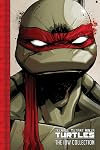
this collects the first twelve issues of the idw ongoing, plus the first five issues of the micro-series that focus on individual characters (in the case of these issues, the four turtle boys plus splinter). this is an extremely strong start to the series imo. it’s got a lot of ground to cover plus a lot of work to do in establishing what kind of tone they want the series to have. i do hope my turtle boys eventually mellow out a bit, like not 1987 or maybe even 2012 cartoon levels of show more mellowing out but i just don’t want them to have to be so serious all the time, you know? but i really did enjoy this opening act to the turtles’ current comics run.
i really don’t hate the reincarnation idea. the turtles having been yoshi’s sons in their human life really does add something to their story, in my opinion. and i liked the way this information was slowly trickled out over the course of these first dozen (plus five micro-series) issues. i also appreciate everyone’s individuated reactions. loyal leo immediately buying in, skeptical donnie immediately questioning it.
also, while this isn’t my absolute favorite version of casey jones, it’s a very close second, and one of the few times i actually genuinely do love him. i think part of it is the way they drew him, he’s a bit softer than usual, and there’s a very early scene of raphael telling him that he’s family that just absolutely melted my heart. just truly great stuff. show less
i really don’t hate the reincarnation idea. the turtles having been yoshi’s sons in their human life really does add something to their story, in my opinion. and i liked the way this information was slowly trickled out over the course of these first dozen (plus five micro-series) issues. i also appreciate everyone’s individuated reactions. loyal leo immediately buying in, skeptical donnie immediately questioning it.
also, while this isn’t my absolute favorite version of casey jones, it’s a very close second, and one of the few times i actually genuinely do love him. i think part of it is the way they drew him, he’s a bit softer than usual, and there’s a very early scene of raphael telling him that he’s family that just absolutely melted my heart. just truly great stuff. show less
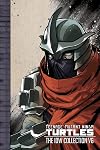
i'm in awe. i just genuinely kind of do not even know where to start with this one.
SO MUCH HAPPENED in this volume, but it didn't feel rushed. it felt purposeful. it felt thoughtful. moments had weight & meaning. this volume wrapped up FOUR YEARS WORTH OF STORY in a satisfying way, but still went out of its way to plant seeds for (by my count) what's probably gonna be at least three major future storylines in a way that did not feel even slightly forced, in a way that fit the breathtakingly show more perfect pace & tone of the rest of the comic.
this really, truly felt like the culmination of four years worth of storytelling. something that's grown increasingly obvious to me the more i've read this comic is that the people making it really care. there were times i literally had to pause reading and just let what had happened in the last few panels or pages sink in. i teared up a couple times.
i don't know if i'm doing this any kind of justice, i don't know if anyone who hasn't read this title will get anything out of me basically doing the textual equivalent of just waving this series in your face & begging you to read it, but seriously, it is SO GOOD. i don't know what else to say. show less
SO MUCH HAPPENED in this volume, but it didn't feel rushed. it felt purposeful. it felt thoughtful. moments had weight & meaning. this volume wrapped up FOUR YEARS WORTH OF STORY in a satisfying way, but still went out of its way to plant seeds for (by my count) what's probably gonna be at least three major future storylines in a way that did not feel even slightly forced, in a way that fit the breathtakingly show more perfect pace & tone of the rest of the comic.
this really, truly felt like the culmination of four years worth of storytelling. something that's grown increasingly obvious to me the more i've read this comic is that the people making it really care. there were times i literally had to pause reading and just let what had happened in the last few panels or pages sink in. i teared up a couple times.
i don't know if i'm doing this any kind of justice, i don't know if anyone who hasn't read this title will get anything out of me basically doing the textual equivalent of just waving this series in your face & begging you to read it, but seriously, it is SO GOOD. i don't know what else to say. show less
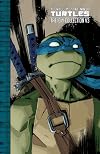
now this is more like it! shredder is genuinely terrifying, karai and alopex kick all kinds of ass, leo gets captured and brainwashed. aside from a frankly kinda lackluster solo effort from eastman in the 2012 annual, this volume was hella tight.
but most importantly, bebop and rocksteady have joined the party!!! and they're so good!!! i swear, they're somehow exactly the same amazing rays of sunshine in literally every version of the franchise they're a part of. literally everything else can show more change around them, and they're just always them. it's kind of uncanny! and every version that doesn't include them suffers for it. the only exception is rise because it's so different than everything that came before that it's really hard to compare it to the rest of the franchise. i think they're the most important non-turtle characters in the franchise. i really do. you could plop them into any version of the franchise that didn't include them and it would immediately make it noticeably better, even if it's already super good. (i'm looking at you, 2007 cgi movie.)
i think that’s the case here, too. i think the best-written volume of the first three is probably the first volume, the second one is a bit rough at times. the third one is noticeably better but like just slightly less good than the first volume… except bebop and rocksteady totally push it across the finish line just barely ahead of the first volume. excellent stuff here. show less
but most importantly, bebop and rocksteady have joined the party!!! and they're so good!!! i swear, they're somehow exactly the same amazing rays of sunshine in literally every version of the franchise they're a part of. literally everything else can show more change around them, and they're just always them. it's kind of uncanny! and every version that doesn't include them suffers for it. the only exception is rise because it's so different than everything that came before that it's really hard to compare it to the rest of the franchise. i think they're the most important non-turtle characters in the franchise. i really do. you could plop them into any version of the franchise that didn't include them and it would immediately make it noticeably better, even if it's already super good. (i'm looking at you, 2007 cgi movie.)
i think that’s the case here, too. i think the best-written volume of the first three is probably the first volume, the second one is a bit rough at times. the third one is noticeably better but like just slightly less good than the first volume… except bebop and rocksteady totally push it across the finish line just barely ahead of the first volume. excellent stuff here. show less
Lists
Awards


You May Also Like


Associated Authors
Statistics
- Works
- 458
- Also by
- 51
- Members
- 4,305
- Popularity
- #5,827
- Rating
- 3.7
- Reviews
- 85
- ISBNs
- 247
- Languages
- 9
- Favorited
- 2

