
Eido Tai Shimano (1932–2018)
Author of Golden Wind: Zen Talks
About the Author
Works by Eido Tai Shimano
Dogen, Bussho: La Nature Donc Bouddha (Encre Marine) (English, French and Japanese Edition) (2003) 5 copies, 1 review
Le zen rinzai 2 copies
Zen, Endless Treasure 1 copy
Endless Vow 1 copy
Points of Departure 1 copy
Associated Works
Freeing the Body, Freeing the Mind: Writings on the Connections between Yoga and Buddhism (2010) — Contributor — 36 copies, 1 review
Speaking of Silence: Christians and Buddhists in Dialogue (2005) — Contributor, some editions — 10 copies
Tagged
Common Knowledge
- Birthdate
- 1932
- Date of death
- 2018-02-18
- Gender
- male
- Education
- Ryūtaku-ji Monastery [transmission|1972]
- Organizations
- New York Zendo Shobo-ji, New York, New York, USA
Dai Bosatsu Zendo Kongo-ji, Catskill Mountains, New York, USA - Nationality
- Japan
- Birthplace
- Tokyo, Japan
- Associated Place (for map)
- Tokyo, Japan
Members
Reviews
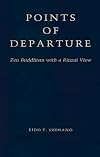
"Gradually we begin to realize there is a Something. That Something was there before we were born, before our present formation, and it will still be there after oiur transformation. It is constantly active. We think that that Something is somewhere else but the fact is, that Something of beginningless beginnings and endless ends, boundless, mysterious, is centered here in ourselves." This book is about the Something, our Buddha Nature, the ultimate Reality. What is this essence of life? How show more can we experience it? Why is it so important to do this? What effect will this experience have in our daily lives? For these Points of Departure, we can enter and continue the study and practice of Zen with a firm step. Eido Tai Shimano (嶋野 栄道) (b. 1932) is a Rinzai Zen Buddhist roshi. He was the founding abbot of the New York Zendo Shobo-Ji in Manhattan and Dai Bosatsu Zendo Kongo-Ji monastery in the Catskill mountains of New York. show less

A book of teisho--an inspirational Zen talk or lecture--given by a master to pass on the teachings of Buddha. Known for his vivid, emotional sermons, Roshi gives sound, practical advice on how to gain a stronger hold on life and develop a compassionate understanding of the nature of things in the universe.
> Catonné Jean-Philippe. Dogen, Shobogenzo, Uji, être-temps, being-time, 1997.
In: Raison présente, n°135, 3e trimestre 2000. Économie et démocratie. pp. 141-142… ; (en ligne),
URL : https://www.persee.fr/doc/raipr_0033-9075_2000_num_135_1_3634_t1_0141_0000_2
> Kone-El-Adji Alioune. Dôgen. Shôbôgenzô. Uji (Etre-Temps)..
In: Archives de sciences sociales des religions, n°106, 1999. p. 117… ; (en ligne),
URL : show more target="_top">https://www.persee.fr/doc/assr_0335-5985_1999_num_106_1_1089_t1_0117_0000_2 show less
In: Raison présente, n°135, 3e trimestre 2000. Économie et démocratie. pp. 141-142… ; (en ligne),
URL : https://www.persee.fr/doc/raipr_0033-9075_2000_num_135_1_3634_t1_0141_0000_2
> Kone-El-Adji Alioune. Dôgen. Shôbôgenzô. Uji (Etre-Temps)..
In: Archives de sciences sociales des religions, n°106, 1999. p. 117… ; (en ligne),
URL : show more target="_top">https://www.persee.fr/doc/assr_0335-5985_1999_num_106_1_1089_t1_0117_0000_2 show less
Sep 13, 2019 (Edited)French
> Pour Houei-Neng, « l'éveil est la réalisation immédiate de la non pensée, le sans souvenir, le sans attachement. » Houang-Po en parle comme d'une « clarté merveilleuse et pleine de félicité, où la réalisation profonde et spontanée plonge directement. » Lin Tsi appelle l'arbre de l'éveil, l'arrêt de toute pensée, et l'arbre de l'ignorance l'incapacité à les arrêter. Quant à Dôgen, il en exprime l'essentiel quand il écrit : « La vérité de la nature-bouddha c'est le show more vide éclatant de lumière. » S'il fallait résumer la mystique bouddhiste en deux mots, nul doute que ceux-ci seraient: l'éveil à la lumière.
—Alain Delaye, Sagesses sans frontières, p.531 show less
—Alain Delaye, Sagesses sans frontières, p.531 show less
Dec 11, 2019 (Edited)French
You May Also Like
Associated Authors
Statistics
- Works
- 13
- Also by
- 2
- Members
- 191
- Popularity
- #114,254
- Rating
- 2.7
- Reviews
- 4
- ISBNs
- 11
- Languages
- 2
- Favorited
- 1