
Andrew McCarthy (2) (1962–)
Author of Brat: An '80s Story
For other authors named Andrew McCarthy, see the disambiguation page.
About the Author
Andrew McCarthy is a writer, actor, and director. He is an editor at large for National Geographic Traveler and has written for The New York Times, The Atlantic, and The Wall Street Journal. The Society of American Travel Writers named him the Travel Journalist of the Year in 2010 and presented him show more with their Grand Award in 2011. McCarthy made his acting debut at nineteen and has appeared in dozens of films, including Pretty in Pink, St. Elmo's Fire, and The Joy Lurk Club. He lives in New York. show less
Works by Andrew McCarthy
Journeys Home: Inspiring Stories, Plus Tips and Strategies to Find Your Family History (2015) — Contributor — 38 copies, 1 review
Associated Works
Tagged
Common Knowledge
- Birthdate
- 1962-11-29
- Gender
- male
- Occupations
- actor
director
travel writer - Nationality
- USA
- Birthplace
- Westfield, New Jersey, USA
- Associated Place (for map)
- New Jersey, USA
Members
Reviews
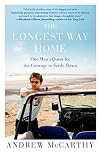
When the first word someone thinks about when they hear your name is "brat" I suspect it's hard to be taken very seriously. Or maybe even to take yourself seriously. That would be a mistake here. McCarthy digs into his soul as he writes about his travels, inspired by the connection between self reflection and travel he found in Paul Theroux' works. And he flays himself pretty well to the bone, from a tumultuous youth to falling into fame and substance abuse to relationship trouble later in show more life. Most interestingly, McCarthy works through a misanthropic isolation keeping him from seriously committing to the woman with whom he is in a long-time relationship. Some of the reviews here take him to task for not enough travel writing in a book billed as a travel log, and others for making himself an unlikable person. But he explains from the outset his mindset about the purpose of the travel - to work through personal issues. And anyone who says they are writing about personal issues, especially a person who is particularly self-effacing, should truthfully detail the intricacies and ugliness. I found his honesty refreshing and quickening. Highly recommended. show less
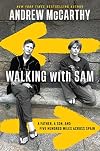
This is the third book I’ve read by McCarthy, and I’ve loved them all. Here, McCarthy embarks on a trek across Spain along the Camino de Santiago, a trip McCarthy took alone when he was the same age as his son. He sees it as an opportunity to connect with his boy who is at the precipice of adulthood. It’s also an opportunity to once more try to compose himself as a better, more loving father than his own. He fails at the task as often as he succeeds, but the trying is the point.
Once show more again, McCarthy exposes himself to the world, in all his complications and faults. But, again like the previous books, the writing is never self-indulgent navel-gazing. It’s sincere and evocative, relatable in ways these kinds of books rarely are. And this time, he’s exposing his son along the way, showing us how the young man grows up in fits and starts over a very short time.
Along the way, there is some wonderful travel prose, for which McCarthy was first known in the world of writing. Every opportunity, he relates some bit of history or landscape to the moment as he slogs along The Way.
5 bones!!!!!
Highly Recommended show less
Once show more again, McCarthy exposes himself to the world, in all his complications and faults. But, again like the previous books, the writing is never self-indulgent navel-gazing. It’s sincere and evocative, relatable in ways these kinds of books rarely are. And this time, he’s exposing his son along the way, showing us how the young man grows up in fits and starts over a very short time.
Along the way, there is some wonderful travel prose, for which McCarthy was first known in the world of writing. Every opportunity, he relates some bit of history or landscape to the moment as he slogs along The Way.
5 bones!!!!!
Highly Recommended show less
I like to travel, but wouldn’t say I have a strong sense of adventure--there are many places I have no desire to visit and activities I don’t personally wish to do. But that doesn’t mean I’m not still curious, and for that reason, travel writing appeals to me. Since most of my travels these days involve a forty-mile stretch comprised of the four Los Angeles freeways between my home and workplace, audiobooks are a great way to pretend I’m somewhere else. I recently spent a week in show more several locales, some exotic--Patagonia, the Amazon, Costa Rica, Mount Kilimanjaro--and some less so--New York, Baltimore, Vienna, Dublin--with Andrew McCarthy as my tour guide. Our travels also took me deep into McCarthy’s psyche as he inched toward that “triumph of hope over experience” event: marrying for the second time.
If the author’s name sounds familiar, it’s probably because he’s “THAT Andrew McCarthy”--yeah, the one from the 80s (Pretty in Pink, St. Elmo’s Fire, etc.). He still acts, and sometimes he directs, but he’s also developed a career as an award-winning travel writer and editor-at-large for National Geographic Traveler magazine, where several of the pieces in his first book, The Longest Way Home: One Man’s Quest for the Courage to Settle Down, originated.
In many respects, McCarthy was already pretty “settled down.” He had two children and had been with his daughter’s mother for seven years; they’d been engaged for four of them. But when they finally began talking about wedding plans, he grew anxious and conflicted. He needed to figure out why--he hoped it wasn’t stereotypical male commitment-phobia--and as much as he loved his family, he needed to go off on his own to work through it.
It wasn’t long before the reason for McCarthy’s preference for solo travel seemed pretty clear to me: despite the fact that he’s made a living as an actor, a profession that seems to require extraversion, the guy’s a fellow introvert. While the book’s subtitle suggests he was searching for “the courage to settle down,” I think he was also seeking how to balance being a fully-invested partner and parent with preserving his core self--not an unusual challenge for anyone in a committed relationship, really. I never actually questioned McCarthy’s commitment to his fiancée or his children, and I'm not sure truly he did either. I think the struggle was more about intimacy and boundaries, combined with the concern of the once-divorced person not to end up a twice-divorced person. I was pretty sympathetic.
The book itself seems to reflect some of those intimacy-and-boundaries struggles. It’s not a fully-encompassing autobiography; McCarthy’s pretty sparing with backstory, and will definitely not satisfy your curiosity about his 1980s Brat Pack heyday. He’s remarkably introspective and intimate with the reader in some places while keeping a distance in others, most notably in not referring to his children by name and identifying his future wife--spoiler: he DOES find that courage--only as “D” throughout the book. That reserve keeps The Longest Way Home from fully satisfying as personal memoir, although I think it may connect better in audio format; I’m glad that’s how I read it. But the book also provides an introduction to McCarthy’s travel writing; I found that thoroughly engaging, and I wouldn’t be surprised if he keeps collecting awards for his work in that field. show less
If the author’s name sounds familiar, it’s probably because he’s “THAT Andrew McCarthy”--yeah, the one from the 80s (Pretty in Pink, St. Elmo’s Fire, etc.). He still acts, and sometimes he directs, but he’s also developed a career as an award-winning travel writer and editor-at-large for National Geographic Traveler magazine, where several of the pieces in his first book, The Longest Way Home: One Man’s Quest for the Courage to Settle Down, originated.
In many respects, McCarthy was already pretty “settled down.” He had two children and had been with his daughter’s mother for seven years; they’d been engaged for four of them. But when they finally began talking about wedding plans, he grew anxious and conflicted. He needed to figure out why--he hoped it wasn’t stereotypical male commitment-phobia--and as much as he loved his family, he needed to go off on his own to work through it.
It wasn’t long before the reason for McCarthy’s preference for solo travel seemed pretty clear to me: despite the fact that he’s made a living as an actor, a profession that seems to require extraversion, the guy’s a fellow introvert. While the book’s subtitle suggests he was searching for “the courage to settle down,” I think he was also seeking how to balance being a fully-invested partner and parent with preserving his core self--not an unusual challenge for anyone in a committed relationship, really. I never actually questioned McCarthy’s commitment to his fiancée or his children, and I'm not sure truly he did either. I think the struggle was more about intimacy and boundaries, combined with the concern of the once-divorced person not to end up a twice-divorced person. I was pretty sympathetic.
The book itself seems to reflect some of those intimacy-and-boundaries struggles. It’s not a fully-encompassing autobiography; McCarthy’s pretty sparing with backstory, and will definitely not satisfy your curiosity about his 1980s Brat Pack heyday. He’s remarkably introspective and intimate with the reader in some places while keeping a distance in others, most notably in not referring to his children by name and identifying his future wife--spoiler: he DOES find that courage--only as “D” throughout the book. That reserve keeps The Longest Way Home from fully satisfying as personal memoir, although I think it may connect better in audio format; I’m glad that’s how I read it. But the book also provides an introduction to McCarthy’s travel writing; I found that thoroughly engaging, and I wouldn’t be surprised if he keeps collecting awards for his work in that field. show less

This is an interesting book and even a little surprising since it is well written. McCarthy says that over the years he has done travel writing, which shows. I have never heard of his previous writing but his style is pleasant and moves easily. He does not usually have any universal insights, but he is good at psychologizing his own motivations and describing the reactions of others. He continually limits what he writes to what is useful to himself alone. The reader is just a companion show more shadow along for the reverie. This is a good sensation to have while reading a memoir. The book covers most of his life belying the book’s title which specifies the 80s. The final chapter of the book takes the reader down his long memory of the vague title Brat Pack and how it hurt him and helped him through the years. McCarthy was never my favorite actor from the 80s but he hit a string of hits which I really appreciate the existence of: Less Than Zero which was great (better than the original book once you knew that Ellis was parodying Joan Didion’s Play It As It Lays), Pretty in Pink, Class (his first movie with Rob Lowe, Mannequin (really funny, thanks to Donna Flores for letting me watch it), St Elmo’s Fire, which I have grown to appreciate. He talks about Ron Kovic going to see The Winter Soldier (play about the Vietnam War) which Kovic also talks about in his own book. The book is an homage to NYC where he apparently still lives. McCarthy was addicted to Xanax and an alcoholic which he needed to seek treatment for as he lives as a recovering alcoholic. McCarthy said he tried to model his acting demeanor on Golden Age actor Montgomery Clift. Worth reading, if you are fan of 80s movies.
B&W Pictures, Readers Guide of Questions, 217 pp. show less
B&W Pictures, Readers Guide of Questions, 217 pp. show less
Lists
Awards


You May Also Like


Associated Authors
Statistics
- Works
- 12
- Also by
- 28
- Members
- 1,053
- Popularity
- #24,475
- Rating
- 3.7
- Reviews
- 44
- ISBNs
- 63