
Skip Pessl
Author of Barren Grounds: The Story of the Tragic Moffatt Canoe Trip
Works by Skip Pessl
Tagged
Common Knowledge
- Gender
- male
Members
Reviews
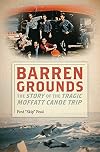
For readers who dream of packing up and heading out into the great unknown, a strong dose of readable reality is served by Skip Pessl in "Barren Grounds" his telling of a canoe trip gone fatally awry in 1950s arctic Canada.
Written partially -- if not completely -- to refute a prior version of the story authored by another member of the same fated party, this trim volume displays Pessl's logbook side by side with a corroborating journal kept by a third canoeist. At first this redundancy is show more tiring, as one reads about the same day twice, day after day. But as the story builds to the fatal apex, reading two perspectives instead gives the reader much needed contextual information about each day's events.
This is a fascinating read about some realities of spending weeks upon end out in the wild, and I recommend it to other lovers of outdoor adventure memoir. show less
Written partially -- if not completely -- to refute a prior version of the story authored by another member of the same fated party, this trim volume displays Pessl's logbook side by side with a corroborating journal kept by a third canoeist. At first this redundancy is show more tiring, as one reads about the same day twice, day after day. But as the story builds to the fatal apex, reading two perspectives instead gives the reader much needed contextual information about each day's events.
This is a fascinating read about some realities of spending weeks upon end out in the wild, and I recommend it to other lovers of outdoor adventure memoir. show less
 This review was written for LibraryThing Early Reviewers.
Skip Pessl has produced a gripping narrative of the ill-fated Moffatt expedition using his diaries and those of fellow traveler and friend, Peter Franck.
For those who aren't familiar with the history of this canoeing adventure, the time frame is 1955 and the idea was that Art Moffatt, an experienced adventurer, was going to guide five Ivy league boys on a summer long trek through the Great Northern Barrens.
The adventure began badly, and to some extent it never recovered. There were many show more things learned, many beautiful sites visited, but ultimately it was at the cost of one life, and much suffering.
Skip Pessl retells the story using journal entries, alternating his and Franck's perspectives. This works really well to give an immediacy to events and I expect most readers will get hooked.
The epilog at the end of the book will no doubt make for some controversy as the author addresses the sharp criticism that has been directed at Art Moffatt and his companions. Personally, I didn't like that section and thought it detracted from the 'authority' of this work; but most people will probably feel differently than I.
A VERY GOOD READ.
BARREN GROUNDS makes a wonderful companion reader to George Grinnell's earlier book. It confirms and clarifies some points, while still leaving plenty of room for vigorous debates. show less
For those who aren't familiar with the history of this canoeing adventure, the time frame is 1955 and the idea was that Art Moffatt, an experienced adventurer, was going to guide five Ivy league boys on a summer long trek through the Great Northern Barrens.
The adventure began badly, and to some extent it never recovered. There were many show more things learned, many beautiful sites visited, but ultimately it was at the cost of one life, and much suffering.
Skip Pessl retells the story using journal entries, alternating his and Franck's perspectives. This works really well to give an immediacy to events and I expect most readers will get hooked.
The epilog at the end of the book will no doubt make for some controversy as the author addresses the sharp criticism that has been directed at Art Moffatt and his companions. Personally, I didn't like that section and thought it detracted from the 'authority' of this work; but most people will probably feel differently than I.
A VERY GOOD READ.
BARREN GROUNDS makes a wonderful companion reader to George Grinnell's earlier book. It confirms and clarifies some points, while still leaving plenty of room for vigorous debates. show less
Skip Pessl is a good writer. He was in the 1950s when he kept a journal during the canoe trip he took with five other men tracing the path of the original Tyrell expedition, and he is now as an elderly man looking back at the past. The seven-page preface to BARREN GROUNDS is actually more gripping than the journal pages that follow, but the reader will enjoy "traveling" along with the two journal keepers of the group - Skip and fellow explorer and canoe man, Peter Franck.
Of the six men on show more the trip, we hear from Skip and Pete. Perhaps they were the only two who kept journals or perhaps they were the only ones whose journals survived. The men - mostly young college students led by the older, experienced adventurer, Art Moffatt, traveled hundreds of miles during June to September of 1955 through rivers and lakes in Canada, up into Inuit territory. The young men's journals talk a great deal about the rivers and lakes upon which they move forward with their journey, the wildlife they see (and often catch or shoot), the dynamics among the six explorers, and food. Food takes up a tremendous number of words on the page: men thinking of food, hunting for food, preparing food, and eating food. Indeed, if one did not know the journey centered around canoeing and photography, one would think the entire purpose of the trip was to eat.
Skip's old journal entries seem fresh, show him at his best as a thinker and leader, and allow the reader to feel totally comfortable with him in a leadership role after the untimely death of Art Moffatt. Peter Franck's journal entries are different from - and a nice complement to - Skip's. Pete relates many of the day's activities in much the same way as Skip, but from his own, shyer perspective. Franck's writing tends to be more personal, often reflecting on himself and his life and not always writing about the trip, the scenery, or the food.
Most readers will shake heads in disbelief by the way this particular canoe trip was conducted. Why would they do this? Why would they do that? Many questions are raised. But Pessl, compiling the journal entries and writing the book from the distance of fifty years, tells the truth about their trip and does not appear to hide any of their obvious blunders. It is easy for readers, knowing the outcome of the adventure, to make judgments, but who is to say that any of us would have conducted the trip any differently if we were doing it in the 1950s.
If the canoe trip were being undertaken today, there would be cell phones, probably a plane overhead doing food drops, and perhaps a television crew along to shoot footage for a documentary or a reality TV show (and there are times in the journals when, yes, the entries read a bit like a TV segment of "Survivor," especially when the members of the group are not seeing eye-to-eye or getting along). But in 1955, the men just went ahead with their canoes, their cameras, their food supplies, and their muscles.
The book is a fast and fascinating read. It is perfect for wilderness canoe aficionados as well as timid arm-chair travelers. One cannot imagine someone NOT getting something from a reading of BARREN GROUNDS as it says a lot about nature as well as ego. We wonder whether Pessl felt compelled to write when another member of the expedtition, George Grinnell, came out with a book a few years ago. Instead of allowing the Moffat Canoe Trip (as it was known) to be the George Grinnell story, Pessl undoubtedly felt driven to tell his own side. And that he did - beautifully. show less
Of the six men on show more the trip, we hear from Skip and Pete. Perhaps they were the only two who kept journals or perhaps they were the only ones whose journals survived. The men - mostly young college students led by the older, experienced adventurer, Art Moffatt, traveled hundreds of miles during June to September of 1955 through rivers and lakes in Canada, up into Inuit territory. The young men's journals talk a great deal about the rivers and lakes upon which they move forward with their journey, the wildlife they see (and often catch or shoot), the dynamics among the six explorers, and food. Food takes up a tremendous number of words on the page: men thinking of food, hunting for food, preparing food, and eating food. Indeed, if one did not know the journey centered around canoeing and photography, one would think the entire purpose of the trip was to eat.
Skip's old journal entries seem fresh, show him at his best as a thinker and leader, and allow the reader to feel totally comfortable with him in a leadership role after the untimely death of Art Moffatt. Peter Franck's journal entries are different from - and a nice complement to - Skip's. Pete relates many of the day's activities in much the same way as Skip, but from his own, shyer perspective. Franck's writing tends to be more personal, often reflecting on himself and his life and not always writing about the trip, the scenery, or the food.
Most readers will shake heads in disbelief by the way this particular canoe trip was conducted. Why would they do this? Why would they do that? Many questions are raised. But Pessl, compiling the journal entries and writing the book from the distance of fifty years, tells the truth about their trip and does not appear to hide any of their obvious blunders. It is easy for readers, knowing the outcome of the adventure, to make judgments, but who is to say that any of us would have conducted the trip any differently if we were doing it in the 1950s.
If the canoe trip were being undertaken today, there would be cell phones, probably a plane overhead doing food drops, and perhaps a television crew along to shoot footage for a documentary or a reality TV show (and there are times in the journals when, yes, the entries read a bit like a TV segment of "Survivor," especially when the members of the group are not seeing eye-to-eye or getting along). But in 1955, the men just went ahead with their canoes, their cameras, their food supplies, and their muscles.
The book is a fast and fascinating read. It is perfect for wilderness canoe aficionados as well as timid arm-chair travelers. One cannot imagine someone NOT getting something from a reading of BARREN GROUNDS as it says a lot about nature as well as ego. We wonder whether Pessl felt compelled to write when another member of the expedtition, George Grinnell, came out with a book a few years ago. Instead of allowing the Moffat Canoe Trip (as it was known) to be the George Grinnell story, Pessl undoubtedly felt driven to tell his own side. And that he did - beautifully. show less
This review was written for LibraryThing Early Reviewers.I requested this book because I've had a fascination with the Barren Grounds since I read Farley Mowat's People of the Deer in college. And because as a high schooler, I canoed from Lake Superior to James Bay (Moosonee)--a trip of 30 days. I never got the chance to do a trip on the scale of the Moffatt trip--and likely was not capable of it.
I knew nothing about the story, so was engaged throughout. I felt the journals' (Skip and Peter) placed together as they were, made for fascinating show more reading. The beauty and wonder, the cold and hunger, the small insight into the personality of the two, were glimpses into a youthful adventure. Both men were philosophical and had taken on the trip with enthusiasm and naivete. In the epilogue, Skip's defense of the trip, explanation from his current maturity, all felt spot on. I doubt I would read George Grinnell's book.
For anyone who has done some canoeing--portaging and tenting--and who appreciates the north, this book will be a very enjoyable read. I will be passing it on to my dad, also, in days past, an avid canoeist. show less
I knew nothing about the story, so was engaged throughout. I felt the journals' (Skip and Peter) placed together as they were, made for fascinating show more reading. The beauty and wonder, the cold and hunger, the small insight into the personality of the two, were glimpses into a youthful adventure. Both men were philosophical and had taken on the trip with enthusiasm and naivete. In the epilogue, Skip's defense of the trip, explanation from his current maturity, all felt spot on. I doubt I would read George Grinnell's book.
For anyone who has done some canoeing--portaging and tenting--and who appreciates the north, this book will be a very enjoyable read. I will be passing it on to my dad, also, in days past, an avid canoeist. show less
This review was written for LibraryThing Early Reviewers.Statistics
- Works
- 1
- Members
- 26
- Popularity
- #495,360
- Rating
- 4.0
- Reviews
- 13
- ISBNs
- 2
