
Sylvain Runberg
Author of Orbital, Vol 1: Scars
About the Author
Image credit: bedetheque.com
Series
Works by Sylvain Runberg
Millennium Vol. 2: The Girl Who Played With Fire (The Girl Who Played With Fire: Millennium) (2014) 33 copies, 1 review
Millénium, Tome 3 : La fille qui rêvait d'un bidon d'essence et d'une allumette : Première partie (2014) 10 copies, 1 review
Orbital, 09: Opstand 3 copies
Captain Future Luxusausgabe: Der ewige Herrscher | Limitierte Sonderausgabe mit Schutzumschlag und 16 Seiten Zusatzmaterial (2025) 2 copies
Under York #1 1 copy
Łowcy relikwii 1 copy
De eenlingen 1 copy
Millenium 2 1 copy
Le grand soir 1 copy
De Splitsing, 02: Verzet 1 copy
Cases blanches 1 copy
Tagged
Common Knowledge
- Birthdate
- 1971
- Gender
- male
- Nationality
- Belgium
- Birthplace
- Tournai, Belgium
- Associated Place (for map)
- Tournai, Belgium
Members
Reviews
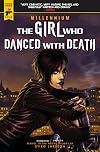
Sylvain Runberg’s The Girl Who Danced with Death continues his adaptation of Stieg Larsson’s Millennium Trilogy featuring Lisbeth Salander and Mikael Blomkvist with art by Bélen Ortega. The story does not follow David Lagercrantz’s novel continuations of the Millennium series. Where Lagercrantz’s novels extensively featured Lisbeth’s sister, Camilla, as running her own criminal syndicate, Runberg departed from Larsson’s novels to portray her as living a happy, normal domestic show more life during the events of the Millennium Trilogy. In the first three adaptations, Runberg also spent more time portraying Blomkvist as working against extremist right-wing organizations, effectively making him an avatar for Larsson whose own journalistic work exposed these organizations in Sweden and setting up a plot point for this sequel. Finally, where Hacker Republic itself played a relatively minor role in Larsson’s original novels, Runberg spent more time with them in order to foreshadow this story. While José Homs and Manolo Carot worked on the art for the previous trilogy, here Ortega offers his own take on the characters that shows evidence of a manga influence.
The story begins with Mikael Blomkvist investigating an alt-right politician for Millennium magazine. The politician has used dog-whistle tactics to appeal to racists and misogynists, securing his rise to power on a tide of populist bigotry. Meanwhile, Lisbeth Salander and the members of Hacker Republic are trying to hack into Säpo’s new datacenter, which is collecting information on every citizen in Sweden. They further learn that, through a program called Hugin (named after Odin’s raven that reported to him on the doings in the world), Säpo can collect information about people around the world in a manner that rivals the NSA. Unfortunately, a group calling itself Sparta begins targeting members of Hacker Republic. Plague has been conducting his own research into Mark Borrow, a figure somewhere between Rollo Tomassi and Neil Strauss with ties to Sparta and their leader, Christian Dunker, a Roger Ailes-type who’s organizing everything in order to buy an island where he can rule tax free and elevate white men above everyone else. One-by-one, Sparta kidnaps the members of Hacker Republic while attacking Blomkvist for his investigation. The action comes to a head with another constitutional crisis for Sweden, much like The Girl Who Kicked the Hornet’s Nest, but with issues far more relevant to modern readers.
Since Runberg adapted the previous three stories in the Millennium Trilogy, he was able to incorporate elements that link it with this continuation he wrote. Due to that, there’s a great deal more narrative coherence than that offered by David Lagercrantz’s sequel novels to Larsson’s original trilogy. The story also feels much truer to the themes of power, corruption, and systemic abuse that Larsson explored than Lagercrantz’s novels, which, while well-written, were more generic Scandinavian crime novels. Fans of Lisbeth Salander will find plenty to like in The Girl Who Danced with Death! show less
The story begins with Mikael Blomkvist investigating an alt-right politician for Millennium magazine. The politician has used dog-whistle tactics to appeal to racists and misogynists, securing his rise to power on a tide of populist bigotry. Meanwhile, Lisbeth Salander and the members of Hacker Republic are trying to hack into Säpo’s new datacenter, which is collecting information on every citizen in Sweden. They further learn that, through a program called Hugin (named after Odin’s raven that reported to him on the doings in the world), Säpo can collect information about people around the world in a manner that rivals the NSA. Unfortunately, a group calling itself Sparta begins targeting members of Hacker Republic. Plague has been conducting his own research into Mark Borrow, a figure somewhere between Rollo Tomassi and Neil Strauss with ties to Sparta and their leader, Christian Dunker, a Roger Ailes-type who’s organizing everything in order to buy an island where he can rule tax free and elevate white men above everyone else. One-by-one, Sparta kidnaps the members of Hacker Republic while attacking Blomkvist for his investigation. The action comes to a head with another constitutional crisis for Sweden, much like The Girl Who Kicked the Hornet’s Nest, but with issues far more relevant to modern readers.
Since Runberg adapted the previous three stories in the Millennium Trilogy, he was able to incorporate elements that link it with this continuation he wrote. Due to that, there’s a great deal more narrative coherence than that offered by David Lagercrantz’s sequel novels to Larsson’s original trilogy. The story also feels much truer to the themes of power, corruption, and systemic abuse that Larsson explored than Lagercrantz’s novels, which, while well-written, were more generic Scandinavian crime novels. Fans of Lisbeth Salander will find plenty to like in The Girl Who Danced with Death! show less

What a great surprise!
We've all seen innumerable Italian flicks about bush people eating silly adventurers, but this little gem managed to put a new spin on the cannibal genre, in making it about suave jet-setters doing the eating. Think American Psycho with an appetite, and you've got an idea of where this is going. And with such an outrageous concept, you'd think the story would easily slip into involuntary comedy, but the storytelling actually manages to make it both believable and show more engaging all the way till the end.
Highly recommended! show less
We've all seen innumerable Italian flicks about bush people eating silly adventurers, but this little gem managed to put a new spin on the cannibal genre, in making it about suave jet-setters doing the eating. Think American Psycho with an appetite, and you've got an idea of where this is going. And with such an outrageous concept, you'd think the story would easily slip into involuntary comedy, but the storytelling actually manages to make it both believable and show more engaging all the way till the end.
Highly recommended! show less
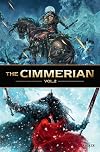
Second volume of Ablaze's wonderful take on Conan stories.
First story takes us to the ever contested parts of the world that matches today's crossroads between Iran, Pakistan, China and Afghanistan. Conan, who established himself as chief of local brigand clans gets sucked into local political power plays that will bring him into conflict with dark sorcerer who enjoys a role of a king maker for a highest bidder.
Art is interesting, at times when author draws action scenes or character show more surprise, it is obvious inspiration is Manga or Korean variation of it. As is case with lots of Manga styles from the west this tends to create lots of sketchy art, so many lines that drawing loses its fullness. But in overall it is good, lots of details and when action kicks in it is amazing. I think that black and white approach here might work better. But again, I enjoy black and white comics in general so might be biased :)
Second story is famous story of Frost Giants Daughter. It is breath taking. Art, coloring, composition, everything is magnificent. Again, this being more adult version of stories sexual energy accumulates and it is visible. From the way Conan eyes this spirit, the way she teases him, her confidence that Conan is just yet another buffoon to be sacrificed to her father, playful exchange between the two that has such a serious and deadly undertones that Conan is not aware of at the beginning.
Again, art is so great that lots of frames would work without a single uttered word from any party. Conan here is such a powerful creature that during the final fight scenes I was truly expecting him to jump out of the pages. Spirit's fear when she realizes that Conan is not a person to be trifled with (presentation how fear starts to grow in her as she sees Conan is uncontrollable and how stressed and afraid she is on last pages after her failure to kill Conan (fear from Conan himself and definitely her father who lost his only two sons due to her scheming) - artist managed to capture every emotion, it is incredible, no frame requires any additional textual explanation) and Conan's charge at the Frost Giant! Epic! This is currently my favorite story from the two volumes from Ablaze.
Excellent book. Highly recommended to all fans of hero fantasy. Cannot wait for volume 3! show less
First story takes us to the ever contested parts of the world that matches today's crossroads between Iran, Pakistan, China and Afghanistan. Conan, who established himself as chief of local brigand clans gets sucked into local political power plays that will bring him into conflict with dark sorcerer who enjoys a role of a king maker for a highest bidder.
Art is interesting, at times when author draws action scenes or character show more surprise, it is obvious inspiration is Manga or Korean variation of it. As is case with lots of Manga styles from the west this tends to create lots of sketchy art, so many lines that drawing loses its fullness. But in overall it is good, lots of details and when action kicks in it is amazing. I think that black and white approach here might work better. But again, I enjoy black and white comics in general so might be biased :)
Second story is famous story of Frost Giants Daughter. It is breath taking. Art, coloring, composition, everything is magnificent. Again, this being more adult version of stories sexual energy accumulates and it is visible. From the way Conan eyes this spirit, the way she teases him, her confidence that Conan is just yet another buffoon to be sacrificed to her father, playful exchange between the two that has such a serious and deadly undertones that Conan is not aware of at the beginning.
Again, art is so great that lots of frames would work without a single uttered word from any party. Conan here is such a powerful creature that during the final fight scenes I was truly expecting him to jump out of the pages. Spirit's fear when she realizes that Conan is not a person to be trifled with (presentation how fear starts to grow in her as she sees Conan is uncontrollable and how stressed and afraid she is on last pages after her failure to kill Conan (fear from Conan himself and definitely her father who lost his only two sons due to her scheming) - artist managed to capture every emotion, it is incredible, no frame requires any additional textual explanation) and Conan's charge at the Frost Giant! Epic! This is currently my favorite story from the two volumes from Ablaze.
Excellent book. Highly recommended to all fans of hero fantasy. Cannot wait for volume 3! show less
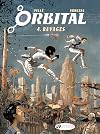
(This is a combined review of [b:Nomads: Orbital Vol. 3|11548444|Orbital, Vol. 3 Nomads|Sylvain Runberg|http://ecx.images-amazon.com/images/I/51wwxiRab2L._SL75_.jpg|16488238] and Ravages: Orbital Vol. 4)
Just prior to the celebrations marking the end of the Human-Sandjarr wars, an incident occurs between Malaysian fisherman and the nomadic alien species Rapakhun. The Human Caleb and Sandjarr Mezoke, security heads for the big event, must defuse the tense situation before it shatters the newly show more found peace. Though this story encompasses volumes 3 and 4 of the Orbital series, no prior knowledge of the previous books is required to enjoy this exciting tale. Pellé's delicate, Euro-art shines with its simplicity. He focuses on the important details, choosing to center on the story rather than showcasing his prodigious talents. Runberg clearly and intelligently details the complex alien interactions, while never talking down to his audience. Orbital delivers the all-too-rare comics combination of humanist and alien encounter fiction wrapped in a package of beauty and quality. show less
Just prior to the celebrations marking the end of the Human-Sandjarr wars, an incident occurs between Malaysian fisherman and the nomadic alien species Rapakhun. The Human Caleb and Sandjarr Mezoke, security heads for the big event, must defuse the tense situation before it shatters the newly show more found peace. Though this story encompasses volumes 3 and 4 of the Orbital series, no prior knowledge of the previous books is required to enjoy this exciting tale. Pellé's delicate, Euro-art shines with its simplicity. He focuses on the important details, choosing to center on the story rather than showcasing his prodigious talents. Runberg clearly and intelligently details the complex alien interactions, while never talking down to his audience. Orbital delivers the all-too-rare comics combination of humanist and alien encounter fiction wrapped in a package of beauty and quality. show less
Lists
Awards


You May Also Like


Associated Authors
Statistics
- Works
- 150
- Members
- 1,420
- Popularity
- #18,121
- Rating
- 3.5
- Reviews
- 37
- ISBNs
- 293
- Languages
- 9