
Gene O'Neill
Author of Taste of Tenderloin
About the Author
Series
Works by Gene O'Neill
COLLECTED TALES OF THE BAJA EXPRESS 5 copies
Bloody Redemption 4 copies
Not Fade Away 4 copies
Operation Rhinoceros Hornbill 3 copies
Funkytown 3 copies
Jade 2 copies
While the City Sleeps 2 copies
The Near Future 2 copies
Magic Numbers 2 copies
The Algernon Effect 2 copies
Kiss of Life 1 copy
You Do the Math 1 copy
Hit Man 1 copy
Ridin' the Dawg 1 copy
Coyote Gambit 1 copy
Fiona And Grams 1 copy
Lottery 1 copy
House of the Rising Sun 1 copy
Balance 1 copy
300 S. Montgomery 1 copy
Graffiti Sonata 1 copy
Associated Works
The Magazine of Fantasy and Science Fiction May 1983, Vol. 64, No. 5 (1983) — Contributor — 12 copies
In Delirium — Author — 11 copies
Piercing the Darkness Anthology: A Charity Anthology for the Children’s Literacy Initiative (2014) — Contributor — 7 copies
Tagged
Common Knowledge
- Canonical name
- O'Neill, Gene
- Birthdate
- 1938
- Gender
- male
- Education
- California State University, Sacramento
University of Minnesota - Occupations
- science fiction writer
horror writer
fantasy writer - Organizations
- Science Fiction and Fantasy Writers of America
- Nationality
- USA
- Places of residence
- Napa Valley, California, USA
- Associated Place (for map)
- California, USA
Members
Reviews

REVIEWED: The Burden of Indigo
WRITTEN BY: Gene O'Neill
PUBLISHED: March, 2002
This is a strangely beautiful story set in a dystopian society of an outcast's journey of hope and morality. I say " strangely beautiful," because the protagonist is a convicted pedophile, yet the reader is drawn into empathizing and rooting for someone who, under most any other circumstances, would be found appalling and despicable. In this not-too-distant-future, criminals have their skin dyed according to the show more severity of their crimes and sent to live in the wilds, outside of society's protection. The book follows Gaetan (now known only as an Indigo Man) in his older years as he discovers that the dye on his skin may finally be beginning to fade, and he contemplates the life he once had and what a new future may bring. Powerful, poignant, and demonstrative, this book is a captivating exploration of a multi-layered world and mindset.
Five out of Five stars show less
WRITTEN BY: Gene O'Neill
PUBLISHED: March, 2002
This is a strangely beautiful story set in a dystopian society of an outcast's journey of hope and morality. I say " strangely beautiful," because the protagonist is a convicted pedophile, yet the reader is drawn into empathizing and rooting for someone who, under most any other circumstances, would be found appalling and despicable. In this not-too-distant-future, criminals have their skin dyed according to the show more severity of their crimes and sent to live in the wilds, outside of society's protection. The book follows Gaetan (now known only as an Indigo Man) in his older years as he discovers that the dye on his skin may finally be beginning to fade, and he contemplates the life he once had and what a new future may bring. Powerful, poignant, and demonstrative, this book is a captivating exploration of a multi-layered world and mindset.
Five out of Five stars show less

Despite the flavorful title, Gene O' Neill's Taste of Tenderloin doesn't feature eight stories dedicated to culinary tales, but instead it's his ode to the San Francisco Tenderloin District, bent on making the area a vivid, magical place all its own.
The first story, “Lost Patrol”, is not necessarily a traditional story with a beginning, middle and end. Instead it's a character profile, short, but vivid, with a delicate stretch of story surrounding it. Like an appetizer, there's not much show more here, but enough to get a good taste of what's to come.
Next comes “Magic Words”, an old school urban fantasy tale of dark magic and a mysterious homeless woman who one night, taking only a promise for the future as payment, gives a man the exact words he needed to move forward in his life. Unlike a lot of other stories, this one doesn't try to present a “be careful what you ask for” moral. Instead it just presents itself as it is, adding an element of mysticism to the Tenderloin.
“Tombstones in His Eyes” tackles the overlapping tales of the junkies on the street, using some very interesting symbolism. Again, O' Neill doesn't so much tell a story as present a character and their tale, in the good and bad, for the reader's viewing.
“Bushido” is also lovely, the tale of a man who finds salvation in the streets walking alongside doom. But the imagery and the climax bear a strong resemblance to the previous tale, and so it lessens some of the impact.
“Balance” follows a vet suffering from a disconnect with reality. It's hard to watch Declan's version of getting more control over the world around him, since he can't seem to control his own brain functions. But this story, like the other so far, is present unflinchingly, with little effort to make the reader sympathize with the characters. Instead O' Neill just beckons you to come and listen.
With “The Apotheosis of Nathan McKee” O'Neill ties the people of the Tenderloin and the stories in this collection together firmly, making each minor, barely mentioned character the owner of their own story. Nathan, interchangeable with the attack victim in “Bushido”, discovers a beating has left him not only for with a complete lack of desire for the booze he used to drug himself, but it's given him a unique ability. Only he's not quite sure what to do with it. The first overall positive tale, without a bittersweet touch, it possesses a delicate aspect of intriguing urban fantasy.
In “Bruised Soul” Mickey D, an ex boxer abandoned to the streets by time and suffering from damage taken through the length of his career, hits the streets after a stint in a mental facility, only to discover the good things have gotten that much worse in his absence and the bad things, of course, never change. It's his new neighbor that piques his interest this time around, an exotic woman named Jenna who seems to have a peculiar ability. Threaded just as finely is an end question, what is real and what has Micky D imagined, without the heavy-handedness of other stories.
Finally is “5150”, the first first person story in the collection. Here the lead might not seem like a true member of the Tenderloin, but by the sad, shattering end of this cop's life you can see every character story so far caught up in this one tale.
Readers should be warned that these characters seem fleshy and real, their tales often dark and hopeless. It is easy to get pulled into the hopeless feeling of this collection.
Taste of Tenderloin is a tight network of precise details and emotion presented, but firmly held back from influencing the reader in each story. A delicate balance of realism, surrealism and unique storytelling makes it a compelling read. show less
The first story, “Lost Patrol”, is not necessarily a traditional story with a beginning, middle and end. Instead it's a character profile, short, but vivid, with a delicate stretch of story surrounding it. Like an appetizer, there's not much show more here, but enough to get a good taste of what's to come.
Next comes “Magic Words”, an old school urban fantasy tale of dark magic and a mysterious homeless woman who one night, taking only a promise for the future as payment, gives a man the exact words he needed to move forward in his life. Unlike a lot of other stories, this one doesn't try to present a “be careful what you ask for” moral. Instead it just presents itself as it is, adding an element of mysticism to the Tenderloin.
“Tombstones in His Eyes” tackles the overlapping tales of the junkies on the street, using some very interesting symbolism. Again, O' Neill doesn't so much tell a story as present a character and their tale, in the good and bad, for the reader's viewing.
“Bushido” is also lovely, the tale of a man who finds salvation in the streets walking alongside doom. But the imagery and the climax bear a strong resemblance to the previous tale, and so it lessens some of the impact.
“Balance” follows a vet suffering from a disconnect with reality. It's hard to watch Declan's version of getting more control over the world around him, since he can't seem to control his own brain functions. But this story, like the other so far, is present unflinchingly, with little effort to make the reader sympathize with the characters. Instead O' Neill just beckons you to come and listen.
With “The Apotheosis of Nathan McKee” O'Neill ties the people of the Tenderloin and the stories in this collection together firmly, making each minor, barely mentioned character the owner of their own story. Nathan, interchangeable with the attack victim in “Bushido”, discovers a beating has left him not only for with a complete lack of desire for the booze he used to drug himself, but it's given him a unique ability. Only he's not quite sure what to do with it. The first overall positive tale, without a bittersweet touch, it possesses a delicate aspect of intriguing urban fantasy.
In “Bruised Soul” Mickey D, an ex boxer abandoned to the streets by time and suffering from damage taken through the length of his career, hits the streets after a stint in a mental facility, only to discover the good things have gotten that much worse in his absence and the bad things, of course, never change. It's his new neighbor that piques his interest this time around, an exotic woman named Jenna who seems to have a peculiar ability. Threaded just as finely is an end question, what is real and what has Micky D imagined, without the heavy-handedness of other stories.
Finally is “5150”, the first first person story in the collection. Here the lead might not seem like a true member of the Tenderloin, but by the sad, shattering end of this cop's life you can see every character story so far caught up in this one tale.
Readers should be warned that these characters seem fleshy and real, their tales often dark and hopeless. It is easy to get pulled into the hopeless feeling of this collection.
Taste of Tenderloin is a tight network of precise details and emotion presented, but firmly held back from influencing the reader in each story. A delicate balance of realism, surrealism and unique storytelling makes it a compelling read. show less

This year’s Bram Stoker Award for superior achievement in long fiction went to Gene O’Neill for The Blue Heron. Dark Regions Press originally printed a mere 13 signed copies of the novella-length work, but plans to issue a trade paperback edition this year. A bit of research on the internet also suggests that it was briefly available as an e-book on the author’s own website or Facebook page, but that no longer appears to be the case.
I’m frankly puzzled by the Stoker win. The Blue show more Heron is a decent mystery/espionage story, but it’s not a horror story, even if one uses a very broad definition of the term “horror” to include thrillers or violent crime stories. In addition, the plot is predictable and the writing has significant problems. This isn’t the first time I’ve disagreed with the members of the Horror Writers Association, which votes on the awards, and it probably won’t be the last.
The premise of The Blue Heron is promising. Six marines were sent to a particular village in Vietnam based on intelligence that it was an ammunition store, with the order that they destroy the ammunition. One of the marines makes a tragic error, and Garcia, another of the men, reacts with religiously fueled anger in his denunciation of the entire unit. The marines complete their mission and return to base with only one of them wounded, and having dealt out a mere two deaths of their own. But Garcia won’t be convinced that the one civilian death was unfortunate but acceptable collateral damage; as far as he’s concerned, it’s murder. Just before the morphine he’s been administered for his wound causes him to lose consciousness, Garcia says that he will make sure that they all pay dearly for what they have done.
Fifty years later, the marines start dying. The only clue to their deaths, which are accomplished with considerable professionalism, is that an origami blue heron is left by each man’s body — a bird that they saw in that village all those years ago. The narrator of the tale is one of the men, now mostly retired from a career with the CIA. He is approached by another of the men, Joey Hotsko, whom he had believed to be dead; but his death was faked so that Hotsko could become a member of an organization that works in even deeper shadows than the CIA does, known only as the Association. Together, they use Hotsko’s connections to try to find Garcia, convinced that he is the one behind the killings.
The story progresses to a solution that any experienced mystery reader will have seen coming from at least halfway through the tale. That doesn’t make the reading less enjoyable, though; the plot is fairly well constructed. But the writing detracts from the storytelling. There are sentence fragments, run-on sentences, changes in verb tense in the middle of a paragraph, clumsy dialogue in which one character tells another what he already knows so that the reader can know it, too, and other errors that a good writer should have fixed and a good editor caught if the writer didn’t.
I do not know if this problem is endemic to the horror field, or particular to small presses, or has some other origin, but this is the second work I’ve read in recent weeks in which the writing distracted me from able plotting. It’s a shame. And it’s something that the field should pay attention to lest the current increased interest in horror evaporate just as it did a few decades ago.
Originally published at http://www.fantasyliterature.com/reviews/horrible-monday-the-blue-heron-by-gene-... show less
I’m frankly puzzled by the Stoker win. The Blue show more Heron is a decent mystery/espionage story, but it’s not a horror story, even if one uses a very broad definition of the term “horror” to include thrillers or violent crime stories. In addition, the plot is predictable and the writing has significant problems. This isn’t the first time I’ve disagreed with the members of the Horror Writers Association, which votes on the awards, and it probably won’t be the last.
The premise of The Blue Heron is promising. Six marines were sent to a particular village in Vietnam based on intelligence that it was an ammunition store, with the order that they destroy the ammunition. One of the marines makes a tragic error, and Garcia, another of the men, reacts with religiously fueled anger in his denunciation of the entire unit. The marines complete their mission and return to base with only one of them wounded, and having dealt out a mere two deaths of their own. But Garcia won’t be convinced that the one civilian death was unfortunate but acceptable collateral damage; as far as he’s concerned, it’s murder. Just before the morphine he’s been administered for his wound causes him to lose consciousness, Garcia says that he will make sure that they all pay dearly for what they have done.
Fifty years later, the marines start dying. The only clue to their deaths, which are accomplished with considerable professionalism, is that an origami blue heron is left by each man’s body — a bird that they saw in that village all those years ago. The narrator of the tale is one of the men, now mostly retired from a career with the CIA. He is approached by another of the men, Joey Hotsko, whom he had believed to be dead; but his death was faked so that Hotsko could become a member of an organization that works in even deeper shadows than the CIA does, known only as the Association. Together, they use Hotsko’s connections to try to find Garcia, convinced that he is the one behind the killings.
The story progresses to a solution that any experienced mystery reader will have seen coming from at least halfway through the tale. That doesn’t make the reading less enjoyable, though; the plot is fairly well constructed. But the writing detracts from the storytelling. There are sentence fragments, run-on sentences, changes in verb tense in the middle of a paragraph, clumsy dialogue in which one character tells another what he already knows so that the reader can know it, too, and other errors that a good writer should have fixed and a good editor caught if the writer didn’t.
I do not know if this problem is endemic to the horror field, or particular to small presses, or has some other origin, but this is the second work I’ve read in recent weeks in which the writing distracted me from able plotting. It’s a shame. And it’s something that the field should pay attention to lest the current increased interest in horror evaporate just as it did a few decades ago.
Originally published at http://www.fantasyliterature.com/reviews/horrible-monday-the-blue-heron-by-gene-... show less
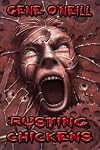
REVIEWED: Rusting Chickens
WRITTEN BY: Gene O'Neill
PUBLISHED: 2011
I read this Gene O'Neill novella right after reading his novel, "The Burden of Indigo," and, had I not known better, would not have known they were written by the same author. That's a good thing. I've read O'Neill's shorter stories as well, and he has a talent for writing in compelling voices that are each unique to the tale being told. In this, a wounded war veteran returns home and questions his sanity as he tries to find show more his place in civilian life. Tragic, yet also touching, "Rusting Chickens" creates a believable and rounded protagonist centered in a grim mystery.
Four and a Half out of Five stars show less
WRITTEN BY: Gene O'Neill
PUBLISHED: 2011
I read this Gene O'Neill novella right after reading his novel, "The Burden of Indigo," and, had I not known better, would not have known they were written by the same author. That's a good thing. I've read O'Neill's shorter stories as well, and he has a talent for writing in compelling voices that are each unique to the tale being told. In this, a wounded war veteran returns home and questions his sanity as he tries to find show more his place in civilian life. Tragic, yet also touching, "Rusting Chickens" creates a believable and rounded protagonist centered in a grim mystery.
Four and a Half out of Five stars show less
Lists
Awards


You May Also Like


Associated Authors
Statistics
- Works
- 50
- Also by
- 29
- Members
- 228
- Popularity
- #98,696
- Rating
- 3.9
- Reviews
- 26
- ISBNs
- 29
- Favorited
- 1
