
Priya Krishna
Author of Indian-Ish: Recipes and Antics from a Modern American Family
Works by Priya Krishna
Cooking at Home: Or, How I Learned to Stop Worrying About Recipes and Love My Microwave (2021) 188 copies, 4 reviews
Ultimate Dining Hall Hacks: Create Extraordinary Dishes from the Ordinary Ingredients in Your College Meal Plan (2014) 19 copies, 2 reviews
Associated Works
Women on Food: Charlotte Druckman and 115 Writers, Chefs, Critics, Television Stars, and Eaters (2019) — Contributor — 41 copies
Tagged
Common Knowledge
- Birthdate
- 20th Century
- Gender
- female
- Education
- Dartmouth College
- Places of residence
- Dallas, Texas, USA
New York, New York, USA - Map Location
- USA
Members
Reviews
Cooking at Home: Or, How I Learned to Stop Worrying About Recipes (And Love My Microwave): A Cookbook by David Chang
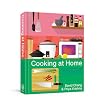
I love to cook, and I am a reasonably good home cook, possibly better than that. I rarely use recipes, though if I am cooking something traditional or belonging to a cuisine with which I am unfamiliar I often cook it from the recipe the first time or two, and then start riffing. I do sometimes read cookbooks to get ideas of what things go together and I use that as a foundation -- I recently started working on my iteration of chicken adobo, but Filipino flavors are new to me so I read about show more a dozen recipes and had a lengthy chat with one of the cooks at a favorite Filipino restaurant and started cooking and success was mine. This cookbook is written for home cooks like me. There are no real recipes, everything can be switched out for other things you happen to have in your fridge and pantry, and food science is explained so the cook can use that to make substitutions. There are lots of knobs of butter and glugs of oil and "when you touch it it will do this when ready" kinds of instructions. I got some good ideas especially for soups and stews, and completely changed my dal recipe for the better. Chang also convinced me to use more traditionally Asian flavoring agents in Western food. I have been deploying fish sauce a lot more in the week since I finished this, and he is right, a dash changed my puttanesca for the better and really amped up and deepened the flavor of my braising liquid for poultry.
All this said, a lot of his methods are not to my taste at all -- so much boiling -- and every recipe has rice and/or noodles, which are not every day foods for me. I get that his tradition is Korean and much of his training is Japanese, and this is his comfort food, it just doesn't work for me personally. (I like David Chang, but in all truth I do not love Momofuku or Ssam -- both are fine, but I can get iterations of their signature dishes I like better at many other restaurants with more comfortable seating.) Still, full of great ideas for the home cook without weird ingredients, or tons of ingredients, and with no difficult techniques. Very worthwhile for cooks who understand basic techniques and who have a basic idea of how flavor works. show less
All this said, a lot of his methods are not to my taste at all -- so much boiling -- and every recipe has rice and/or noodles, which are not every day foods for me. I get that his tradition is Korean and much of his training is Japanese, and this is his comfort food, it just doesn't work for me personally. (I like David Chang, but in all truth I do not love Momofuku or Ssam -- both are fine, but I can get iterations of their signature dishes I like better at many other restaurants with more comfortable seating.) Still, full of great ideas for the home cook without weird ingredients, or tons of ingredients, and with no difficult techniques. Very worthwhile for cooks who understand basic techniques and who have a basic idea of how flavor works. show less
Cooking at Home: Or, How I Learned to Stop Worrying About Recipes (And Love My Microwave) by David Chang
David Chang, the founder of Momofuku, is the co-author of this James Beard Award-nominated cookbook. It should be fabulous, right? But I just couldn’t finish it. In fact, I couldn’t even get a fourth of the way through it.
Chang’s co-author Priya Krishna writes on p. 25, “[M]aybe by the time you’ve gotten to this point you’ve realized you just purchased a cookbook by a famous chef with no recipes and you’re confused. Or disappointed. Or panicked.” But this really isn’t a show more cookbook without recipes; it’s much worse. It’s a cookbook with very, very vague recipes of unfamiliar dishes without enough guidance to avoid a disaster. If you’re a Brooklyn-level foodie with a sky-high sense of adventure, this cookbook probably will be your cup of tea. As for me, I just had to abandon this bitter brew. I bought this book in the Kindle edition on sale for just a few dollars, and I still feel ripped off. Cocus emptor. show less
Chang’s co-author Priya Krishna writes on p. 25, “[M]aybe by the time you’ve gotten to this point you’ve realized you just purchased a cookbook by a famous chef with no recipes and you’re confused. Or disappointed. Or panicked.” But this really isn’t a show more cookbook without recipes; it’s much worse. It’s a cookbook with very, very vague recipes of unfamiliar dishes without enough guidance to avoid a disaster. If you’re a Brooklyn-level foodie with a sky-high sense of adventure, this cookbook probably will be your cup of tea. As for me, I just had to abandon this bitter brew. I bought this book in the Kindle edition on sale for just a few dollars, and I still feel ripped off. Cocus emptor. show less
Cooking at Home: Or, How I Learned to Stop Worrying About Recipes (And Love My Microwave): A Cookbook by David Chang
This isn’t set up like most cookbooks course or even some by season. This is set up taking an item and then showing what a few changes to it can make several different meals based on different cultures. There is a lot of back and forth from both writer in the book and there is also reference titles they give of you want to learn more in-depth about certain dishes and other dishes from that culture. This is much more of a cook at home book and a discussion of home cooking than “Let’s do show more recipes from my restaurant”. I was reviewing a digital copy of the book but I do want to look at the final version because I think some stuff will be different. This book feels like it is geared to someone who wants to be more adventurous in the kitchen but is a bit hesitant about playing with flavors. It feels more like an intermediate book, something for someone that is used to cooking a few things but is ready to take the next step in the kitchen.
Digital review copy provided by the publisher through Edelwiess show less
Digital review copy provided by the publisher through Edelwiess show less
Cooking at home : or how I learned to stop following recipes and love sandbagging : how to not follow a recipe by David Chang
This is good, full of no-recipe recipes for delicious food, allowing for lots of substitutions. It takes into account realities of your grocery store (frozen vegetables!) and average kitchen. Most of it is written by David Chang, but Priya Krishna fills in some gaps (especially for less meaty dishes), and I’m happy to learn from both of them. There are a few fussy ingredients, mostly from different Asian cuisines, but everything is optional within reason so it works. If you have access to show more Asian groceries, this book has a lot of exciting ways to use them, but it also works if all you have is a standard chain grocery. I haven’t tried it yet, but one of the most exciting non-recipes here is for shrimp with corn and potatoes.
I only hesitate to buy this because some of the best hacks are for the microwave, something I don’t have. But this would be an excellent first how-to-cook book. show less
I only hesitate to buy this because some of the best hacks are for the microwave, something I don’t have. But this would be an excellent first how-to-cook book. show less
Awards


You May Also Like


Associated Authors
Statistics
- Works
- 5
- Also by
- 3
- Members
- 581
- Popularity
- #43,162
- Rating
- 3.8
- Reviews
- 10
- ISBNs
- 7