
Paul Brickhill (1916–1991)
Author of The Great Escape
About the Author
Works by Paul Brickhill
Velký útěk 1 copy
Associated Works
Three Great Air Stories: Brickhill, P. Reach for the Sky; Forrester, L. Skymen; Hay, D. Man in the Hot Seat (1970) — Contributor — 11 copies
Tagged
Common Knowledge
- Canonical name
- Brickhill, Paul
- Legal name
- Brickhill, Paul Chester Jerome
- Birthdate
- 1916-12-20
- Date of death
- 1991-04-23
- Gender
- male
- Education
- North Sydney Boys' High School
University of Sydney - Occupations
- journalist
fighter pilot
writer
historian (military) - Organizations
- Royal Australian Air Force
- Nationality
- Australia
- Birthplace
- Melbourne, Victoria, Australia
- Places of residence
- Sydney, New South Wales, Australia
Stalag Luft III, Silesia, Third Reich - Place of death
- Sydney, New South Wales, Australia
- Associated Place (for map)
- Australia
Members
Reviews

Douglas Bader has a modern reputation for having been too uncritically lionized, but he was at heart simply a border collie on stilts: workaholic, stubborn, brave, fiercely focused, and intense up close. If you've got four dozen sheep—or Messerschmidts—to chase down, he's a godsend and a ball of joy. But for the sake of everyone's sanity, you'd better let him chase those sheep or as an exasperated Keith Park learned, he'll eat your furniture and never stop barking. (Far too much show more psychological complexity is ascribed to Bader when in all cases, the phrase "border collie" will do.)
This book paints a straightforward portrait of a young prodigy whose talent initially outstripped his maturity to his very great cost, who assumed all the charm of an ingrown toenail when he wasn't allowed into the thick of any fight, who maintained his sanity and sense of direction in the face of terrible loss and ordeals, who was lucky to live during the brief time in history when he could make the most of his gifts with few to no limitations based on his disability, and who, with his wife, negotiated an awkward and unwanted transition into celebrity that neither of them asked for nor anticipated, turning it into something positive for many thousands of people desperate for reassurance that losing a limb didn't mean losing their dreams.
And this book is no hagiography. Bader's various flying cock-ups are described in detail. Neither does Brickhill draw back from describing how Bader consciously used what is today called "emotional intelligence" both to inspire loyalty and obedience as well as to drive his enemies up the wall, and how his bloody-minded refusal to cut himself any slack at all—referred to by Brickhill as "the little demon"—could be both a constructive and destructive force for himself and those around him. I dare anyone to read of Bader's time in a succession of German prison camps without thinking of O. Henry's "The Ransom of Red Chief" at least once. The Allies could have blackmailed an unconditional surrender out of Germany just by threatening to not take him back.
Therefore to me, this seems like a balanced portrait. I don't think an author can refer to a significant chunk of his subject's psychology as "the little demon" and be fairly accused of writing a hagiography. Furthermore, toward the end of the book, Brickhill also states that, in contrast to concerns that he must have been difficult to cope with in close quarters, Bader and his wife seemed a happy and devoted couple. Had those concerns not been extant even at the time, Brickhill would not have felt the need to address them, and I find it reassuring that he felt they should be since it indicates that people were thinking of Thelma. (Nevertheless, that woman must have had the patience of a saint; like most respectable Englishwomen of the time, she was said to be fond of dogs and horses, and I confess thinking that might have made it easier for her to deal with her hyperactive, not entirely domesticated husband.)
In fairness however, I'm an American, and the vast majority of people in the US have never heard of Douglas Bader. Thus I was not under an impression since childhood that he was a flawless boys-own hero. I first encountered him as a middle-aged adult and already understood that "Behold My Rizz" is the baseline personality for any fighter ace. I was then pleasantly surprised to learn his personality was greatly moderated by a generous, reassuring side that he put to good use in uplifting others. (And in retrospect, the work he did to uplift others in need was also part of Bader's border collie mentality: both chasing "enemy" sheep and guarding its own flock with equal ferocity.) A British reader's impression of Bader is more likely to have gone in the other direction.
Nevertheless, whether your opinion of him rose or fell to reach moderation, Bader was a fearless, talented man who repeatedly risked his life to defend the world against Nazism and who, after the war, sacrificed a good amount of his personal life to bring hope to people who badly needed it. The only thing that keeps this from being a five-star book is that it is a mid-life biography, as opposed to a late-life autobiography. Three more decades of life awaited Bader, and their absence here is frustrating. Thankfully, Percy Belgrave Lucas's late-life biography of him "Flying Colours" fills that gap. show less
This book paints a straightforward portrait of a young prodigy whose talent initially outstripped his maturity to his very great cost, who assumed all the charm of an ingrown toenail when he wasn't allowed into the thick of any fight, who maintained his sanity and sense of direction in the face of terrible loss and ordeals, who was lucky to live during the brief time in history when he could make the most of his gifts with few to no limitations based on his disability, and who, with his wife, negotiated an awkward and unwanted transition into celebrity that neither of them asked for nor anticipated, turning it into something positive for many thousands of people desperate for reassurance that losing a limb didn't mean losing their dreams.
And this book is no hagiography. Bader's various flying cock-ups are described in detail. Neither does Brickhill draw back from describing how Bader consciously used what is today called "emotional intelligence" both to inspire loyalty and obedience as well as to drive his enemies up the wall, and how his bloody-minded refusal to cut himself any slack at all—referred to by Brickhill as "the little demon"—could be both a constructive and destructive force for himself and those around him. I dare anyone to read of Bader's time in a succession of German prison camps without thinking of O. Henry's "The Ransom of Red Chief" at least once. The Allies could have blackmailed an unconditional surrender out of Germany just by threatening to not take him back.
Therefore to me, this seems like a balanced portrait. I don't think an author can refer to a significant chunk of his subject's psychology as "the little demon" and be fairly accused of writing a hagiography. Furthermore, toward the end of the book, Brickhill also states that, in contrast to concerns that he must have been difficult to cope with in close quarters, Bader and his wife seemed a happy and devoted couple. Had those concerns not been extant even at the time, Brickhill would not have felt the need to address them, and I find it reassuring that he felt they should be since it indicates that people were thinking of Thelma. (Nevertheless, that woman must have had the patience of a saint; like most respectable Englishwomen of the time, she was said to be fond of dogs and horses, and I confess thinking that might have made it easier for her to deal with her hyperactive, not entirely domesticated husband.)
In fairness however, I'm an American, and the vast majority of people in the US have never heard of Douglas Bader. Thus I was not under an impression since childhood that he was a flawless boys-own hero. I first encountered him as a middle-aged adult and already understood that "Behold My Rizz" is the baseline personality for any fighter ace. I was then pleasantly surprised to learn his personality was greatly moderated by a generous, reassuring side that he put to good use in uplifting others. (And in retrospect, the work he did to uplift others in need was also part of Bader's border collie mentality: both chasing "enemy" sheep and guarding its own flock with equal ferocity.) A British reader's impression of Bader is more likely to have gone in the other direction.
Nevertheless, whether your opinion of him rose or fell to reach moderation, Bader was a fearless, talented man who repeatedly risked his life to defend the world against Nazism and who, after the war, sacrificed a good amount of his personal life to bring hope to people who badly needed it. The only thing that keeps this from being a five-star book is that it is a mid-life biography, as opposed to a late-life autobiography. Three more decades of life awaited Bader, and their absence here is frustrating. Thankfully, Percy Belgrave Lucas's late-life biography of him "Flying Colours" fills that gap. show less
If you only know the Dam Busters form the theme tune or the film, you really should read this book. If you flew with the squadron, you should really read this book, although I have no doubt the few of you left have.
As a book, it is decent, it does its job well and clearly enough for a book written in that period on this type of subject. There are a few niggles when the author gets slightly over-personal with Cheshire, but having just read "Cheshire VC", I can understand and readily forgive show more that.
It is, however, not a book, but more a biography of a squadron, and what a squadron.
This is a study in tenacity, determination, unbelievable bravery, invention (not just by Barnes Wallis) and camaraderie. If you have any interest in war, not just the air war, WWII or the RAF, you simply must read it. I would, however, recommend it to almost anyone as, as much as it is about anything, this is a book about people, the members, the sadly ever-changing members, of 617 Squadron.
Not convinced? Then consider one raid where they had to fly a heavy bomber with a wingspan of over 100' at only 60' above a lake to succeed, "jumping" over electricity pylons on their way to the target. Consider when asked to destroy a bridge, that from over 12,000 feet up, separate planes dropping one single massive bomb each, managed to hit both ends of the bridge at the same time and as it lifted into the air, hit the centre of it with yet another bomb to completely destroy it. Hollywood would not consider such feats acceptable in a script, but men did it. show less
As a book, it is decent, it does its job well and clearly enough for a book written in that period on this type of subject. There are a few niggles when the author gets slightly over-personal with Cheshire, but having just read "Cheshire VC", I can understand and readily forgive show more that.
It is, however, not a book, but more a biography of a squadron, and what a squadron.
This is a study in tenacity, determination, unbelievable bravery, invention (not just by Barnes Wallis) and camaraderie. If you have any interest in war, not just the air war, WWII or the RAF, you simply must read it. I would, however, recommend it to almost anyone as, as much as it is about anything, this is a book about people, the members, the sadly ever-changing members, of 617 Squadron.
Not convinced? Then consider one raid where they had to fly a heavy bomber with a wingspan of over 100' at only 60' above a lake to succeed, "jumping" over electricity pylons on their way to the target. Consider when asked to destroy a bridge, that from over 12,000 feet up, separate planes dropping one single massive bomb each, managed to hit both ends of the bridge at the same time and as it lifted into the air, hit the centre of it with yet another bomb to completely destroy it. Hollywood would not consider such feats acceptable in a script, but men did it. show less
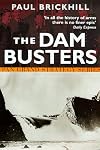
A rather dry account of 617 Squadron in World War Two, whose exploits should need no introduction. It is told enthusiastically by author Paul Brickhill but, particularly when discussing the missions in the years after the famous Dam Busters raid, it is easy to lose the narrative thread and get lost in the mass of detail. Brickhill seemed acutely aware of this, which is why he focused more on inventor Barnes Wallis than on the procession of squadron commanders, bomber crews and flak-riddled show more missions over Germany.
Those bombing campaigns are deeply seeded into the book – and the heroism and flying skill is often astonishing – but the book is never as good as when it is with Wallis, poking around in his garden and trying to figure out new ways of planting one on Hitler's nose. It is this sense of underdog ingenuity – not only in Wallis trying to get his eccentric 'bouncing bombs' greenlit by RAF top brass, but in various little inventions like the plywood bombsight knocked up by a carpenter in five minutes (pg. 71) – which really appeals to the British reader's sense of pluck and patriotism. Any bloke who has ever played snooker in a pub can sympathise with Wallis' attempts to control the backspin on his bombs and land them in the right place at the dam wall, and the success of this true story is, as Brickhill writes, something that reassures "those who are dismayed by the fact that the British and their allies are outnumbered in this not too amicable world" (pg. 9). show less
Those bombing campaigns are deeply seeded into the book – and the heroism and flying skill is often astonishing – but the book is never as good as when it is with Wallis, poking around in his garden and trying to figure out new ways of planting one on Hitler's nose. It is this sense of underdog ingenuity – not only in Wallis trying to get his eccentric 'bouncing bombs' greenlit by RAF top brass, but in various little inventions like the plywood bombsight knocked up by a carpenter in five minutes (pg. 71) – which really appeals to the British reader's sense of pluck and patriotism. Any bloke who has ever played snooker in a pub can sympathise with Wallis' attempts to control the backspin on his bombs and land them in the right place at the dam wall, and the success of this true story is, as Brickhill writes, something that reassures "those who are dismayed by the fact that the British and their allies are outnumbered in this not too amicable world" (pg. 9). show less
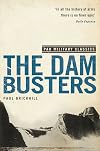
The Dam Busters was a timely read in 2018, the 75th anniversary year of the historic Dam Busters raid. This book is about more than that raid, though: it is about the development of the bombs that were used in the raid, the work that the lead scientist was doing in the years leading up to the raid, and the adventures of the squadron for the rest of the war.
It is a book filled with colourful characters who go on sorties and perform acts of derring-do. It also contains, unfortunately, a show more patronizing attitude toward women. The WAAFs mentioned in this book are few and far between, which is perhaps understandable if you're focusing on the people in the planes, but almost every single reference to any woman in the book had them being referred to as "girls", being described by their looks (or as "slim", or "languid", which was just weird), or appearing in the context of them getting in the men's way or making what the men saw as mistakes, but whose actions made perfect sense to the reader because they had the context. ("What she said was perfectly natural given the mental model she had of the situation!" I grumbled at one point. "Stupid men, assuming that the woman could read their minds!")
Apart from that, there were a couple of totally unnecessary similes that fed into stereotypes about women: likening memory to a woman, for example, because it isn't around when you want it...and the one that talked about something being "as reliable as women's intuition" (in this case, not very). This sort of attitude could be seen as unfortunate but natural given the vintage of the author (born 1916), but the throwaway similes could easily have been rewritten in a non-sexist manner (usually cats are painted as capricious, and there are surely other habitually unreliable things that could have been used in the other simile).
The writing about the actual raids and the men of the squadron was perfectly fine, as these things go, but I would only recommend this book more for its immediacy (it was written in 1951 and so more of the major players were alive) than for its writing style. show less
It is a book filled with colourful characters who go on sorties and perform acts of derring-do. It also contains, unfortunately, a show more patronizing attitude toward women. The WAAFs mentioned in this book are few and far between, which is perhaps understandable if you're focusing on the people in the planes, but almost every single reference to any woman in the book had them being referred to as "girls", being described by their looks (or as "slim", or "languid", which was just weird), or appearing in the context of them getting in the men's way or making what the men saw as mistakes, but whose actions made perfect sense to the reader because they had the context. ("What she said was perfectly natural given the mental model she had of the situation!" I grumbled at one point. "Stupid men, assuming that the woman could read their minds!")
Apart from that, there were a couple of totally unnecessary similes that fed into stereotypes about women: likening memory to a woman, for example, because it isn't around when you want it...and the one that talked about something being "as reliable as women's intuition" (in this case, not very). This sort of attitude could be seen as unfortunate but natural given the vintage of the author (born 1916), but the throwaway similes could easily have been rewritten in a non-sexist manner (usually cats are painted as capricious, and there are surely other habitually unreliable things that could have been used in the other simile).
The writing about the actual raids and the men of the squadron was perfectly fine, as these things go, but I would only recommend this book more for its immediacy (it was written in 1951 and so more of the major players were alive) than for its writing style. show less
Lists
Awards

You May Also Like


Associated Authors
Statistics
- Works
- 16
- Also by
- 6
- Members
- 2,777
- Popularity
- #9,246
- Rating
- 4.0
- Reviews
- 45
- ISBNs
- 104
- Languages
- 6