
Max Hastings
Author of All Hell Let Loose: The World at War 1939-1945
About the Author
British journalist, editor, and historian Max Hastings was born on December 28, 1945. He was a foreign correspondent for BBC television and London's Evening Standard, for which he later served as editor from 1996 to 2001. Hastings also worked as editor and editor-in-chief of The Daily Telegraph. In show more addition to presenting BBC historical documentaries and writing numerous books of military history, Hastings has contributed to publications including the Daily Mail, The Guardian, and the New York Review of Books. He received the nonfiction Somerset Maugham Award for Bomber Command, as well as the Yorkshire Post Book of the Year Prize for both Overlord and The Battle for the Falklands. His title Catastrophe 1914: Europe Goes to War made The New York Times Best Seller List in 2013. The Secret War: Spies, Ciphers, and Guerrillas, 1939-1945 was published in 2016 and is also on the New York Times Bestsellers List. Hastings was knighted in 2002, is a Fellow of the Royal Society of Literature, and from 2002-2007 was President of the Campaign to Protect Rural England. (Bowker Author Biography) show less
Works by Max Hastings
Bomber Command : The Myths and Reality of the Strategic Bombing Offensive, 1939-1945 (1979) — Author — 551 copies, 8 reviews
Das Reich: The March of the 2nd Panzer Division through France, June 1944 (1981) 415 copies, 8 reviews
Sword: The gripping military history of D-Day and Sword Beach from the Sunday Times bestselling author (2025) 39 copies, 1 review
The Daily Telegraph Record of the Second World War: Month by Month from 1939 to 1945 (1989) 9 copies
Soldiers 5 copies
World War Two: A graphic account of the greatest and most terrible event in human history (All you need to know) (2018) 4 copies
Record of the Second World War 2 copies
Fegyverben a világ 1 copy
1914 - Európa lángba borul 1 copy
All Hell Let Loose. Vol.2. 1 copy
Abisso (Italian Edition) 1 copy
Kóreustríðið 1950–1953 1 copy
Max Hastings 4 Books Collection Set (The Secret War, Nemesis, Catastrophe, All Hell Let Loose) (2024) 1 copy
The General 1 copy
Story of D Day, 1 copy
As Guerras Secretas - 4 1 copy
As Guerras Secretas - 3 1 copy
As Guerras Secretas - 2 1 copy
As Guerras Secretas - 1 1 copy
Associated Works
An Army at Dawn: The War in North Africa, 1942–1943 (2002) — some editions — 3,191 copies, 72 reviews
Defeat into Victory: Battling Japan in Burma and India, 1942–1945 (1956) — Introduction, some editions — 464 copies, 11 reviews
March to the South Atlantic: 42 Commando Royal Marines in the Falklands War (1986) — Foreword — 14 copies
MHQ: The Quarterly Journal of Military History — Winter 1994 (1993) — Author "The Lonely Passion of Bomber Harris" and "Firestorm at Hamburg" — 10 copies
MHQ: The Quarterly Journal of Military History — Autumn 2010 (2010) — Author "Ask MHQ: How Hirohito Escaped the Hangman’s Noose" — 4 copies
Reader's Digest Condensed Books: Overlord • The Children's Game • A Kind of Magic • Tiger, Tiger (1984) 4 copies
MHQ: The Quarterly Journal of Military History — Autumn 2013 (2013) — Author "'Inventions of the Devil'" — 4 copies
Tagged
Common Knowledge
- Legal name
- Hastings, Sir Max Hugh Macdonald
- Birthdate
- 1945-12-28
- Gender
- male
- Education
- University College, Oxford
Charterhouse School - Occupations
- journalist
editor - Organizations
- British Broadcasting Corporation
Evening Standard
The Daily Telegraph
Daily Mail - Awards and honors
- Royal Society of Literature (Fellow)
Royal Historical Society (Fellow)
Knight Bachelor (2002) - Relationships
- Hastings, Macdonald (father)
Scott-James, Anne (mother)
Scott-James, R. A. (grandfather)
Hastings, Clare (sister) - Nationality
- UK
- Birthplace
- London, Middlesex, England, UK
- Places of residence
- Oxford, Oxfordshire, England, UK
London, Middlesex, England, UK - Map Location
- England, UK
Members
Reviews
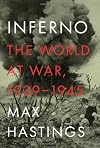
To me, artillery was the invention of hell.
This was exhaustive in terms of the sheer amount of information stored in this book. When Max Hastings chose World At War in his title, he truly meant it. It's really amazing how he was able to include basically all sides of World War II into this, from countries who were barely impacted to civilians that saw no change in their daily life around the world. No stone left unturned, as they say.
This is one of those books that I think everyone should show more take some time to sift through, and should probably be utilized in schools everywhere. The amount of information provided is amazing, and the detail is very humbling. In a day and age where people make jokes about us 'needing another world war', reading this has made it even more obvious to me how absolutely disgusting and out of touch that is to say and joke about.
This war was a detriment to not only millions of people (perhaps billions if you include everything from death to rape to grief) but country to country relations, and the environment itself. Zero good came from this war, except for the people who were freed from torture and imprisonment.
On the other hand, it almost felt as if more people were freed from the consequences of their inhumane actions than the victims of the event getting their own sort of vindication. It was really awful hearing about not only how many Nazis escaped retribution by fleeing Germany (Hastings even touches on Germany absorbing some and protecting them which is so heinous), but how many war crimes were committed by allies, Russian, British, and American soldiers, and simply ignored. One less gruesome story of evading consequences stuck out to me of an officer who called his men to machine gun enemy soldiers who were stranded in the ocean after their ship went down. This man was given a medal for his service during the war and kept climbing the ranks of the military, as if he had not called for the slaughter of unarmed men. This is far from the only time a terrible action was committed and the perpetrator was basically rewarded.
I found it interesting just how much floundering was happening in the first years of the war by ally leaders and other countries. How much terror could have been stopped and prevented if they had gotten off their asses and taken action against the Nazi threat, rather than brushing it off as an ego that would peter out before it gained much traction. It wasn't until Britain was literally under threat by Germany that they finally reacted. Mistakes were made in strides by everyone, including Germany, and I liked learning about those cases. No one is infallible, and so, it proves they really aren't gods. Leaders are human like you and I, and truly don't have a superiority over the rest of us, despite most leadership pretending so. Plenty of leaders are just plain stupid, which is laid out clearly by Hastings many times, but especially when he spends time exploring Mussolini's choices.
My favorite thing about Hastings' work was his focus on specific groups and time periods that a lot of narratives gloss over or leave out entirely. He spends time on women in the war, around the world, from their own service, their presence increasing in the work force in various countries, to the assaults they suffered. Hastings does not shy away from grief or rape or murder, and I think it's important he doesn't. Basically all armies committed sex crimes against women, allies and axis, and there were plenty of reports of children and elderly being assaulted as well. Rape is conveniently left out most of the time when WWII books and documentaries are made, unless of course they are attempting to vilify Nazis or Japanese soldiers specifically, or even Russians depending on the agenda of the writer. In a way, WWII is an act of rape itself- rape of people, of land, of rights. It's sickening, and should never be forgot. None of it should be forgot.
Hastings spends time talking about aspects of segregation and colonization. How Amerikkka used Black soldiers but gave them no glory, nor rights, for their sacrifices, how countries colonized by Europe were forced into combat they had no part of. A raping of rights.
Probably my most favorite aspects of this book was Hastings use of real letters and diaries being quoted (with sources) within the text. Hearing from actual soldiers, grieving mothers, victimized girls was really hard hitting and avoided this feeling like a textbook and kept it emotional. It's impossible to separate yourself from what happened when you can so easily see yourself in the words of real people. He doesn't play favorites either- time is spent on Nazi and German accounts, both in favor of conquering the world for Hitler and those more critical of the terrors conducted. This is important to me, to give a full narrative of events and instead of playing the Evil German vs Good Ally cards that I feel many enforce. No one is complete evil, and no one is complete good, and it's very very dangerous to fall into that mindset, especially in the context of WWII. Don't forget, we are all susceptible to propaganda.
In all, this was hard hitting, transparent, and emotionally difficult. As it should be. It's critical that these events never happens again and that we never forget. Misinformation and attempts to falsify the reality of WWII is crucial as we move forward in this digital era. We cannot repeat history, and to do that, we must all be educated on the dirty details of what happened. Learning that Japanese adolescents don't even know the extent of the role their country played in this horrendous event is awful, and it opens my eyes to the lack of education in the United States as well. We cannot forget. show less
This was exhaustive in terms of the sheer amount of information stored in this book. When Max Hastings chose World At War in his title, he truly meant it. It's really amazing how he was able to include basically all sides of World War II into this, from countries who were barely impacted to civilians that saw no change in their daily life around the world. No stone left unturned, as they say.
This is one of those books that I think everyone should show more take some time to sift through, and should probably be utilized in schools everywhere. The amount of information provided is amazing, and the detail is very humbling. In a day and age where people make jokes about us 'needing another world war', reading this has made it even more obvious to me how absolutely disgusting and out of touch that is to say and joke about.
This war was a detriment to not only millions of people (perhaps billions if you include everything from death to rape to grief) but country to country relations, and the environment itself. Zero good came from this war, except for the people who were freed from torture and imprisonment.
On the other hand, it almost felt as if more people were freed from the consequences of their inhumane actions than the victims of the event getting their own sort of vindication. It was really awful hearing about not only how many Nazis escaped retribution by fleeing Germany (Hastings even touches on Germany absorbing some and protecting them which is so heinous), but how many war crimes were committed by allies, Russian, British, and American soldiers, and simply ignored. One less gruesome story of evading consequences stuck out to me of an officer who called his men to machine gun enemy soldiers who were stranded in the ocean after their ship went down. This man was given a medal for his service during the war and kept climbing the ranks of the military, as if he had not called for the slaughter of unarmed men. This is far from the only time a terrible action was committed and the perpetrator was basically rewarded.
I found it interesting just how much floundering was happening in the first years of the war by ally leaders and other countries. How much terror could have been stopped and prevented if they had gotten off their asses and taken action against the Nazi threat, rather than brushing it off as an ego that would peter out before it gained much traction. It wasn't until Britain was literally under threat by Germany that they finally reacted. Mistakes were made in strides by everyone, including Germany, and I liked learning about those cases. No one is infallible, and so, it proves they really aren't gods. Leaders are human like you and I, and truly don't have a superiority over the rest of us, despite most leadership pretending so. Plenty of leaders are just plain stupid, which is laid out clearly by Hastings many times, but especially when he spends time exploring Mussolini's choices.
My favorite thing about Hastings' work was his focus on specific groups and time periods that a lot of narratives gloss over or leave out entirely. He spends time on women in the war, around the world, from their own service, their presence increasing in the work force in various countries, to the assaults they suffered. Hastings does not shy away from grief or rape or murder, and I think it's important he doesn't. Basically all armies committed sex crimes against women, allies and axis, and there were plenty of reports of children and elderly being assaulted as well. Rape is conveniently left out most of the time when WWII books and documentaries are made, unless of course they are attempting to vilify Nazis or Japanese soldiers specifically, or even Russians depending on the agenda of the writer. In a way, WWII is an act of rape itself- rape of people, of land, of rights. It's sickening, and should never be forgot. None of it should be forgot.
Hastings spends time talking about aspects of segregation and colonization. How Amerikkka used Black soldiers but gave them no glory, nor rights, for their sacrifices, how countries colonized by Europe were forced into combat they had no part of. A raping of rights.
Probably my most favorite aspects of this book was Hastings use of real letters and diaries being quoted (with sources) within the text. Hearing from actual soldiers, grieving mothers, victimized girls was really hard hitting and avoided this feeling like a textbook and kept it emotional. It's impossible to separate yourself from what happened when you can so easily see yourself in the words of real people. He doesn't play favorites either- time is spent on Nazi and German accounts, both in favor of conquering the world for Hitler and those more critical of the terrors conducted. This is important to me, to give a full narrative of events and instead of playing the Evil German vs Good Ally cards that I feel many enforce. No one is complete evil, and no one is complete good, and it's very very dangerous to fall into that mindset, especially in the context of WWII. Don't forget, we are all susceptible to propaganda.
In all, this was hard hitting, transparent, and emotionally difficult. As it should be. It's critical that these events never happens again and that we never forget. Misinformation and attempts to falsify the reality of WWII is crucial as we move forward in this digital era. We cannot repeat history, and to do that, we must all be educated on the dirty details of what happened. Learning that Japanese adolescents don't even know the extent of the role their country played in this horrendous event is awful, and it opens my eyes to the lack of education in the United States as well. We cannot forget. show less
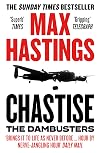
When I was a child I was thrilled to read the wonderful WW2 adventure stories by Scottish author Alistair Maclean. I mention this because The Dam Busters, on first blush, reads like a thriller, a boys own yarn, from the aforementioned author. However, as we know, the story of the Dam Busters is not an imaginary tale but rather an audacious attack right into the heart of Nazi Germany.
It was a time of world war, stagnation, constant heavy “carpet” bombing missions under the leadership of show more the somewhat controversial Arthur Harris. Harris appeared to be accomplishing little, the only way to mark/pinpoint a target from a Lancaster bomber was by use of a compass, a map, and a sharp pair of young eyes. It is therefore of little surprise that targeted carpet bombing had very limited success, and it is against this background that an enigmatic Barnes Wallis unfolds his bouncing bomb.
3 dams were chosen; the Mohne, the Sorpe and the Eder. A special 617 squadron was created under the auspices of Wing Commander Guy Penrose Gibson, VC, DSO & Bar, DFC & Bar, and a fleet of Lancaster bombers were requisitioned and accordingly modified to carry the inventors explosive device. In order to deliver the bouncing bomb at the centre of the chosen dam, great concentration, precision and nerve were demanded from the crew of the attacking plane. A modern generation can never imagine how brave and utterly fearless those young men inside the Lancaster bomber were. To fly at a height of only 60ft, under constant attack by enemy fire, and expected to destroy a specified target needs a certain type of resilience, a certain type of superhero. When you realize that an airman was expected to complete 30 missions as part of a tour it is little wonder that few survived beyond the first few.
There have been those who have voiced great concern and justification at the implementation of such at such a foolhardy mission. Not only a great loss of so many young airmen but equally devastating to those residents who lived immediately below and therefore directly in the path of a fast approaching mountainous volume of water. However Britain needed a hero, something to cheer for, in the stagnant waters of the early 1940’s, and a young boyish aircrew led by the flamboyant, abrasive Gibson aptly filled that role. Max Hasting’s “Chastise” is a truly inspiring, magnificent book. It brings to life a story of a daring mission deep into the heart of a hostile nation. How fearless young men were prepared to fight and most probably die for the greater good, free from oppression and tyranny so that future generations could live in relative freedom……. “We lived supremely for the moment. Our preoccupation was the next patrol, our horizon the next leave. Sometimes, jokingly, as one discusses winning the Derby Sweep, we would plan our lives after the war. But this had no substantial significance. It was a dream, conjecturable as heaven, resembling no life we knew. We were trained with one object -to kill. We had one hope - to live”.....Wonderful inspiring writing and highly recommended. show less
It was a time of world war, stagnation, constant heavy “carpet” bombing missions under the leadership of show more the somewhat controversial Arthur Harris. Harris appeared to be accomplishing little, the only way to mark/pinpoint a target from a Lancaster bomber was by use of a compass, a map, and a sharp pair of young eyes. It is therefore of little surprise that targeted carpet bombing had very limited success, and it is against this background that an enigmatic Barnes Wallis unfolds his bouncing bomb.
3 dams were chosen; the Mohne, the Sorpe and the Eder. A special 617 squadron was created under the auspices of Wing Commander Guy Penrose Gibson, VC, DSO & Bar, DFC & Bar, and a fleet of Lancaster bombers were requisitioned and accordingly modified to carry the inventors explosive device. In order to deliver the bouncing bomb at the centre of the chosen dam, great concentration, precision and nerve were demanded from the crew of the attacking plane. A modern generation can never imagine how brave and utterly fearless those young men inside the Lancaster bomber were. To fly at a height of only 60ft, under constant attack by enemy fire, and expected to destroy a specified target needs a certain type of resilience, a certain type of superhero. When you realize that an airman was expected to complete 30 missions as part of a tour it is little wonder that few survived beyond the first few.
There have been those who have voiced great concern and justification at the implementation of such at such a foolhardy mission. Not only a great loss of so many young airmen but equally devastating to those residents who lived immediately below and therefore directly in the path of a fast approaching mountainous volume of water. However Britain needed a hero, something to cheer for, in the stagnant waters of the early 1940’s, and a young boyish aircrew led by the flamboyant, abrasive Gibson aptly filled that role. Max Hasting’s “Chastise” is a truly inspiring, magnificent book. It brings to life a story of a daring mission deep into the heart of a hostile nation. How fearless young men were prepared to fight and most probably die for the greater good, free from oppression and tyranny so that future generations could live in relative freedom……. “We lived supremely for the moment. Our preoccupation was the next patrol, our horizon the next leave. Sometimes, jokingly, as one discusses winning the Derby Sweep, we would plan our lives after the war. But this had no substantial significance. It was a dream, conjecturable as heaven, resembling no life we knew. We were trained with one object -to kill. We had one hope - to live”.....Wonderful inspiring writing and highly recommended. show less
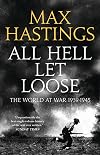
A huge and hugely impressive and moving book, 'All Hell Let Loose' is a concise and precise, but detailed and passion-filled history of the war years of the Second World War. The book is a rivetingly fresh look at a period I thought I knew something about. It challenged me and it has - certainly - rewarded me with increased understanding both of the situation and for those who had to try and survive it. On both sides.
Max Hastings never loses sight of his objective; to put into words an show more experience that which most ordinary people found indescribable. Explaining how the title came about, he writes; "Many resorted to a cliché: 'All hell broke loose.' Because the phrase is commonplace in eyewitness descriptions of battles, air raids, massacres and ship sinkings, later generations are tempted to shrug at it's banality. Yet in an important sense the words capture the essence of what the struggle meant to hundreds of millions of people, plucked from peaceful, ordered existences to face ordeals that in many cases lasted for years, and for at least sixty millions were terminated by death."
As hinted at above, you will get a thorough and nuanced idea of what the Second World War was actually like to live through for people like you and me. The leaders do get a look in here, and grand stratagems are discussed and illustrated, but it is the even-handed perspective with which he discusses how the war irreversably affected the lives of the ordinary person that shines through. Everyone who was forced to endure it, suffered. Some more than others, some like to say, but thankfully Max Hastings has the rationality to see through the modern cynical smokescreen: "It would have been insulting to invite a hungry Frenchman, or even an English housewife weary of the monotony of rations, to consider that in besieged Leningrad starving people were eating each other, while in West Bengal they were selling their daughters. Few people who endured the Luftwaffe's 1940-41 blitz on London would be comforted by knowledge that the German and Japanese peoples would later face losses from Allied bombing many times greater, together with unparalleled devastation."
We mostly all know the rough outline of the conflict. Our background and up-bringing makes us think we know who the good guys were, who the bad guys were. This book doesn't attempt to change that overall 'big picture', but by giving us provocative examples of how it was to be a participant or an 'active participant', willingly or un-willingly, we are challenged to come away with a much more thought-provoking image of what really went on.
But my over-riding impression from the first two-thirds and one of the main impressions I came away from the book with; is how un-prepared, amateurish and even cynical we 'victors' were before and during the first phases, wherever in the world 'we' were at the outbreak of conflict. Then even going towards the eventual victory over Nazi Germany and Japan, we often did our best to attempt the snatching of defeat from the jaws of victory. Rather than entering the conflict determined, sure and with a grand strategy that would lead us inexorably on the path to justice and victory, I got the impression we could be said to have often relied on the other side making worse lash-ups of it than we did.
History and histories will always be written by the victors, but this book is a lot more objective than that might lead you to expect. Arrogance, broken promises, cynicism, fumbling, bumbling, incompetence, unreliability, naivity, it's all here and revealed in detail - on both sides. And who had to deal with all the shit? People like your parents and mine. As he points out: "Combatants fared better than civilians: around three-quarters of all those who perished were unarmed victims rather than active participants in the struggle."
The final chapter is brilliantly perfect. One of the best pieces of concise writing I can ever remember reading. It gathers together most of the big themes explored throughout the book and discusses them in a riviting and incredibly moving way: "It is impossible to dignify the struggle as an unalloyed contest between good and evil, nor rationally to celebrate an experience, and even an outcome, which imposed such misery on so many."
I never thought I would be so moved by a history of something I thought I knew so much about. I cannot recommend it highly enough. It's a brilliant book, I'm sorry I came to the end of it, I'm glad I didn't have to live through it. show less
Max Hastings never loses sight of his objective; to put into words an show more experience that which most ordinary people found indescribable. Explaining how the title came about, he writes; "Many resorted to a cliché: 'All hell broke loose.' Because the phrase is commonplace in eyewitness descriptions of battles, air raids, massacres and ship sinkings, later generations are tempted to shrug at it's banality. Yet in an important sense the words capture the essence of what the struggle meant to hundreds of millions of people, plucked from peaceful, ordered existences to face ordeals that in many cases lasted for years, and for at least sixty millions were terminated by death."
As hinted at above, you will get a thorough and nuanced idea of what the Second World War was actually like to live through for people like you and me. The leaders do get a look in here, and grand stratagems are discussed and illustrated, but it is the even-handed perspective with which he discusses how the war irreversably affected the lives of the ordinary person that shines through. Everyone who was forced to endure it, suffered. Some more than others, some like to say, but thankfully Max Hastings has the rationality to see through the modern cynical smokescreen: "It would have been insulting to invite a hungry Frenchman, or even an English housewife weary of the monotony of rations, to consider that in besieged Leningrad starving people were eating each other, while in West Bengal they were selling their daughters. Few people who endured the Luftwaffe's 1940-41 blitz on London would be comforted by knowledge that the German and Japanese peoples would later face losses from Allied bombing many times greater, together with unparalleled devastation."
We mostly all know the rough outline of the conflict. Our background and up-bringing makes us think we know who the good guys were, who the bad guys were. This book doesn't attempt to change that overall 'big picture', but by giving us provocative examples of how it was to be a participant or an 'active participant', willingly or un-willingly, we are challenged to come away with a much more thought-provoking image of what really went on.
But my over-riding impression from the first two-thirds and one of the main impressions I came away from the book with; is how un-prepared, amateurish and even cynical we 'victors' were before and during the first phases, wherever in the world 'we' were at the outbreak of conflict. Then even going towards the eventual victory over Nazi Germany and Japan, we often did our best to attempt the snatching of defeat from the jaws of victory. Rather than entering the conflict determined, sure and with a grand strategy that would lead us inexorably on the path to justice and victory, I got the impression we could be said to have often relied on the other side making worse lash-ups of it than we did.
History and histories will always be written by the victors, but this book is a lot more objective than that might lead you to expect. Arrogance, broken promises, cynicism, fumbling, bumbling, incompetence, unreliability, naivity, it's all here and revealed in detail - on both sides. And who had to deal with all the shit? People like your parents and mine. As he points out: "Combatants fared better than civilians: around three-quarters of all those who perished were unarmed victims rather than active participants in the struggle."
The final chapter is brilliantly perfect. One of the best pieces of concise writing I can ever remember reading. It gathers together most of the big themes explored throughout the book and discusses them in a riviting and incredibly moving way: "It is impossible to dignify the struggle as an unalloyed contest between good and evil, nor rationally to celebrate an experience, and even an outcome, which imposed such misery on so many."
I never thought I would be so moved by a history of something I thought I knew so much about. I cannot recommend it highly enough. It's a brilliant book, I'm sorry I came to the end of it, I'm glad I didn't have to live through it. show less
I freely admit that I probably wouldn’t have read ‘The Korean War’ if it hadn’t been lent to me. Moreover, it took me a little while to get into. I'm very glad to have given it a chance, though, and 80 pages in I was hooked. The Korean War is an often overlooked conflict; I knew practically nothing about it before reading this book. It is overshadowed by WWII on one side and Vietnam on the other, yet was of immense global significance. Hastings tells the story in a clear, readable, show more and informative style, without getting too journalistic. The book was originally published in 1987, which dates the conclusions at the end interestingly. When the USSR and communism were still considered global superpowers and threats to the West, it must have been easier to see the Korean war as a just conflict that merited its cost in lives and money. These days, it is notable that the only insular communist dictatorship still to exist is North Korea with, as I understand it, the same boundaries as were agreed in the 1953 armistice. This is hardly a positive legacy for the Korean War. In the 21st century, we can ask with hindsight why it was worth fighting proxy wars against communism when its superpowers would peacefully collapse (USSR) or smoothly shift into a state capitalist oligarchy (China) a few decades later. At the time of the Cold War, such developments could hardly be foreseen. Hastings ends by saying that the war saved South Korea from an awful fate. On the other hand, who’s to say that it hasn’t prolonged the terrible fate of the North? Since 1987 American has stacked up several more catastrophic military interventions, tempting the rest of the world to suppose that they only ever make things worse.
The actual narrative of the war, by contrast, has not dated discernibly. The inevitable temptation to compare wars to each other led me to consider the similarities of the Korean War and the trenches of WWI. The former began with unprovoked invasion of South Korea by the North, which the South Korean army could do little to repulse. The USA, which was occupying Japan at the time, mustered up a vaguely worded UN resolution to resist North Korea’s aggression, partly from the belief that it was backed by the USSR. American forces, with fairly tokenistic allied support, proceeded to repulse the North Korean army and drive it back close to the Northern border with China. Whereupon Chinese forces entered the war and threw back the American troops into South Korea, nearly creating a rout. After the initial shock had worn off and General MacArthur had been replaced, the Americans pulled themselves together and turned back the Chinese advance. All this occurred within the first year of the war, which then dragged on for a further three or so years, during which time both sides dug in and the lines moved very little. Any small gains were achieved at the cost of heavy casualties. That certainly seems to me a lot more like WWI’s Western Front than any particular phase of WWII. I don’t know much about the Vietnam War, but Hastings certainly confirmed my impression that the US completely failed to apply any useful lessons from Korea to that later, similar conflict.
In fact, my strongest impression of the whole war is that it was a tragic fiasco and narrowly escaped becoming a nuclear one. The US forces were by all accounts in a terrible state when the war began, their technological superiority barely making up for failures of leadership, training, and morale. The South Korean regime was a corrupt dictatorship with a totally ineffectual army. The North Korean communist regime was ruthlessly oppressive. Bad decisions were made on all sides, millions of lives were thrown away, and both North and South Korea were devastated. China’s military made perhaps the most creditable showing, as they were able to use very recent experience of guerrilla conflict in the Chinese civil war to compensate for a severe lack of equipment. On the other hand, the surprising success of the Chinese forces was premised on a complete disregard for the value of human life. Hastings is only able to provide vague estimates for Chinese and Korean casualties, which run to the millions: an order of magnitude greater than US losses.
The loss of life in the Korean War would nonetheless have been much greater if nuclear weapons had been used. Hastings suggests that the US came disturbingly close to this. In the early 1950s, only the US had the bomb and MacArthur argued both before and after his removal from command that tactical nuclear strikes on China were necessary to contain communism. All America’s allies were opposed to this, on the totally reasonable grounds of not wanting another world war. It appears, though, that at the time nuclear weapons did not have the doomsday aura they later acquired and the American military viewed them as only quantitatively different from conventional arms. Hastings puts it like this:
All very chilling. Not surprisingly, most of the voices in the narrative are American or others on the UN side, but Hastings does take care to include Korean and Chinese accounts. He also makes no secret of the atrocities on all sides and the pervasive racism of the US soldiers. In addition to following the front lines, the book includes chapters on intelligence (scant and badly organised), the war in the air (US-dominated), prisoners of war, and how peace was negotiated. The latter includes extraordinary accounts of how the island of Koje-do, where the UN forces kept their POWs, became in effect a second front in the war. North Korean and Chinese POWs took control of the camps where they were imprisoned, thanks to deliberate communist infiltration and remarkably slapdash US management. In May 1952, one camp of North Koreans actually took their American commandant hostage, precipitating a siege.
Overall, I recommend Hastings’ account as an eye-opening account of the Korean War that neatly balances military details with wider analysis. 29 years after its publication, it would be fascinating to read a complementary account drawing on USSR and Chinese archives that may have subsequently become available. What has not changed, sadly, in the apparent inability of the US to learn foreign policy lessons. Hastings quotes Colonel John Michaelis as follows:
One need only change Korea to Iraq or Afghanistan. Back then the stated aim was to create bulwarks against communism, now apparently it's to create bulwarks against Islamic fundamentalism. I'm no expert, but the tactics seem equally counterproductive in each case. Same shit, different century. show less
The actual narrative of the war, by contrast, has not dated discernibly. The inevitable temptation to compare wars to each other led me to consider the similarities of the Korean War and the trenches of WWI. The former began with unprovoked invasion of South Korea by the North, which the South Korean army could do little to repulse. The USA, which was occupying Japan at the time, mustered up a vaguely worded UN resolution to resist North Korea’s aggression, partly from the belief that it was backed by the USSR. American forces, with fairly tokenistic allied support, proceeded to repulse the North Korean army and drive it back close to the Northern border with China. Whereupon Chinese forces entered the war and threw back the American troops into South Korea, nearly creating a rout. After the initial shock had worn off and General MacArthur had been replaced, the Americans pulled themselves together and turned back the Chinese advance. All this occurred within the first year of the war, which then dragged on for a further three or so years, during which time both sides dug in and the lines moved very little. Any small gains were achieved at the cost of heavy casualties. That certainly seems to me a lot more like WWI’s Western Front than any particular phase of WWII. I don’t know much about the Vietnam War, but Hastings certainly confirmed my impression that the US completely failed to apply any useful lessons from Korea to that later, similar conflict.
In fact, my strongest impression of the whole war is that it was a tragic fiasco and narrowly escaped becoming a nuclear one. The US forces were by all accounts in a terrible state when the war began, their technological superiority barely making up for failures of leadership, training, and morale. The South Korean regime was a corrupt dictatorship with a totally ineffectual army. The North Korean communist regime was ruthlessly oppressive. Bad decisions were made on all sides, millions of lives were thrown away, and both North and South Korea were devastated. China’s military made perhaps the most creditable showing, as they were able to use very recent experience of guerrilla conflict in the Chinese civil war to compensate for a severe lack of equipment. On the other hand, the surprising success of the Chinese forces was premised on a complete disregard for the value of human life. Hastings is only able to provide vague estimates for Chinese and Korean casualties, which run to the millions: an order of magnitude greater than US losses.
The loss of life in the Korean War would nonetheless have been much greater if nuclear weapons had been used. Hastings suggests that the US came disturbingly close to this. In the early 1950s, only the US had the bomb and MacArthur argued both before and after his removal from command that tactical nuclear strikes on China were necessary to contain communism. All America’s allies were opposed to this, on the totally reasonable grounds of not wanting another world war. It appears, though, that at the time nuclear weapons did not have the doomsday aura they later acquired and the American military viewed them as only quantitatively different from conventional arms. Hastings puts it like this:
How close did the United States come, in the winter of 1950, to employing nuclear bombs against the Chinese? Much closer, the answer must be, than her allies cared to believe at the time. If Truman and the fellow-members of his Administration recoiled from bearing the responsibility for so terrible an act, America’s leading military men, from the Joint Chiefs downwards, were far more equivocal, and seemed far less disturbed by the prospect. [...] Had the Chinese proved able to convert the defeat of the UN forces into their destruction, had Eighth Army been unable to check its retreat, and been driven headlong into the coastal ports with massive casualties, it is impossible to declare with certainty that Truman would have resisted demands for an atomic demonstration against China.
All very chilling. Not surprisingly, most of the voices in the narrative are American or others on the UN side, but Hastings does take care to include Korean and Chinese accounts. He also makes no secret of the atrocities on all sides and the pervasive racism of the US soldiers. In addition to following the front lines, the book includes chapters on intelligence (scant and badly organised), the war in the air (US-dominated), prisoners of war, and how peace was negotiated. The latter includes extraordinary accounts of how the island of Koje-do, where the UN forces kept their POWs, became in effect a second front in the war. North Korean and Chinese POWs took control of the camps where they were imprisoned, thanks to deliberate communist infiltration and remarkably slapdash US management. In May 1952, one camp of North Koreans actually took their American commandant hostage, precipitating a siege.
Overall, I recommend Hastings’ account as an eye-opening account of the Korean War that neatly balances military details with wider analysis. 29 years after its publication, it would be fascinating to read a complementary account drawing on USSR and Chinese archives that may have subsequently become available. What has not changed, sadly, in the apparent inability of the US to learn foreign policy lessons. Hastings quotes Colonel John Michaelis as follows:
“I don’t think that, as an army or a nation, we ever learn from our mistakes, from history. We didn’t learn from the Civil War, we didn’t learn from World War I. The US Army has still not accepted the simple fact that its performance in Korea was lousy.”
One need only change Korea to Iraq or Afghanistan. Back then the stated aim was to create bulwarks against communism, now apparently it's to create bulwarks against Islamic fundamentalism. I'm no expert, but the tactics seem equally counterproductive in each case. Same shit, different century. show less
Lists
THE WAR ROOM (10)
History: Asia (1)
Awards


You May Also Like


Associated Authors
Statistics
- Works
- 74
- Also by
- 17
- Members
- 14,376
- Popularity
- #1,596
- Rating
- 4.0
- Reviews
- 236
- ISBNs
- 472
- Languages
- 16
- Favorited
- 21