
Ian Kershaw
Author of Hitler: 1889-1936: Hubris
About the Author
Ian Kershaw is professor of modern history at the University of Sheffield. (Bowker Author Biography)
Image credit: Ian Kershaw in Paris,France on the 9th of September 2008
Series
Works by Ian Kershaw
The End: The Defiance and Destruction of Hitler's Germany, 1944-1945 (2011) — Author — 1,238 copies, 27 reviews
The Nazi Dictatorship: Problems and Perspectives of Interpretation (1985) — Author — 353 copies, 3 reviews
Making Friends with Hitler: Lord Londonderry, the Nazis, and the Road to War (2005) 287 copies, 5 reviews
Hitler t.2 czesc 2 4 copies
Bolton Priory; the economy of a northern monastery, 1286-1325 (Oxford historical monographs) (1973) 3 copies
Great Interviews of the 20th Century: Adolf Hitler by George Sylvester Viereck 1932 (2007) — Foreword — 3 copies
Hitler: uma biografia_Vol. 3 2 copies
Hitler: uma biografia _Vol. 2 2 copies
Hitler: uma biografia_Vol. 5 2 copies
Hitler: uma biografia_Vol. 4 2 copies
Hitler: uma biografia_Vol. 6 2 copies
Hitler: uma biografia_Vol. 7 2 copies
Hitler: uma biografia_Vol. 8 2 copies
The Bolton Priory Compotus 1286-1325: Together with a Priory Account Roll for 1377-78 (2001) 2 copies
Persoonlijkheid en macht 1 copy
Savage Continent 1 copy
We Should Definitely Have More Dancing: Or the Amazing Adventures of the Woman with a Fist in Her Head (Modern Plays) (2022) 1 copy
Penso, Logo Emagreço - eBook 1 copy
O Encontrar em si - eBook 1 copy
1998 1 copy
2004 1 copy
2016 1 copy
Associated Works
Transactions of the Royal Historical Society - Sixth Series, Volume 02 (1993) — Contributor, some editions — 5 copies
Comprendre Hitler et la Shoah : Les Historiens de la République fédérale d'Allemagne et l'identité allemande depuis… (2000) — Preface, some editions — 4 copies
Tagged
Common Knowledge
- Canonical name
- Kershaw, Ian
- Birthdate
- 1943-04-29
- Gender
- male
- Education
- University of Liverpool (BA ∙ History)
University of Oxford (D.Phil ∙ History)
St Bede's College, Manchester - Occupations
- historian
professor - Organizations
- University of Sheffield
University of Nottingham
University of Manchester
Historical Association
Roman Catholic Church - Awards and honors
- Knight Bachelor (2002)
Fellow, British Academy (1991)
Bundesverdienstkreuz (1994)
Fellow, Royal Historical Society (1980)
Wolfson History Prize (2000)
British Academy Book Prize (2001) (show all 10)
Norton Medlicott Medal (2004)
Elizabeth Longford Prize for Historical Biography (2005)
Leipzig Book Award for European Understanding (2012)
Charlemagne Medal (2018) - Relationships
- Kershaw, Betty (wife)
Robinson, Alice (mother) - Short biography
- Sir Ian Kershaw, FBA (born 29 April 1943) is a British historian of 20th century Germany whose work has chiefly focused on the period of the Third Reich. He is regarded by many as one of the world's leading experts on Adolf Hitler and Nazi Germany, and is particularly noted for his monumental biography of Hitler.
- Nationality
- UK
- Birthplace
- Oldham, Lancashire, England, UK
- Places of residence
- Oldham, Lancashire, England, UK
- Map Location
- England, UK
Members
Reviews
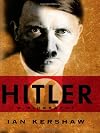
This is a gruelling read in every sense. In the two weeks it took me to read this mammoth volume, I felt as if I was living through the rise and fall of the Third Reich, a discomfiting sensation.
Kershaw is stronger on what Hitler did rather than why he did it; in some ways, frustrating, but in others commendable that the author resisted the urge to reach for pop-psychology in his conclusions. It may be that Hitler's evil is ultimately inexplicable.
Recommended, but not a holiday read...
Kershaw is stronger on what Hitler did rather than why he did it; in some ways, frustrating, but in others commendable that the author resisted the urge to reach for pop-psychology in his conclusions. It may be that Hitler's evil is ultimately inexplicable.
Recommended, but not a holiday read...

Like most people alive today, I'm only a generation or so away from people who were involved in the Second World War. What happened in Nazi Germany isn't an abstract bit of history, but it's something that had direct and severe effects on people very close to me. I've therefore grown up with the notion of Hitler as a "special case", the one person you can't abstract into a "character from history" and the one character from history that you daren't identify with as a person. Reading a show more biography of him feels like a risky act: the idea of seeing Hitler in the normal human terms — someone who is born, quarrels with his parents, goes to school, etc. — is a distinctly uncomfortable one. It feels like tangling with dangerous knowledge.
Kershaw is well aware of this. He most definitely doesn't manage to identify with his subject in the way biographers usually do: Hitler remains very much at arm's length throughout this book. More than anything else, especially in the early chapters, we are presented with Hitler as someone estranged from the world around him. He didn't have any close contact with friends or family, he never studied, he wasn't religious, he doesn't seem to have had a sex life, he never learned a trade, he evaded military service in Austria, except as a soldier in the First World War he never had a job, he didn't have any identifiable cultural interest apart from a passion for Wagner (which Kershaw doesn't examine in any depth) — up to 1919 his existence is just a string of negatives. Had it not been for the chance that he stayed in the army and was assigned to propaganda work, he might easily have ended up as a kind of Franz Biberkopf, a petty criminal leading a hand-to-mouth existence on the fringes of society, with a few crazy ideas he was fond of airing in bars.
The question how Hitler got from that point to becoming Chancellor in 1933 is not a trivial one, and Kershaw doesn't propose any simple answer. Part of it is clearly down to Hitler's abilities as an actor and public speaker (it seems improbable that he developed these skills out of nothing in the few months he was on political duties in the army, but we don't get any other explanation); Kershaw makes it clear that another large part was due to the opportunism and irresponsible self-interest of various groups in German society that saw no point in maintaining democracy.
This book certainly isn't a comfortable read, but I felt it did add a good deal of perspective to the picture of Hitler I had in my mind. Kershaw's background as someone who has spent his career studying the way others saw Hitler is uniquely well-adapted for this, even if it does tend to leave a bit of a blank space at the very centre of the narrative.
Kershaw is not the best and most fluent of narrative historians, and his prose style has clearly been damaged by years of reading bureaucratic German: all too often you have to re-read a sentence to try to work out where the verb is. He also has a few words he habitually misuses (especially "epicentre"). But these are minor issues, and only interfere minimally with the effectiveness of the book. Certainly not enough to discourage you from moving on to the second volume. show less
Kershaw is well aware of this. He most definitely doesn't manage to identify with his subject in the way biographers usually do: Hitler remains very much at arm's length throughout this book. More than anything else, especially in the early chapters, we are presented with Hitler as someone estranged from the world around him. He didn't have any close contact with friends or family, he never studied, he wasn't religious, he doesn't seem to have had a sex life, he never learned a trade, he evaded military service in Austria, except as a soldier in the First World War he never had a job, he didn't have any identifiable cultural interest apart from a passion for Wagner (which Kershaw doesn't examine in any depth) — up to 1919 his existence is just a string of negatives. Had it not been for the chance that he stayed in the army and was assigned to propaganda work, he might easily have ended up as a kind of Franz Biberkopf, a petty criminal leading a hand-to-mouth existence on the fringes of society, with a few crazy ideas he was fond of airing in bars.
The question how Hitler got from that point to becoming Chancellor in 1933 is not a trivial one, and Kershaw doesn't propose any simple answer. Part of it is clearly down to Hitler's abilities as an actor and public speaker (it seems improbable that he developed these skills out of nothing in the few months he was on political duties in the army, but we don't get any other explanation); Kershaw makes it clear that another large part was due to the opportunism and irresponsible self-interest of various groups in German society that saw no point in maintaining democracy.
This book certainly isn't a comfortable read, but I felt it did add a good deal of perspective to the picture of Hitler I had in my mind. Kershaw's background as someone who has spent his career studying the way others saw Hitler is uniquely well-adapted for this, even if it does tend to leave a bit of a blank space at the very centre of the narrative.
Kershaw is not the best and most fluent of narrative historians, and his prose style has clearly been damaged by years of reading bureaucratic German: all too often you have to re-read a sentence to try to work out where the verb is. He also has a few words he habitually misuses (especially "epicentre"). But these are minor issues, and only interfere minimally with the effectiveness of the book. Certainly not enough to discourage you from moving on to the second volume. show less

This is what good history should be about - an evidence-based narrative exploration offering the best working explanation of a particular problem of possible concern to us today.
Ian Kershaw asks a simple question of why Germany continued to fight on, far beyond reason, against the overwhelming force of Russian manpower and of Anglo-American air and technical superiority.
The book takes us from the failed Operation Valkyrie (the only serious revolt by conservative nationalists against national show more socialism) in July 1944 to the final capitulation in May 1945.
These were ten months in which it was pretty clear after the failure of the Ardennes Offensive and then the massive punch of the Soviets to within 80km of Berlin that the 'regime' had no chance of survival.
Yet Germany fought on - not just the Nazi Party but the entire military, the bureaucracy, the increasingly discredited judiciary and a good proportion of the common people. Kershaw simply asks why?
This period saw not just the military dead but the death marches of concentration camp victims, significant refugee losses, mass aerial bombings (including Dresden) and German-on-German terror.
And yet the system did not break even as the country was split - not until Hitler was known to be dead and a more rational if still ferociously Nazi Donitz eventually sued for unconditional peace.
Can it be down to the force of Hitler's will or the blind obedience of the German people? Kershaw explores these and many other reasons and like all the best history comes up with some very complex answers.
However, the best history seeks patterns in the chaos and in the interweaving of many causes and effects. Kershaw is no exception. There was some binding force that locked Germany into its apocalypse.
Kershaw finds this force in the functional reality of the 'fuhrerprinzip' where military, bureaucracy, party and national identity were bound into one locus represented by a monomaniac.
Unlike Italy, where Mussolini could be ousted by the Fascist Grand Council and the military and state be redirected under a national identity separate from the man, Germany was bound into one figure.
Beneath this man, all the players could dispose of forces towards one end set by Hitler but under conditions where each gathered power in competition with the other.
After Valkyrie, Bormann turned the Party into a mechanism of terror directed at controlling the German people through fear. Goebbels took responsibility for the engagement of the masses in the war effort.
Speer used his power to broker a corporatist economic state directed at armaments production, binding military, industrialists, workers and, more unwillingly than most, slave labour.
Himmler imposed discipline on the army in a collaborative relationship with the Wehrmacht. Powerful pro-Nazi Generals took advantage of Valkyrie to place their honour and duty in the hands of the Fuhrer.
Above all, the whole 'fuhrerprinzip' was underpinned by a dreadful combination of German nationalist duty and honour and national socialist fanaticism against both communism and the 'Jewish threat'.
If most soldiers may not have cared that much about the Jews, they were prepared to sacrifice them and other race-hate targets in the primary war against the Bolsheviks.
It was this hatred of the East which bound military and Hitler together and the hatred was fully returned. Soviet vengeance became a genuine fear factor in the continuation of the war.
Any deal with the West that did not allow Germany to release its troops to fight the Soviets was seen as a cultural and possibly real death sentence for half of the country.
Anti-communist fanaticism and fear were so strong that senior figures often could not comprehend that the Western Empires would prefer to fight alongside Stalin to the end rather than save Germany.
If I have not mentioned the opinions of the ordinary German (though Kershaw is very enlightening here) it is only because they had very little to say that mattered. They were not permitted much agency.
By the last months of the war, Germans, including ordinary German soldiers in some zones, were placed under a brutal terror regime of arbitrary executions that meant revolt was a death sentence.
And this is what strikes us about the story - the extreme lack of agency offered by the 'regime' where, although paid the weekly or monthly cheque to the end, a German was the slave of his Government.
Kershaw is also good on the fundamental attitudinal split between military and civilians in the East (fearful of Soviet atrocities) and in the West (almost desperate in some places for the Allies to arrive).
He also reminds us of the human cost, with atrocities in which no player in the game was not guilty. Nazi atrocities in the East were simply compounded at home under what amounted to a gangster regime.
Soviet atrocities were real enough (it took some time for control to be re-asserted by the authorities over their own occupying troops) and led to a tragic refugee exodus in icy conditions.
The French destroyed a whole village under circumstances still not clear today and the mass aerial bombing of German civilians by the British, notably the fire storm at Dresden, still leaves a bad taste.
This was a maelstrom of horror in which the men at the top (and their wives) reveled in their own fanaticism, desperation, 'heroism', brutality and power. But can we learn from this?
The puzzlement of Kershaw was that it was so rare, possibly unique, in history for a state to go so far and so willingly down the road to potential annihilation and at such cost to itself.
It is unlikely that it will ever be repeated as a case since now we know that even communist regimes can fall without a fight - their internal complexity perhaps helps to explain why.
Perhaps Stalin's Russia came closest and perhaps it was an intelligent analysis of his own situation - a lesson that Saddam Hussein attempted to copy, not reckoning on the sheer firepower of the US.
The story tells us something about our species and power that, on reflection, is rather grim - it is that the state's strength is in opposition to individual agency on terms very favourable to the former.
Even in our lovely cuddly liberal democracies, the state has immense reserve powers - as Americans saw under Woodrow Wilson and Britons saw under Lloyd George and Churchill. These are truly formidable.
We think our agency is a human right in that magical thinking about contracts and rights of which liberals are so fond. It is true that political culture in the West usually restrains the worst of the State.
But be under no illusions that the restraint exists only because those who control the State do not have a monomaniac will to use the State for some mad cap ideal. It is convenient for them to separate powers.
If a State is so disrupted that a monomaniac can systematically unravel pluralism and centre the bureaucracy, the military and the police on him then you and I do not stand a chance.
We are then simply not in a position to organise anything but the most futile of resistance (basically, we die or are imprisoned). We should remember this when think of the powers now accruing to the NSA.
This leaves us with an interesting dilemma in our dealings with the modern state. Do we trust it to be restrained and hope it is never disrupted so that some extremist loon can seize power?
Or do we begin to consider how we can make sure that the State is always actually rather than theoretically beholden us. In short, what checks can we the people make against a loss of checks and balances.
Certainly, in 1933, the elite handed power to a genius in political manipulation and turned itself into his willing creature. Within a little over a decade, the population ended up in a hell on earth.
Even today, the British and American military have ideologies of duty and honour towards single sovereigns that are scarcely different from that of the Wehrmacht in functional terms.
It is, of course, extremely unlikely that we, in the West, would be ruled by a monomaniac able to terrorise us into total compliance but, even today, the state's weapon of choice remains fear and half truths.
Outside the West, the idea of monomania is less ridiculous when there are religious and nationalist parties which offer path ways not dissimilar to that of the Nazis in the drive to control the State.
Perhaps this is why Sisi's coup in Egypt may not be pleasant but should be heartening in a way. The military turned away from obscurantist magical thinking in favour of rational administration.
The book should thus be read not as something distant from us but as a lesson in our lack of agency even in more benign conditions and in the ridiculous power that we give to institutions and belief systems
It should also be read as an essay in the consequences of particular modes of thinking - duty and honour in the military, duty and 'public service' in the bureaucracy and belief in the party and the nation.
We think of heroism, duty, honour, ideals and often faith (though less so with maturity and education) as positives but they are not if there is no serious questioning of why the heroic act and to whom the duty.
In Silesia, the Soviet advance isolated a town. The local Gauleiter became a Nazi hero for his defence to the end against the 'Asiatic horde' but the citizens would have done better to have surrendered.
This is not an argument for pacifism or 'cowardice' but for reason. Continuing a fight against overwhelming odds for gangsters is simply stupid, worse, it is criminal where lives are concerned.
It is time to look duty, obedience, honour, authority, custom, claims of heroism, idealism and leadership in the eye and call them out by asking them why and for whom people hold to these magical beliefs.
The Nazi regime was a merger of an aristocratic presumption on its last legs and the resentments at the uglier end of the masses in a malign war on modernity and progress.
Such people were not and never could be heroes. They were simply, so it was proved, not bright enough to understand their own condition and they dragged a lot of innocent people down with them.
Let them now be cursed again. In the end, these were only dim thugs who denied humanity its greatest evolutionary prize - personal agency and freedom. show less
Ian Kershaw asks a simple question of why Germany continued to fight on, far beyond reason, against the overwhelming force of Russian manpower and of Anglo-American air and technical superiority.
The book takes us from the failed Operation Valkyrie (the only serious revolt by conservative nationalists against national show more socialism) in July 1944 to the final capitulation in May 1945.
These were ten months in which it was pretty clear after the failure of the Ardennes Offensive and then the massive punch of the Soviets to within 80km of Berlin that the 'regime' had no chance of survival.
Yet Germany fought on - not just the Nazi Party but the entire military, the bureaucracy, the increasingly discredited judiciary and a good proportion of the common people. Kershaw simply asks why?
This period saw not just the military dead but the death marches of concentration camp victims, significant refugee losses, mass aerial bombings (including Dresden) and German-on-German terror.
And yet the system did not break even as the country was split - not until Hitler was known to be dead and a more rational if still ferociously Nazi Donitz eventually sued for unconditional peace.
Can it be down to the force of Hitler's will or the blind obedience of the German people? Kershaw explores these and many other reasons and like all the best history comes up with some very complex answers.
However, the best history seeks patterns in the chaos and in the interweaving of many causes and effects. Kershaw is no exception. There was some binding force that locked Germany into its apocalypse.
Kershaw finds this force in the functional reality of the 'fuhrerprinzip' where military, bureaucracy, party and national identity were bound into one locus represented by a monomaniac.
Unlike Italy, where Mussolini could be ousted by the Fascist Grand Council and the military and state be redirected under a national identity separate from the man, Germany was bound into one figure.
Beneath this man, all the players could dispose of forces towards one end set by Hitler but under conditions where each gathered power in competition with the other.
After Valkyrie, Bormann turned the Party into a mechanism of terror directed at controlling the German people through fear. Goebbels took responsibility for the engagement of the masses in the war effort.
Speer used his power to broker a corporatist economic state directed at armaments production, binding military, industrialists, workers and, more unwillingly than most, slave labour.
Himmler imposed discipline on the army in a collaborative relationship with the Wehrmacht. Powerful pro-Nazi Generals took advantage of Valkyrie to place their honour and duty in the hands of the Fuhrer.
Above all, the whole 'fuhrerprinzip' was underpinned by a dreadful combination of German nationalist duty and honour and national socialist fanaticism against both communism and the 'Jewish threat'.
If most soldiers may not have cared that much about the Jews, they were prepared to sacrifice them and other race-hate targets in the primary war against the Bolsheviks.
It was this hatred of the East which bound military and Hitler together and the hatred was fully returned. Soviet vengeance became a genuine fear factor in the continuation of the war.
Any deal with the West that did not allow Germany to release its troops to fight the Soviets was seen as a cultural and possibly real death sentence for half of the country.
Anti-communist fanaticism and fear were so strong that senior figures often could not comprehend that the Western Empires would prefer to fight alongside Stalin to the end rather than save Germany.
If I have not mentioned the opinions of the ordinary German (though Kershaw is very enlightening here) it is only because they had very little to say that mattered. They were not permitted much agency.
By the last months of the war, Germans, including ordinary German soldiers in some zones, were placed under a brutal terror regime of arbitrary executions that meant revolt was a death sentence.
And this is what strikes us about the story - the extreme lack of agency offered by the 'regime' where, although paid the weekly or monthly cheque to the end, a German was the slave of his Government.
Kershaw is also good on the fundamental attitudinal split between military and civilians in the East (fearful of Soviet atrocities) and in the West (almost desperate in some places for the Allies to arrive).
He also reminds us of the human cost, with atrocities in which no player in the game was not guilty. Nazi atrocities in the East were simply compounded at home under what amounted to a gangster regime.
Soviet atrocities were real enough (it took some time for control to be re-asserted by the authorities over their own occupying troops) and led to a tragic refugee exodus in icy conditions.
The French destroyed a whole village under circumstances still not clear today and the mass aerial bombing of German civilians by the British, notably the fire storm at Dresden, still leaves a bad taste.
This was a maelstrom of horror in which the men at the top (and their wives) reveled in their own fanaticism, desperation, 'heroism', brutality and power. But can we learn from this?
The puzzlement of Kershaw was that it was so rare, possibly unique, in history for a state to go so far and so willingly down the road to potential annihilation and at such cost to itself.
It is unlikely that it will ever be repeated as a case since now we know that even communist regimes can fall without a fight - their internal complexity perhaps helps to explain why.
Perhaps Stalin's Russia came closest and perhaps it was an intelligent analysis of his own situation - a lesson that Saddam Hussein attempted to copy, not reckoning on the sheer firepower of the US.
The story tells us something about our species and power that, on reflection, is rather grim - it is that the state's strength is in opposition to individual agency on terms very favourable to the former.
Even in our lovely cuddly liberal democracies, the state has immense reserve powers - as Americans saw under Woodrow Wilson and Britons saw under Lloyd George and Churchill. These are truly formidable.
We think our agency is a human right in that magical thinking about contracts and rights of which liberals are so fond. It is true that political culture in the West usually restrains the worst of the State.
But be under no illusions that the restraint exists only because those who control the State do not have a monomaniac will to use the State for some mad cap ideal. It is convenient for them to separate powers.
If a State is so disrupted that a monomaniac can systematically unravel pluralism and centre the bureaucracy, the military and the police on him then you and I do not stand a chance.
We are then simply not in a position to organise anything but the most futile of resistance (basically, we die or are imprisoned). We should remember this when think of the powers now accruing to the NSA.
This leaves us with an interesting dilemma in our dealings with the modern state. Do we trust it to be restrained and hope it is never disrupted so that some extremist loon can seize power?
Or do we begin to consider how we can make sure that the State is always actually rather than theoretically beholden us. In short, what checks can we the people make against a loss of checks and balances.
Certainly, in 1933, the elite handed power to a genius in political manipulation and turned itself into his willing creature. Within a little over a decade, the population ended up in a hell on earth.
Even today, the British and American military have ideologies of duty and honour towards single sovereigns that are scarcely different from that of the Wehrmacht in functional terms.
It is, of course, extremely unlikely that we, in the West, would be ruled by a monomaniac able to terrorise us into total compliance but, even today, the state's weapon of choice remains fear and half truths.
Outside the West, the idea of monomania is less ridiculous when there are religious and nationalist parties which offer path ways not dissimilar to that of the Nazis in the drive to control the State.
Perhaps this is why Sisi's coup in Egypt may not be pleasant but should be heartening in a way. The military turned away from obscurantist magical thinking in favour of rational administration.
The book should thus be read not as something distant from us but as a lesson in our lack of agency even in more benign conditions and in the ridiculous power that we give to institutions and belief systems
It should also be read as an essay in the consequences of particular modes of thinking - duty and honour in the military, duty and 'public service' in the bureaucracy and belief in the party and the nation.
We think of heroism, duty, honour, ideals and often faith (though less so with maturity and education) as positives but they are not if there is no serious questioning of why the heroic act and to whom the duty.
In Silesia, the Soviet advance isolated a town. The local Gauleiter became a Nazi hero for his defence to the end against the 'Asiatic horde' but the citizens would have done better to have surrendered.
This is not an argument for pacifism or 'cowardice' but for reason. Continuing a fight against overwhelming odds for gangsters is simply stupid, worse, it is criminal where lives are concerned.
It is time to look duty, obedience, honour, authority, custom, claims of heroism, idealism and leadership in the eye and call them out by asking them why and for whom people hold to these magical beliefs.
The Nazi regime was a merger of an aristocratic presumption on its last legs and the resentments at the uglier end of the masses in a malign war on modernity and progress.
Such people were not and never could be heroes. They were simply, so it was proved, not bright enough to understand their own condition and they dragged a lot of innocent people down with them.
Let them now be cursed again. In the end, these were only dim thugs who denied humanity its greatest evolutionary prize - personal agency and freedom. show less

Ian Kershaw's book aims to answer just one question: why did the Germans continue to fight even after the second world war was clearly lost? He reviews a number of explanations given, ranging from the reasonable to the ludicrous, and settles on an interpretation of how the Nazi state had been established and how it was still running in 1944-5 that prevented popular rebellion or a military coup, even when almost no one believed the war could still be won. Hitler's dreaded a 1918-style end to show more the war, with soldiers' mutinies and workers' strikes. He and his regime managed to make these impossible. A beautifully-written, well-researched investigation into a historical nightmare. show less
Lists
Awards


You May Also Like


Associated Authors
Statistics
- Works
- 63
- Also by
- 6
- Members
- 10,307
- Popularity
- #2,304
- Rating
- 4.1
- Reviews
- 150
- ISBNs
- 413
- Languages
- 20
- Favorited
- 12


