

Peter Longerich
Author of Heinrich Himmler
About the Author
Peter Longerich is Professor of Modern German History at Royal Holloway, University of London, and Director of the Research Centre for the Holocaust and Twentieth Century History
Image credit: Peter Longerich en 2015
Works by Peter Longerich
"Davon haben wir nichts gewusst!" Die Deutschen und die Judenverfolgung 1933-1945 (2006) — Author — 75 copies
The Unwritten Order: Hitler's Role in the Final Solution (History of Nazism) (2001) 65 copies, 1 review
Akten der partei-kanzlei der NSDAP. rekonstruktion eines verlorengegangenen bestandes / Band 3/4, Register (2015) 6 copies
Die Erste Republik: Dokumente zur Geschichte des Weimarer Staates (Serie Piper Dokumentation) (German Edition) (1992) 5 copies
Die Ermordung der europäischen Juden: Eine umfassende Dokumentation des Holocaust 1941-1945 (Serie Piper) (1989) 4 copies
Was ist des Deutschen Vaterland?: Dokumente zur Frage der deutschen Einheit, 1800 bis 1990 (Serie Piper Dokumentati (1990) 4 copies
Hitlers Stellvertreter Führung der Partei und Kontrolle des Staatsapparates durch den Stab Hess und die Partei-Kanzlei Bormann (1992) 3 copies
Propagandisten im Krieg : die Presseabteilung des Auswärtigen Amtes unter Ribbentrop (1987) 3 copies
Unwillige Volksgenossen: Wie die Deutschen zum NS-Regime standen. Eine Stimmungsgeschichte (2025) 2 copies
Die Wannsee-Konferenz vom 20. Januar 1942: Planung und Beginn des Genozid an den Europäischen Juden. Auswahlbibliographie (1998) 1 copy
ZeitungsZeugen 08 1 copy
ZeitungsZeugen 68 1 copy
Associated Works
Le Troisième Reich dans l'historiographie allemande. Lieux de pouvoir, rivalités de pouvoirs (2013) — Contributor — 2 copies
Tagged
Common Knowledge
- Legal name
- Longerich, Peter
- Birthdate
- 1955
- Gender
- male
- Education
- Université Louis-et-Maximilien de Munich (Doctorat ∙ Histoire, Thèse 'Les propagandistes en guerre. Le service de presse du ministère des Affaires étrangères sous Ribbentrop', 19 87)
- Occupations
- historian
- Organizations
- Royal Holloway, University of London
- Relationships
- Cesarani, David (Collègue)
- Nationality
- Germany
- Birthplace
- Krefeld, Germany
- Associated Place (for map)
- Krefeld, Germany
Members
Reviews
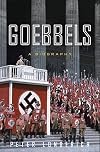
As a historian of virtually universal, almost unparalleled acclaim on the Nazi regime and the Holocaust in particular, Longerich presents so much knowledge, offers so much context, and makes so many brilliant connections that it is frankly daunting for even the enthusiast or academic. This book, 900+ pages long, is not for the layman, and even the audio book I received for this review, read in a polite, calm, unchanging British voice, occasionally comes off as monotonous. This should not be show more taken as a criticism of Longerich’s work, however, as this subject matter is given the intellectual, somber treatment it deserves instead of allowing any emotion to get in the way.
Drawing heavily from the primary source of Goebbels’s own diaries (which incredibly resulted in his publisher being sued by Goebbels’s estate) Longerich cites, puts into perspective, analyzes, and offers informed speculation on the Reich Minister for Enlightenment and Propaganda in a way no one else ever has. Beginning in detail from roughly his college years, the book then spans his life elaborating on his failed aspirations as a novelist, his roots in the NASDAP, his rise to power under Adolf Hitler, his relationship with and marriage to Magda Ritschel and their resulting six children, his participation in the war effort, his affair with a beautiful actress that nearly resulted in divorce and public disgrace, and his last days in the Chancellery bunker in Berlin before he and his wife infamously poisoned their children before killing themselves.
More than a biography, however, the book’s thesis focuses on Goebbels’s psychology; Longerich diagnoses him as a prime example of narcissistic personality disorder, which resulted from a combination of factors including a physical disfigurement (club foot), unrealized potential, remarkable intelligence, and having been born into poverty. Goebbels initially became a writer in part to impress women, and failed in succession with several. In the 1920s, this failure in relationships led to an obsessive hero worship and love of Hitler, becoming one of his most fervent disciples.
This is not a book that can be listened to or read for pleasure by most, even those who devour books on the subject. Even in an academic setting, most of the value it offers will be obtained in pieces or small passages rather than all at once. Many in-depth studies have this disclaimer, but make no mistake – Goebbels: A Biography will certainly be regarded going forward as the definitive standard for the subject. show less
Drawing heavily from the primary source of Goebbels’s own diaries (which incredibly resulted in his publisher being sued by Goebbels’s estate) Longerich cites, puts into perspective, analyzes, and offers informed speculation on the Reich Minister for Enlightenment and Propaganda in a way no one else ever has. Beginning in detail from roughly his college years, the book then spans his life elaborating on his failed aspirations as a novelist, his roots in the NASDAP, his rise to power under Adolf Hitler, his relationship with and marriage to Magda Ritschel and their resulting six children, his participation in the war effort, his affair with a beautiful actress that nearly resulted in divorce and public disgrace, and his last days in the Chancellery bunker in Berlin before he and his wife infamously poisoned their children before killing themselves.
More than a biography, however, the book’s thesis focuses on Goebbels’s psychology; Longerich diagnoses him as a prime example of narcissistic personality disorder, which resulted from a combination of factors including a physical disfigurement (club foot), unrealized potential, remarkable intelligence, and having been born into poverty. Goebbels initially became a writer in part to impress women, and failed in succession with several. In the 1920s, this failure in relationships led to an obsessive hero worship and love of Hitler, becoming one of his most fervent disciples.
This is not a book that can be listened to or read for pleasure by most, even those who devour books on the subject. Even in an academic setting, most of the value it offers will be obtained in pieces or small passages rather than all at once. Many in-depth studies have this disclaimer, but make no mistake – Goebbels: A Biography will certainly be regarded going forward as the definitive standard for the subject. show less
 This review was written for LibraryThing Early Reviewers.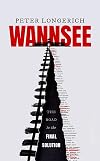
This book zooms in on the closest thing to a smoking gun the nazis didn't destroy - protocols from the Wannsee conference, where the minutiae of exactly who would count as jewish, and what was to be done with them, was decided. The discussions of if it's better to offer 'mischlings' (mixed race jews) sterilization, or just to kill them outright are macabre. The clinical nature of the discussions surrounding extermination mixes with the heated nature of the racial theories that are marking show more them for death and the only hesitation surrounds how this will all be covered up, and to what extent people are actually required for industrial slave labour.
It's a short book well worth reading, but for a better view of the holocaust and wider population extermination plans (the 'lebensraum' in the east) read Bloodlands: Europe Between Hitler and Stalin. Snyder's account notes that by the time homicidal gas chambers were used, the majority of the death toll had already happened by more primitive methods. Part of the Wannsee protocols deals with making it 'easier' to do the killings by making the process more industrialized, because of the psychological damage it was doing to the soldiers shooting rows and rows of civilians. show less
It's a short book well worth reading, but for a better view of the holocaust and wider population extermination plans (the 'lebensraum' in the east) read Bloodlands: Europe Between Hitler and Stalin. Snyder's account notes that by the time homicidal gas chambers were used, the majority of the death toll had already happened by more primitive methods. Part of the Wannsee protocols deals with making it 'easier' to do the killings by making the process more industrialized, because of the psychological damage it was doing to the soldiers shooting rows and rows of civilians. show less
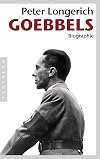
Longerich's account of Joseph Goebbels is a well-written and concise presentation of the life of one of the 3rd Reich's top men. The only short-fall in this book is that the author is dead-bent on performing a psycho-analysis of Goebbels, maintaining the hypothesis that the latter's deeds can be explained by a childhood trauma. Whereas the main part of the book is luckily free of this attempt at a psychological diagnosis, the narrative is framed by the attempt to interpret every fact of show more Goebbels life as being an effect of his trauma. But again, apart from this little shortcoming, the book is a incredibly interesting account of the life and death of one of the most horryfing personalites of the 20th centuries, largely informed by Longerich's extensive knowledge on 3rd Reich history and using Goebbels' diaries for his research. show less
Illuminating scholarly account of the Holocaust
This book is not for everyone interested in understanding the Holocaust. There are no pictures and no maps. The author makes no attempt to convey the horror of Nazi actions through vivid descriptions or language (beyond using the word "murder" a thousand times or so). He assumes a lot of background knowledge in the reader about the basic story of the Holocaust: the primary methods, locales, and perpetrators. The translation from the original show more German is pretty good but a little stilted. The text was originally the author's "Habilitation" thesis in Germany. It has lots of footnotes and a big bibliography.
There are pop history books, history textbooks, and scholarly historical works. This book is clearly in the latter category. If you don't like scholarly historical works, this book is not for you. That doesn't make you bad or the book bad; there's just going to be a mismatch between what you want and what this book provides.
What this book provides is a remarkably detailed and insightful look at the evolution of Nazi policy towards the Jews from the time the Nazis took over Germany to the time that the Third Reich collapsed. The author provides ample evidence that the policy evolved substantially throughout this time period, and he gives well-reasoned explanations of why it changed the way it did. Maybe this book ought to have seemed very dry, with the myriad Polish place names and the body counts eventually just becoming a blur in the mind of the reader. Yet I had trouble putting it down, and I feel much better informed for having read it. show less
This book is not for everyone interested in understanding the Holocaust. There are no pictures and no maps. The author makes no attempt to convey the horror of Nazi actions through vivid descriptions or language (beyond using the word "murder" a thousand times or so). He assumes a lot of background knowledge in the reader about the basic story of the Holocaust: the primary methods, locales, and perpetrators. The translation from the original show more German is pretty good but a little stilted. The text was originally the author's "Habilitation" thesis in Germany. It has lots of footnotes and a big bibliography.
There are pop history books, history textbooks, and scholarly historical works. This book is clearly in the latter category. If you don't like scholarly historical works, this book is not for you. That doesn't make you bad or the book bad; there's just going to be a mismatch between what you want and what this book provides.
What this book provides is a remarkably detailed and insightful look at the evolution of Nazi policy towards the Jews from the time the Nazis took over Germany to the time that the Third Reich collapsed. The author provides ample evidence that the policy evolved substantially throughout this time period, and he gives well-reasoned explanations of why it changed the way it did. Maybe this book ought to have seemed very dry, with the myriad Polish place names and the body counts eventually just becoming a blur in the mind of the reader. Yet I had trouble putting it down, and I feel much better informed for having read it. show less
Lists
Awards

You May Also Like


Associated Authors
Statistics
- Works
- 31
- Also by
- 1
- Members
- 1,350
- Popularity
- #19,055
- Rating
- 4.0
- Reviews
- 33
- ISBNs
- 119
- Languages
- 12

