
Gitta Sereny (1921–2012)
Author of Albert Speer: His Battle with Truth
About the Author
Her previous books include Into That Darkness, Albert Speer: His Battle with Truth & most recently Cries Unheard. Born in Vienna, she lives in London. (Bowker Author Biography)
Works by Gitta Sereny
Dans l'ombre du Reich 2 copies
Associated Works
Tagged
Common Knowledge
- Canonical name
- Sereny, Gitta
- Legal name
- Honeyman, Gitta Sereny
- Other names
- Sereny Honeyman, Gitta (Nom d'alliance)
- Birthdate
- 1921-03-21
- Date of death
- 2012-06-14
- Gender
- female
- Education
- Stonar House, Sandwich, Kent, England, U.K.
Realgymnasium and Lyzeum Luithlen, Vienna, Austria
Max-Reinhardt-Seminar, Vienna, Austria
Sorbonne University - Occupations
- journalist
historian
biographer - Organizations
- United Nations Relief and Rehabilitation Administration (UNRRA)
- Awards and honors
- The Duff Cooper Prize (1995)
Stig Dagerman Prize (2002)
Commander of the Order of the British Empire (2004) - Relationships
- von Mises, Ludwig (stepfather)
Honeyman, Donald (husband) - Short biography
- Gitta Sereny was born in Vienna to an aristocratic Hungarian-German family. As an 11-year-old schoolgirl, she heard Hitler speak at one of the Nazi Nuremberg rallies. She was educated in England and Vienna, where she studied at the drama school founded by director Max Reinhardt. After the Nazi takeover of Austria in 1938, she moved to France, where she worked as a volunteer nurse with orphans and participated in the French Resistance, until she had to flee the country when the Germans occupied it. After World War II, she was a welfare worker with displaced persons before becaming a journalist, and gained fame for a book about Albert Speer. In 1948, she married photographic journalist Don Honeyman and moved with him to London, where they raised their two children. Gitta Sereny wrote investigative articles for newspapers and magazines as well as books. Her subjects included the trials of Nazi concentration camp personnel and young child murderer Mary Bell.
- Nationality
- Austria (birth)
UK - Birthplace
- Vienna, Austria
- Places of residence
- Vienna, Austria
Paris, France
London, England, UK
Cambridge, Cambridgeshire, England, UK - Place of death
- Cambridge, Cambridgeshire, England, UK
- Associated Place (for map)
- England, UK
Members
Reviews
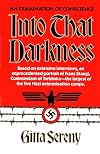
It is really difficult to give this book five stars because its content is so repugnant and disturbing. A quote from a review by Elie Wiesel on the rear cover perfectly sums it up - "Most often one is sick to one's soul. Yes, that is the word that is needed ... one is gripped by a profound existential nausea." And I did feel sick to my stomach while reading much of this book - but it is important precisely because it serves as a most necessary reminder that each and every one of us is show more capable of deep good and profound evil. It is our work in this life to face up to this truth and do our best to work toward the former and away from the latter. This requires an understanding of how evil is allowed to persist. Gitta Sereny does a masterful job of cross-examining both her subject, Franz Stangl, and his friends and family members about their support for and participation in mass murder and torture, and the psychological mechanism of deep denial. For any student of human rights, the Holocaust, or genocide, this is difficult, but essential reading. show less
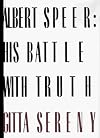
Albert Speer, "Hitler's architect" and the Minister of Armaments and War Production (after his predecessor's death in 1942), is the only high-ranking Nazi official who accepted, really, any blame for the Third Reich's systematic slaughter of the Jews, Poles, Romanis, Russians, political dissidents, etc. Somehow managing to escape with his life after Nuremberg, he spent twenty years in relative solitude, writing his memoirs (which were published as Inside the Third Reich and Spandau: The show more Secret Diaries) and proclaiming that, although he was a high-ranking official in the Nazi Party and admittedly one of Hitler's closest acquaintances (Hitler, according to many, never had "friends" in the traditional sense of the word), he had no idea what was going on in eastern Europe.
I mainly read this book because I "enjoyed" (I find it difficult to say that I "enjoyed" reading a book about the near-eradication of European Jews, but I can't think of another word at this time to describe how I felt about this book) Gitta Sereny's "Into that Darkness," which I read for a college course about the Shoah (Holocaust) in 2002 (and I really must reread at some point in the future, since my knowledge base has increased dramatically since then). She had no problems putting Franz Stangl's "alternative facts" (to use a more modern term) to examination, and I was expecting something similar here (she was, I would argue, a bit "softer" on Speer, at least partially, I believe, because she developed a genuine fondness for the man).
The book is huge - 720 pages of text, not including picture inserts and the author's notes in the back - and it's dense. There were times that I could only read a few pages before setting the book aside to digest what had been discussed or revealed.
Of course, I have a vested personal interest in Nazi history; my grandmother was the only direct family member to survive the Shoah, and that is because her mother scrounged up enough money to send her to England in 1938 to live with a host family there via the Kindertransport, where she would live until 1946 (when she married my American grandfather). My great-grandparents, great-aunts, great-uncles, their children, etc - entirely gone, and to this day, we do not know what happened to all of them exactly - all killed because they were Jewish, except for my great-grandfather, who was primarily killed (and early - 1933) because he was a Communist (although I am sure being Jewish, although a secular Jew, did him no favours). All of this colours my perceptions and how I interpreted this book - you are forewarned. ;)
I suppose, approaching this, my question was - why? Why did this man - who was from a well-to-do family (although he had a bitterly unhappy, unloving childhood) and well-educated and, by all accounts, well-spoken and intelligent - fall in with Hitler? Why did so many like him follow Hitler into fascism? I believe this is especially important at this time in history, because it looks like other countries (including my own America, unfortunately) are tipping closer to fascism in this modern era.
And the book doesn't answer this. Speer himself cannot answer this, really - he just saw Hitler speak and found him very charismatic, so he signed up without much thought. And considering how, well, thoughtful Speer was, this seems strange. It almost feels as if there WAS some other reason that Speer either does not wish or CANNOT discuss - because, as Sereny demonstrates throughout the book, Speer had constructed in his mind the type of man he was and wanted to be, and nothing that interfered with this construction could be examined. Much of Speer's "battle with truth" is Speer battling with himself, trying to make his past conform to this idealized version of himself that he held until his dying day.
And what was this version of himself that he wanted to present to the world? He was primarily an architect, interested in creation and not destruction (this, at least, is believable). He was a Minister in Hitler's government, but he knew NOTHING about what was happening to the Jews. He knew little about the horrible conditions that the "foreign workers" were held under, even though his Cabinet oversaw the forced labour, which was used in war production (these two things I find unbelievable, as does, I am certain, Sereny, who says as much in the last full chapter, entitled "The Great Lie.") And he was repentant of his role, whatever it was, in the deaths of millions - which, even at Nuremberg, he stated that he accepted co-responsibility for, as a member of Hitler's government (none of the others on trial did that).
As a biography, I think this does a good job of showing Speer's life, from birth to his untimely death. As an examination of his culpability, however, Sereny, as I already mentioned, allows her friendship with Speer to colour her perceptions at times, and she is quite kind and delicate with her approach to asking the "hard questions." I am not calling for this to portray Speer as a one-dimensional war criminal; he wasn't, and I would never argue that he was, one-dimensional. However, I wish that she would have pushed him a bit more with the tougher questions, which he often attempted (rather successfully) to sidestep. Perhaps it was impossible for Speer to admit, even to himself, that he acted as anything other than exemplary; he seemed very invested in portraying himself as quite the perfect gentleman.
In the end, although few believe him, Speer states that he was never aware of what was happening in eastern Europe (in his own words, he didn't WANT to know, and so he didn't) and he spent a great deal of time and energy trying to disprove those who would present any evidence to the contrary. And he also stated that he never held any antisemitic views; in comparison to the rabid antisemitism held by Hitler and his followers, Speer's antisemitism is quite muted, although he stated in a letter that he "really had no aversion to [Jews], or rather, no more than the slight discomfort all of us feel when sometimes in contact with them" (p. 90).
But no one apparently played a role in the Shoah, at least according to most of the statements and memoirs pumped out by former Nazis. No one in Germany knew (even though the Allies knew by 1942 what was happening in eastern Europe); no soldiers knew; no one in the SS knew; no one in leadership knew. When presented with evidence to the contrary, then everyone was "just following orders." So Speer's denials give a false ring, because nearly everyone denied their involvement in the Shoah to save their own skins. Speer's denial, therefore, sounds like more of the same.
The parts of the book I found most interesting were the ones that dealt with Speer's time in Spandau prison; how he got along (or didn't) with his fellow prisoners. He seemed to "watch out" for Hess, which was a little surprising, considering that Hess was a devout Nazi. It was also interesting to read how Speer spent his time; he read quite a bit, wrote over a thousand pages in a year (the draft for Inside the Third Reich), smuggled out letters to various friends and family members, etc.
It was also interesting to see how Speer's family viewed him. His wife, Margret, whom he married when they were both young and with whom he had six children, stuck by him through everything - but there was a huge block between them, almost feeling as if they were two strangers. And Speer's reserved nature and penchant for becoming a workaholic distanced himself quite a bit from his children, who didn't know how to relate to this virtual stranger. It was actually quite sad to read about Speer's loveless childhood, in which neither his mother nor father particularly cared for him, and to see that he, although he didn't wish it to be so, visited the same on his own children. He cared about them, in his own way, but he just couldn't quite convey that to them, leading to the complete emotional estrangement from his children.
And the children and Margret are the ones I feel sorry for most in this book (besides, of course, the innocent victims of Hitler, but I mean on a personal level). Margret, especially, stood by Speer through everything - twenty years of worry with him in Spandau, raising six children virtually on her own (although with monetary support from Speer's friends - many of whom would also become estranged from him in later years, because Speer insisted on calling Hitler a criminal and defected from the latent Nazism of that generation) - only to have him take a mistress in England, which he didn't bother to hide from her, and to be informed of Speer's fatal stroke from said mistress, who was with him at the end. What a slap to the face for her.
As for Speer, I have no doubt that he knew, at least partially, what was happening in the east. He saw the conditions at a forced labour camp, which upset him greatly; surely he didn't think that the Jews, who were blamed for anything and everything, were faring any better in their camps. There was a speech at Posen, delivered by Himmler, which Speer may or may not have been present for (he argues, of course, that he was there earlier in the day but NOT during Himmler's speech) - but even if he wasn't present, surely he heard murmurings about things later. Even in the most dictatorial states there are whispers, unrest, secret information passed along the vine - I find it completely impossible that he didn't, at least, hear SOME of this.
Speer battled with truth for the entirety of his post-Hitler life, but truth did not win out in the end. Speer, with his regimented self-control, triumphed, even telephoning the author about how he did fairly well with his life, considering. He did give a good portion of his earnings from his memoirs to Jewish charities (anonymously). He did form friendship with religious men (Catholic, Protestant, and yes, even Jewish) and tried to become a better man. He did give numerous interviews, both televised and in print, talking about his collective co-responsibility for what Hitler did. But, in the end, Speer could not face the complete truth and admit that, yes, he knew; he couldn't bear facing THAT truth, and so he never did. show less
I mainly read this book because I "enjoyed" (I find it difficult to say that I "enjoyed" reading a book about the near-eradication of European Jews, but I can't think of another word at this time to describe how I felt about this book) Gitta Sereny's "Into that Darkness," which I read for a college course about the Shoah (Holocaust) in 2002 (and I really must reread at some point in the future, since my knowledge base has increased dramatically since then). She had no problems putting Franz Stangl's "alternative facts" (to use a more modern term) to examination, and I was expecting something similar here (she was, I would argue, a bit "softer" on Speer, at least partially, I believe, because she developed a genuine fondness for the man).
The book is huge - 720 pages of text, not including picture inserts and the author's notes in the back - and it's dense. There were times that I could only read a few pages before setting the book aside to digest what had been discussed or revealed.
Of course, I have a vested personal interest in Nazi history; my grandmother was the only direct family member to survive the Shoah, and that is because her mother scrounged up enough money to send her to England in 1938 to live with a host family there via the Kindertransport, where she would live until 1946 (when she married my American grandfather). My great-grandparents, great-aunts, great-uncles, their children, etc - entirely gone, and to this day, we do not know what happened to all of them exactly - all killed because they were Jewish, except for my great-grandfather, who was primarily killed (and early - 1933) because he was a Communist (although I am sure being Jewish, although a secular Jew, did him no favours). All of this colours my perceptions and how I interpreted this book - you are forewarned. ;)
I suppose, approaching this, my question was - why? Why did this man - who was from a well-to-do family (although he had a bitterly unhappy, unloving childhood) and well-educated and, by all accounts, well-spoken and intelligent - fall in with Hitler? Why did so many like him follow Hitler into fascism? I believe this is especially important at this time in history, because it looks like other countries (including my own America, unfortunately) are tipping closer to fascism in this modern era.
And the book doesn't answer this. Speer himself cannot answer this, really - he just saw Hitler speak and found him very charismatic, so he signed up without much thought. And considering how, well, thoughtful Speer was, this seems strange. It almost feels as if there WAS some other reason that Speer either does not wish or CANNOT discuss - because, as Sereny demonstrates throughout the book, Speer had constructed in his mind the type of man he was and wanted to be, and nothing that interfered with this construction could be examined. Much of Speer's "battle with truth" is Speer battling with himself, trying to make his past conform to this idealized version of himself that he held until his dying day.
And what was this version of himself that he wanted to present to the world? He was primarily an architect, interested in creation and not destruction (this, at least, is believable). He was a Minister in Hitler's government, but he knew NOTHING about what was happening to the Jews. He knew little about the horrible conditions that the "foreign workers" were held under, even though his Cabinet oversaw the forced labour, which was used in war production (these two things I find unbelievable, as does, I am certain, Sereny, who says as much in the last full chapter, entitled "The Great Lie.") And he was repentant of his role, whatever it was, in the deaths of millions - which, even at Nuremberg, he stated that he accepted co-responsibility for, as a member of Hitler's government (none of the others on trial did that).
As a biography, I think this does a good job of showing Speer's life, from birth to his untimely death. As an examination of his culpability, however, Sereny, as I already mentioned, allows her friendship with Speer to colour her perceptions at times, and she is quite kind and delicate with her approach to asking the "hard questions." I am not calling for this to portray Speer as a one-dimensional war criminal; he wasn't, and I would never argue that he was, one-dimensional. However, I wish that she would have pushed him a bit more with the tougher questions, which he often attempted (rather successfully) to sidestep. Perhaps it was impossible for Speer to admit, even to himself, that he acted as anything other than exemplary; he seemed very invested in portraying himself as quite the perfect gentleman.
In the end, although few believe him, Speer states that he was never aware of what was happening in eastern Europe (in his own words, he didn't WANT to know, and so he didn't) and he spent a great deal of time and energy trying to disprove those who would present any evidence to the contrary. And he also stated that he never held any antisemitic views; in comparison to the rabid antisemitism held by Hitler and his followers, Speer's antisemitism is quite muted, although he stated in a letter that he "really had no aversion to [Jews], or rather, no more than the slight discomfort all of us feel when sometimes in contact with them" (p. 90).
But no one apparently played a role in the Shoah, at least according to most of the statements and memoirs pumped out by former Nazis. No one in Germany knew (even though the Allies knew by 1942 what was happening in eastern Europe); no soldiers knew; no one in the SS knew; no one in leadership knew. When presented with evidence to the contrary, then everyone was "just following orders." So Speer's denials give a false ring, because nearly everyone denied their involvement in the Shoah to save their own skins. Speer's denial, therefore, sounds like more of the same.
The parts of the book I found most interesting were the ones that dealt with Speer's time in Spandau prison; how he got along (or didn't) with his fellow prisoners. He seemed to "watch out" for Hess, which was a little surprising, considering that Hess was a devout Nazi. It was also interesting to read how Speer spent his time; he read quite a bit, wrote over a thousand pages in a year (the draft for Inside the Third Reich), smuggled out letters to various friends and family members, etc.
It was also interesting to see how Speer's family viewed him. His wife, Margret, whom he married when they were both young and with whom he had six children, stuck by him through everything - but there was a huge block between them, almost feeling as if they were two strangers. And Speer's reserved nature and penchant for becoming a workaholic distanced himself quite a bit from his children, who didn't know how to relate to this virtual stranger. It was actually quite sad to read about Speer's loveless childhood, in which neither his mother nor father particularly cared for him, and to see that he, although he didn't wish it to be so, visited the same on his own children. He cared about them, in his own way, but he just couldn't quite convey that to them, leading to the complete emotional estrangement from his children.
And the children and Margret are the ones I feel sorry for most in this book (besides, of course, the innocent victims of Hitler, but I mean on a personal level). Margret, especially, stood by Speer through everything - twenty years of worry with him in Spandau, raising six children virtually on her own (although with monetary support from Speer's friends - many of whom would also become estranged from him in later years, because Speer insisted on calling Hitler a criminal and defected from the latent Nazism of that generation) - only to have him take a mistress in England, which he didn't bother to hide from her, and to be informed of Speer's fatal stroke from said mistress, who was with him at the end. What a slap to the face for her.
As for Speer, I have no doubt that he knew, at least partially, what was happening in the east. He saw the conditions at a forced labour camp, which upset him greatly; surely he didn't think that the Jews, who were blamed for anything and everything, were faring any better in their camps. There was a speech at Posen, delivered by Himmler, which Speer may or may not have been present for (he argues, of course, that he was there earlier in the day but NOT during Himmler's speech) - but even if he wasn't present, surely he heard murmurings about things later. Even in the most dictatorial states there are whispers, unrest, secret information passed along the vine - I find it completely impossible that he didn't, at least, hear SOME of this.
Speer battled with truth for the entirety of his post-Hitler life, but truth did not win out in the end. Speer, with his regimented self-control, triumphed, even telephoning the author about how he did fairly well with his life, considering. He did give a good portion of his earnings from his memoirs to Jewish charities (anonymously). He did form friendship with religious men (Catholic, Protestant, and yes, even Jewish) and tried to become a better man. He did give numerous interviews, both televised and in print, talking about his collective co-responsibility for what Hitler did. But, in the end, Speer could not face the complete truth and admit that, yes, he knew; he couldn't bear facing THAT truth, and so he never did. show less
I have just finished reading one of the most profound (and profoundly disturbing) books I have encountered in my 75 years of life - originally published in 1974 by the journalist Gitta Sereny (who passed away at 91 in June 2012). The title is Into That Darkness: An Examination of Conscience. The subject matter is a person-to person exploration of the life and conscience of Nazi SS police officer Franz Stangl who between between 23 July 1942 and 19 October 1943 managed the highly efficient show more industrial slaughter and incineraion of one million two hundred thousand children, women and men in the German death "camp" near the Polish town of Treblinka. (The death count is based on numbers meticulously copied from train manifests by a station master at the Treblinka junction interviewed by Sereny who recorded train movements for the Polish Resistance.)
Stangl was an Austrian policeman who joined the Nazi party in 1931 was recruited into the SS in 1938 where he worked in the Nazi program to euthanize all the mentally ill and retarded people held in German asylums, until he was promoted to the Sobibór death camp, and then to finish the construction, day-to-day operation, decommissioning and the physical erasure of the fact that the camp had ever existed. Following the War he escaped detention to Italy and then migrated to Syria and then Brazil (apparently with help of the Catholic Church) where he lived openly under his own name. Encouraged by the Nazi hunter Simon Wisenthal he was arrested by Brazilian Federal place in 1967 and sentenced in Austria to life imprisonment. Sereny interviewed him when he was held in remand pending an appeal against this life sentence.
Sereny's book is based on 70 hours of interviews with Stangl in two week-long periods. These were separated by several months when she interviewed a variety of people to check facts and to try to better understand Stangl and the extraordinary events he participated in - a process that continued for several months after her last interview with Stangl and his apparently natural death by heart attack a day later. In addition to Stangl, Sereny interviewed his wife, sister in law, two of his three children, former SS men who had worked with Stangl, five of the small handful of Jews who managed to escape and survive Treblinka. Other witnesses speck of events connected with the Euthanasia Program, Sobibor and Treblinka.
In the last fifth of the book, Sereny explores how the Catholic Church helped Stangel survive in Rome and escape to Syria and then Brazil after the end of the War in Europe, and Pope Pius XII's knowledge of abd failure to criticize the genocide, and his and the Church's possible complicity in the escapes from justice of those directly guilty of exterminating millions of European Jews and hundreds of thousands of Polish Catholics. These questions were examined both in her discussions with Stangl himself, and interviews with a number of church and lay people who were involved with hosting Stangl in Rome and moving him and his family to Syria and Brazil. It is up to the reader to conclude how complicit the Church was. In any event, in retrospect, it is remarkable how easily Stangl "escaped" despite making no effort to hide his and his family's identies.
Sereny did not write a polemic, but rather she established extraordinary rapports with those she interviewed in order to probe in their own words their personal histories and innermost thoughts and and feelings about the events and historical processes they were involved in. She does not moralize but rather encourages people to expose their "souls" to scrutiny in an attempt to understand and reveal the banality and simple human weaknesses that underlie the most evil and horrific acts in history.
In sum, I regard this as an extraordinarily important demonstration as to how easily fairly ordinary people can become unspeakably evil and justify to themselves that they are still ordinary people responding to the circumstances they find themselves in. For this reason, and particularly because the teaching of history seems to be deteriorating, this book should be required reading for all final year secondary students and many other people as well. In the "developed" world, to say nothing of fundamentalist and autocratic countries, too many of our governments are tending to the kinds of reactionary authoritarianism that typified Germany in the 1930s. I fear we are breeding and training many potential Franz Stangl's today. The only real defense is to foster the development of individual consciences. show less
Stangl was an Austrian policeman who joined the Nazi party in 1931 was recruited into the SS in 1938 where he worked in the Nazi program to euthanize all the mentally ill and retarded people held in German asylums, until he was promoted to the Sobibór death camp, and then to finish the construction, day-to-day operation, decommissioning and the physical erasure of the fact that the camp had ever existed. Following the War he escaped detention to Italy and then migrated to Syria and then Brazil (apparently with help of the Catholic Church) where he lived openly under his own name. Encouraged by the Nazi hunter Simon Wisenthal he was arrested by Brazilian Federal place in 1967 and sentenced in Austria to life imprisonment. Sereny interviewed him when he was held in remand pending an appeal against this life sentence.
Sereny's book is based on 70 hours of interviews with Stangl in two week-long periods. These were separated by several months when she interviewed a variety of people to check facts and to try to better understand Stangl and the extraordinary events he participated in - a process that continued for several months after her last interview with Stangl and his apparently natural death by heart attack a day later. In addition to Stangl, Sereny interviewed his wife, sister in law, two of his three children, former SS men who had worked with Stangl, five of the small handful of Jews who managed to escape and survive Treblinka. Other witnesses speck of events connected with the Euthanasia Program, Sobibor and Treblinka.
In the last fifth of the book, Sereny explores how the Catholic Church helped Stangel survive in Rome and escape to Syria and then Brazil after the end of the War in Europe, and Pope Pius XII's knowledge of abd failure to criticize the genocide, and his and the Church's possible complicity in the escapes from justice of those directly guilty of exterminating millions of European Jews and hundreds of thousands of Polish Catholics. These questions were examined both in her discussions with Stangl himself, and interviews with a number of church and lay people who were involved with hosting Stangl in Rome and moving him and his family to Syria and Brazil. It is up to the reader to conclude how complicit the Church was. In any event, in retrospect, it is remarkable how easily Stangl "escaped" despite making no effort to hide his and his family's identies.
Sereny did not write a polemic, but rather she established extraordinary rapports with those she interviewed in order to probe in their own words their personal histories and innermost thoughts and and feelings about the events and historical processes they were involved in. She does not moralize but rather encourages people to expose their "souls" to scrutiny in an attempt to understand and reveal the banality and simple human weaknesses that underlie the most evil and horrific acts in history.
In sum, I regard this as an extraordinarily important demonstration as to how easily fairly ordinary people can become unspeakably evil and justify to themselves that they are still ordinary people responding to the circumstances they find themselves in. For this reason, and particularly because the teaching of history seems to be deteriorating, this book should be required reading for all final year secondary students and many other people as well. In the "developed" world, to say nothing of fundamentalist and autocratic countries, too many of our governments are tending to the kinds of reactionary authoritarianism that typified Germany in the 1930s. I fear we are breeding and training many potential Franz Stangl's today. The only real defense is to foster the development of individual consciences. show less
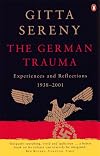
Gitta Sereny's collection of her journalism from the late 1960s to the 1990s gets five stars for just one extended piece - her assessment of Franz Stangl, Commandant of Treblinka, based on interviews she undertook in 1971 just before Stangl died of a heart attack in prison.
We will get back to Stangl in a moment but the book has a number of other insightful pieces on characters like Francois Genoud and events such as the farce over the Hitler Diaries and the political confusion surrounding show more the Demjanjuk case with fresh autobiographical material added to give context.
There also some potboilers in there - interviews that are not much more than self-serving publicity for the interviewees (Speer, Riefenstahl, Syberberg) or pieces that dully explore the neuroses of the German liberal bourgeoisie - but the good investigative pieces outweight the transient gossip.
You can read these texts either as an insight into the cosmopolitan liberal mind trying to build a narrative around national socialism that can be made to fit with the journalistic ethics of detachment or you can read them as 'last chances' to get into the heads of some darkened souls.
Naturally, behind all this is a fact on the ground - one side won and one side lost a brutal war with crimes of horrifying proportions on both sides. The real issue is that the side that lost did something of exceptional horror - industrialising the slaughter of civilians for reasons of ideology.
Many themes emerge that cause us to think about the psychological consequences of this on the losing side and Sereny is a good guide not because of her liberalism (which we may take as a given) but because, with rare lapses, of her commitment to detachment in giving the past its voice.
The Stangl interview (which became the core of a significant book which sits alongside her works on Speer and the child murderess Mary Bell as contributions to the study of 'evil') exemplifies her skill and her honesty. She is also honest when she just can't take more of some ex-Nazi's nonsense.
Personally I am less interested in the guilt trip of neurotics who were not born or were children during the Nazi era. The self-flagellation of the German establishment was more about giving cover to not rocking the boat in rehabilitating former Nazis and sustaining democracy than morality.
What is really interesting is how people who are not obviously psychopathic are drawn into activity that is, in fact, legal under the prevailing regime but which even they recognise go way beyond the bounds of the acceptable under normal circumstances.
To be blunt, we might ask the same question of those who bombed Tokyo or Hamburg or many a modern corporate executive operating in the emerging world but in Stangl we have the extreme case - an ordinary copper (basically) steadily drawn into the business of organising mass murder.
The notion of the banality of evil is not really accepted as it once was - if only because we now know that Eichmann (about whom this was said by Arendt in good faith) was not quite who he appeared to be, or equally as it was convenient to present him, at his trial.
The idea of the banality of evil was useful to a certain class at a certain type of history because it could point the finger at 'them' (the functionaries and 'essential workers' of a regime) and not 'us' (the educated and intelligentsia) who, implied, could never have been implicated in such crimes!
The Stangl interview does show us an ordinary person who - if Sereny is to be believed - was not 'bad' under normal circumstances but who did bad things because he was embedded in a particular system at a particular time under particular circumstances.
And this sense of a particular set of human conditions guiding people into conformity - cemented by regime intellectuals elsewhere - recurs over and over again in the interviews with the constant and fair complaint that critics simply do not understand what it was like to live then.
It is this contingency of our 'goodness' that should strike home and make us think. I look at a liberal intellectual operating on automatic today and I often see someone who, under certain circumstances, could easily have been a racial hygeinist or Boshevik.
What Stangl and his critics often have in common is an inability to think critically on their own account about the contingency of their own situation and so they can be pulled increasingly into justifying the unjustifiable because they share a morality rather than have a private ethic.
In other words, terming what was done as banal is arrogant. We should actually refer to it as the normality of evil, a very different way of seeing things. Any structure that organises itself to survive under perceived existential threat or for existential ambition can and will make evil normal.
Sereny's skill lies in being wholly unforgiving of the act without confusing an act with the totality of a person - a rather catholic way of seeing the world (though Sereny was, in fact, of mixed German-Jewish and Hungarian Protestant background).
The conditionality of evil is what should interest us here and we see the same thing with the case of John Demanjuk who was undoubtedly trapped by history into a position at Sobibor but then proved himself exemplary (if not enormously intelligent) once he was out of that hell.
We often see an absolutist view of good and evil that refuses to recognise this conditionality that places people in positions where good or evil is to be done without thought although one must recognise the existence of some persons who are driven to good or bad acts by their very nature.
Sereny herself towards the end of the book wonders what the point had become by the 1980s of trying older men for things done under very different conditions in their late teenage or early twenties now that the immediate post-war chance for justice had long since gone.
And, though no position is taken, throughout the book there is a more nuanced approach than we often find from liberals to the memorialisation of the past into fixed narratives designed to create some form of impossible justice than is actually a form of revenge.
This is not a book that will easily resolve any moral dilemmas. It is a book simply of (mostly) excellent journalism giving us at least some semblance of the facts on which we can then draw our own moral conclusions.
This is not say that I would be forgiving of such crimes (far from it) but I would be proportionate and demand consistency and fairness within all normalising systems (including our own) rather than see our current tendency for show trials for the purpose of mass cultural engineering.
Stangl should perhaps have been executed rather than imprisoned from that perspective. The politicisation of extreme criminality in the West seems often to have been less just than the brute punishment meted out in the East by Russian war crimes hypocrites but that's another story.
Fundamentally, the morality of the post-war era was a 'fix' at so many levels - designed to ensure Germany remained subservient, to ensure that Nazi Germans could be reintegrated harmlessly, to avoid too many questions being asked about the generality of war crimes and to try and show some compassion and restitution to those most affected or noisiest.
It was about subservience without humiliation, stabilisation and respect for the most powerful of those representing the damaged (I recall no rush to return the German gold reserves to Greece). It was probably all that could be done but it was not quite as just or fair as we would like to think.
From this perspective, Sereny shines a light on many of the dark corners of this process of 'justice' so that rather than being told what is evil by the posturing moralists, we can see it for itself and then make our own judgements on what it is and how it manifests itself.
And this is why the testimony of Stangl is so important because never was cruel mechanised evil so manifest in the production line murder of people whose only 'crime' was not to fit into the alternative world view of a system of desperate ideological loons with a sense of style.
How an ordinary man, more catholic than Nazi by instincts, ends up acting as the central administrator of such a programme of machined death is what should interest us and Sereny's account of that process is plausible and disturbing.
Sereny's skill in this is often to separate person from deeds. This comes across most effectively in her curious and honest account of her family friendship with Francois Genoud, unrepentant Nazi and funder of Arab terrorism, which will worry many readers. It worried me somewhat.
She can say that this person was one of the most decent and honest people she had met - perhaps even a political naif - but also that he never wavered in his ideological position. The two, she suggests, are not incompatible which flies in the face of all contemporary liberal assumptions.
But she is right. Ideological lunacy is only dangerous when associated with the ability to implement it and we come full circle to the problem of evil - not how to deal with evil people but how to ensure we do not permit evil systems. And sometimes we refuse to see the lurking evil in ours. show less
We will get back to Stangl in a moment but the book has a number of other insightful pieces on characters like Francois Genoud and events such as the farce over the Hitler Diaries and the political confusion surrounding show more the Demjanjuk case with fresh autobiographical material added to give context.
There also some potboilers in there - interviews that are not much more than self-serving publicity for the interviewees (Speer, Riefenstahl, Syberberg) or pieces that dully explore the neuroses of the German liberal bourgeoisie - but the good investigative pieces outweight the transient gossip.
You can read these texts either as an insight into the cosmopolitan liberal mind trying to build a narrative around national socialism that can be made to fit with the journalistic ethics of detachment or you can read them as 'last chances' to get into the heads of some darkened souls.
Naturally, behind all this is a fact on the ground - one side won and one side lost a brutal war with crimes of horrifying proportions on both sides. The real issue is that the side that lost did something of exceptional horror - industrialising the slaughter of civilians for reasons of ideology.
Many themes emerge that cause us to think about the psychological consequences of this on the losing side and Sereny is a good guide not because of her liberalism (which we may take as a given) but because, with rare lapses, of her commitment to detachment in giving the past its voice.
The Stangl interview (which became the core of a significant book which sits alongside her works on Speer and the child murderess Mary Bell as contributions to the study of 'evil') exemplifies her skill and her honesty. She is also honest when she just can't take more of some ex-Nazi's nonsense.
Personally I am less interested in the guilt trip of neurotics who were not born or were children during the Nazi era. The self-flagellation of the German establishment was more about giving cover to not rocking the boat in rehabilitating former Nazis and sustaining democracy than morality.
What is really interesting is how people who are not obviously psychopathic are drawn into activity that is, in fact, legal under the prevailing regime but which even they recognise go way beyond the bounds of the acceptable under normal circumstances.
To be blunt, we might ask the same question of those who bombed Tokyo or Hamburg or many a modern corporate executive operating in the emerging world but in Stangl we have the extreme case - an ordinary copper (basically) steadily drawn into the business of organising mass murder.
The notion of the banality of evil is not really accepted as it once was - if only because we now know that Eichmann (about whom this was said by Arendt in good faith) was not quite who he appeared to be, or equally as it was convenient to present him, at his trial.
The idea of the banality of evil was useful to a certain class at a certain type of history because it could point the finger at 'them' (the functionaries and 'essential workers' of a regime) and not 'us' (the educated and intelligentsia) who, implied, could never have been implicated in such crimes!
The Stangl interview does show us an ordinary person who - if Sereny is to be believed - was not 'bad' under normal circumstances but who did bad things because he was embedded in a particular system at a particular time under particular circumstances.
And this sense of a particular set of human conditions guiding people into conformity - cemented by regime intellectuals elsewhere - recurs over and over again in the interviews with the constant and fair complaint that critics simply do not understand what it was like to live then.
It is this contingency of our 'goodness' that should strike home and make us think. I look at a liberal intellectual operating on automatic today and I often see someone who, under certain circumstances, could easily have been a racial hygeinist or Boshevik.
What Stangl and his critics often have in common is an inability to think critically on their own account about the contingency of their own situation and so they can be pulled increasingly into justifying the unjustifiable because they share a morality rather than have a private ethic.
In other words, terming what was done as banal is arrogant. We should actually refer to it as the normality of evil, a very different way of seeing things. Any structure that organises itself to survive under perceived existential threat or for existential ambition can and will make evil normal.
Sereny's skill lies in being wholly unforgiving of the act without confusing an act with the totality of a person - a rather catholic way of seeing the world (though Sereny was, in fact, of mixed German-Jewish and Hungarian Protestant background).
The conditionality of evil is what should interest us here and we see the same thing with the case of John Demanjuk who was undoubtedly trapped by history into a position at Sobibor but then proved himself exemplary (if not enormously intelligent) once he was out of that hell.
We often see an absolutist view of good and evil that refuses to recognise this conditionality that places people in positions where good or evil is to be done without thought although one must recognise the existence of some persons who are driven to good or bad acts by their very nature.
Sereny herself towards the end of the book wonders what the point had become by the 1980s of trying older men for things done under very different conditions in their late teenage or early twenties now that the immediate post-war chance for justice had long since gone.
And, though no position is taken, throughout the book there is a more nuanced approach than we often find from liberals to the memorialisation of the past into fixed narratives designed to create some form of impossible justice than is actually a form of revenge.
This is not a book that will easily resolve any moral dilemmas. It is a book simply of (mostly) excellent journalism giving us at least some semblance of the facts on which we can then draw our own moral conclusions.
This is not say that I would be forgiving of such crimes (far from it) but I would be proportionate and demand consistency and fairness within all normalising systems (including our own) rather than see our current tendency for show trials for the purpose of mass cultural engineering.
Stangl should perhaps have been executed rather than imprisoned from that perspective. The politicisation of extreme criminality in the West seems often to have been less just than the brute punishment meted out in the East by Russian war crimes hypocrites but that's another story.
Fundamentally, the morality of the post-war era was a 'fix' at so many levels - designed to ensure Germany remained subservient, to ensure that Nazi Germans could be reintegrated harmlessly, to avoid too many questions being asked about the generality of war crimes and to try and show some compassion and restitution to those most affected or noisiest.
It was about subservience without humiliation, stabilisation and respect for the most powerful of those representing the damaged (I recall no rush to return the German gold reserves to Greece). It was probably all that could be done but it was not quite as just or fair as we would like to think.
From this perspective, Sereny shines a light on many of the dark corners of this process of 'justice' so that rather than being told what is evil by the posturing moralists, we can see it for itself and then make our own judgements on what it is and how it manifests itself.
And this is why the testimony of Stangl is so important because never was cruel mechanised evil so manifest in the production line murder of people whose only 'crime' was not to fit into the alternative world view of a system of desperate ideological loons with a sense of style.
How an ordinary man, more catholic than Nazi by instincts, ends up acting as the central administrator of such a programme of machined death is what should interest us and Sereny's account of that process is plausible and disturbing.
Sereny's skill in this is often to separate person from deeds. This comes across most effectively in her curious and honest account of her family friendship with Francois Genoud, unrepentant Nazi and funder of Arab terrorism, which will worry many readers. It worried me somewhat.
She can say that this person was one of the most decent and honest people she had met - perhaps even a political naif - but also that he never wavered in his ideological position. The two, she suggests, are not incompatible which flies in the face of all contemporary liberal assumptions.
But she is right. Ideological lunacy is only dangerous when associated with the ability to implement it and we come full circle to the problem of evil - not how to deal with evil people but how to ensure we do not permit evil systems. And sometimes we refuse to see the lurking evil in ours. show less
Lists
Awards


You May Also Like


Associated Authors
Statistics
- Works
- 12
- Also by
- 1
- Members
- 2,663
- Popularity
- #9,634
- Rating
- 4.0
- Reviews
- 49
- ISBNs
- 104
- Languages
- 12
- Favorited
- 6
