
Blake Morrison
Author of And When Did You Last See Your Father?
About the Author
Works by Blake Morrison
Associated Works
Writing Works: A Resource Handbook for Therapeutic Writing Workshops and Activities (Writing for Therapy or Personal Development) (2006) — Foreword — 22 copies
Stories of Hope and Wonder: In Support of the UK's Healthcare Workers (2020) — Contributor — 11 copies, 1 review
Theorising performance : Greek drama, cultural history and critical practice (2010) — Contributor — 6 copies
Tagged
Common Knowledge
- Birthdate
- 1950-10-08
- Gender
- male
- Education
- Ermystead's Grammar School
University of Nottingham
McMaster University
University College London - Occupations
- journalist
professor (Creative and Life Writing) - Organizations
- University of London (Goldsmiths College)
- Awards and honors
- E. M. Forster Award (1988)
Waterstone's/Volvo/Esquire Award for Non-fiction (1993)
J R Ackerley Prize for Autobiography (1993) - Nationality
- England
UK - Birthplace
- Skipton, Yorkshire, England, UK
- Places of residence
- London, England, UK
- Associated Place (for map)
- England, UK
Members
Reviews
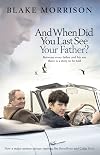
This is a thoughtful and perceptive reflection on the life, and particularly on the death, of the author's father. But unlike many books of this type, this isn't a picture of a dysfunctional family or unhappy childhood: the relationship between Morrison and his father was ultimately a loving one, although one fraught with frustrations.
Blake Morrison was born around 1950 into a prosperous family: both his parents were doctors in partnership in general practice in a small town in Yorkshire. show more His father was a larger than life character, perhaps not quite the respectable character that his position might suggest:
'This is the way it was with my father. Minor duplicities. Little fiddles. Money-saving, privilege-attaining fragments of opportunism. The queue-jump, the backhander, the deal under the table. Parking where you shouldn't, drinking after hours, accepting the poached pheasant and the hoods off the back of a lorry.'
What Morrison captures wonderfully is the rivalry, whether physical or otherwise, between father and son, as the one ages and the other grows. And there are some truly funny moments as the son attempts to deal with some of the excesses of his father's behaviour. But what makes the book stand out are Morrison's reflections on his father's death from inoperable cancer at the age of 75. Morrison depicts each stage in the decline in his father's physical condition with unusual clarity, but rather than being unnecessarily graphic , this is done in a very tender and moving way.
When we discussed this book at my RL book club all but one of the members really enjoyed it. Several people found the description of the realities of death, and of the family's reaction to death, incredibly moving. show less
Blake Morrison was born around 1950 into a prosperous family: both his parents were doctors in partnership in general practice in a small town in Yorkshire. show more His father was a larger than life character, perhaps not quite the respectable character that his position might suggest:
'This is the way it was with my father. Minor duplicities. Little fiddles. Money-saving, privilege-attaining fragments of opportunism. The queue-jump, the backhander, the deal under the table. Parking where you shouldn't, drinking after hours, accepting the poached pheasant and the hoods off the back of a lorry.'
What Morrison captures wonderfully is the rivalry, whether physical or otherwise, between father and son, as the one ages and the other grows. And there are some truly funny moments as the son attempts to deal with some of the excesses of his father's behaviour. But what makes the book stand out are Morrison's reflections on his father's death from inoperable cancer at the age of 75. Morrison depicts each stage in the decline in his father's physical condition with unusual clarity, but rather than being unnecessarily graphic , this is done in a very tender and moving way.
When we discussed this book at my RL book club all but one of the members really enjoyed it. Several people found the description of the realities of death, and of the family's reaction to death, incredibly moving. show less
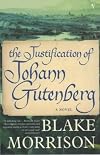
An interesting historical novel exploring the life and times of the man who revolutionised the culture of Medieval Europe through his invention of printing, and production of the first printed Bible. Hard biographical evidence about Gutenberg's life is sketchy to say the least and in his afterword Morrison admits he had to make up a lot of the action, but nonetheless this novel captures the sights, sounds and smells of Medieval Germany brilliantly and in his version of Gutenberg, Morrison show more has created a fascinating figure. In his single-minded pursuit of his dream of 'mechanical writing' Gutenberg stakes everything and is not afraid to mislead or betray others to bring his invention to life. He cannot be said to be a fully likeable narrator but its hard not to admire the force of his drive and the calibre of his mind. More than anything else, this is a story about the double-edged sword of obsession. The novel is a melancholy one in many respects because, like many of the greatest revolutions, the effects of Gutenberg's work were not fully recognised or understood in his own life time. Illuminating stuff. show less
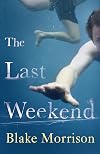
I wanted to like this book more than I did. Brisk pace, could visualize characters, good plot and use of unreliable narrator. It may have been edited down a tad too much, as a few more paragraphs to establish Ollie’s reliability and give the female characters more sentences of backstory would have helped the dynamics. When using an unreliable narrator (Ian) it’s important to provide just a little more likability, just enough so the reveals pack more punch. A good beach read but I wish it show more had some really great sentences or one or two incredibly keen insights.
One aspect that was done very well was expanding the idea of an unreliable narrator to Ollie and Daisy as well (Em, Ian’s wife, appears to be more reliable). We all tweak our realities here and there and there is good foreshadowing re the nature of truth. Very good mechanics overall but I was left with the impression of a book written with a technical map in hand. show less
One aspect that was done very well was expanding the idea of an unreliable narrator to Ollie and Daisy as well (Em, Ian’s wife, appears to be more reliable). We all tweak our realities here and there and there is good foreshadowing re the nature of truth. Very good mechanics overall but I was left with the impression of a book written with a technical map in hand. show less
I read this at one go while waiting for the phone to ring with some bad news (it never did ring that day). The unreliable narrator works well and the writing is top quality. Morrison does middle-aged men failing badly superbly (if you get me).
Lists
Awards


You May Also Like


Associated Authors
Statistics
- Works
- 36
- Also by
- 19
- Members
- 1,478
- Popularity
- #17,380
- Rating
- 3.9
- Reviews
- 33
- ISBNs
- 111
- Languages
- 6
- Favorited
- 6