
Rudolf Höß (1900–1947)
Author of Death Dealer: The Memoirs of the SS Kommandant at Auschwitz
About the Author
Image credit: Rudolf Höss, en 1946
Works by Rudolf Höß
Associated Works
Survivors, Victims, And Perpetrators: Essays On The Nazi Holocaust (1980) — Contributor — 19 copies, 1 review
Tagged
Common Knowledge
- Canonical name
- Höß, Rudolf
- Legal name
- Höß, Rudolf Franz Ferdinand
- Other names
- HÖSS, Rudolf Franz Ferdinand
HOESS, Rudolf Franz Ferdinand
HÖSS, Rudolf
HOESS, Rudolf
HOSS, Rudolf - Birthdate
- 1900-11-25
- Date of death
- 1947-04-16
- Gender
- male
- Occupations
- Nazi
mass murderer - Organizations
- SS (joined 1934)
Nazi Party (joined 1922) - Nationality
- Germany
- Birthplace
- Baden-Baden, Germany
- Places of residence
- Baden-Baden, Germany
- Place of death
- Poland
- Associated Place (for map)
- Baden-Baden, Germany
Members
Reviews
Haunting book - the memoirs that Höss, Auschwitz commander for two years, wrote while in jail awaiting execution. This Italian edition (for one in English see [b:Death Dealer: The Memoirs Of The Ss Kommandant At Auschwitz|275654|Death Dealer The Memoirs Of The Ss Kommandant At Auschwitz|Rudolf Höss|http://photo.goodreads.com/books/1173336496s/275654.jpg|267311]) comes with a lucid preface by [a:Primo Levi|4187|Primo Levi|http://photo.goodreads.com/authors/1209062310p2/4187.jpg] (himlsef an show more Auschwitz survivor) - Hoss sees himself simply as somebody who wants to do his job properly, or at least this is the justification he is putting out to the world. In his allucinated perspective, perfecting ways to "process" large numbers of inmates becomes almost an act of kindness to his prisoners: "Death would overcome [them] in the crowded cells just after the gas had been pumped int. A short cry, immediately muffled, and all was over" [my translation] - and Hoss is greatly conforted by the success of gasing Russian prisoners, as he had worried about not being able to carry out the orders of the mass extermination of the Jews in the near future. He is simply a guy doing his job, and he cares about doing it properly. As compelling as it is horrifying. show less
War crimes trials are a 20th Century invention. Although a vehicle for punishment and, perhaps, the reestablishment of the rule of law, one has to wonder the extent to which individual defendants truly acknowledge any real guilt.
This is seen in the autobiography written by Auschwitz camp commander Rudolf Hoess while in prison following the war. Hoess' several hundred page work was first published some 50 years ago and has since appeared in a variety of editions and under varying titles. The show more latest is The Commandant, a condensed volume edited by Jürg Amann, a Swiss author and dramatist. Amann edited Hoess' writings down to about 100 pages, what he terms a 16-part monologue conceived for the stage and as a radio play. Yet even The Commandant provides a singular view into the operations and psychology of the Nazi killing machine.
Whether an intentional construction or a reflection of a psychological compartmentalization employed by those running the death camps, Hoess almost simultaneously defends his actions, accepts a slight form of, what is to him, responsibility for what occurred, and claims to have been greatly disturbed by them. As Ian Buruma notes in an afterword, these internal inconsistencies leave us with a man who might exemplify what Hannah Arendt had in mind when she referred to "the banality of evil."
It doesn't take long for Hoess to lay the groundwork for thee so-called "Nuremberg defense," the claim that "I was just following orders." In the first chapter, Hoess tells us, "Even from childhood on up, I was trained in a complete awareness of duty. Attention to duty was greatly respected in my parents' home, so that all orders would be performed exactly and conscientiously." In other words, it was impossible for him to have acted any differently when told to kill Jews.
Of course, that trait was reinforced by his belief in the Nazi party. When the orders for Hoess to create a mass killing center to annihilate the Jews came down, he recognized them as "something extraordinary, something monstrous." But he didn't give them a thought or form an opinion about them. Why? It was not his place to be "second guessing" the Fuhrer. According to Hoess, when Himmler issued orders in Hitler's name, those orders "were holy. There was no reflection, no interpretation, no explanation about these orders. Whatever the Fuhrer or Himmler ordered was always right."
Still, given a chance in prison to consider those orders and express an opinion on them, he says they were "absolutely wrong." Yet his reasoning is insightful. It was not morals, decency or even justice that rendered the orders wrong. Instead, he objects because "[i]t was exactly because of this mass extermination that Germany earned itself the hatred of the entire world. The cause of anti-Semitism was not served by this act at all, in fact, just the opposite."
What is also disturbing is the empathy Hoess claims to have had for the prisoners. In the 1920s, Hoess was among a group of people who, invoking "an unwritten law," killed someone they considered a traitor. Hoess suggests that the six years he spent in prison for his role in the murder allowed him to understand what concentration camp inmates were going through. "I had been a prisoner for too long for me not to notice their needs," he wrote. "It was not without inner sympathy that I faced all of the occurrences in the camp. Outwardly I was cold, even stone-faced, but inwardly I was moved to the deepest." It also was empathy that caused him to be encouraged by the efficacy of gassing Jews rather than shooting them. He felt that would alleviate the stress that was leading to suicides of SS Special Action troops "who could no longer mentally endure wading in the bloodbath." Hoess doesn't say whether this was less psychologically stressful for the victims.
This reflects Hoess' odd view of culpability. He claims his "guilt' began when he was first assigned to Dachau. At that point, Hoess claims it was clear to him he was not suited for concentration camp duties because he didn't agree with the conditions and the practices followed in them. He even asserts that even though he followed orders, "I never became insensitive to human suffering. I always saw it and I felt it." In fact, Hoess claims he used "every means" at his disposal" to halt "the horrible tortures" at Auschwitz but could not stop them. Why? "One person is no match for such viciousness, depravity, and cruelty." It perhaps goes without saying that this is especially so when the cruelty stems from what the person considers "holy" orders.
We do not know whether these fractured rationalizations reflect the mindset of those involved in "the Final Solution' or represents Hoess trying to somehow portray himself as merely a cog who felt sorry for his victims. However, there is no doubt Hoess ultimately agreed with the Nazi program. He believed in the need for concentration camps to lock up "enemies of the state" and professional criminals. Likewise, he seeks to "emphasize" that he "personally never hated the Jews." Instead, he just "considered them to be the enemy of our nation." The fact that certain results flow from those positions seems utterly inconsequential to Hoess.
Given the subject, both individually and topically, I don't see wanting to sit in a theater to hear Hoess expound on his life and thoughts. Still, the 16 chapters Amann extracts from the original, lengthier writings are a concise recap of Hoess' life and the concentration camp system. More important, they provide stark insight into the nature of many of those responsible for the Holocaust.
(Originally posted at A Progressive on the Prairie.) show less
This is seen in the autobiography written by Auschwitz camp commander Rudolf Hoess while in prison following the war. Hoess' several hundred page work was first published some 50 years ago and has since appeared in a variety of editions and under varying titles. The show more latest is The Commandant, a condensed volume edited by Jürg Amann, a Swiss author and dramatist. Amann edited Hoess' writings down to about 100 pages, what he terms a 16-part monologue conceived for the stage and as a radio play. Yet even The Commandant provides a singular view into the operations and psychology of the Nazi killing machine.
Whether an intentional construction or a reflection of a psychological compartmentalization employed by those running the death camps, Hoess almost simultaneously defends his actions, accepts a slight form of, what is to him, responsibility for what occurred, and claims to have been greatly disturbed by them. As Ian Buruma notes in an afterword, these internal inconsistencies leave us with a man who might exemplify what Hannah Arendt had in mind when she referred to "the banality of evil."
It doesn't take long for Hoess to lay the groundwork for thee so-called "Nuremberg defense," the claim that "I was just following orders." In the first chapter, Hoess tells us, "Even from childhood on up, I was trained in a complete awareness of duty. Attention to duty was greatly respected in my parents' home, so that all orders would be performed exactly and conscientiously." In other words, it was impossible for him to have acted any differently when told to kill Jews.
Of course, that trait was reinforced by his belief in the Nazi party. When the orders for Hoess to create a mass killing center to annihilate the Jews came down, he recognized them as "something extraordinary, something monstrous." But he didn't give them a thought or form an opinion about them. Why? It was not his place to be "second guessing" the Fuhrer. According to Hoess, when Himmler issued orders in Hitler's name, those orders "were holy. There was no reflection, no interpretation, no explanation about these orders. Whatever the Fuhrer or Himmler ordered was always right."
Still, given a chance in prison to consider those orders and express an opinion on them, he says they were "absolutely wrong." Yet his reasoning is insightful. It was not morals, decency or even justice that rendered the orders wrong. Instead, he objects because "[i]t was exactly because of this mass extermination that Germany earned itself the hatred of the entire world. The cause of anti-Semitism was not served by this act at all, in fact, just the opposite."
What is also disturbing is the empathy Hoess claims to have had for the prisoners. In the 1920s, Hoess was among a group of people who, invoking "an unwritten law," killed someone they considered a traitor. Hoess suggests that the six years he spent in prison for his role in the murder allowed him to understand what concentration camp inmates were going through. "I had been a prisoner for too long for me not to notice their needs," he wrote. "It was not without inner sympathy that I faced all of the occurrences in the camp. Outwardly I was cold, even stone-faced, but inwardly I was moved to the deepest." It also was empathy that caused him to be encouraged by the efficacy of gassing Jews rather than shooting them. He felt that would alleviate the stress that was leading to suicides of SS Special Action troops "who could no longer mentally endure wading in the bloodbath." Hoess doesn't say whether this was less psychologically stressful for the victims.
This reflects Hoess' odd view of culpability. He claims his "guilt' began when he was first assigned to Dachau. At that point, Hoess claims it was clear to him he was not suited for concentration camp duties because he didn't agree with the conditions and the practices followed in them. He even asserts that even though he followed orders, "I never became insensitive to human suffering. I always saw it and I felt it." In fact, Hoess claims he used "every means" at his disposal" to halt "the horrible tortures" at Auschwitz but could not stop them. Why? "One person is no match for such viciousness, depravity, and cruelty." It perhaps goes without saying that this is especially so when the cruelty stems from what the person considers "holy" orders.
We do not know whether these fractured rationalizations reflect the mindset of those involved in "the Final Solution' or represents Hoess trying to somehow portray himself as merely a cog who felt sorry for his victims. However, there is no doubt Hoess ultimately agreed with the Nazi program. He believed in the need for concentration camps to lock up "enemies of the state" and professional criminals. Likewise, he seeks to "emphasize" that he "personally never hated the Jews." Instead, he just "considered them to be the enemy of our nation." The fact that certain results flow from those positions seems utterly inconsequential to Hoess.
Given the subject, both individually and topically, I don't see wanting to sit in a theater to hear Hoess expound on his life and thoughts. Still, the 16 chapters Amann extracts from the original, lengthier writings are a concise recap of Hoess' life and the concentration camp system. More important, they provide stark insight into the nature of many of those responsible for the Holocaust.
(Originally posted at A Progressive on the Prairie.) show less
I read a much earlier edition of this book decades ago, hard to find it on a shelf now. It's probably the best insight into what motivates a Nazi I've read, including Shellenberg's SD memoir, however both serve to remind us that they were not evil in their own eyes and there but for grace go I. Sad to say, mere demonization of an enemy only causes us to underestimate him/her.
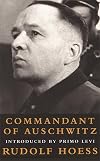
This book is, as [a:Primo Levi|4187|Primo Levi|http://d.gr-assets.com/authors/1209062310p2/4187.jpg] says in the introduction, filled with lies and shirks, but never the less, it is an extremely important document of The Final Solution, the extermination machine, Auschwitz, Birkenau, the bureaucracy, the corruption and the insanity that existed in the top ranks and among the SS in Auschwitz.
While Höss details his life from growing up until the end, he intersperses the story with very show more important details on how Auschwitz grew, how the sub-camps worked, he also writes about his family, mass exterminations, day-to-day activities, hardships, etc.
Remember: Höss joined the nazi party and the SS voluntarily. And he is considered by many to be the most cruel commandant of Auschwitz.
All in all, as Levi writes, Höss' prejudice and idiocies stick out like "flies in milk", but viewed with a critical eye, this is a must read for anybody who wants more insight into the horrors of The Final Solution. show less
While Höss details his life from growing up until the end, he intersperses the story with very show more important details on how Auschwitz grew, how the sub-camps worked, he also writes about his family, mass exterminations, day-to-day activities, hardships, etc.
Remember: Höss joined the nazi party and the SS voluntarily. And he is considered by many to be the most cruel commandant of Auschwitz.
All in all, as Levi writes, Höss' prejudice and idiocies stick out like "flies in milk", but viewed with a critical eye, this is a must read for anybody who wants more insight into the horrors of The Final Solution. show less
Lists
Holocaust (2)
You May Also Like


Associated Authors
Statistics
- Works
- 10
- Also by
- 1
- Members
- 915
- Popularity
- #28,030
- Rating
- 3.8
- Reviews
- 22
- ISBNs
- 49
- Languages
- 11
- Favorited
- 1


