
Miklós Nyiszli (1901–1956)
Author of Auschwitz: A Doctor's Eyewitness Account
About the Author
Works by Miklós Nyiszli
Tagged
Common Knowledge
- Canonical name
- Nyiszli, Miklós
- Other names
- Nyiszli, Nicolaus
Nyiszli, Nicolae
Prisoner A8450 - Birthdate
- 1901-06-17
- Date of death
- 1956-05-05
- Gender
- male
- Education
- Friedrich-Wilhelms-Universität, Breslau, Germany
- Occupations
- physician
pathologist
memoirist
Holocaust survivor - Short biography
- Miklós Nyiszli was born to a Jewish family in Szilágysomlyó, Hungary. He attended the Friedrich Wilhelm University in Breslau, Germany, completing his medical degree in 1929 with a specialty in forensic pathology. In 1930, he began working in the town of Oradea in the Transylvania region -- then part of Hungary, present-day Romania -- often assisting the police and the courts in identifying unusual or disputed causes of death. In 1944, he, his wife, and young daughter were deported to the Nazi death camp at Auschwitz. There he was separated from his family and put to work with the Sondercommando, then as a physician to the SS and as the chief pathologist under the direction of SS officer Josef Mengele. Dr. Nyiszli was forced to perform Mengele's medical experiments and conduct the autopsies on the bodies of dozens of victims. In 1945, along with an estimated 66,000 other prisoners, he was forced on a death march away from Auschwitz into German-occupied Poland, Czechoslovakia, Germany, and Austria, ending up in the Melk an der Donau camp. There he survived to be liberated by U.S. troops. His wife and daughter also survived Auschwitz and were liberated from Bergen-Belsen. After the war, the family settled again in Oradea, where he returned to private practice. His memoir, Auschwitz: A Doctor’s Eyewitness Account, was first published in 1947. Critics have called in inaccurate and some have labeled it a historical novel. It was adapted into the 2001 movie The Grey Zone.
- Nationality
- Hungary
Romania - Birthplace
- Szilágysomlyó, Hungary (now Şimleu Silvaniei, Romania)
- Places of residence
- Nagyvárad, Hungary
Kiel, Germany
Romania
Kolozsvar, Hungary
Breslau, Germany
Auschwitz, Poland (show all 7)
Mauthausen, Austria - Place of death
- Oradea, Romania
Members
Reviews
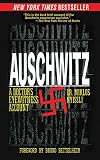
I gained a lot of questions from this but the one I always come back to is the one asked by Bruno Bettelheim; what would the past have looked like if as he suggests every Jew had been more 'in touch with reality' and more likely to get a gun or see the Nazis for what they were? Would Anne Frank have survived?
This question may be considered off putting to many but I think asking it is key for if we don't then we end up harboring doubt.
Whilst many may doubt Bruno's right to speak on the show more subject, do remember that he was a Jew, he was someone imprisoned in a concentration camp and he did spend almost a year of his life there. There's a ton of flaws in his arguments and it doesn't apply to himself either as he claims that living on in death with dignity intact is far better than becoming a slave. But isn't that what happened to him.
Whilst Bruno intrigued me and I'll definitely be reading up a bit more on him- coming to the main book, it was an eye opener in regards to governments, a malicious will to power and the purpose of morality without getting too much into the meat of the book. Read it. Make your children read it. Forgetting history is exactly why mistakes reoccur. show less
This question may be considered off putting to many but I think asking it is key for if we don't then we end up harboring doubt.
Whilst many may doubt Bruno's right to speak on the show more subject, do remember that he was a Jew, he was someone imprisoned in a concentration camp and he did spend almost a year of his life there. There's a ton of flaws in his arguments and it doesn't apply to himself either as he claims that living on in death with dignity intact is far better than becoming a slave. But isn't that what happened to him.
Whilst Bruno intrigued me and I'll definitely be reading up a bit more on him- coming to the main book, it was an eye opener in regards to governments, a malicious will to power and the purpose of morality without getting too much into the meat of the book. Read it. Make your children read it. Forgetting history is exactly why mistakes reoccur. show less
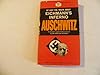
I almost passed this book along, without reading it. The cover is off putting. The cover seems more like the book is from a Nazi by choice, rather than someone who was brought to Auschwitz to be killed and was spared because of his forensic knowledge. I will not read a book from Nazis, but will read a book by someone who has survived them. However, in these times, I think it is important for all of us in the world, because of certain people, to remind ourselves what has happened in the past. show more It seems a small thing to read a book, but if all of us would read certain books (though some might say that seems like the opposite of book banning and also bad), then we won't be reliving history over and over again. To me, current immigration deportation policies are edging a little closer to what happened in Europe 80 years ago. Reading this book from a doctor, who never thought he would survive Auschwitz, who felt he needed to be a witness to as much as possible in case he DID make it out, was very powerful. As Dr. Mengele's assistant, he was privy to a lot of info. He mentions the book isn't literary enough, but I don't think that is what anyone is looking for while reading this. The facts are important. The account of what happened is important. I hope we all know the basics of what happened, but this firsthand account went further. And of course it is more stark, more methodical than seems possible. Of course this man didn't think he would be believed, as so much that happened within these pages is unbelievable. The forward wonders why there wasn't more resistance to being murdered, less "business as usual" but I think it was because the situation was just so unbelievable, the victims had a sense that "this can't be happening" until the very end. And all of us on the side of good can not be complacent with current things happening in 2025. Noone in the world deserves this and we can't let it happen again. For the miracle of this man's survival and for the existence of this book alone, I give the book five stars. I'm glad I read this, no matter how horrifying. show less

A short yet enlightening read. Dissector for Mengele at Auschwitz, the author had a unique view of the final months of the "KZ" and the final days of the concentration camp system. This is the first time I heard an explanation of Mengele's deadly and cruel fascination with twins: he thought it was a route to more prolific breeding of the "master race". The author goes into this and more details of how he put his scalpel to work there. Also covered is the crematorium-destroying revolt of the show more 12th Sonderkommando. I was disappointed there plan to have any of their number flee ultimately proved hopeless.
Perhaps the most unsettling part of the book is Bruno Bettelheim's foreword which seems to blame Jewish cultural traits for the success of The Holocaust. He says "the walk to the gas chamber was the last act of a business-as-usual philosophy", etc. show less
Perhaps the most unsettling part of the book is Bruno Bettelheim's foreword which seems to blame Jewish cultural traits for the success of The Holocaust. He says "the walk to the gas chamber was the last act of a business-as-usual philosophy", etc. show less
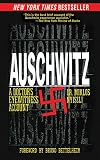
On the one hand, this book was totally as expected: a description of the often-told horrors of Auschwitz by in inside witness. And yet it manages to shock again, not just through the physical cruelty described herein, but with the psychologically dehumanising effects of the extermination programme. People in this camp were resigned to their eventual deaths, including the Sonderkommandos (jews who worked in the gas chambers and the cremation ovens) who knew that they would survive four months show more at most. And yet only one of the 14 Sonderkommandos decided to go down fighting (and to destroy one of the four crematoria in the process). The author continues to perform autopsies for Dr. Mengele on sets of twins that were murdered especially for this purpose, as if he were working "in the pathology university faculty of a middle-sized town". I was struck by little details that illustrate this madness: the prisoners inthe Sonderkommando would trade food for 140 gramme gold coins (melted from gold tooth fillings extracted from the gassed corpses),since that was the only currency they could have access to. Nazis would talk to a Jew (especially a useful jew like the expert pathologist who wrote this book), but would never greet him when arriving or leaving - because they didn't deserve to be further acknowledged. Not a fun read, but one I will remember for a long time. show less
Lists
You May Also Like


Associated Authors
Statistics
- Works
- 4
- Members
- 1,456
- Popularity
- #17,648
- Rating
- 4.1
- Reviews
- 39
- ISBNs
- 45
- Languages
- 13
