

Olga Lengyel (1908–2001)
Author of Five Chimneys: The Story of Auschwitz
About the Author
Works by Olga Lengyel
HORNOS DE HITLER, LO 3 copies
Tagged
Common Knowledge
- Canonical name
- Lengyel, Olga
- Birthdate
- 1908-10-19
- Date of death
- 2001-04-15
- Gender
- female
- Occupations
- surgical assistant
memoirist - Organizations
- Memorial Library (Founder)
- Short biography
- Olga Lengyel, née Gross, was born in the Transylvania region of Romania that later became part of Hungary. In 1944, she was working as a surgical assistant in the hospital in Cluj (Kolozsvár) where her husband, Dr. Miklós Lengyel, a Jewish surgeon, was director. The couple had two sons. She and her husband, children, and her parents were deported to the Auschwitz-Birkenau concentration camp. Olga was put to work in the Auschwitz infirmary, where she also secretly worked for a French underground resistance cell, trying to demolish a crematory oven. She was the only member of her family to survive. After World War II, she managed to emigrate to the USA via France and Russia. She wrote about her experiences in one of the first Holocaust memoirs, Five Chimneys: The Story of Auschwitz, first published in France in 1946 as Souvenirs de l'au-delà. A later American edition was entitled I Survived Hitler's Ovens. Olga eventually remarried and founded the Memorial Library and Art Collection of the Second World War, chartered by the University of the State of New York.
- Nationality
- Romania
USA - Places of residence
- New York, New York, USA
Paris, France
Cluj, Romania
Members
Reviews
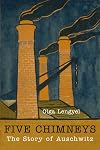
What can one ever say about such a book? That anyone had the tenacity and spirit to survive the holocaust is amazing. That you would not go completely insane under such circumstances unimaginable. Reading this book was not easy. Even though we know all the atrocities, having someone set them down in a first person narrative and knowing that these are not just tales but experiences for her was heartbreaking.
I cry over images of mistreated dogs on Pit Bulls and Parolees. Trying to imagine show more watching people undergo such cruelty and being unable to do anything more than struggle to survive, is more than I find bearable. I did not want to read this, but I think all of us need to. We need to for the memory of those who endured it, like Olga Lengyel, and we need to because cruelty and horror still occurs, on a lesser scale, but just as devastating to those who witness it or are subjected to it.
In the words of Olga Lengyel:
In setting down this personal record I have tried to carry out the mandate given to me by the many fellow internees at Auschwitz who perished so horribly. This is my memorial to them. God rest their poor souls! No hell anyone could conceive could equal what they endured. Frankly, I want my work to mean more than that. I want the world to read and to resolve that this must never be permitted to happen again. That after perusing this account any will still doubt, I cannot believe.
Lest we forget. show less
I cry over images of mistreated dogs on Pit Bulls and Parolees. Trying to imagine show more watching people undergo such cruelty and being unable to do anything more than struggle to survive, is more than I find bearable. I did not want to read this, but I think all of us need to. We need to for the memory of those who endured it, like Olga Lengyel, and we need to because cruelty and horror still occurs, on a lesser scale, but just as devastating to those who witness it or are subjected to it.
In the words of Olga Lengyel:
In setting down this personal record I have tried to carry out the mandate given to me by the many fellow internees at Auschwitz who perished so horribly. This is my memorial to them. God rest their poor souls! No hell anyone could conceive could equal what they endured. Frankly, I want my work to mean more than that. I want the world to read and to resolve that this must never be permitted to happen again. That after perusing this account any will still doubt, I cannot believe.
Lest we forget. show less
A moving and emotional true account of Olga Lengyel, a survivor of Auschwitz and a woman who has Given the world a heartbreaking but frank account of her seven months as a prisoner of the concentration camp. Not a word is wasted in the vivid and shocking account.
I have read numerous books on the concentration camps and am still shocked by what I read and Five Chimneys is a difficult and emotional read but an important story that was originally published in 1946 under the name of Souvenir de show more l’au-dela as this brave woman was determined to have the shocking details of the camps documented as quickly as possible so as the world would know the extent of the atrocities that was was committed by the Nazis. She was the sole surviving member of her immediate family and her account and story deserves to be read and listened to. I can only imagine that when the camps were librated many of the suvivours were left without voices, unable to relive the horrors and the pain they endured and afraid to speak out which makes these written accounts all the more important and they should be read by YA in schools all over the world.
This is a relatively short account page wise and yet it took me days to listen to as it is intense and emotional and I found myself exclaiming out loud so many times. Olga Lengyel writes at the beginning of this book that she feels responsible for the deaths of her parents and sons as she chose to accompany her husband who had been detained and was to be deported from Romania to Germany and how she had to live her whole life with this torture along with everything else she had endured, how would anyone ever have known the evils that were taking place and she was in no way responsible for what happened to her family and was just doing her best to stay together as a family.
Albert Einstein was so moved by her story that he wrote a personal letter to Lengyel, thanking her for her ""very frank, very well written book”
It’s books like this that make historical fiction stories on the Concentration camps pale in comparison for me and why I think works like this should be read and discussed in schools least we should ever forget.
I listened to this non fiction book on audible and the narration was pretty good. show less
I have read numerous books on the concentration camps and am still shocked by what I read and Five Chimneys is a difficult and emotional read but an important story that was originally published in 1946 under the name of Souvenir de show more l’au-dela as this brave woman was determined to have the shocking details of the camps documented as quickly as possible so as the world would know the extent of the atrocities that was was committed by the Nazis. She was the sole surviving member of her immediate family and her account and story deserves to be read and listened to. I can only imagine that when the camps were librated many of the suvivours were left without voices, unable to relive the horrors and the pain they endured and afraid to speak out which makes these written accounts all the more important and they should be read by YA in schools all over the world.
This is a relatively short account page wise and yet it took me days to listen to as it is intense and emotional and I found myself exclaiming out loud so many times. Olga Lengyel writes at the beginning of this book that she feels responsible for the deaths of her parents and sons as she chose to accompany her husband who had been detained and was to be deported from Romania to Germany and how she had to live her whole life with this torture along with everything else she had endured, how would anyone ever have known the evils that were taking place and she was in no way responsible for what happened to her family and was just doing her best to stay together as a family.
Albert Einstein was so moved by her story that he wrote a personal letter to Lengyel, thanking her for her ""very frank, very well written book”
It’s books like this that make historical fiction stories on the Concentration camps pale in comparison for me and why I think works like this should be read and discussed in schools least we should ever forget.
I listened to this non fiction book on audible and the narration was pretty good. show less
I sat here for several minutes, not knowing where to begin writing this review. It's a serious book & deserves a serious review, but that's not my review or blogging style. I write like I talk - casual, chatty, and a little bit of babble. This book is about how one woman survived Hell - Auschwitz & Birkenau. I read history because history is more interesting then fiction half the time, and how does that old quote go? Something about learning about the past so you aren't doomed to repeat it? show more I read history for that reason, too.
Anyways, it's a tough book to read, and another one of those books that I read in short bits at a time in order to think about what I actually read. Your stomach churns at reading most of it. Lengyel writes very dispassionately, I think perhaps as her way of coping with the horrors? But the dispassionate doesn't take away any part of learning about her experience; in fact, I think you really feel it all the more for her calm way of explaining what happened to her.
This book is worth reading, but I wouldn't make it my number one suggestion, either. show less
Anyways, it's a tough book to read, and another one of those books that I read in short bits at a time in order to think about what I actually read. Your stomach churns at reading most of it. Lengyel writes very dispassionately, I think perhaps as her way of coping with the horrors? But the dispassionate doesn't take away any part of learning about her experience; in fact, I think you really feel it all the more for her calm way of explaining what happened to her.
This book is worth reading, but I wouldn't make it my number one suggestion, either. show less
Harrowing and interesting. This is a first-hand account of being a prisoner in Birkenau-Auschwitz and surviving. Helpful thoughts on this and a well structured book.
Lists
Awards

You May Also Like


Statistics
- Works
- 2
- Members
- 568
- Popularity
- #44,050
- Rating
- 4.3
- Reviews
- 18
- ISBNs
- 29
- Languages
- 3
- Favorited
- 1