
Lucette Lagnado (1956–2019)
Author of Children of the Flames: Dr. Josef Mengele and the Untold Story of the Twins of Auschwitz
About the Author
Lucette Lagnado is the coauthor of Children of the Flames: Dr. Josef Mengele and the Untold Story of the Twins of Auschwitz. She is a senior special writer and investigative reporter for the Wall Street Journal. She resides with her husband, Douglas Feiden, in Sag Harbor and New York City
Works by Lucette Lagnado
Children of the Flames: Dr. Josef Mengele and the Untold Story of the Twins of Auschwitz (1990) 642 copies, 12 reviews
The Arrogant Years: One Girl's Search for Her Lost Youth, from Cairo to Brooklyn (2011) 122 copies, 6 reviews
Tagged
Common Knowledge
- Canonical name
- Lagnado, Lucette
- Legal name
- Lagnado, Lucette Matalon
- Birthdate
- 1956-09-19
- Date of death
- 2019-07-10
- Gender
- female
- Education
- Vassar College (BA|1977 - English and French Literature)
New Utrecht High School - Occupations
- journalist
editor
author
memoirist - Organizations
- The Wall Street Journal
New York Post
Village Voice
Brooklyn Spectator
The Forward - Awards and honors
- Sami Rohr Prize for Jewish Literature (2008)
Mike Berger Award (2002)
Newswomen's Club of New York Front Page Awards (3x)
New York Press Club Heart of New York award (2001)
Big Apple Journalism Award (2001)
Laurel Award (2003) (show all 7)
New York Press Club Award (2x) - Agent
- Tracy Brown
- Relationships
- Feiden, Douglas (spouse)
Anderson, Jack (co-writer #1) - Cause of death
- Hodgkin's disease
- Nationality
- Egypt (birth)
USA (naturalized) - Birthplace
- Cairo, Egypt
- Places of residence
- Paris, France
Brooklyn, New York, USA
Sag Harbor, New York, USA - Place of death
- Manhattan, New York, USA
- Associated Place (for map)
- New York, USA
Members
Reviews

The Arrogant Years: One Girl's Search for Her Lost Youth, from Cairo to Brooklyn by Lucette Lagnado is a memoir about the author's early childhood in Cairo, the circumstances that brought her family to New York City, and her adolescence/college years in the United States. It is also a loving remembrance of the author's mother and her heritage.
I instantly loved Lucette's mother, Edith, because of her love for education and libraries. As a young woman before her marriage, Edith worked as a show more teacher for an exclusive Cairo academy, L'Ecole Cattaui, and helped develop their first library:
"Madame Cattaui decreed the school would have a state-of-the-art library and la chere Mademoiselle Matalon would be the one to organize it. That was the extraordinary project entrusted to Edith - to set up a library that would allow even students of modest means, or simply those with great intellectual curiosity, to read and study and take home any books they fancied
"...It was a thrilling assignment, and Edith, still in her teens, rose to the challenge. Driven, committed, and thoroughly impassioned by her undertaking, she had never felt so empowered as when she ordered more books, and money was no object, and she could indulge in all her tastes" (pg. 57).
Sounds like heaven! I'm a librarian, but when I order books, not only is money an object, but I can only order boring health sciences books. Even so, it's thrilling to order new books and handle them when they come in. I can only imagine how much more amazing that would be if I were actually interested in the books!
When Edith married her husband, Leon, he expected her to quit her job. She did so very reluctantly. Years later, after the family moved to Brooklyn and was under financial strain, Edith ignored her husband's wishes and got a job - at a branch of the Brooklyn Public Library:
"One day after dropping me off at Berkeley, she had trudged across the expanse of Prospect Park West and interviewed for a job at the imposing library with the big bronze entranceway. And though she didn't have any of the classic credentials - a college degree or even a high school equivalency diploma - she was able to draw on her vast store of knowledge and her literary sensibility to persuade the library to hire her practically on the spot.
"...With a few tweaks to her wardrobe, thirty years after L'Ecole Cattaui, my mother was ready to return to work at a library.
"It was a part-time job and she was only a clerk. Her pay was a pittance - barely above minimum wage. But no matter, to her mind she was going back to those halcyon days working with the pasha's wife. She would be her own woman again, and more important still, she would be surrounded by books" (pg. 205-206).
As Lucette makes clear, Edith "was passionate about libraries - it gave her such pleasure to step into those quiet rooms filled with books... She trusted libraries implicitly - they were sacred to her, holy sites" (pg. 189).
The title of the book - The Arrogant Years - comes from a quote in F. Scott Fitzgerald's Tender is the Night:
"She put on the first ankle-length day dress she had owned in many years and crossed herself reverently with Chanel Sixteen.... How good.... to be worshipped again, to pretend to have a mystery. She had lost two of the great arrogant years in the life of a pretty girl - now she felt like making up for them."
The premise that Lagnado takes from this quotation is that nearly every woman, at some time in her life, though generally when she's young and knows everything, has her "arrogant years" - a time when she feels most confident about herself, her appearance, her intelligence: "that period in a young woman's life when she feels - and is - on top of the world" (pg. 58).
This book, as evidenced by the title, revolves around the "arrogant years" of two women living in completely different worlds. A mother and a daughter, living and fighting with each other, loving and supporting the other. Lagnado tells her mother's story of young womanhood in Cairo, and juxtaposes her own adolescence in Brooklyn, New York. We get an account of Edith's life - the ups and downs, her arrogant years and her repressed years.
Overall, The Arrogant Years is a touching and thoughtful story of mothers and daughters, adapting to the inevitable changes in life, and the strength of womanhood. It doesn't matter that when we pick up the book we don't know these two women. As we read, we come to know them and respect them for their amazing experiences and the obstacles they overcame. Furthermore, the writing is clear, drawing the reader in without barriers. A memoir worth reading, for sure. show less
I instantly loved Lucette's mother, Edith, because of her love for education and libraries. As a young woman before her marriage, Edith worked as a show more teacher for an exclusive Cairo academy, L'Ecole Cattaui, and helped develop their first library:
"Madame Cattaui decreed the school would have a state-of-the-art library and la chere Mademoiselle Matalon would be the one to organize it. That was the extraordinary project entrusted to Edith - to set up a library that would allow even students of modest means, or simply those with great intellectual curiosity, to read and study and take home any books they fancied
"...It was a thrilling assignment, and Edith, still in her teens, rose to the challenge. Driven, committed, and thoroughly impassioned by her undertaking, she had never felt so empowered as when she ordered more books, and money was no object, and she could indulge in all her tastes" (pg. 57).
Sounds like heaven! I'm a librarian, but when I order books, not only is money an object, but I can only order boring health sciences books. Even so, it's thrilling to order new books and handle them when they come in. I can only imagine how much more amazing that would be if I were actually interested in the books!
When Edith married her husband, Leon, he expected her to quit her job. She did so very reluctantly. Years later, after the family moved to Brooklyn and was under financial strain, Edith ignored her husband's wishes and got a job - at a branch of the Brooklyn Public Library:
"One day after dropping me off at Berkeley, she had trudged across the expanse of Prospect Park West and interviewed for a job at the imposing library with the big bronze entranceway. And though she didn't have any of the classic credentials - a college degree or even a high school equivalency diploma - she was able to draw on her vast store of knowledge and her literary sensibility to persuade the library to hire her practically on the spot.
"...With a few tweaks to her wardrobe, thirty years after L'Ecole Cattaui, my mother was ready to return to work at a library.
"It was a part-time job and she was only a clerk. Her pay was a pittance - barely above minimum wage. But no matter, to her mind she was going back to those halcyon days working with the pasha's wife. She would be her own woman again, and more important still, she would be surrounded by books" (pg. 205-206).
As Lucette makes clear, Edith "was passionate about libraries - it gave her such pleasure to step into those quiet rooms filled with books... She trusted libraries implicitly - they were sacred to her, holy sites" (pg. 189).
The title of the book - The Arrogant Years - comes from a quote in F. Scott Fitzgerald's Tender is the Night:
"She put on the first ankle-length day dress she had owned in many years and crossed herself reverently with Chanel Sixteen.... How good.... to be worshipped again, to pretend to have a mystery. She had lost two of the great arrogant years in the life of a pretty girl - now she felt like making up for them."
The premise that Lagnado takes from this quotation is that nearly every woman, at some time in her life, though generally when she's young and knows everything, has her "arrogant years" - a time when she feels most confident about herself, her appearance, her intelligence: "that period in a young woman's life when she feels - and is - on top of the world" (pg. 58).
This book, as evidenced by the title, revolves around the "arrogant years" of two women living in completely different worlds. A mother and a daughter, living and fighting with each other, loving and supporting the other. Lagnado tells her mother's story of young womanhood in Cairo, and juxtaposes her own adolescence in Brooklyn, New York. We get an account of Edith's life - the ups and downs, her arrogant years and her repressed years.
Overall, The Arrogant Years is a touching and thoughtful story of mothers and daughters, adapting to the inevitable changes in life, and the strength of womanhood. It doesn't matter that when we pick up the book we don't know these two women. As we read, we come to know them and respect them for their amazing experiences and the obstacles they overcame. Furthermore, the writing is clear, drawing the reader in without barriers. A memoir worth reading, for sure. show less
Children of the Flames: Dr. Josef Mengele and the Untold Story of the Twins of Auschwitz by Lucette Lagnado

This book takes us from the youths of of Josef Mengele and his victims (briefly) to Auschwitz to the Nazi-hunting of the post-war period to the late 1980s. It tells these stories in alternating voices, stressing how necessary it is to do so: these stories are inextricably linked.
The title is a bit misleading; this is perhaps weighed more on the side of a brief biography of Mengele, with emphasis on postwar activities. The stories of a group of twins break into the narrative in italicized show more bursts, fracturing it-- and thus reminding us all of how the horrific events of World War II fractured individuals, families, communities, nations.
The book is an oral history of Auschwitz, told by those who survived it. Certainly, it is well researched (especially when it comes to the information about Nazi hunting and war tribunals), but the information in the "spotlight," so to speak, are the unsilenced voices of the twins. Do not expect pages of historical detail about what types of experiments were performed, reviews of medical cases, lengthy discussions of what occured in labs; that information is not there. This is a book about a handful of people and their stories, and while the book tells Mengele's for him, the twins tell their own. Particularly on the part of the twins, it is more a psychological study than a historical one (we could go into how psychology and history are intertwined, but it would be best for the reader to reach his or her own conclusions after reading the book).
The text is deeply moving, often shattering. The voices that shatter the narrative of Mengele's life, denying the murderer any seamless biography, are vivid and alive. The authors picked a unique and, ultimately, extremely effective way to deliver biographies of oppresser and oppressed. show less
The title is a bit misleading; this is perhaps weighed more on the side of a brief biography of Mengele, with emphasis on postwar activities. The stories of a group of twins break into the narrative in italicized show more bursts, fracturing it-- and thus reminding us all of how the horrific events of World War II fractured individuals, families, communities, nations.
The book is an oral history of Auschwitz, told by those who survived it. Certainly, it is well researched (especially when it comes to the information about Nazi hunting and war tribunals), but the information in the "spotlight," so to speak, are the unsilenced voices of the twins. Do not expect pages of historical detail about what types of experiments were performed, reviews of medical cases, lengthy discussions of what occured in labs; that information is not there. This is a book about a handful of people and their stories, and while the book tells Mengele's for him, the twins tell their own. Particularly on the part of the twins, it is more a psychological study than a historical one (we could go into how psychology and history are intertwined, but it would be best for the reader to reach his or her own conclusions after reading the book).
The text is deeply moving, often shattering. The voices that shatter the narrative of Mengele's life, denying the murderer any seamless biography, are vivid and alive. The authors picked a unique and, ultimately, extremely effective way to deliver biographies of oppresser and oppressed. show less
The Man in the White Sharkskin Suit: A Jewish Family's Exodus from Old Cairo to the New World (P.S.) by Lucette Lagnado
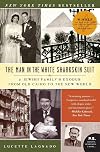
A fascinating portrait of what it was like to live in Cairo in the 1950's pre-Nasser and during Nasser's time if one was a well-to-do Syrian Jewish family. The book is a memoir by the author (a Wall St. Journal investigative reporter) of her father, an elegant though somewhat dissipated business man in Cairo whose source of income is not ever clear and who was, though always out at night dancing and having affairs, a pious man at heart. The young daughter adores her father who adores her and show more keeps him on a pedestal even though his patriarchal attitudes powerfully influence the family, leading to submission on his wife's part and rebellion from his oldest daughter. The focus of the story is on how this elegant man was broken by despair and an inability to accommodate when he was forced to emigrate first to Paris and then to America. Had he not fallen before he left and hurt himself so that walking was agony, had he been allowed to take more than 200 pounds for his entire family (not the art, jewels, and monies he had accrued), had people resettling refugees been more empathic, perhaps the family history would have turned out better. My two criticisms: there should have been more of the politics of the time reflected in the book (though I do know it was told through the eyes of a child who would not have understood) and in the American section, I was surprised that the author gave so little credit to her mother and seemed to continue to idolize her father, all this when she was mature enough to be more perceptive. show less
The Man in the White Sharkskin Suit: A Jewish Family's Exodus from Old Cairo to the New World (P.S.) by Lucette Lagnado
The Man in the White Sharkskin Suit is an extraordinarily moving and well-written memoir that speaks to the immigrant experience that built America. The focus is on author Lucette Lagnando’s family, particularly her father, Leon. Leon was a prosperous Cairo businessman. A lover of Cairo’s nightlife, Leon did not consider marriage until spying 20 year old Edith at an outdoor cafe in 1943.Within a few weeks, they become engaged, and wed shortly after.
Devout Jews, the Lagnado family lived show more in harmony with their Moslem and Christian neighbors in a spacious apartment on a bustling Cairo boulevard, Malaka Nazli. The Lagnado family has servants. The children attend the finest schools, and wear the finest clothes, and are often treated to excursions to Cairo’s most renowned cafes and pastry shops. The family vacations each year by the sea, and visits with their extended family are routine.
This magical life ends when Nasser comes to power, and the Jews of Egypt are forced to leave with only whatever clothing they can take-no money, no jewelry, nothing that would help them begin a new life. The family spends a year living in Paris, then comes to New York, all with the assistance of international refugee aid organizations. Eventually, the Lagnado family ended up in Bensonhurst, Brooklyn, amidst a small community of Egyptian Jews.
Over the years, the different family members react to their new circumstances in different ways. As Leon and Edith age and become more infirm, their children become more distant, and more American. Leon and Edith never really become American.
The Man in the White Sharkskin Suit is a love letter to a time gone by, and also a sad and realistic depiction of how immigrants become American. As all traces of their old life disappear, some become stronger, and other are destroyed.
I highly recommend this fine memoir, and look forward to reading more of Lucetter Lagnado’s work. show less
Devout Jews, the Lagnado family lived show more in harmony with their Moslem and Christian neighbors in a spacious apartment on a bustling Cairo boulevard, Malaka Nazli. The Lagnado family has servants. The children attend the finest schools, and wear the finest clothes, and are often treated to excursions to Cairo’s most renowned cafes and pastry shops. The family vacations each year by the sea, and visits with their extended family are routine.
This magical life ends when Nasser comes to power, and the Jews of Egypt are forced to leave with only whatever clothing they can take-no money, no jewelry, nothing that would help them begin a new life. The family spends a year living in Paris, then comes to New York, all with the assistance of international refugee aid organizations. Eventually, the Lagnado family ended up in Bensonhurst, Brooklyn, amidst a small community of Egyptian Jews.
Over the years, the different family members react to their new circumstances in different ways. As Leon and Edith age and become more infirm, their children become more distant, and more American. Leon and Edith never really become American.
The Man in the White Sharkskin Suit is a love letter to a time gone by, and also a sad and realistic depiction of how immigrants become American. As all traces of their old life disappear, some become stronger, and other are destroyed.
I highly recommend this fine memoir, and look forward to reading more of Lucetter Lagnado’s work. show less
Lists
Awards

You May Also Like


Associated Authors
Statistics
- Works
- 4
- Members
- 1,364
- Popularity
- #18,850
- Rating
- 3.8
- Reviews
- 43
- ISBNs
- 24
- Languages
- 5
- Favorited
- 1