
Ariel Sabar
Author of My Father's Paradise: A Son's Search for His Jewish Past in Kurdish Iraq
About the Author
Ariel Sabar, who was born in New York City, won the National Book Critics Circle Award, for his first book, My Father's Paradise. He is an award-winning former staff writer for the Baltimore Sun, Christian Science Monitor, and Providence Journal. His work has also appeared in the New York Times show more Magazine, Washington Monthly, and Boston Globe, among many other publications. He has lectured on creative writing at Brown, Georgetown, and The George Washington University. show less
Image credit: Andy Nelson
Works by Ariel Sabar
My Father's Paradise: A Son's Search for His Jewish Past in Kurdish Iraq (2008) 529 copies, 45 reviews
Heart of the City: Nine Stories of Love and Serendipity on the Streets of New York (2011) 50 copies, 2 reviews
Babam ve Ben 1 copy
Tagged
Common Knowledge
- Birthdate
- 1971
- Gender
- male
- Relationships
- Sabar, Yona (father)
- Short biography
- Ariel Sabar's first book won the 2008 National Book Critics Circle Award for Autobiography. His writing has appeared in the New York Times, the Times Sunday Magazine, Boston Globe, Washington Monthly, Mother Jones, and other publications. He is an award-winning former staff writer for the Baltimore Sun, Christian Science Monitor, and Providence (RI) Journal. He is a magna cum laude graduate of Brown University and teaches creative writing at The George Washington University. [from arielsabar.com]
- Nationality
- USA
- Birthplace
- New York, New York, USA
- Places of residence
- Washington, D.C., USA
- Associated Place (for map)
- USA
Members
Reviews

Veritas is an excellent example of investigative journalism centering on the now-infamous scrap of papyrus known as the "Gospel of Jesus' Wife". Despite the deliberately inflammatory title given to this forgery, and all the subsequent column inches it inspired as to whether the historical Jesus was married, Veritas isn't a pulpy, Da Vinci Code-esque read—if you go into this expecting breathless scandal, you will be disappointed. (Not to say that there isn't some salacious stuff in here, show more though. I'm wildly curious to know how many takes it took for the audiobook narrator to say "she launched their Yahoo discussion group, femalebarebackgangbangextreme, on January 27, 2001" without cracking up.) Ariel Sabar is much more interested in the causes, contexts, and consequences. But if you've got an interest in how a journalist pieces together a story, or in the psychology of why someone commits a con or willingly colludes in letting themselves be conned, I think you'll find this a fascinating read.
If you're reading this an academic who's in at least a related field, you will also get to read this on the level of appalled schadenfreude—knowing both just how much what Sabar describes is not at all what is supposed to happen, and how much actually solid, ethical academic work gets done outside of the Ivy League but will never get funding or awards or gullible coverage in the New York Times because it doesn't have the imprimatur of a big name university. I mean: boggle at the idea that in the late '90s you could get hired full prof at Harvard with one book! One book published at a press you co-founded! Shriek at an Ivy League professor saying she never thought a manuscript's provenance could be researched! Fire off appalled messages to friends in academia describing the apparent "peer review" process at a Harvard-edited journal and get responses saying "Are these people possessed?" show less
If you're reading this an academic who's in at least a related field, you will also get to read this on the level of appalled schadenfreude—knowing both just how much what Sabar describes is not at all what is supposed to happen, and how much actually solid, ethical academic work gets done outside of the Ivy League but will never get funding or awards or gullible coverage in the New York Times because it doesn't have the imprimatur of a big name university. I mean: boggle at the idea that in the late '90s you could get hired full prof at Harvard with one book! One book published at a press you co-founded! Shriek at an Ivy League professor saying she never thought a manuscript's provenance could be researched! Fire off appalled messages to friends in academia describing the apparent "peer review" process at a Harvard-edited journal and get responses saying "Are these people possessed?" show less
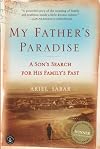
A compelling narrative that serves both to illuminate the world and experience of Iraqi Kurdish Jews, and the journey of one particular one (the author's father) from Kurdistan to Israel to Los Angeles, where he becomes an authority on the disappearing language of his boyhood. Ariel Sabar writes clearly and evocatively, whether it's outlining the complicated history of the region or reenacting scenes from his grandparents' and parents' lives. One only wishes that all sons and daughters could show more do as well with capturing the stories of the generations that came before. show less
Veritas in Latin translates as "truth". Sabar has written a detailed and fascinating book about how that was achieved in the case of a papyrus fragment that had a series of words that could be interpreted to suggest that Jesus was married (ala DaVinci Code -- a fun book, btw.). Sabar's story contains confirmation bias, hubris, amateur scholars v. professional scholars, and academic jealousies. Truths might take a while to get into the Ivory Tower but they do make it eventually.
The temptation show more to read a concept into something because it matches an agenda we already subscribe to is an overwhelming temptation. Karen King, esteemed professor in the Divinity School at Harvard, fell victim to a forged papyrus that could (! not necessarily) have suggested Jesus had a wife. (That it's much more likely he was gay, given his predilection for hanging out with guys, has been suspected in other quarters.) Nevertheless, this scrap of papyrus was a dream come true for King who had argued the Church's position on women was all wrong.
The story is fascinating. Two amateur Coptic scholars, one an atheist, when they had a chance to look at the fragment, realized the translation and wording was lifted verbatim from the Gospel of Thomas and the translation of the word for "my" most likely had a different meaning anyway. Other professional scholars also revealed doubts although their argument that the grammar was inappropriate for the time period didn't convince me. All you have to do is watch television or listen to conversations on the street and you will quickly realize how perverted colloquial grammar can become. Words like notorious, infamous, and famous have all become synonymous, ruining any former subtleties, not to mention confusion of ran and run, nor the infamous "he gave it to you and I" which sends shivers down my Strunk and White. (If you don't know what Strunk and White is, then you're part of the problem.) Not to mention the total destruction of the past tense by the historical present. End of rant.
Sabar had followed the story from the beginning and it was his article in the Atlantic that reopened the furor. He had taken the time to track down the origin of the fragment and doggedly sleuthed out the seller of the fragment, something King most assuredly should have done.
Along the way, Sabar discusses the history of our attitudes toward marriage and Augustine's obsession with sex as well as the non-canonical Gospels. It all provides very appropriate context. In the end I don't damn King as much as others have in the media. We ALL suffer from confirmation bias and her case is simply confirmation of how powerful it can be. (Puns intended.) show less
The temptation show more to read a concept into something because it matches an agenda we already subscribe to is an overwhelming temptation. Karen King, esteemed professor in the Divinity School at Harvard, fell victim to a forged papyrus that could (! not necessarily) have suggested Jesus had a wife. (That it's much more likely he was gay, given his predilection for hanging out with guys, has been suspected in other quarters.) Nevertheless, this scrap of papyrus was a dream come true for King who had argued the Church's position on women was all wrong.
The story is fascinating. Two amateur Coptic scholars, one an atheist, when they had a chance to look at the fragment, realized the translation and wording was lifted verbatim from the Gospel of Thomas and the translation of the word for "my" most likely had a different meaning anyway. Other professional scholars also revealed doubts although their argument that the grammar was inappropriate for the time period didn't convince me. All you have to do is watch television or listen to conversations on the street and you will quickly realize how perverted colloquial grammar can become. Words like notorious, infamous, and famous have all become synonymous, ruining any former subtleties, not to mention confusion of ran and run, nor the infamous "he gave it to you and I" which sends shivers down my Strunk and White. (If you don't know what Strunk and White is, then you're part of the problem.) Not to mention the total destruction of the past tense by the historical present. End of rant.
Sabar had followed the story from the beginning and it was his article in the Atlantic that reopened the furor. He had taken the time to track down the origin of the fragment and doggedly sleuthed out the seller of the fragment, something King most assuredly should have done.
Along the way, Sabar discusses the history of our attitudes toward marriage and Augustine's obsession with sex as well as the non-canonical Gospels. It all provides very appropriate context. In the end I don't damn King as much as others have in the media. We ALL suffer from confirmation bias and her case is simply confirmation of how powerful it can be. (Puns intended.) show less
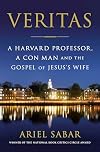
A stupendous book, building on Sabar's Atlantic article on the same topic. I was riveted from first to last. Along with a deep dive into the nature of the forgery and its perpetrator, Sabar also provides as readable an account of the gnoticism and the "gnostic gospels" I've read, too.
Lists
Awards


You May Also Like


Associated Authors
Statistics
- Works
- 5
- Members
- 817
- Popularity
- #31,213
- Rating
- 4.2
- Reviews
- 54
- ISBNs
- 25
- Languages
- 2
- Favorited
- 2
