
Becky Cooper
Author of We Keep the Dead Close: A Murder at Harvard and a Half Century of Silence
About the Author
Image credit: via Amazon.com
Works by Becky Cooper
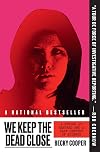
We Keep the Dead Close: A Murder at Harvard and a Half Century of Silence (2020) 678 copies, 24 reviews
Tagged
Common Knowledge
- Gender
- female
- Education
- Harvard University
- Occupations
- journalist
- Agent
- Marya Spence
- Nationality
- USA
- Birthplace
- New York, New York, USA
- Associated Place (for map)
- New York, USA
Members
Reviews
A refreshingly adult, self-aware, and thorough take on the true crime genre, which is often anything but. Cooper's narrative, and metanarrative, examines the unsolved 1969 murder of Jane Britton, a Harvard student found dead in her university-adjacent apartment. As might be expected, Cooper takes a deep dive into materials related to this case, both the official documents and the community of amateur sleuths who, for better or for worse, kept the investigation alive on online forums. The show more book also suggests that she's a terrific interviewer, the kind that can get her subjects to open up about the sort of things that they'd rather not talk about under most conditions. "We Keep the Dead Close" is also good about evidentiary rules and the intricacies of police bureaucracy. Because my parents come from Mass, I knew that traditional ways of doing everything tend to hang on a bit longer there. But Cooper shows that this resistance to change has made it more difficult to request documents, re-open investigations, and, in certain cases, examine criminal evidence. Most impressive of all, perhaps, the author makes this situation sound genuinely interesting.
But "We Keep the Dead Close" is also unique, in my experience, because the author readily admits that she became obsessed with Jane Britton's case while she wrote the book. She interviewed her surviving family members, friends, classmates, teachers -- anyone who might have had any connection with her. She read her letters and her papers. She went through archives looking for photos of her. She tells us, at one point, that she could feel the line that separated her from Jane dissolve to a mere fiber when her research was at its most intense. "We Keep the Dead Close" might be called an act of writing-as-resurrection: the reader witnesses someone who was nearly forgotten, save for a few stray rumors among Harvard undergrads, being, in a sense, brought back to life. Cooper spent years researching and writing about the Britton case. It often seems like a deliberate struggle against our tendency to forget problems we can't easily solve.
Lastly, "We Keep the Dead Close" is a sort of meditation on rumor and stereotype. I enjoyed learning a bit more about archeology when I read this one, but one of the things I learned about it is that this field tends to attract more than its share of strange characters. Throughout most of the book, there are three archeology professors who seem likely suspects for Jane's murder. But Cooper's very good at keeping her narrative from tilting over into unwarranted certainty: even when something significant is revealed about Jane's relationship with one of them, she's careful not to declare one of her suspects guilty, which is more than can be said for some of the online detectives she keeps up with. Her book is, in a sense, an examination of the space that separates the truth from the sorts of narratives that we expect — or prefer — to hear. An excellent example of how far the true crime genre can stretch, and how many dimensions of human experience it can encompass. Highly recommended. show less
But "We Keep the Dead Close" is also unique, in my experience, because the author readily admits that she became obsessed with Jane Britton's case while she wrote the book. She interviewed her surviving family members, friends, classmates, teachers -- anyone who might have had any connection with her. She read her letters and her papers. She went through archives looking for photos of her. She tells us, at one point, that she could feel the line that separated her from Jane dissolve to a mere fiber when her research was at its most intense. "We Keep the Dead Close" might be called an act of writing-as-resurrection: the reader witnesses someone who was nearly forgotten, save for a few stray rumors among Harvard undergrads, being, in a sense, brought back to life. Cooper spent years researching and writing about the Britton case. It often seems like a deliberate struggle against our tendency to forget problems we can't easily solve.
Lastly, "We Keep the Dead Close" is a sort of meditation on rumor and stereotype. I enjoyed learning a bit more about archeology when I read this one, but one of the things I learned about it is that this field tends to attract more than its share of strange characters. Throughout most of the book, there are three archeology professors who seem likely suspects for Jane's murder. But Cooper's very good at keeping her narrative from tilting over into unwarranted certainty: even when something significant is revealed about Jane's relationship with one of them, she's careful not to declare one of her suspects guilty, which is more than can be said for some of the online detectives she keeps up with. Her book is, in a sense, an examination of the space that separates the truth from the sorts of narratives that we expect — or prefer — to hear. An excellent example of how far the true crime genre can stretch, and how many dimensions of human experience it can encompass. Highly recommended. show less
The brutal murder of Jane Britton, a Harvard archaeology graduate student, shook the university's campus in 1969. Ultimately, the ensuing investigation went cold and the case remained unsolved. Learning about the Britton case via school lore and gossip during her time at Harvard, author Becky Cooper begins an independent investigation, interviewing Britton's family, friends, classmates and professors in search of clues or slants that could shed new light on the 50-year-old, unsolved show more murder.
Cooper certainly put an incredible amount of time and research into this book, tracking down the many, many people who knew Britton and eliciting memories and information from them, painting an intriguing picture of Britton's life and the horrifying circumstances of her death. However, the premise of the book felt to me like a bait and switch. If this were a mystery novel it would break one of the core rules of the genre: the criminal cannot be just some rando previously unmentioned in the story. While I'm fully aware that this isn't a mystery novel, it was nevertheless disappointing, after all that buildup and investment into all of these potential suspects and being inundated with details about them, that perpetrator was none of the focus characters. (Or was it? Given what we know about profiling and forensic fallibility, am I convinced that the DA didn't just want to tie it up neatly and finally close the case? We'll never know now.) For this reader, the conclusion of this case makes this very long book less worthy of publishing, though I sort of understand Cooper's motivation to do so as she had invested years in the story and obviously couldn't control the outcome. She wouldn't have wanted her work to go for naught, but in the end it makes for a quite unsatisfying ending. show less
Cooper certainly put an incredible amount of time and research into this book, tracking down the many, many people who knew Britton and eliciting memories and information from them, painting an intriguing picture of Britton's life and the horrifying circumstances of her death. However, the premise of the book felt to me like a bait and switch. If this were a mystery novel it would break one of the core rules of the genre: the criminal cannot be just some rando previously unmentioned in the story. While I'm fully aware that this isn't a mystery novel, it was nevertheless disappointing, after all that buildup and investment into all of these potential suspects and being inundated with details about them, that perpetrator was none of the focus characters. (Or was it? Given what we know about profiling and forensic fallibility, am I convinced that the DA didn't just want to tie it up neatly and finally close the case? We'll never know now.) For this reader, the conclusion of this case makes this very long book less worthy of publishing, though I sort of understand Cooper's motivation to do so as she had invested years in the story and obviously couldn't control the outcome. She wouldn't have wanted her work to go for naught, but in the end it makes for a quite unsatisfying ending. show less
“There are no true stories; there are only facts, and the stories we tell ourselves about those facts.”
In January 1969, Jane Britton, an ambitious 23-year-old graduate student in Harvard's Anthropology Department would be found brutally murdered in her Cambridge apartment. The murder was never solved. Forty years later, the author, an undergrad at Harvard, hears the story of Jane's killing and begins to do her own investigating. She discovers that Jane was having an affair with a show more professor there and he may have bludgeoned her to death. Cooper also uncovers misogyny and other unsettling traditions, that were pervasive at that revered institution.
Cooper planting herself in this story, really adds an interesting layer to this solid true crime tale. The writing is good and it feels meticulously researched. My only issue, is that I think it could have been a much tighter and leaner narrative. show less
In January 1969, Jane Britton, an ambitious 23-year-old graduate student in Harvard's Anthropology Department would be found brutally murdered in her Cambridge apartment. The murder was never solved. Forty years later, the author, an undergrad at Harvard, hears the story of Jane's killing and begins to do her own investigating. She discovers that Jane was having an affair with a show more professor there and he may have bludgeoned her to death. Cooper also uncovers misogyny and other unsettling traditions, that were pervasive at that revered institution.
Cooper planting herself in this story, really adds an interesting layer to this solid true crime tale. The writing is good and it feels meticulously researched. My only issue, is that I think it could have been a much tighter and leaner narrative. show less
A very meta true crime/memoir—the crime being the 50-year-old murder of a young Harvard archeology student, and the meta part the author's nuanced interrogation of her own motives, assumptions, and context for pursuing the case. As Cooper digs deeper into the murdered girl's story she turns up any number of loose ends, dead ends, and a large cast of tangential characters whose stories become intertwined with hers. I'm dancing around the story itself because it is, at bottom, a crime story show more that has a resolution... or does it? And I wouldn't want to spoil that for anyone. But it's the many ripples and reverberations set off by the murder that make up the substance of Cooper's story, and keep it weird and slightly off-kilter. This is a bit of an unclassifiable book, which is something I liked very much. show less
Lists
True Crime (1)
Awards


You May Also Like


Statistics
- Works
- 2
- Members
- 773
- Popularity
- #32,917
- Rating
- 3.7
- Reviews
- 24
- ISBNs
- 16
- Languages
- 1