

Robert A. M. Stern (1939–2025)
Author of New York 1960: Architecture and Urbanism Between the Second World War and the Bicentennial
About the Author
Works by Robert A. M. Stern
New York 1960: Architecture and Urbanism Between the Second World War and the Bicentennial (1995) 180 copies, 1 review
New York 2000: Architecture and Urbanism Between the Bicentennial and the Millennium (2006) 86 copies
Re-Reading Perspecta: The First Fifty Years of the Yale Architectural Journal (2005) 22 copies, 1 review
Designs for Learning: College and University Buildings by Robert A.M. Stern Architects (2017) 17 copies
New York 2020: Architecture and Urbanism at the Beginning of a New Century (2025) 13 copies, 1 review
Associated Works
Manhattan Water-Bound: Manhattan's Waterfront from the Seventeenth Century to the Present (1987) — Foreword, some editions — 21 copies
Jackson Heights, a garden in the city: The history of America's first garden and cooperative apartment community (1998) — Introduction — 9 copies
Tagged
Common Knowledge
- Canonical name
- Stern, Robert A. M.
- Legal name
- Stern, Robert Arthur Morton
- Birthdate
- 1939-05-23
- Date of death
- 2025-11-27
- Gender
- male
- Education
- Columbia University (BA|1960)
Yale University (M.Arch|1965) - Occupations
- architect
professor - Organizations
- Columbia University
Yale University (Dean, 1998-2016)
Robert A. M. Stern Architects - Awards and honors
- Vincent Scully Award (2008)
Edmund N. Bacon Prize (2006)
Driehaus Prize for Classical Architecture (2011)
Topaz Medallion for Architectural Education (2017)
Athena Award (2007)
American Academy of Arts & Sciences (2007) (show all 8)
American Academy of Arts and Letters (2011)
Fellow, American Institute of Architects - Nationality
- USA
- Birthplace
- New York, New York, USA
- Places of residence
- New York, New York, USA
- Associated Place (for map)
- New York, New York, USA
Members
Reviews

The end of July in Chicago means the Newberry Book Fair at the Newberry Library, which I would raid every year for obscure and unexpected donated books; it's something I have missed since moving to NYC, which doesn't appear to have a similar fair. One year an architect seemed to have donated his whole library to Newberry, and one of the many titles I picked up that year was this issue of A+U from the glory days of Postmodernism. The XL issue is packed with architects both well known – show more Stern of course, Michael Graves, Venturi, Rauch and Scott Brown, Arquitectonica, Charles W. Moore, even Frank Gehry – and a lot that time has forgotten. As I noted last year in a blog post on old publications (https://archidose.blogspot.com/2013/01/on-value-of-old-publications.html), the issue is more and more valuable as Postmodernism is being reappraised, even though I still don't like what the movement produced. show less
New York 1960: Architecture and Urbanism Between the Second World War and the Bicentennial by Robert A. M. Stern

This is the fourth of five — and potentially six — books in a series on New York architecture and urbanism by the prolific author, educator, and writer Robert A.M. Stern. The other titles include 1880, 1900, 1930, 2000, and a planned 2020. 1960 is the first one I picked up, while in St. Louis for the weekend about 20 years ago. When I was writing my Guide to Contemporary New York City Architecture, this book and 2000, which I referenced at the library at the time, were indispensable. The show more more I learn about New York City architecture, such as with my walking tours and a book on them that I'm writing, the more I want to complete the series in my library. These are not books to be read cover to cover; they're too long, with the introductory essays the length of a short book in and of themselves. But if I ever want to gain some decent knowledge on a particular project, complete with references and the opinions of critics, these books cannot be matched.
An anecdote about 1960 in particular. Recently I wanted to learn about West Village Housing, the low-rise project from the 1960s and 70s that sits on the land vacated by the High Line after its southern section was torn down. Richard Plunz's excellent A History of Housing in New York City was helpful, as was Robert Kanigel's biography of Jane Jacobs, since she was instrumental in getting the project realized as low-rise housing fitted to the vacated land rather than as high-rise housing on cleared blocks, as was the norm at the time. Seeing the project now, it doesn't look like anything special, especially given its sparse, fairly depressing architecture. But the history, which I won't go into here, is fascinating, and explains how something promising ended up compromised; and turns out the best source for it is New York 1960. It delves into things other accounts gloss over, and its references led me to original sources and critiques written when it was completed.
Minutiae like this is commendable for a (pseudo-)historian like me, but it's also the book's biggest problem (hence not a five-star review); there's just too much packed into one book. (Here and there I came across buildings treated at length – buildings I didn't find so deserving.) Perhaps Stern and his co-authors should have broken their ambitious project into decade-long books to make them a more manageable size. As is, they are generational swaths about the physical evolution of one of the few cities worth such an undertaking. show less
An anecdote about 1960 in particular. Recently I wanted to learn about West Village Housing, the low-rise project from the 1960s and 70s that sits on the land vacated by the High Line after its southern section was torn down. Richard Plunz's excellent A History of Housing in New York City was helpful, as was Robert Kanigel's biography of Jane Jacobs, since she was instrumental in getting the project realized as low-rise housing fitted to the vacated land rather than as high-rise housing on cleared blocks, as was the norm at the time. Seeing the project now, it doesn't look like anything special, especially given its sparse, fairly depressing architecture. But the history, which I won't go into here, is fascinating, and explains how something promising ended up compromised; and turns out the best source for it is New York 1960. It delves into things other accounts gloss over, and its references led me to original sources and critiques written when it was completed.
Minutiae like this is commendable for a (pseudo-)historian like me, but it's also the book's biggest problem (hence not a five-star review); there's just too much packed into one book. (Here and there I came across buildings treated at length – buildings I didn't find so deserving.) Perhaps Stern and his co-authors should have broken their ambitious project into decade-long books to make them a more manageable size. As is, they are generational swaths about the physical evolution of one of the few cities worth such an undertaking. show less
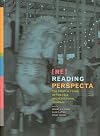
This is a massive book from 2005 with excerpts from the first 30 issues of "Perspecta," the journal edited by students at Yale School of Architecture. The book is massive because it adopts the same folio paper size as the journal itself, and because the importance of the contributions collected in the reader is unmatched by any other architectural publication with such longevity. "Perspecta" started in 1952 under chair George Howe, but it is most famous for the 9/10 double issue edited by show more Robert A. M. Stern in 1965, the last year that Paul Rudolph served as chair. I have that double issue that is coveted for the excerpt from Robert Venturi’s then-forthcoming "Complexity and Contradiction in Architecture" and Charles Moore’s “You Have to Pay for the Public Life.” Unfortunately, Stern and the other editors of "Re-Reading Perspecta" (Caroline Picard and Alan Plattus) opted not to carry the page layout and design from the original issues to the reader; this provides a consistency across the hefty book’s 828 pages, but it pushes the images into a narrow 2-inch band across the bottom of the 12-inch tall pages, clearly an effort at maximizing the book’s contents while keeping it below a thousand pages. This means readers will not see, among other things, the red Disneyland gatefold map that was part of Moore’s essay — one example of how an original exceeds its copy. show less

Awards


You May Also Like


Associated Authors
Statistics
- Works
- 51
- Also by
- 4
- Members
- 1,737
- Popularity
- #14,806
- Rating
- 4.1
- Reviews
- 7
- ISBNs
- 57
- Languages
- 1
- Favorited
- 2