
Bruce Brooks Pfeiffer (1930–2017)
Author of Frank Lloyd Wright
About the Author
Bruce Brooks Pfeiffer is Director of the Frank Lloyd Wright Archives at the Frank Lloyd Wright Foundation, Taliesin West, in Scottsdale, AZ (Bowker Author Biography)
Image credit: Bruce Brooks Pfeiffer
Series
Works by Bruce Brooks Pfeiffer
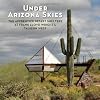
Under Arizona Skies: The Apprentice Desert Shelters at Frank Lloyd Wright's Taliesin West (2011) 30 copies, 18 reviews
Frank Lloyd Wright on Architecture, Nature, and the Human Spirit: A Collection of Quotations (2011) 29 copies
FRANK LLOYD WRIGHT MONOGRAPH 1924-1936. Volume 5 in the Complete Works of Frank Lloyd Wright Series (1985) 21 copies, 1 review
FRANK LLOYD WRIGHT PRELIMINARY STUDIES 1889-1916. Volume 9 in the Complete Works of Frank Lloyd Wright Series (1985) 19 copies
FRANK LLOYD WRIGHT MONOGRAPH 1914-1923. Volume 4 in the Complete Works of Frank Lloyd Wright Series (1985) 17 copies
The Wright Letters Box Set: Letters to Architects, Letters to Clients, Letters to Apprentices (3 volumes) (1982) 1 copy
FRANK LLOYD WRIGHT: Letters to Architects. Selected and with commentary by Bruce Brooks Pfeiffer. 1 copy
Frank Lloid Wright 1867-1959 1 copy
Wright 1 copy
Associated Works
Tagged
Common Knowledge
- Canonical name
- Pfeiffer, Bruce Brooks
- Birthdate
- 1930-08-04
- Date of death
- 2017-12-31
- Gender
- male
- Education
- École nationale des Beaux-Arts de Paris
Taliesin West - Occupations
- Director of The Frank Lloyd Wright Archives
architect
curatorial consultant - Organizations
- Frank Lloyd Wright Archives
Frank Lloyd Wright Foundation
Society of Architectural Historians - Awards and honors
- Wright Spirit Award (1997)
- Short biography
- Bruce Brooks Pfeiffer a fait ses études à l'École nationale des Beaux-Arts de Paris et est devenu en 1949 élève de Frank Lloyd Wright, au sein de la Communauté Taliesin.
Il est directeur des Archives Frank Lloyd Wright de Scottsdale, Arizona, curateur de la fondation Frank Lloyd Wright et auteur de nombreux ouvrages sur la vie et l'œuvre de Wright. - Nationality
- USA
- Birthplace
- South Natick, Massachusetts, USA
- Places of residence
- Scottsdale, Arizona, USA
- Place of death
- Scottsdale, Arizona, USA
- Associated Place (for map)
- Arizona, USA
Members
Discussions
Under Arizona Skies in Reviews of Early Reviewers Books (November 2011)
Reviews
Under Arizona Skies: The Apprentice Desert Shelters at Frank Lloyd Wright's Taliesin West by Bruce Brooks Pfeiffer
I hate to sound like a cheap advert, but the first thing that strikes the reader about this book is that its publishers care about it. It is a love child, not something thrown together for monetary gain. The book comes shrink wrapped; now, I know that some people might chide Pomegranate for wasting the earth's resources, but I got a pristine copy, not something with bashed corners and marks from being in a dusty corner. This is a book that deserves to be around for a hundred years, not read show more and discarded.
The feeling of quality continues when one examines the contents. The book is about Frank Lloyd Wright's Taliesin West home which he built with the express design of using the desert as a training ground for architects. The students initially live in tents and, during their stay, build living accommodation in the desert. As the book points out, this makes the student perform a triumvirate of roles; designer, builder and client. Surely, there can be little better way to become an architect: how many times have you looked at some monstrosity and thought how different it might have looked, were the designer to have lived therein?
The book is lavishly illustrated with colour pictures, anyone of which could be framed and hung as a work of art. A sketch design and a taught narrative give the reader all that they need to know about each of the dwellings.
This is asuperb book and I have decided that, were I to be lucky enough to win the lottery (and this would take considerable luck, because I do not enter same!), the first thing that I would buy is not a new car, a foreign holiday or jewellery, but the entire back catalogue of these wonderful tomes (and NO, I am not getting paid to say that). It is a pleasure to handle an object which must give so much pride to everyone involved in its production. I need six, possibly seven stars to do it justice. show less
The feeling of quality continues when one examines the contents. The book is about Frank Lloyd Wright's Taliesin West home which he built with the express design of using the desert as a training ground for architects. The students initially live in tents and, during their stay, build living accommodation in the desert. As the book points out, this makes the student perform a triumvirate of roles; designer, builder and client. Surely, there can be little better way to become an architect: how many times have you looked at some monstrosity and thought how different it might have looked, were the designer to have lived therein?
The book is lavishly illustrated with colour pictures, anyone of which could be framed and hung as a work of art. A sketch design and a taught narrative give the reader all that they need to know about each of the dwellings.
This is asuperb book and I have decided that, were I to be lucky enough to win the lottery (and this would take considerable luck, because I do not enter same!), the first thing that I would buy is not a new car, a foreign holiday or jewellery, but the entire back catalogue of these wonderful tomes (and NO, I am not getting paid to say that). It is a pleasure to handle an object which must give so much pride to everyone involved in its production. I need six, possibly seven stars to do it justice. show less
 This review was written for LibraryThing Early Reviewers.
If there is a heaven, then Frank Lloyd Wright is busy designing homes for the god and angels. It constantly amazes me that this man who was born in the heart of Wisconsin could have designed what can only be called Livable Art.
He was the first architect to take the location of the building into consideration while he designed it. Wright not only designed the house, but he also mandated what kind of furniture should be in it and then realized that mandate by designing it. He would have been show more comfortable in a loft since his houses were very often built in such a way that the walls created all the separation needed. Living rooms merged with bedrooms, and dining rooms segued into living rooms.
When we look through his designs (both those that were built and those for which the engineering has not yet caught up), we see motifs and construction details that are now common, but did not exist before Wright picked up his pen. And let us also remember that, when a great earthquake destroyed practically every building in Japan in the early 1920s, his hotel remained standing. This is an amazing feat given that research into making buildings resistant to moving earth did not begin until 30 years after the architect died.
I live in Madison, Wisconsin, less than 40 miles from where he spent his childhood and to which he returned as a husband and father. He lost his family near here, but changed that grief into new designs. He legacy still lives in the first Usonian church ever created -- a place that makes one feel tiny in contrast to the god worshiped there. And many other buildings, designed by his followers and students dot the city.
This book doesn't look at all of Wright's designs, only at those which the author considers to be Wright's masterworks.But it took 300 pages to cover this small number of his designs. Paging through it, looking at the beauty he created, can refresh one's head and soul. show less
He was the first architect to take the location of the building into consideration while he designed it. Wright not only designed the house, but he also mandated what kind of furniture should be in it and then realized that mandate by designing it. He would have been show more comfortable in a loft since his houses were very often built in such a way that the walls created all the separation needed. Living rooms merged with bedrooms, and dining rooms segued into living rooms.
When we look through his designs (both those that were built and those for which the engineering has not yet caught up), we see motifs and construction details that are now common, but did not exist before Wright picked up his pen. And let us also remember that, when a great earthquake destroyed practically every building in Japan in the early 1920s, his hotel remained standing. This is an amazing feat given that research into making buildings resistant to moving earth did not begin until 30 years after the architect died.
I live in Madison, Wisconsin, less than 40 miles from where he spent his childhood and to which he returned as a husband and father. He lost his family near here, but changed that grief into new designs. He legacy still lives in the first Usonian church ever created -- a place that makes one feel tiny in contrast to the god worshiped there. And many other buildings, designed by his followers and students dot the city.
This book doesn't look at all of Wright's designs, only at those which the author considers to be Wright's masterworks.But it took 300 pages to cover this small number of his designs. Paging through it, looking at the beauty he created, can refresh one's head and soul. show less
Under Arizona Skies: The Apprentice Desert Shelters at Frank Lloyd Wright's Taliesin West by Bruce Brooks Pfeiffer
Under Arizona Skies is a delightful little book about self-built student structures at Taliesin West, architect Frank Lloyd Wright's home and school located in northeast Scottsdale, AZ. Compiled and written by Bruce Brooks Pfeiffer, Director of Archives, and Dean Victor E. Sidy, the little volume, barely seven inches square (and one quarter inch thick ... a full half-inch if you include hardcover thickness), the book contains a total of 72 pages, 10 only of which are of text. This slim show more volume is primarily a picture-book, which is very nearly ideal, as it's the student structures which we wish to see and explore.
The several structures illustrated here are of astonishing variety, considering their main purpose is a simple one: to provide a place to toss a sleeping bag at night, as the apprentices live and work in the main campus during the day. An outgrowth of Frank Lloyd Wright's desert winter camp, the student shelters began as simple four-sided commercially produced sheepherder's tents, in this case originally erected on ten-foot square concrete slabs. Over the years (nearly 75 years, now, since 1938) the structures have evolved into something quite different: deliberate, creative essays and explorations in the art and science of site, structure, space, and materials: raw, student solutions to problems peculiar to their open desert setting, everything disciplined primarily by the individual apprentice's often strictly limited budget.
One problem in the choice of lodging, which most Taliesin apprentices have to face at one time or other, is the existence of desert wildlife, such as the various species of rattlesnake, but, especially, the native, pesky, pack-rat (the Arizona woodrat ... Neotoma Devis), which creature has the uncanny habit of taking advantage of every new opportunity. More than once has a student arrived at his "tent" at night, only to be painfully impaled on a ball of cholla, carefully placed in a quiet corner by these intrepid intruders.
Recently students have devised structures meant to minimize or eliminate this hazard ... witness the sheepherder's tent pictured on the cover, which is hung over the desert from a tall steel support embedded deep within a concrete bastion. Other structures have been built up off the desert floor. Indeed, one structure spans a deep desert wash ... not once, but twice!
All this is well-enough, as the process of design and construction of student housing has been somewhat systematized since the early days, when the rule was the simple, inexpensive, 4-sided tent, most of which were constructed at a time when few apprentices had access to or took advantage of outside resources. Several new advantages outlined in the text have helped give rise to strikingly new, clever and unique structures, some of which are surprisingly sophisticated and well-built. It's not certain, however, that all of these new structures properly balance the various limitations which gave rise to form. Though all designs are worthy of praise, one or two seem to swing just a bit far out in "left-field". But never mind ... as the book illustrates ... the only "tent" which has prevailed from first to last are those of the sheepherder.
Plans help illustrate the structures. However, as they are apparently computer-generated, these plans and elevation lack a certain clarity. It's sometimes difficult to connect line to form and photograph. The text itself is cut to the bone ... which is surprising, as an earlier, far more informative version of this subject was published in 2007 in the Taliesin Quarterly: Spring 2007, Volume 18, No.2. The reader can only assume the publisher's rigid format dictated the compass of the book .
It should be noted that during the mid-fifties Wright, himself, designed an apprentice tent in the form of a tetrahedron ... a three-walled "tentrahedron" with a built in canvas floor. Ten-feet in length on each of its six sides, this tent could be completely zipped-up to prevent the intrusion of unwanted creatures. Unfortunately, as the years passed, this unique one-of-a-kind design became more and more expensive to produce, and no more than two were ever constructed. Though the photo of one of Wright's tents is not identified in the book, an early version of the "tentrahedon" is pictured at the lower right of page 9, while a simple plan showing their layout, complete with terraces, is illustrated on page 16.
Wright frequently devised new forms for living, and clients often faced the problem of hauling their old furniture into an uncompromising structure of uncommon geometric shape ... circle, triangle, hexagon, and the like, and the disparity between the two competing forms ... structure and furniture ... could often be jarring, which prompted Wright to design much of his own furniture.
Here a confession: For a number of years I had the privilege of calling one of Wright's 3-walled tents "home". It might be instructive for me to briefly discuss the problem of living, or sleeping, at least, in a small, triangular tent. At the time the other inhabitant of a similar 3-walled structure had built himself a purely conventional rectangular bed-frame, which he pushed against the far wall of his tent. His solution seemed to me a somewhat clumsy compromise, so I sat down at my draughting board, penciled in the plan of my new tent, then struck a straight line from one of the three corners to the middle of the opposite side, which formed two identically sized right-triangles.
I then drew to scale a 4 x 8 sheet of 3/4" plywood, with the intent of cutting the sheet to fit into one of the right-triangles ... the one opposite the entrance, which bisected one triangular wall. Of course the plywood was not large enough to fill the entire span, but there was just enough "waste" to assemble two small triangles to fill in the missing spaces, both of which (one, an equilateral triangle at the far corner), served as small tables. Raised up off the floor on 2 x 4's this sleeping platform seemed to me to be far more appropriate than that of the conventional rectangle, and, as the platform was ten feet long, the odd shape was no problem, ergonomically. With the canvas door open, the complete ensemble "looked" much more appropriate. It was simple and direct, with each part organically related to Wright's basic "idea". A good lesson in design. I've never lived quite so grandly. show less
The several structures illustrated here are of astonishing variety, considering their main purpose is a simple one: to provide a place to toss a sleeping bag at night, as the apprentices live and work in the main campus during the day. An outgrowth of Frank Lloyd Wright's desert winter camp, the student shelters began as simple four-sided commercially produced sheepherder's tents, in this case originally erected on ten-foot square concrete slabs. Over the years (nearly 75 years, now, since 1938) the structures have evolved into something quite different: deliberate, creative essays and explorations in the art and science of site, structure, space, and materials: raw, student solutions to problems peculiar to their open desert setting, everything disciplined primarily by the individual apprentice's often strictly limited budget.
One problem in the choice of lodging, which most Taliesin apprentices have to face at one time or other, is the existence of desert wildlife, such as the various species of rattlesnake, but, especially, the native, pesky, pack-rat (the Arizona woodrat ... Neotoma Devis), which creature has the uncanny habit of taking advantage of every new opportunity. More than once has a student arrived at his "tent" at night, only to be painfully impaled on a ball of cholla, carefully placed in a quiet corner by these intrepid intruders.
Recently students have devised structures meant to minimize or eliminate this hazard ... witness the sheepherder's tent pictured on the cover, which is hung over the desert from a tall steel support embedded deep within a concrete bastion. Other structures have been built up off the desert floor. Indeed, one structure spans a deep desert wash ... not once, but twice!
All this is well-enough, as the process of design and construction of student housing has been somewhat systematized since the early days, when the rule was the simple, inexpensive, 4-sided tent, most of which were constructed at a time when few apprentices had access to or took advantage of outside resources. Several new advantages outlined in the text have helped give rise to strikingly new, clever and unique structures, some of which are surprisingly sophisticated and well-built. It's not certain, however, that all of these new structures properly balance the various limitations which gave rise to form. Though all designs are worthy of praise, one or two seem to swing just a bit far out in "left-field". But never mind ... as the book illustrates ... the only "tent" which has prevailed from first to last are those of the sheepherder.
Plans help illustrate the structures. However, as they are apparently computer-generated, these plans and elevation lack a certain clarity. It's sometimes difficult to connect line to form and photograph. The text itself is cut to the bone ... which is surprising, as an earlier, far more informative version of this subject was published in 2007 in the Taliesin Quarterly: Spring 2007, Volume 18, No.2. The reader can only assume the publisher's rigid format dictated the compass of the book .
It should be noted that during the mid-fifties Wright, himself, designed an apprentice tent in the form of a tetrahedron ... a three-walled "tentrahedron" with a built in canvas floor. Ten-feet in length on each of its six sides, this tent could be completely zipped-up to prevent the intrusion of unwanted creatures. Unfortunately, as the years passed, this unique one-of-a-kind design became more and more expensive to produce, and no more than two were ever constructed. Though the photo of one of Wright's tents is not identified in the book, an early version of the "tentrahedon" is pictured at the lower right of page 9, while a simple plan showing their layout, complete with terraces, is illustrated on page 16.
Wright frequently devised new forms for living, and clients often faced the problem of hauling their old furniture into an uncompromising structure of uncommon geometric shape ... circle, triangle, hexagon, and the like, and the disparity between the two competing forms ... structure and furniture ... could often be jarring, which prompted Wright to design much of his own furniture.
Here a confession: For a number of years I had the privilege of calling one of Wright's 3-walled tents "home". It might be instructive for me to briefly discuss the problem of living, or sleeping, at least, in a small, triangular tent. At the time the other inhabitant of a similar 3-walled structure had built himself a purely conventional rectangular bed-frame, which he pushed against the far wall of his tent. His solution seemed to me a somewhat clumsy compromise, so I sat down at my draughting board, penciled in the plan of my new tent, then struck a straight line from one of the three corners to the middle of the opposite side, which formed two identically sized right-triangles.
I then drew to scale a 4 x 8 sheet of 3/4" plywood, with the intent of cutting the sheet to fit into one of the right-triangles ... the one opposite the entrance, which bisected one triangular wall. Of course the plywood was not large enough to fill the entire span, but there was just enough "waste" to assemble two small triangles to fill in the missing spaces, both of which (one, an equilateral triangle at the far corner), served as small tables. Raised up off the floor on 2 x 4's this sleeping platform seemed to me to be far more appropriate than that of the conventional rectangle, and, as the platform was ten feet long, the odd shape was no problem, ergonomically. With the canvas door open, the complete ensemble "looked" much more appropriate. It was simple and direct, with each part organically related to Wright's basic "idea". A good lesson in design. I've never lived quite so grandly. show less
This review was written for LibraryThing Early Reviewers.Under Arizona Skies: The Apprentice Desert Shelters at Frank Lloyd Wright’s Taliesin West by Bruce Brooks Pfeiffer
This lovely, small book focuses on one of the more interesting aspects of a Taliesin education: Virtually all students build their own housing out in the desert surrounding the campus. These small structures - considered far preferable to dwelling in the monastic dormitory - are a testament to the imagination and skill of the students. Some of the dwellings are presented as first built, while others as they have been altered over time by successive occupants (students will often move into a show more shelter built by a former student, and modify it to meet their own needs). The book is small, not coffee-table sized, but the photography is gorgeous. It is refreshing to read about Taliesin but to have the focus on something other than Wright himself. show less
This review was written for LibraryThing Early Reviewers.Lists
You May Also Like


Associated Authors
Statistics
- Works
- 52
- Also by
- 5
- Members
- 2,307
- Popularity
- #11,126
- Rating
- 4.1
- Reviews
- 29
- ISBNs
- 101
- Languages
- 11

