
Donald Hoffmann
Author of Frank Lloyd Wright’s Fallingwater: The House and Its History
About the Author
Donald Hoffmann served as art and architecture critic for the Kansas City Star from 1965 to 1990, was assistant editor of the Journal of the Society of Architectural Historians from 1970 to 1972, and is the author of seven books on the architecture of Frank Lloyd Wright
Image credit: Photo by Lilithcat
Works by Donald Hoffmann
Tagged
Common Knowledge
- Canonical name
- Hoffmann, Donald
- Birthdate
- 1933-06-24
- Gender
- male
- Education
- University of Chicago (BA|1953)
- Occupations
- journalist
art and architecture critic
editor - Organizations
- Kansas City Star
Journal of the Society of Architectural Historians - Nationality
- USA
- Birthplace
- Springfield, Illinois, USA
- Places of residence
- Kansas City, Missouri, USA
- Associated Place (for map)
- USA
Members
Reviews
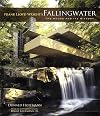
We recently got to visit Fallingwater! This home is an architectural icon, designed by Frank Lloyd Wright. It was built in the 1930s for Edgar Kaufmann (a wealthy Pittsburgh merchant) and his family as a second home, and is perched above a waterfall. Visiting Fallingwater has long been on my bucket list (ever since seeing a photo of it in a college textbook back in the 1980s).
This book was purchased at the gift shop, and covers how the seed was planted for Fallingwater and the trials and show more tribulations of it being built. It includes excerpts of letters between Wright and Kaufmann, among other correspondence between others concerning the build. Fallingwater was a challenge to build -- its design and locale specifically above water caused a lot of fits and spurts and occasional changes in plans and techniques in its development.
My only complaint about this volume is that the numerous pictures of Fallingwater before, during, and after are all in black and white (understandable for while it was being built, but would have been nice to have color pictures showing it is as it is today). But this quibble is actually what makes this book a reasonable price ($19.95) -- it's a Dover edition.
A very good book that provides a good feel of what it was like to build it, and to live in it once completed. It's easy to see why Fallingwater, and Wright himself, are iconic. show less
This book was purchased at the gift shop, and covers how the seed was planted for Fallingwater and the trials and show more tribulations of it being built. It includes excerpts of letters between Wright and Kaufmann, among other correspondence between others concerning the build. Fallingwater was a challenge to build -- its design and locale specifically above water caused a lot of fits and spurts and occasional changes in plans and techniques in its development.
My only complaint about this volume is that the numerous pictures of Fallingwater before, during, and after are all in black and white (understandable for while it was being built, but would have been nice to have color pictures showing it is as it is today). But this quibble is actually what makes this book a reasonable price ($19.95) -- it's a Dover edition.
A very good book that provides a good feel of what it was like to build it, and to live in it once completed. It's easy to see why Fallingwater, and Wright himself, are iconic. show less
Frank Lloyd Wright is probably still America's best known and iconic architect with 433 projects listed in Storrer's work catalog. FLW's buildings all share a common look of Japan/Pueblo meets Hobbit romanticism.
In this unassuming booklet with plenty of B/W photos and illustrations, Hoffmann distills the essence and principles of FLW's architecture: the horizontal lines hugging the ground, the cantilevered roof freeing walls from structural duties, the integration of buildings in their show more natural surroundings.
While Hoffmann dwells on the importance of the prairie on Wright's style, he neglects in my opinion the influence of Japanese buildings (a culture rediscovered shortly before FLW's birth). A discussion of his near contemporary Walter Gropius who also discovered many of Wright's lessons might have served to illustrate Wright's closeness to the 19th century with his focus on craftmanship and uniqueness. Overall, an excellent primer on Wright. show less
In this unassuming booklet with plenty of B/W photos and illustrations, Hoffmann distills the essence and principles of FLW's architecture: the horizontal lines hugging the ground, the cantilevered roof freeing walls from structural duties, the integration of buildings in their show more natural surroundings.
While Hoffmann dwells on the importance of the prairie on Wright's style, he neglects in my opinion the influence of Japanese buildings (a culture rediscovered shortly before FLW's birth). A discussion of his near contemporary Walter Gropius who also discovered many of Wright's lessons might have served to illustrate Wright's closeness to the 19th century with his focus on craftmanship and uniqueness. Overall, an excellent primer on Wright. show less
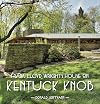
We recently visited Kentuck Knob, a home designed by Frank Lloyd Wright later in his career that also utilized the concept of his Usonian houses. It's outside of Pittsburgh, not far from the famed Fallingwater (which we visited last year). This is a nice small hardback volume with color photographs; it summarizes well the concept and appearance of the house.
Presents good, basic information on the ideas and concepts that Frank Lloyd Wright developed over his long career as an architect. It is a Dover Edition, so just black and white photos are used for illustrations. The author focuses mostly on Wright's Prairie style and how it came to be -- this style was what FLW was best known for.
You May Also Like


Statistics
- Works
- 10
- Members
- 861
- Popularity
- #29,720
- Rating
- 4.1
- Reviews
- 5
- ISBNs
- 18