
Elon Green
Author of Last Call: A True Story of Love, Lust, and Murder in Queer New York
About the Author
Elon Green is the author of Last Call and has written for The New York Times, The Atlantic, and The New Yorker. His work appears in the true crime anthology Unspeakable Acts.
Works by Elon Green
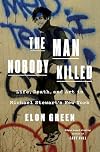
The Man Nobody Killed: Life, Death, and Art in Michael Stewart's New York (2025) 34 copies, 1 review
Tagged
Common Knowledge
- Birthdate
- 20th Century
- Gender
- male
- Nationality
- USA
- Associated Place (for map)
- USA
Members
Reviews
Rating: 4.5* of five
The Publisher Says: The first comprehensive book about Michael Stewart, the young Black artist and model who died after an altercation with the police in 1983, from Elon Green, the Edgar Award-winning author of Last Call.
At twenty-five years old, Michael Stewart was a young Black aspiring artist, deejay, and model, looking to make a name for himself in the vibrant downtown art scene of the early 1980’s New York City. On September 15, 1983, he was brutally beaten by New show more York City Transit Authority police for allegedly tagging a 14th Street subway station wall.
Witnesses reported officers beating him with billy clubs and choking him with a nightstick. Stewart arrived at Bellevue Hospital hog-tied with no heartbeat and died after thirteen days in a coma. This was, at that point, the most widely noticed act of police brutality in the city's history. The Man Nobody Killed recounts the cultural impact of Michael Stewart’s life and death.
The Stewart case quickly catalyzed movements across multiple communities. It became a rallying cry, taken up by artists and singers including Madonna, Keith Haring, Spike Lee, and Jean-Michel Basquiat, tabloid legends such as Jimmy Breslin and Murray Kempton, and the pioneering local news reporter, Gabe Pressman. The Stewart family and the downtown arts community of 1980s New York demanded justice for Michael, leading to multiple investigations into the circumstances of his wrongful death.
Elon Green, the Edgar Award–winning author of Last Call, presents the first comprehensive narrative account of Michael Stewart's life and killing, the subsequent court proceedings, and the artistic aftermath. In the vein of The Short and Tragic Life of Robert Peace and His Name is George Floyd, Green brings us the story of a promising life cut short and a vivid snapshot of the world surrounding this loss. A tragedy set in stark contrast against the hope, activism, and creativity of the 1980’s New York City art scene, The Man Nobody Killed serves as a poignant reminder of recurring horrors in American history and explores how, and for whom, the justice system fails.
I RECEIVED A DRC FROM THE PUBLISHER VIA NETGALLEY. THANK YOU.
My Review: Elon Green's followup to Last Call, again centering the life and murder of someone very much not like his cishet Jewish self, gets the tones of his subject's life and murder spot-on.
It's a gift not all have. I think his evident curiosity about people, the whys that drive them to the wheres that force us to hear about them, shines through in this exploration of all parties to this crime. Stewart, a young man of borning fame for a talent still developing, does not have much of a documentary footprint outside his still-early recognition from the downtown Manhattan art scene. He is of necesity flattened in affect thereby; he had little time and no special reason to leave behind a trove of thinking, essays, manifestoes; he is known only because his death interrupted his rise to Basquiat-levels of celebrity. It doesn't change the outrage vented by the white establishment liberals on the MTA-cop murderers, it doesn't alter by a jot the klieg-lights-and-klaxons that the murder of young Black men by white men set off, only to subside as the relentless slopping of the media trough with more acceptable outrages that refocus attention away from systemic racism accomplishes its task.
Michael Stewart died in vain. His death did not stop cops from killing other young Black men on the regular, nor dissuade the occasional white amateur from trying it...getting tried...getting off.
Elon Green doesn't shy away from the ugliness inherent in this story. He uses the limited materials about the victim to flesh him out as much as possible. It's just that the system itself, the perps it's enabled, the horrors of living in a world that views your existence as a provocation deserving of death, has a much larger footprint. It's thus that the system and its publicity becomes the focus of the book (hence my docked half-star). That might leave the reader wondering why Stewart got such prominent billing on the cover. Because we are accustomed to centering the white person(s) over the victims of color, we're accustomed to the perps (eg Derek Chauvin) getting media attention. It was his fate to be the killer cop who ignited, finally, #BlackLivesMatter and #SayHisName...could as easily have happened with one of Ahmaud Arbery's murderers, or Michael Stewart's. Follow those links, white people. Look at the titles of each article. Think about what you are seeing. Really THINK.
I assume you're sentient and I don't need to spell it out for you.
It's an infuriating read. I wanted the results not to be the results. It is history so of course I was disappointed. But, and all y'all who "just can't, too hard," with these books on difficult topics, think about how supremely spoiled and privileged a stance that is. Michael Stewart and his mother couldn't just ignore it. They had to live it, she lived it until she died.
Does it still feel too hard? Or can you use that rage, outrage, sympathy for a mother who outlived her child, to power some practical resistance? The US is sliding into a new era of sanctioned violence against those They hate. Does that not seem important enough to do actual work to oppose? show less
The Publisher Says: The first comprehensive book about Michael Stewart, the young Black artist and model who died after an altercation with the police in 1983, from Elon Green, the Edgar Award-winning author of Last Call.
At twenty-five years old, Michael Stewart was a young Black aspiring artist, deejay, and model, looking to make a name for himself in the vibrant downtown art scene of the early 1980’s New York City. On September 15, 1983, he was brutally beaten by New show more York City Transit Authority police for allegedly tagging a 14th Street subway station wall.
Witnesses reported officers beating him with billy clubs and choking him with a nightstick. Stewart arrived at Bellevue Hospital hog-tied with no heartbeat and died after thirteen days in a coma. This was, at that point, the most widely noticed act of police brutality in the city's history. The Man Nobody Killed recounts the cultural impact of Michael Stewart’s life and death.
The Stewart case quickly catalyzed movements across multiple communities. It became a rallying cry, taken up by artists and singers including Madonna, Keith Haring, Spike Lee, and Jean-Michel Basquiat, tabloid legends such as Jimmy Breslin and Murray Kempton, and the pioneering local news reporter, Gabe Pressman. The Stewart family and the downtown arts community of 1980s New York demanded justice for Michael, leading to multiple investigations into the circumstances of his wrongful death.
Elon Green, the Edgar Award–winning author of Last Call, presents the first comprehensive narrative account of Michael Stewart's life and killing, the subsequent court proceedings, and the artistic aftermath. In the vein of The Short and Tragic Life of Robert Peace and His Name is George Floyd, Green brings us the story of a promising life cut short and a vivid snapshot of the world surrounding this loss. A tragedy set in stark contrast against the hope, activism, and creativity of the 1980’s New York City art scene, The Man Nobody Killed serves as a poignant reminder of recurring horrors in American history and explores how, and for whom, the justice system fails.
I RECEIVED A DRC FROM THE PUBLISHER VIA NETGALLEY. THANK YOU.
My Review: Elon Green's followup to Last Call, again centering the life and murder of someone very much not like his cishet Jewish self, gets the tones of his subject's life and murder spot-on.
It's a gift not all have. I think his evident curiosity about people, the whys that drive them to the wheres that force us to hear about them, shines through in this exploration of all parties to this crime. Stewart, a young man of borning fame for a talent still developing, does not have much of a documentary footprint outside his still-early recognition from the downtown Manhattan art scene. He is of necesity flattened in affect thereby; he had little time and no special reason to leave behind a trove of thinking, essays, manifestoes; he is known only because his death interrupted his rise to Basquiat-levels of celebrity. It doesn't change the outrage vented by the white establishment liberals on the MTA-cop murderers, it doesn't alter by a jot the klieg-lights-and-klaxons that the murder of young Black men by white men set off, only to subside as the relentless slopping of the media trough with more acceptable outrages that refocus attention away from systemic racism accomplishes its task.
Michael Stewart died in vain. His death did not stop cops from killing other young Black men on the regular, nor dissuade the occasional white amateur from trying it...getting tried...getting off.
Elon Green doesn't shy away from the ugliness inherent in this story. He uses the limited materials about the victim to flesh him out as much as possible. It's just that the system itself, the perps it's enabled, the horrors of living in a world that views your existence as a provocation deserving of death, has a much larger footprint. It's thus that the system and its publicity becomes the focus of the book (hence my docked half-star). That might leave the reader wondering why Stewart got such prominent billing on the cover. Because we are accustomed to centering the white person(s) over the victims of color, we're accustomed to the perps (eg Derek Chauvin) getting media attention. It was his fate to be the killer cop who ignited, finally, #BlackLivesMatter and #SayHisName...could as easily have happened with one of Ahmaud Arbery's murderers, or Michael Stewart's. Follow those links, white people. Look at the titles of each article. Think about what you are seeing. Really THINK.
I assume you're sentient and I don't need to spell it out for you.
It's an infuriating read. I wanted the results not to be the results. It is history so of course I was disappointed. But, and all y'all who "just can't, too hard," with these books on difficult topics, think about how supremely spoiled and privileged a stance that is. Michael Stewart and his mother couldn't just ignore it. They had to live it, she lived it until she died.
Does it still feel too hard? Or can you use that rage, outrage, sympathy for a mother who outlived her child, to power some practical resistance? The US is sliding into a new era of sanctioned violence against those They hate. Does that not seem important enough to do actual work to oppose? show less
Real Rating: 4.75* of five
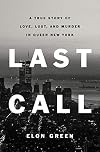
The Publisher Says: The gripping true story, told here for the first time, of the Last Call Killer and the gay community of New York City that he preyed upon.
The Townhouse Bar, midtown, July 1992: The piano player seems to know every song ever written, the crowd belts out the lyrics to their favorites, and a man standing nearby is drinking a Scotch and water. The man strikes the piano player as forgettable.
He looks bland and inconspicuous. Not at all what you think show more a serial killer looks like. But that’s what he is, and tonight, he has his sights set on a gray haired man. He will not be his first victim.
Nor will he be his last.
The Last Call Killer preyed upon gay men in New York in the ‘80s and ‘90s and had all the hallmarks of the most notorious serial killers. Yet because of the sexuality of his victims, the skyhigh murder rates, and the AIDS epidemic, his murders have been almost entirely forgotten.
This gripping true-crime narrative tells the story of the Last Call Killer and the decades-long chase to find him. And at the same time, it paints a portrait of his victims and a vibrant community navigating threat and resilience.
SOMEONE SENT ME A SIGNED COPY! THANK YOU VERY MUCH!
My Review: It's an awful feeling to realize that you're not a serial-killing statistic by sheer chance. I'm taller and a little younger than this serial killer's victims. But I was there, in the relevant places at the relevant times; absent a quirk of chance, I would be dead like any one of those poor closeted bastards.
And it took a straight man to shine a long-missing light on the case. One case, not several as it was treated for a long time. In fact, I was pretty much unaware of the case until Elon Green's book hit my shelves.
I’d found the story by accident, surfaced by an errant Web search. Most of these so-called true crime cases don’t stay with me, but this one I couldn’t let go. Once I got past the murders and the investigations, and my own disbelief that it had all been forgotten—a string of killings in New York City didn’t merit so much as a Wikipedia entry?—I became obsessed with the lives of the victims. I became obsessed with the lives they wanted but couldn’t have. Here was a generation of men, more or less, for whom it was difficult to be visibly gay. To be visibly whole.
Doesn't that just say it all. Yes, things are...or were...getting better for the QUILTBAG community. The world's scum, however, can't abide that and decided to start victimizing the most vulnerable among us, the trans folk and the kids just figuring themselves out. How long before this kind of targeted killing spree happens again? If it hasn't, that is, and we're just unaware of it because it suits the statistics collectors not to look for this particular pattern.
I'm not going to say the name of the perpetrator of these disgusting crimes. He's still alive. That would be unthinkable in capital-punishment obsessed Murruhkuh...except his victims are faggots, so, well...maybe he didn't oughta have done it but, you know....
This list is of the men whose lives, blighted by homophobia and the dishonesty it's forced on so many for so long, were taken by a man without a soul.
You are not forgotten. Thanks to a straight man, whose intersecting interests and requirements...he didn't suddenly become a writer, he was alert to the story that wasn't told, and that is how good work gets done!...led him to come and tell us all about what we weren't really supposed to know, or to hear about even. It makes law enforcement look as thuggish and homophobic as, sad experience has taught me, most any gay man can tell you they actually, regrettably, but inexcusably are.
As to the overall journalistic establishment...look into a mirror, y'all. Say it aloud: "I am homophobic." Because, you know by now, you slept on a story that wasn't about you, or about people you love. (This most definitely includes gay journalists.)
Sleep tight. show less
The Publisher Says: The gripping true story, told here for the first time, of the Last Call Killer and the gay community of New York City that he preyed upon.
The Townhouse Bar, midtown, July 1992: The piano player seems to know every song ever written, the crowd belts out the lyrics to their favorites, and a man standing nearby is drinking a Scotch and water. The man strikes the piano player as forgettable.
He looks bland and inconspicuous. Not at all what you think show more a serial killer looks like. But that’s what he is, and tonight, he has his sights set on a gray haired man. He will not be his first victim.
Nor will he be his last.
The Last Call Killer preyed upon gay men in New York in the ‘80s and ‘90s and had all the hallmarks of the most notorious serial killers. Yet because of the sexuality of his victims, the skyhigh murder rates, and the AIDS epidemic, his murders have been almost entirely forgotten.
This gripping true-crime narrative tells the story of the Last Call Killer and the decades-long chase to find him. And at the same time, it paints a portrait of his victims and a vibrant community navigating threat and resilience.
SOMEONE SENT ME A SIGNED COPY! THANK YOU VERY MUCH!
My Review: It's an awful feeling to realize that you're not a serial-killing statistic by sheer chance. I'm taller and a little younger than this serial killer's victims. But I was there, in the relevant places at the relevant times; absent a quirk of chance, I would be dead like any one of those poor closeted bastards.
And it took a straight man to shine a long-missing light on the case. One case, not several as it was treated for a long time. In fact, I was pretty much unaware of the case until Elon Green's book hit my shelves.
I’d found the story by accident, surfaced by an errant Web search. Most of these so-called true crime cases don’t stay with me, but this one I couldn’t let go. Once I got past the murders and the investigations, and my own disbelief that it had all been forgotten—a string of killings in New York City didn’t merit so much as a Wikipedia entry?—I became obsessed with the lives of the victims. I became obsessed with the lives they wanted but couldn’t have. Here was a generation of men, more or less, for whom it was difficult to be visibly gay. To be visibly whole.
Doesn't that just say it all. Yes, things are...or were...getting better for the QUILTBAG community. The world's scum, however, can't abide that and decided to start victimizing the most vulnerable among us, the trans folk and the kids just figuring themselves out. How long before this kind of targeted killing spree happens again? If it hasn't, that is, and we're just unaware of it because it suits the statistics collectors not to look for this particular pattern.
I'm not going to say the name of the perpetrator of these disgusting crimes. He's still alive. That would be unthinkable in capital-punishment obsessed Murruhkuh...except his victims are faggots, so, well...maybe he didn't oughta have done it but, you know....
This list is of the men whose lives, blighted by homophobia and the dishonesty it's forced on so many for so long, were taken by a man without a soul.
Peter Anderson
–and–
Tom Mulcahy
–and–
Anthony Marrero
–and–
Michael Sakara
–and–
Fred Spencer
You are not forgotten. Thanks to a straight man, whose intersecting interests and requirements...he didn't suddenly become a writer, he was alert to the story that wasn't told, and that is how good work gets done!...led him to come and tell us all about what we weren't really supposed to know, or to hear about even. It makes law enforcement look as thuggish and homophobic as, sad experience has taught me, most any gay man can tell you they actually, regrettably, but inexcusably are.
As to the overall journalistic establishment...look into a mirror, y'all. Say it aloud: "I am homophobic." Because, you know by now, you slept on a story that wasn't about you, or about people you love. (This most definitely includes gay journalists.)
Sleep tight. show less

In the mid-nineties, bodies were being discovered dumped in out of the way places outside of New York City. There were similarities in how they were dumped and all of the men were gay. At a time when AIDS was at its peak and homophobia rampant, the disappearance of a few gay men didn't make the news. Elon Green focuses on the stories of the victims and of the lives they led and the gay piano bars of midtown Manhattan where they met the murderer.
This is a well-written and researched work, show more where the emphasis stays on the lives of four ordinary gay men, whose life paths were very different. It's a snapshot into a time and a place not that long gone, done with respect and empathy. If this is the future of true crime writing, bring it on. show less
This is a well-written and researched work, show more where the emphasis stays on the lives of four ordinary gay men, whose life paths were very different. It's a snapshot into a time and a place not that long gone, done with respect and empathy. If this is the future of true crime writing, bring it on. show less
True crime writing rarely gets better than this. After reading you feel you understand the main facts of the case, no small feat given that the crimes described took place in multiple states over the span of decades. Even more refreshingly, this author doesn’t commit the cardinal sin of true crime writing (especially writing about serial killers) and glorify or in any way give undue attention to the man who ruined so many lives. Instead, ample time is given to an in-depth and nuanced show more portrayal of each of the victims, their personalities, histories, ambitions and their potential cut short too soon. When the author does get around to describing the murderer, it is in a reserved, factual way, the spotlight is always on the victims themselves, the investigative process, and the scores of people whose dedicated work finally brought him to justice. Overall an excellent book about a little known case. show less
Lists
True Crime (1)
Awards


You May Also Like


Associated Authors
Statistics
- Works
- 3
- Members
- 461
- Popularity
- #53,307
- Rating
- 3.8
- Reviews
- 25
- ISBNs
- 7
- Languages
- 1