
Jeremy Atherton Lin
Author of Gay Bar: Why We Went Out
About the Author
Image credit: from author's website
Works by Jeremy Atherton Lin
Tagged
Common Knowledge
- Canonical name
- Atherton Lin, Jeremy
- Gender
- male
- Education
- Royal College of Art (MA)
- Organizations
- Society of Authors
- Nationality
- USA
- Places of residence
- Los Angeles, California, USA
East Sussex, England, UK - Map Location
- USA
Members
Reviews
Rating: 4.5* of five
The Publisher Says: From the National Book Critics Circle Award-winning author of Gay Bar comes a rule-breaking, sweat-soaked, genre-busting story of outlaw love.
It’s 1996, and Jeremy Atherton Lin has met the boy of his dreams—a mumbling, starry-eyed Brit—just as, amid a media frenzy, US Congress prepares the Defense of Marriage Act, denying same-sex couples federal rights including immigration. The pair steals away to remote forests and vast deserts, London fashion show more shows and Berlin sex clubs, dinner parties, back alleys, East Village hotel rooms, and San Francisco dives. Finding no other way to stay together, they shack up illicitly among unlikely allies in a “city of refuge.”
With Atherton Lin’s inimitable blend of tenderness and wicked humor, Deep House moves through the couple’s string of rented apartments while unlocking doors to a lineage of gay men who have come before—smuggling a foreign partner through national checkpoints or going public to stand up for the right to get down in the privacy of their own homes. They include hapless criminals, sexpot bartenders, friars, pirates, government workers who subverted the system, activists who went all the way to the Supreme Court, and the celebrated artist Felix Gonzalez-Torres.
Following Gay Bar—called “a rich tapestry” by Vanity Fair and “an absolute tour de force” by Maggie Nelson—Deep House juxtaposes whispered disclosures of undocumented domesticity with courtroom drama and political stunts to explore myriad forms of intimacy while questioning the mechanisms that legitimize love. Deep House is at once a historical kaleidoscope and the innermost tale of two boyfriends who made a home in the shadows of a turbulent civil rights battle.
I RECEIVED A DRC FROM THE PUBLISHER VIA NETGALLEY. THANK YOU.
My Review: A story whose timeliness could not possibly be greater. Author Jeremy takes us through a moment, thirty years ago, when the political landscape looked a lot like today's. He had just fallen in love with "Famous Blue Raincoat," an undocumented Brit, which is presenting practical problems of residence and life together. How do you rent an apartment, earn a living, make couple-friends? You're carrying the usual relationship stuff but on top of that is the need to be discreet, even secretive, about big pieces of your life.
What Author Jeremy chooses as his narrative strategy is lighter on the deeply personal details in favor of a potted history of the topic of marriage equality in the US from DOMA in 1996 through twists an turns of bi-national queer couples litigating their basic human rights (which is not how rights are supposed to work except here in looney-religious-land) through to the now-imperiled Obergefell v Hodges decision in 2015.
It's a lot to take in. The personal parts pertaining to Author Jeremy and "Famous Blue Raincoat" are sprinkled on like powdered sugar to make the wodges of information go down easier. There are so many facts that impinge on the love story he's telling that there's really no other way to tell the whole story. Author Jeremy was threading needle after needle after needle, trying not to be preachy while advocating equality, trying not to be confessional while honestly depicting the cost of a life defined by struggle to access simple equality, trying not to chirp triumphantly about battles won while they're being refought, yet leaving his readers with real hope in a world that does not do much to support it.
The amount of focused effort in these four-hundred-plus pages is humbling. It's a gift to receive this kind of careful craft on such a personal topic. I'd've given a full fifth star had I had citations, not simply end-notes; it's a "me" thing, it likely won't bother a lot of y'all, but when you're relying on sources to make factual cases and points within cases, I'd like to be pointed at those sources in the text not simply as end notes. I feel a bit unkind bringing it up in a time where even the inclusion of end notes is increasingly rare, but, well, I'm pedantic and grouchy and old.
Surprise!
Don't wait...get yourself a copy fast as you can for your #PrideMonth reading. It's a pleasurable way to appreciate fully and personally what is at stake in the current political crisis. show less
The Publisher Says: From the National Book Critics Circle Award-winning author of Gay Bar comes a rule-breaking, sweat-soaked, genre-busting story of outlaw love.
It’s 1996, and Jeremy Atherton Lin has met the boy of his dreams—a mumbling, starry-eyed Brit—just as, amid a media frenzy, US Congress prepares the Defense of Marriage Act, denying same-sex couples federal rights including immigration. The pair steals away to remote forests and vast deserts, London fashion show more shows and Berlin sex clubs, dinner parties, back alleys, East Village hotel rooms, and San Francisco dives. Finding no other way to stay together, they shack up illicitly among unlikely allies in a “city of refuge.”
With Atherton Lin’s inimitable blend of tenderness and wicked humor, Deep House moves through the couple’s string of rented apartments while unlocking doors to a lineage of gay men who have come before—smuggling a foreign partner through national checkpoints or going public to stand up for the right to get down in the privacy of their own homes. They include hapless criminals, sexpot bartenders, friars, pirates, government workers who subverted the system, activists who went all the way to the Supreme Court, and the celebrated artist Felix Gonzalez-Torres.
Following Gay Bar—called “a rich tapestry” by Vanity Fair and “an absolute tour de force” by Maggie Nelson—Deep House juxtaposes whispered disclosures of undocumented domesticity with courtroom drama and political stunts to explore myriad forms of intimacy while questioning the mechanisms that legitimize love. Deep House is at once a historical kaleidoscope and the innermost tale of two boyfriends who made a home in the shadows of a turbulent civil rights battle.
I RECEIVED A DRC FROM THE PUBLISHER VIA NETGALLEY. THANK YOU.
My Review: A story whose timeliness could not possibly be greater. Author Jeremy takes us through a moment, thirty years ago, when the political landscape looked a lot like today's. He had just fallen in love with "Famous Blue Raincoat," an undocumented Brit, which is presenting practical problems of residence and life together. How do you rent an apartment, earn a living, make couple-friends? You're carrying the usual relationship stuff but on top of that is the need to be discreet, even secretive, about big pieces of your life.
What Author Jeremy chooses as his narrative strategy is lighter on the deeply personal details in favor of a potted history of the topic of marriage equality in the US from DOMA in 1996 through twists an turns of bi-national queer couples litigating their basic human rights (which is not how rights are supposed to work except here in looney-religious-land) through to the now-imperiled Obergefell v Hodges decision in 2015.
It's a lot to take in. The personal parts pertaining to Author Jeremy and "Famous Blue Raincoat" are sprinkled on like powdered sugar to make the wodges of information go down easier. There are so many facts that impinge on the love story he's telling that there's really no other way to tell the whole story. Author Jeremy was threading needle after needle after needle, trying not to be preachy while advocating equality, trying not to be confessional while honestly depicting the cost of a life defined by struggle to access simple equality, trying not to chirp triumphantly about battles won while they're being refought, yet leaving his readers with real hope in a world that does not do much to support it.
The amount of focused effort in these four-hundred-plus pages is humbling. It's a gift to receive this kind of careful craft on such a personal topic. I'd've given a full fifth star had I had citations, not simply end-notes; it's a "me" thing, it likely won't bother a lot of y'all, but when you're relying on sources to make factual cases and points within cases, I'd like to be pointed at those sources in the text not simply as end notes. I feel a bit unkind bringing it up in a time where even the inclusion of end notes is increasingly rare, but, well, I'm pedantic and grouchy and old.
Surprise!
Don't wait...get yourself a copy fast as you can for your #PrideMonth reading. It's a pleasurable way to appreciate fully and personally what is at stake in the current political crisis. show less

“Gay bars aren’t what they used to be“ — a complaint that you hear everywhere you go these days (especially if you’re somewhere other than a gay bar…). If people aren’t campaigning to keep their local bar open amidst threats of redevelopment, they are complaining about the way it has filled up with hen-parties, or how drinks are too expensive, or that they’re fed up with listening to disco, or that the only men you find in there are the ones who are too decrepit to work out show more how to use Grindr...
Jeremy Atherton Lin has lived in Los Angeles, San Francisco and London, and he has drunk, danced and cruised in numerous famous establishments that have subsequently closed down or changed their characters (even the London bar featured in the opening chapter has closed its doors by the time we get to the end of the book). In this book, he combines a kind of personal memoir of going out with a more objective look at the history of the gay bar as a cultural phenomenon, and tries to debunk some of our cosy preconceptions. Bars are inherently risky places where we go looking for the thrill of meeting strangers, and where the owners are trying to make money by selling us a lot of alcohol. Any sense of “safe space” or “community” is an accidental side-effect.
There probably never was a “golden age” when everything was better: in the fifties you would have to be in the know even to find a gay bar, and would risk getting beaten up by cops if you frequented it; nowadays gay culture has become so mainstream that it has almost been diluted to nothing, and it’s easier to meet strangers for sex on a mobile phone than at a bar. And in between we had to deal with AIDS and Thatcher and queer-bashing and all sorts of other lovely things.
Although Lin has a lot of bad experiences to describe here (perhaps his lowest point is when he and his partner go to Blackpool for a weekend…) he manages to be very funny about a lot of them, and to convey at least some of the nocturnal magic that has kept him partying against all reason and common sense for the last few decades. Fun. show less
Jeremy Atherton Lin has lived in Los Angeles, San Francisco and London, and he has drunk, danced and cruised in numerous famous establishments that have subsequently closed down or changed their characters (even the London bar featured in the opening chapter has closed its doors by the time we get to the end of the book). In this book, he combines a kind of personal memoir of going out with a more objective look at the history of the gay bar as a cultural phenomenon, and tries to debunk some of our cosy preconceptions. Bars are inherently risky places where we go looking for the thrill of meeting strangers, and where the owners are trying to make money by selling us a lot of alcohol. Any sense of “safe space” or “community” is an accidental side-effect.
There probably never was a “golden age” when everything was better: in the fifties you would have to be in the know even to find a gay bar, and would risk getting beaten up by cops if you frequented it; nowadays gay culture has become so mainstream that it has almost been diluted to nothing, and it’s easier to meet strangers for sex on a mobile phone than at a bar. And in between we had to deal with AIDS and Thatcher and queer-bashing and all sorts of other lovely things.
Although Lin has a lot of bad experiences to describe here (perhaps his lowest point is when he and his partner go to Blackpool for a weekend…) he manages to be very funny about a lot of them, and to convey at least some of the nocturnal magic that has kept him partying against all reason and common sense for the last few decades. Fun. show less
TL/DR: A moving and intimate tale told by a gifted writer to his life partner. Lin deftly weaves the broader tale of the fight for gay marriage into his personal love story.
Book subtitles are mostly a marketing thing. They don't usually give you a wholly accurate description of what's inside the covers. They're meant to grab your attention so that you'll pick up the book and give it a chance. As a marketing tool, subtitles have a tendency to oversell a book’s content.
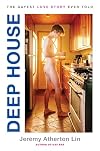
Not so with Jeremy show more Atherton Lin’s latest book, Deep House. If anything, the subtitle “The Gayest Love Story Ever Told” undersells what's between these covers.
That's because Lin tackles both the personal, and the all-encompassing. He tells not only the (semi-autobiographical) love story between he and his now husband, but at the same time he unwraps the tale of the fight for gay marriage through the 90’s and 2000’s, giving us a beautifully rendered and deeply personal telling of gay love and how it came to be legally recognized.
Lin is a gifted writer. His own love story is told, in part, by placing each space he and his lover lived in — each apartment, rented basement, or shared loft — front and center, detailing the shape of their love in each space, and how it grew from house to house over time. He tells these stories to his partner, calling him “you” throughout. They are intimate stories, in the way that making love is intimate, and in the way that staying home nights, on the couch watching movies together, is intimate. I found these stories very moving and very relatable.
[A word for the non-gay reader: Lin is not afraid of letting us in on some of the physical aspects of his and his partner’s love, as you might guess from the book’s cover. That is not the focus of, or even a large part of, the book. While it may be different than what you are personally used to, it does add to the intimacy of the love story.]
The broader tale of the advances of gay marriage is deftly woven into the personal love story. Sometimes Lin steps back to give us context through stories from earlier decades, but mostly the fight advances at the same time as events in Lin and his partner’s lives.
One wrinkle in the personal love story - while Lin is American his partner is British. They met while Lin was a student visiting London in the late 1990s. Without being able to marry, they found themselves without a way to both reside legally in one or the other's country. So throughout much of the book Lin's partner is in the US illegally, a situation that weighs on both of them and constrains them in ways they hadn't anticipated.
I loved this book. While Lin and his husband have made some different choices than have my husband and I (he talks honestly of their open relationship), I loved reading this story of two men in love, and whose love lasts through decades. show less
Book subtitles are mostly a marketing thing. They don't usually give you a wholly accurate description of what's inside the covers. They're meant to grab your attention so that you'll pick up the book and give it a chance. As a marketing tool, subtitles have a tendency to oversell a book’s content.
Not so with Jeremy show more Atherton Lin’s latest book, Deep House. If anything, the subtitle “The Gayest Love Story Ever Told” undersells what's between these covers.
That's because Lin tackles both the personal, and the all-encompassing. He tells not only the (semi-autobiographical) love story between he and his now husband, but at the same time he unwraps the tale of the fight for gay marriage through the 90’s and 2000’s, giving us a beautifully rendered and deeply personal telling of gay love and how it came to be legally recognized.
Lin is a gifted writer. His own love story is told, in part, by placing each space he and his lover lived in — each apartment, rented basement, or shared loft — front and center, detailing the shape of their love in each space, and how it grew from house to house over time. He tells these stories to his partner, calling him “you” throughout. They are intimate stories, in the way that making love is intimate, and in the way that staying home nights, on the couch watching movies together, is intimate. I found these stories very moving and very relatable.
[A word for the non-gay reader: Lin is not afraid of letting us in on some of the physical aspects of his and his partner’s love, as you might guess from the book’s cover. That is not the focus of, or even a large part of, the book. While it may be different than what you are personally used to, it does add to the intimacy of the love story.]
The broader tale of the advances of gay marriage is deftly woven into the personal love story. Sometimes Lin steps back to give us context through stories from earlier decades, but mostly the fight advances at the same time as events in Lin and his partner’s lives.
One wrinkle in the personal love story - while Lin is American his partner is British. They met while Lin was a student visiting London in the late 1990s. Without being able to marry, they found themselves without a way to both reside legally in one or the other's country. So throughout much of the book Lin's partner is in the US illegally, a situation that weighs on both of them and constrains them in ways they hadn't anticipated.
I loved this book. While Lin and his husband have made some different choices than have my husband and I (he talks honestly of their open relationship), I loved reading this story of two men in love, and whose love lasts through decades. show less
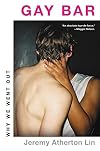
This is a mix of memoir and an exploration of "why we went out" - the "we" being both collective and personal. Gritty, witty, sweaty and erratically inclusive - it's not a compendium like _States of Desire_ by Edmund White (1980). But Lin admits as much - both his bias and his blatant omissions. Like many of us he bemoans the loss of the brick and mortar due to the electronic takeover of apps like Grindr, et al. He quotes George Melly (whom he labels "post gay"): "'What I would like to see show more is no gay scene, because it would be so natural for people to be gay that they wouldn't feel they had to actually form a scene which is really making a shell around themselves to protect them from the censure of other people.'" This is both a raunchy celebration and a melancholy paean to places quickly disappearing. show less
Lists
Awards


You May Also Like


Statistics
- Works
- 2
- Members
- 432
- Popularity
- #56,590
- Rating
- 3.7
- Reviews
- 8
- ISBNs
- 15
- Languages
- 1
- Favorited
- 1