
George Chauncey
Author of Gay New York: Gender, Urban Culture, and the Makings of the Gay Male World, 1890-1940
About the Author
Image credit: University of Chicago
Works by George Chauncey
Associated Works
The Columbia Reader on Lesbians & Gay Men in Media, Society, and Politics (1999) — Contributor — 86 copies
Tagged
Common Knowledge
- Birthdate
- 1953
- Gender
- male
- Education
- Yale University (BA | 1977)
Yale University (PhD | 1989) - Occupations
- professor
historian - Organizations
- University of Chicago
Yale University
Society of American Historians (2005)
New York Academy of History (2007)
Columbia University - Awards and honors
- John W. Kluge Prize for Achievement in the Study of Humanity (2022)
- Nationality
- USA
- Places of residence
- New York, New York, USA
- Associated Place (for map)
- New York, USA
Members
Reviews
Gay New York: Gender, Urban Culture, and the Making of the Gay Male World, 1890-1940 by George Chauncey
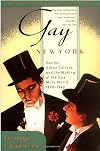
A life-changing book for gay people who think they have no history. Although it focuses almost exclusively on gay men (with good reason, and Chauncey acknowledges that reason,) and only looks at New York City, Chauncey masterfully strips apart dominant narratives about the history of sexuality and explores the nuances of masculinity at the turn of the century. My primary complaint is that communities of color are not as present as they could have been; although Chauncey devotes some space to show more Black men and women in the section about Harlem, that constitutes half a chapter, with no real acknowledgement as to the gap he's left behind.
Regardless, this book is life-changing and definitely necessary for those interested in the history of sexuality in general, and of gay male history in particular. The notes alone may also be worth a serious look for those less interested in gay men--the sources he draws from also cover urban history, some Black history, the history of sex work, women's history, and lesbian history. We can also argue here (happily!) over whether or not it's a work of transgender history--certainly it's a history of gender variance in this country, and for that I think it is worth for transgender people, especially transfeminine folk, to look at this too, despite the title. show less
Regardless, this book is life-changing and definitely necessary for those interested in the history of sexuality in general, and of gay male history in particular. The notes alone may also be worth a serious look for those less interested in gay men--the sources he draws from also cover urban history, some Black history, the history of sex work, women's history, and lesbian history. We can also argue here (happily!) over whether or not it's a work of transgender history--certainly it's a history of gender variance in this country, and for that I think it is worth for transgender people, especially transfeminine folk, to look at this too, despite the title. show less
Gay New York: gender, urban culture, and the makings of the gay male world, 1890-1940 by George Chauncey

A superbly-researched history of gay lives, where the author sought to dispel the myth that gay male culture itself only fermented in WWII and fully exploded into the cultural consciousness with the Stonewall riots in 1969 but that a very active and vibrant gay (sub)culture existed very publicly in New York from 1890 to 1930.
It was fascinating to learn about the way gay men created their own social world in both public and private spheres of their lives. How they constantly walked the line show more of being ostracised and acknowledged (or just tolerated) as long as they still conformed to social ideas of masculinity and femininity. How they manage to transform public areas into their own, recognising each other via subtle cues of conversation etc, undetected by the otherwise heteronormative, social-purity surroundings. How they persisted and created a culture of their own in the face of constant oppression, to thrive in their own private social lives, and fostered a supportive environment for the next generation of gay men.
Chauncey acknowledges the difficulty of doing research on such a suppressed culture, the source texts mainly involving court records and oral history from interviews he conducted. Despite this, he managed to recreate the vivid everyday lives that gay men achieved in spite of the constant opposition they faced. Black gay history of the Harlem area was also included in the book (but to a lesser extent than the white gay lives of the Village) which I think could be a really great book on its own. As would the lesser-discussed lesbian lives of the same era.
Truly an important and much-needed addition to gay history. I look forward to his next book on the postwar gay world.
Fascinating things I've learnt:
- the rise of the word gay (the semantics of labels defining particular sexual identities, which later became perjoratives, which in turn led to gay being adopted as an umbrella term whose dominant use and whose redefined parameters helped increase the visibility of gay culture),
- how working-class culture was the driving force in the establishment of gay culture in then New York (which made sense since the burgeoning middle class sought to distinguish themselves from the working class, one aspect of which meant they centred their lives more around their private homes whereas the tenement housing of the working class means they sought for public places such as saloons to congregate where like-minded people might meet and be able to mingle more freely),
- the difference between working class men and middle class men of era. The former can be with effeminate gay men while retaining their "masculine" identity (without having to label themselves as gay) within the working class community, provided they maintain the dominant male roles in the relations. Meanwhile middle class men are slowly enforcing the strict heterosexual/homosexual binary because they feel like their masculinity are being threatened (by working class men because they're viewed as more traditionally masculine than middle class men who work in an office and are in deference to bigger bosses, by women because they want to vote which undermines the man's position at home and also because they're taking over the work domains of middle class men [albeit in subservient roles but I suppose the presence of the women is enough to make the men feel threatened]). Which leads to the interesting pursuits that these middle class men thinks would restore their masculinity, such as, bodybuilding for the purposes of admiring each other naked... Men! show less
It was fascinating to learn about the way gay men created their own social world in both public and private spheres of their lives. How they constantly walked the line show more of being ostracised and acknowledged (or just tolerated) as long as they still conformed to social ideas of masculinity and femininity. How they manage to transform public areas into their own, recognising each other via subtle cues of conversation etc, undetected by the otherwise heteronormative, social-purity surroundings. How they persisted and created a culture of their own in the face of constant oppression, to thrive in their own private social lives, and fostered a supportive environment for the next generation of gay men.
Chauncey acknowledges the difficulty of doing research on such a suppressed culture, the source texts mainly involving court records and oral history from interviews he conducted. Despite this, he managed to recreate the vivid everyday lives that gay men achieved in spite of the constant opposition they faced. Black gay history of the Harlem area was also included in the book (but to a lesser extent than the white gay lives of the Village) which I think could be a really great book on its own. As would the lesser-discussed lesbian lives of the same era.
Truly an important and much-needed addition to gay history. I look forward to his next book on the postwar gay world.
Fascinating things I've learnt:
- the rise of the word gay (the semantics of labels defining particular sexual identities, which later became perjoratives, which in turn led to gay being adopted as an umbrella term whose dominant use and whose redefined parameters helped increase the visibility of gay culture),
- how working-class culture was the driving force in the establishment of gay culture in then New York (which made sense since the burgeoning middle class sought to distinguish themselves from the working class, one aspect of which meant they centred their lives more around their private homes whereas the tenement housing of the working class means they sought for public places such as saloons to congregate where like-minded people might meet and be able to mingle more freely),
- the difference between working class men and middle class men of era. The former can be with effeminate gay men while retaining their "masculine" identity (without having to label themselves as gay) within the working class community, provided they maintain the dominant male roles in the relations. Meanwhile middle class men are slowly enforcing the strict heterosexual/homosexual binary because they feel like their masculinity are being threatened (by working class men because they're viewed as more traditionally masculine than middle class men who work in an office and are in deference to bigger bosses, by women because they want to vote which undermines the man's position at home and also because they're taking over the work domains of middle class men [albeit in subservient roles but I suppose the presence of the women is enough to make the men feel threatened]). Which leads to the interesting pursuits that these middle class men thinks would restore their masculinity, such as, bodybuilding for the purposes of admiring each other naked... Men! show less
Gay New York : gender, urban culture, and the makings of the gay male world, 1890-1940 by George Chauncey
Really interesting preface to the reprint edition about how Chauncey would treat transgender issues differently if he were writing it 20 years later. Chauncey argues that in the 1890s and for several decades thereafter, the flourishing gay life in NYC was not defined by sexual object choice but by gender—“fairies” etc. were men who “took the woman’s part” and therefore “had a woman’s soul.” Among other things, this meant that many men who had or even preferred sex with show more women were willing to interact with and have sex with men we’d now call gay. Relatedly, working-class gay male life was heavily integrated with working-class heterosexual male life. Although many men saw themselves as living a double life or wearing a mask, they did not see themselves as “closeted” in the sense of isolated from other gay men. There were robust public forms of gay life, including balls, bathhouses, and bars, most of which were shut down by midcentury (the bathhouses lived until the AIDS crisis) but which before that were publicly acknowledged by newspapers, police, and others. It wasn’t that being gay was safe—arrests and attacks were real, albeit less common than they became—but that gay men nonetheless carved out lives that included public aspects. show less
Gay New York: Gender, Urban Culture, and the Making of the Gay Male World, 1890-1940 by George Chauncey
I'm glad I read Gay New York just after reading Odd Girls and Twilight Lovers: the differences between the two queer social histories was edifying. Where Odd Girls attempts to create a narrative structure, in which queer culture progressed in a straight line, Gay New York looks at the first third of the 20th century thematically rather than chronologically. While this certainly makes it a much more difficult, dense read, it has the wonderful effect of showing the many simultaneous gay show more experiences of New Yorkers from different racial and economic backgrounds. In the end, Chauncey has described a vibrant polyphonic culture, and done it great justice. show less
Lists
Awards


You May Also Like


Associated Authors
Statistics
- Works
- 5
- Also by
- 4
- Members
- 2,056
- Popularity
- #12,506
- Rating
- 4.2
- Reviews
- 11
- ISBNs
- 16
- Languages
- 2
- Favorited
- 1