
John Rechy
Author of City of Night
About the Author
Rechy is an important gay writer also linked to the Beat Movement, whose work has been recognized by a number of prestigious grant nominations or awards, including one from the National Endowment for the Arts. He grew up in El Paso, Texas, in a poor, Mexican American family. Because of his poverty show more and his ethnic heritage, he learned very early in life to feel himself an outsider, which was intensified by his later experiences as a gay hustler traveling America in search of his social and sexual identity. He came to popular and critical attention with his first published novel, City of Night (1963), which was a bestseller and was nominated for the International Prix Formentor. A fictionalized account of his travels, the novel focuses on the people whom the unnamed narrator encounters on the hustling scene in a number of cities, including New York, San Francisco, New Orleans, Chicago, and Los Angeles. Together, these cities make up the titular "city of night," or, as Rechy writes, "the city of night of the soul." A state of mind rather than a particular place, this "city"---modern America---is where hypocrisy and homophobia are reconciled with the fact of homosexuality in various forms, and poverty may be more spiritual than material. The book owes something to two classics: Jack Kerouac's Beat novel, On the Road, which celebrates countercultural alternatives to middle-class culture and lifestyles, including bourgeois marriage and family life, and Djuna Barnes's modernist novel Nightwood, which explores a tragic gay "nightworld" as a symbol of the modern urban wasteland. Rechy addresses similar themes in a later work that is equally well known, The Sexual Outlaw (1977), which he has described as an experiment with the novel form. Ostensibly a documentary of the life of a gay man, the book is also a critique of American values and morality. Commentaries throughout the text are really journalistic essays that expose the double standards and double binds of a "closeted" culture, in which many fear to be openly gay because of homophobic reprisals. Rechy has suggested that all of his work (which includes plays, essays, and reviews, as well as novels) articulates the need to preserve gay "difference," which he associates with "abundant sexuality," in the face of increasing "heterofascism." (Bowker Author Biography) show less
Image credit: John Rechy, 4 novembre 2003
Works by John Rechy
The Sexual Outlaw: A Documentary: A Non-fiction Account, with Commentaries, of Three Days and Nights in the Sexual Underground (1977) 322 copies, 3 reviews
Associated Works
In Search of Stonewall: The Riots at 50, The Gay and Lesbian Review at 25, Best Essays 1994-2018 (2019) — Contributor — 94 copies, 1 review
Take My Advice: Letters to the Next Generation from People Who Know a Thing or Two (2002) — Contributor — 50 copies
Hecho en Tejas: An Anthology of Texas-Mexican Literature (Southwestern Writers Collection) (2006) — Contributor — 32 copies
Rediscoveries II: Important Writers Select Their Favorite Works of Neglected Fiction (1988) — Contributor — 31 copies, 1 review
Tagged
Common Knowledge
- Legal name
- Rechy, John Francisco Flores
- Birthdate
- 1934-03-10
- Gender
- male
- Education
- Texas Western College (BA)
New School for Social Research - Occupations
- novelist
playwright
teacher - Organizations
- United States Army
University of California, Los Angeles
University of Southern California - Awards and honors
- Publishing Triangle (Bill Whitehead Award for Lifetime Achievement ∙ 1999)
PEN Center USA Lifetime Achievement Award (1997)
Robert Kirsch Award (2017)
Los Angeles Review of Books/UCR Creative Writing Lifetime Achievement Award (2016)
ONE Magazine Culture Hero Award (2006)
Lambda Literary Visionary Award (2018) (show all 9)
Lon Tinkle Lifetime Achievement Award (2020)
UCLA Medal (2019)
Luis Leal Award for Distinction in Chicano/Latino Literature (2014) - Nationality
- USA
- Birthplace
- El Paso, Texas, USA
- Places of residence
- Los Angeles, California, USA
El Paso, Texas, USA (birth) - Associated Place (for map)
- USA
Members
Reviews
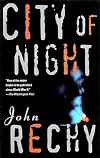
This is American writing from the great era of the typewriter that never sleeps, when to use apostrophes in "don't" and "can't" would have been irredeemably square, and when writing "youngman" as a compound noun and arbitrarily capitalising random adjectives (adjectives are profuse, even superabundant, in this book) was a sure sign that you were someone who could swap authentic jive talk with the best of them. It would be unfair to blame Rechy for any of those things, any more than you can show more blame him for the bombastic images that angrily open each chapter with the impact of a panting animal. I did blame him for all of those things when I started reading the book, of course, but I got over it surprisingly quickly, because they turn out to be completely irrelevant to what makes this quaint survivor from the early days of LGBT writing such a wonderful treat.
Rechy's unnamed narrator travels from city to city in fifties America, selling his body on the streets and in the gay bars, and telling us in fascinating and vivid detail about the characters he meets in what was still "the strange twilight world of the homosexual": the hustlers and drag queens, their clients, the fag-hags who hang around them, the vice cops, barkeepers, and all the rest. In the process, the narrator - who obviously sometimes is Rechy, with his typewriter stashed away in his room at the Y, and sometimes isn't - explores his attitude to his own sexuality, and unpicks what it is that drives him to live a life in which men have to demonstrate their desire for him by giving him money, but he doesn't allow himself to desire anything except sexual release.
Described like that, it sounds cold and anthropological, but Rechy obviously does have far more empathy for the people he describes than he allows his narrator to show, and he brings them to life very vividly on the page. And as a reader, you can't help getting involved with the fate of the Professor, Miss Destiny, Chuck, Chi-Chi and the rest of them. We even find ourselves engaging with the pathetic would-be-Nazi leather queen Neil for a few pages...
No surprise that this book was a big commercial success despite uniformly negative reviews in 1963, but a pleasant surprise to see that it's managed to retain at least some of its charm half a century later. show less
Rechy's unnamed narrator travels from city to city in fifties America, selling his body on the streets and in the gay bars, and telling us in fascinating and vivid detail about the characters he meets in what was still "the strange twilight world of the homosexual": the hustlers and drag queens, their clients, the fag-hags who hang around them, the vice cops, barkeepers, and all the rest. In the process, the narrator - who obviously sometimes is Rechy, with his typewriter stashed away in his room at the Y, and sometimes isn't - explores his attitude to his own sexuality, and unpicks what it is that drives him to live a life in which men have to demonstrate their desire for him by giving him money, but he doesn't allow himself to desire anything except sexual release.
Described like that, it sounds cold and anthropological, but Rechy obviously does have far more empathy for the people he describes than he allows his narrator to show, and he brings them to life very vividly on the page. And as a reader, you can't help getting involved with the fate of the Professor, Miss Destiny, Chuck, Chi-Chi and the rest of them. We even find ourselves engaging with the pathetic would-be-Nazi leather queen Neil for a few pages...
No surprise that this book was a big commercial success despite uniformly negative reviews in 1963, but a pleasant surprise to see that it's managed to retain at least some of its charm half a century later. show less
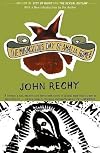
One hot day in Los Angeles, Amalia Gómez look to the sky and sees a large, silver cross. Or did she? After all, such miracles only happen to a chosen few, but maybe....
Over the course of the day, Amalia wanders through Hollywood, reflecting on the life she's lead, raising three children while working menial jobs and struggling against the threat of gangas dragging her children into a harder life, especially after losing her beloved son Manny to them. The Miraculous Day of Amalia Gómez show more offers a gritty look at the life of a family in the heart of Los Angeles as seen through eyes of Amalia. Mixed in with the tourists, the bullying policeman threatening deportation or beating up seeming innocents, and the constant presence of gangs, she finds ways to keep her spirits up: discussing the latest novela with her friend Milagros or a single rose blossoming from a bush thought to be dried up.
The story is her journey to re-discover the belief in herself that slowly seems to be deserting her. Amalia feels like a real person, the kind you see walking down the street every day, and her story is interesting and ultimately uplifting (with an ending that I wasn't expecting). It's a great read, and I highly recommend it. show less
Over the course of the day, Amalia wanders through Hollywood, reflecting on the life she's lead, raising three children while working menial jobs and struggling against the threat of gangas dragging her children into a harder life, especially after losing her beloved son Manny to them. The Miraculous Day of Amalia Gómez show more offers a gritty look at the life of a family in the heart of Los Angeles as seen through eyes of Amalia. Mixed in with the tourists, the bullying policeman threatening deportation or beating up seeming innocents, and the constant presence of gangs, she finds ways to keep her spirits up: discussing the latest novela with her friend Milagros or a single rose blossoming from a bush thought to be dried up.
The story is her journey to re-discover the belief in herself that slowly seems to be deserting her. Amalia feels like a real person, the kind you see walking down the street every day, and her story is interesting and ultimately uplifting (with an ending that I wasn't expecting). It's a great read, and I highly recommend it. show less

City of Night
By John Rechy
Review by Karl Wolff
Personal History: City of Night by John Rechy was another discovery I found in Paul's Bookstore in Madison, Wisconsin during my undergraduate years. Sequestered in a crate of random paperbacks was a 1964 edition. (A second paperback edition in this particular instance.) The initial attraction to the book was its vintage status, already more than twenty years old when I purchased it ('97? '98?). I was also drawn to the noir-ish cover photograph show more by Grove publisher and translator Richard Seaver. (Seaver would go on to publish everyone from Beckett to Ionesco to Henry Miller to the Marquis de Sade.) Since Rechy's book could be considered gay erotica, I will admit that I came to this book with some nostalgie de la boue (ungrammatical French for "yearning for the mud"). It's why I took Latin to read Catullus and Propertius and why I read William S. Burroughs in high school. I also wanted to know the history of all things forbidden.
High school and undergraduate history courses don't normally cover the history of gay prostitution. This made reading City of Night for the first time an eye-opening experience. This second time around, I read it as more of a historical relic. (And treated with the awe and reverence relics deserve.) One of the consequences of reading is discovering entirely new territories. While minority and women got their cursory token placement in my history classes, nothing was mentioned or acknowledged about gay history, American, global, or otherwise. For me, reading across orientations wasn't an exercise in increasing my awareness and lessening my liberal white guilt, it was feeding a lustful greed to know more. Between Naked Lunch and City of Night, gay life sure seemed interesting, exciting, and forbidden. Luckily the University of Wisconsin-Madison had a vibrant and supportive LBGT student life. I had gay classmates and even went to a LGBT film festival. ("So that's what drag kings are. Huh. America is awesome!") While I was initially drawn to the book's tabloid nature and winking hints at gay sex between the covers, I realized after I read it that there was more to modern American society than that disclosed in my suburban middle-class upbringing.
The greatest thing City of Night did for me was open up a galaxy of fiction to me. Gay fiction, BDSM fiction, New Orleans fiction, and so on. From Rechy I moved on to Ethan Mordden, Alan Hollinghurst, Ronald Firbank, John Waters, and Todd Haynes. There are more, but you get the general idea.
The History: City of Night was written by John Rechy in 1963. In other words, it is a work about being gay in Fifties America. The year 1963 was the cusp year at the end of the Long Fifties, an attempt by historians to square the circle of periodicity. From Ike's inauguration in 1951 to Kennedy's assassination in 1963, the United States experienced a long period of economic growth and prosperity (albeit for white people) and a cultural attitude focused on creating stability. Two perspectives collide in this decade and how you assess this decade will be based on your own personal interpretation. One perspective is that the Fifties saw the creation of a stable society after two decades (roughly 1929 to 1945) of economic depression, war, suffering, psychological despair, and shared sacrifice. This feeds into the popular mythology of manicured lawns, nuclear families, smiling housewives, and an idyllic Republican suburbia. Another perspective sees the Fifties as a decade of blacklists, redbaiting, redlining, bigotry, segregation, the lynching of Emmit Till, and hysteria about juvie gangs, junkies, Commie infiltration, and a castrating conformity. Both have a kernel of truth to them, but as a historian, I tend to avoid either/or propositions. Mythology isn't just limited to Greek and Roman myths taught in literature classes. Mythology is also taught in history classes. The Fifties and the Sixties have their own mythologies and one should be discerning enough to recognize them for what they are.
This is a roundabout way of arriving at John Rechy, a Mexican-American writer, raised in Texas, who wrote City of Night. Life for gays in the Fifties and Sixties was not easy. Existing in a world largely hidden, these places included gay bars and areas where men exchanged money for sex. Unless one was in a large metropolis, the notion of homosexuality didn't exist in the minds of many. Publicly shunned, ghettoized, and persecuted, the threat of discovery included severe consequences. One could lose his or her job. To straight America, gays existed as caricatures, comic relief, and freaks of nature. In the back of my paperback edition, there is a list of books published by Grove. One of these is Three Men by Jean Evans. Here's the synopsis: "The shocking life stories of three warped and tortured men - a criminal, a necrophile, and a homosexual - brilliantly told in this widely hailed masterpiece of psychological reporting." Equating these three men is pretty horrifying stuff. It's hard to lobby for equal rights when one is likened to a criminal and a necrophile. Compounding this dilemma was the Mid-century Modernist habit of glorifying the declasse. Case in point, "The White Negro: Superficial Reflections on the Hipster," by Norman Mailer, where he equates the jazz-loving white hipster to the psychopath. Part of the popularity of such writers like William S. Burroughs and Jean Genet was their criminality and violent prose. While both writers transcended the caricatures provided by their literary champions, the overall effect on gay liberation was far from positive.
Gay Americans weren't entirely invisible in Mid-century America. Tennessee Williams, Edward Albee, and William Inge took Broadway by storm with groundbreaking drama. Senator Joseph McCarthy's familiar Roy Cohn would later be revealed to be a practicing homosexual, along with Communist spy Whittaker Chambers. And one can't avoid mentioning J. Edgar Hoover's perplexing relationship by Clyde Tolson. (Perplexing because being married was de rigueur for special agents working for the FBI and Hoover was an adamant believer that homosexuality was another means of Communist infiltration.)
The Book: City of Night follows an unnamed narrator across the United States in a nomadic version of the bildungsroman. His coming of age is coupled with his coming to terms with his own homosexuality and dealing with the threat of aging. After a torturous childhood in El Paso, Texas, a dusty border town, he witnesses his dog die during a wind storm and has issues with his father, a failed musician now working as a janitor in a hospital. Following a brief stint in the army, he makes his way to New York City, having his "first contact with the alluring anarchic world which promised such turbulence." Throughout the novel, he meets various memorable characters and in the end attempts to come to terms with being gay.
Unlike Our Lady of the Flowers or Naked Lunch, Rechy's novel can be likened to a gay Grapes of Wrath. There is abundant personal suffering and the occasional heavy-handed metaphor. (The narrator's attachment to his dog and wondering why it can't go to Heaven is the most egregious example.) But not everything about the novel is quite so blunt and obvious.
Unlike Steinbeck's characters in search of a Promised Land, the narrator's pilgrimage is simultaneously internal and external. He visits Times Square, Hollywood Boulevard, Pershing Square in San Francisco, and the French Quarter, New Orleans. Each of these locations has become a pilgrimage site for gay Americans. Besides his geographic pilgrimages, the narrator also travels on a psychological pilgrimage, in this case being comfortable as a gay man. But like Moses, he never reaches the Promised Land. The novel is light on plot, but makes up for it with in-depth character studies. These range from a closeted individual calling himself "The Professor," who collects beautiful gay men for his amusement. There is Pete, a closeted hustler who calls queens "queers." There is Neil, the bondage aficionado and wannabe fascist. The novel has others as well, each offering up a personal testimony, a literary monument to their individuality and meaningfulness as human beings. Not all of these portraits are that idealized, since Rechy's portraits of drag queens and leathermen tend to be quite crude. We see how Gay America isn't a secret conspiratorial monolith, but a subculture riven with factions, rivalries, and resentment. Pete tells the narrator that since men have sex with him for money, he isn't "queer." He resents the female parody represented by the drag queens. Yet the queens are out and despite their make-up and campy mannerisms, they are authentically who they are, not compromising to society's wishes for them to conform to pre-determined gender norms.
While the novel's narrative is very loose and shambling, Rechy gives each character the time and space for a personal testimony. This is where the novel succeeds. This was pretty subversive, since it dares to put a human face on the various figures that make up the cosmology of American gay culture. The narrator gets out of the way and let's them speak.
The Verdict: The novel is a classic of gay American literature. It is also a relic of a gay America before Stonewell and before the AIDS epidemic. Both of these events galvanized, unified, and even normalized the gay community. Not to sound glib, but City of Night shows straight America the Closet and its like the TARDIS. It's bigger on the inside. Rechy shows us entire universes inside lives tightly secured and secreted away from persecution and ridicule.
The novel also established the Gay Hustler as an American literary icon. (Other literary icons include the cowboy, the hard-boiled private eye, the Italian gangster, etc.) It is an enduring figure, even if it is from a socioeconomic stratum many would prefer not to recognize.
http://www.cclapcenter.com/2013/07/the_nsfw_files_city_of_night_b.html
OR
http://driftlessareareview.com/2013/07/26/the-nsfw-files-city-of-night-by-john-r... show less
By John Rechy
Review by Karl Wolff
Personal History: City of Night by John Rechy was another discovery I found in Paul's Bookstore in Madison, Wisconsin during my undergraduate years. Sequestered in a crate of random paperbacks was a 1964 edition. (A second paperback edition in this particular instance.) The initial attraction to the book was its vintage status, already more than twenty years old when I purchased it ('97? '98?). I was also drawn to the noir-ish cover photograph show more by Grove publisher and translator Richard Seaver. (Seaver would go on to publish everyone from Beckett to Ionesco to Henry Miller to the Marquis de Sade.) Since Rechy's book could be considered gay erotica, I will admit that I came to this book with some nostalgie de la boue (ungrammatical French for "yearning for the mud"). It's why I took Latin to read Catullus and Propertius and why I read William S. Burroughs in high school. I also wanted to know the history of all things forbidden.
High school and undergraduate history courses don't normally cover the history of gay prostitution. This made reading City of Night for the first time an eye-opening experience. This second time around, I read it as more of a historical relic. (And treated with the awe and reverence relics deserve.) One of the consequences of reading is discovering entirely new territories. While minority and women got their cursory token placement in my history classes, nothing was mentioned or acknowledged about gay history, American, global, or otherwise. For me, reading across orientations wasn't an exercise in increasing my awareness and lessening my liberal white guilt, it was feeding a lustful greed to know more. Between Naked Lunch and City of Night, gay life sure seemed interesting, exciting, and forbidden. Luckily the University of Wisconsin-Madison had a vibrant and supportive LBGT student life. I had gay classmates and even went to a LGBT film festival. ("So that's what drag kings are. Huh. America is awesome!") While I was initially drawn to the book's tabloid nature and winking hints at gay sex between the covers, I realized after I read it that there was more to modern American society than that disclosed in my suburban middle-class upbringing.
The greatest thing City of Night did for me was open up a galaxy of fiction to me. Gay fiction, BDSM fiction, New Orleans fiction, and so on. From Rechy I moved on to Ethan Mordden, Alan Hollinghurst, Ronald Firbank, John Waters, and Todd Haynes. There are more, but you get the general idea.
The History: City of Night was written by John Rechy in 1963. In other words, it is a work about being gay in Fifties America. The year 1963 was the cusp year at the end of the Long Fifties, an attempt by historians to square the circle of periodicity. From Ike's inauguration in 1951 to Kennedy's assassination in 1963, the United States experienced a long period of economic growth and prosperity (albeit for white people) and a cultural attitude focused on creating stability. Two perspectives collide in this decade and how you assess this decade will be based on your own personal interpretation. One perspective is that the Fifties saw the creation of a stable society after two decades (roughly 1929 to 1945) of economic depression, war, suffering, psychological despair, and shared sacrifice. This feeds into the popular mythology of manicured lawns, nuclear families, smiling housewives, and an idyllic Republican suburbia. Another perspective sees the Fifties as a decade of blacklists, redbaiting, redlining, bigotry, segregation, the lynching of Emmit Till, and hysteria about juvie gangs, junkies, Commie infiltration, and a castrating conformity. Both have a kernel of truth to them, but as a historian, I tend to avoid either/or propositions. Mythology isn't just limited to Greek and Roman myths taught in literature classes. Mythology is also taught in history classes. The Fifties and the Sixties have their own mythologies and one should be discerning enough to recognize them for what they are.
This is a roundabout way of arriving at John Rechy, a Mexican-American writer, raised in Texas, who wrote City of Night. Life for gays in the Fifties and Sixties was not easy. Existing in a world largely hidden, these places included gay bars and areas where men exchanged money for sex. Unless one was in a large metropolis, the notion of homosexuality didn't exist in the minds of many. Publicly shunned, ghettoized, and persecuted, the threat of discovery included severe consequences. One could lose his or her job. To straight America, gays existed as caricatures, comic relief, and freaks of nature. In the back of my paperback edition, there is a list of books published by Grove. One of these is Three Men by Jean Evans. Here's the synopsis: "The shocking life stories of three warped and tortured men - a criminal, a necrophile, and a homosexual - brilliantly told in this widely hailed masterpiece of psychological reporting." Equating these three men is pretty horrifying stuff. It's hard to lobby for equal rights when one is likened to a criminal and a necrophile. Compounding this dilemma was the Mid-century Modernist habit of glorifying the declasse. Case in point, "The White Negro: Superficial Reflections on the Hipster," by Norman Mailer, where he equates the jazz-loving white hipster to the psychopath. Part of the popularity of such writers like William S. Burroughs and Jean Genet was their criminality and violent prose. While both writers transcended the caricatures provided by their literary champions, the overall effect on gay liberation was far from positive.
Gay Americans weren't entirely invisible in Mid-century America. Tennessee Williams, Edward Albee, and William Inge took Broadway by storm with groundbreaking drama. Senator Joseph McCarthy's familiar Roy Cohn would later be revealed to be a practicing homosexual, along with Communist spy Whittaker Chambers. And one can't avoid mentioning J. Edgar Hoover's perplexing relationship by Clyde Tolson. (Perplexing because being married was de rigueur for special agents working for the FBI and Hoover was an adamant believer that homosexuality was another means of Communist infiltration.)
The Book: City of Night follows an unnamed narrator across the United States in a nomadic version of the bildungsroman. His coming of age is coupled with his coming to terms with his own homosexuality and dealing with the threat of aging. After a torturous childhood in El Paso, Texas, a dusty border town, he witnesses his dog die during a wind storm and has issues with his father, a failed musician now working as a janitor in a hospital. Following a brief stint in the army, he makes his way to New York City, having his "first contact with the alluring anarchic world which promised such turbulence." Throughout the novel, he meets various memorable characters and in the end attempts to come to terms with being gay.
Unlike Our Lady of the Flowers or Naked Lunch, Rechy's novel can be likened to a gay Grapes of Wrath. There is abundant personal suffering and the occasional heavy-handed metaphor. (The narrator's attachment to his dog and wondering why it can't go to Heaven is the most egregious example.) But not everything about the novel is quite so blunt and obvious.
Unlike Steinbeck's characters in search of a Promised Land, the narrator's pilgrimage is simultaneously internal and external. He visits Times Square, Hollywood Boulevard, Pershing Square in San Francisco, and the French Quarter, New Orleans. Each of these locations has become a pilgrimage site for gay Americans. Besides his geographic pilgrimages, the narrator also travels on a psychological pilgrimage, in this case being comfortable as a gay man. But like Moses, he never reaches the Promised Land. The novel is light on plot, but makes up for it with in-depth character studies. These range from a closeted individual calling himself "The Professor," who collects beautiful gay men for his amusement. There is Pete, a closeted hustler who calls queens "queers." There is Neil, the bondage aficionado and wannabe fascist. The novel has others as well, each offering up a personal testimony, a literary monument to their individuality and meaningfulness as human beings. Not all of these portraits are that idealized, since Rechy's portraits of drag queens and leathermen tend to be quite crude. We see how Gay America isn't a secret conspiratorial monolith, but a subculture riven with factions, rivalries, and resentment. Pete tells the narrator that since men have sex with him for money, he isn't "queer." He resents the female parody represented by the drag queens. Yet the queens are out and despite their make-up and campy mannerisms, they are authentically who they are, not compromising to society's wishes for them to conform to pre-determined gender norms.
While the novel's narrative is very loose and shambling, Rechy gives each character the time and space for a personal testimony. This is where the novel succeeds. This was pretty subversive, since it dares to put a human face on the various figures that make up the cosmology of American gay culture. The narrator gets out of the way and let's them speak.
The Verdict: The novel is a classic of gay American literature. It is also a relic of a gay America before Stonewell and before the AIDS epidemic. Both of these events galvanized, unified, and even normalized the gay community. Not to sound glib, but City of Night shows straight America the Closet and its like the TARDIS. It's bigger on the inside. Rechy shows us entire universes inside lives tightly secured and secreted away from persecution and ridicule.
The novel also established the Gay Hustler as an American literary icon. (Other literary icons include the cowboy, the hard-boiled private eye, the Italian gangster, etc.) It is an enduring figure, even if it is from a socioeconomic stratum many would prefer not to recognize.
http://www.cclapcenter.com/2013/07/the_nsfw_files_city_of_night_b.html
OR
http://driftlessareareview.com/2013/07/26/the-nsfw-files-city-of-night-by-john-r... show less
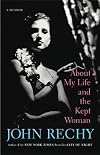
I have been reading this book in tandem with _City of the Night_, one of the novels Rechy based on parts of his life described in this book, which was written later. In both works one can see the extreme role-playing of the gay lifestyle in the 50s and 60s, the fear of arrest or exposure, and the denial and self-hatred. Rechy spent years centering his identity on his sexual desirability, his ability to attract men willing to pay him for fleeting, non-reciprocated sex. In the hustling world show more he had to conceal his intellect and deny that he was attracted to men. His descriptions of interactions regarding his writing are reminiscent of the pitfalls surrounding women with talent-- as he avoids the 'casting couch' and insists on having his work accepted for it's own sake. The kept woman of the tile was a figure from his childhood: the older sister of Rechy's younger sister's husband, who had defied her father's wrath to attend the wedding. The young Rechy saw the woman, mysterious and veiled, and heard her referred to as 'the kept woman' of a powerful and wealthy man in Mexico. She becomes s symbol for him of someone who lives her life in defiance of conventional morality. Another memory from his youth is a young woman whom he had dated briefly, who remakes herself by taking another name and leaving El Paso. She successfully poses as Spanish and marries a prominent San Franciscan. Many of the people mentioned are given fake names, as most were not out of the closet. Others, such as Christopher Isherwood and Allen Ginsberg are named. It is interesting to note that open rebellion against police abuses was sporadic in LA long before the Stonewall riot. show less
Lists
Awards


You May Also Like


Associated Authors
Statistics
- Works
- 29
- Also by
- 11
- Members
- 2,701
- Popularity
- #9,508
- Rating
- 3.7
- Reviews
- 29
- ISBNs
- 109
- Languages
- 8
- Favorited
- 8
