
Armistead Maupin
Author of Tales of the City
About the Author
Armistead Maupin was born in Washington D.C. on May 13, 1944. He received a B.A. from the University of North Carolina at Chapel Hill. He served as a naval officer in the Mediterranean and with the River Patrol Force in Vietnam. He worked as a reporter for a newspaper in Charleston, South Carolina, show more before being assigned to the San Francisco bureau of the Associated Press in 1971. In 1976, he launched his groundbreaking Tales of the City serial in the San Francisco Chronicle. The series describes a group of characters that live together in a boarding house in San Francisco. Eventually, these Tales were collected into a series of six novels. In 1993, the British Broadcasting Company adapted them for a television series that aired on PBS in 1994. His other works include Maybe the Moon, Michael Tolliver Lives, and The Days of Anna Madrigal. The Night Listener was adapted into a movie starring Robin Williams and Toni Collette. (Bowker Author Biography) show less
Series
Works by Armistead Maupin
Armistead Maupin's Tales of the City [1993 TV miniseries] (2003) — Novel; Screenwriter — 43 copies, 1 review
Suddenly Home 2 copies
The Night Listener, part 2 2 copies
Tales 04: Tales Of The City 1 copy
Revealing Mr. Maugham 1 copy
2004 1 copy
Associated Works
The Letter Q: Queer Writers' Notes to their Younger Selves (2012) — Contributor — 296 copies, 5 reviews
Why We Write: 20 Acclaimed Authors on How and Why They Do What They Do (2013) — Contributor — 206 copies, 10 reviews
Gay by the Bay: A History of Queer Culture in the San Francisco Bay Area (1996) — Foreword — 134 copies, 1 review
Girls Who Like Boys Who Like Boys: True Tales of Love, Lust, and Friendship Between Straight Women and Gay Men (2007) — Foreword — 111 copies, 3 reviews
Queer: A Collection of LGBTQ Writing from Ancient Times to Yesterday (2021) — Contributor, some editions — 65 copies
Armistead Maupin's Tales of the City: Part 1 [1993 TV series] — Original novel — 16 copies
Armistead Maupin's Tales of the City: Part 2 — Original novel — 5 copies
Armistead Maupin's Tales of the City: Part 3 — Original novel — 5 copies
Tagged
Common Knowledge
- Canonical name
- Maupin, Armistead
- Legal name
- Maupin, Armistead Jones, Jr.
- Birthdate
- 1944-05-13
- Gender
- male
- Education
- University of North Carolina, Chapel Hill (BA|1966)
- Occupations
- journalist
naval officer
writer
author
novelist - Organizations
- United States Navy (Vietnam)
- Awards and honors
- Publishing Triangle (Bill Whitehead Award for Lifetime Achievement ∙ 1997)
Pioneer Award, Lamba Literary Foundation (2012)
Barbary Coast Award (2007) - Agent
- Steven Barclay Agency
- Relationships
- Turner, Christopher (husband)
- Nationality
- USA
UK (naturalised 2023) - Birthplace
- Washington, D.C., USA
- Places of residence
- San Francisco, California, USA
Raleigh, North Carolina, USA
New Zealand
Tesuque, New Mexico, USA
Clapham, London, Middlesex, England, UK - Map Location
- Washington DC, USA
Members
Reviews

Armistead Maupin is a surprisingly divisive figure: people like or dislike his books for obvious political reasons, of course, but also for the same sort of reasons that readers disagree about Dickens: he is a writer who produced most of his work as serials under heavy time-pressure, relying on a superb natural storytelling ability, deliberately terrible jokes, topical references and sometimes rather too facile sentimentality. If you first came across Tales of the city at a time when there show more was no positive, funny light fiction featuring LGBT characters (as I did), you might be inclined to regard it as wonderful; if you saw it on TV and then went back to read the books you might just as easily dismiss it as too glossy, romantic and American. I think he's one of the great modern authors of light fiction, up there with Wodehouse and Alexander McCall Smith, but I know a lot of my (gay) friends just don't see the point of him at all...
It's possibly a bit more interesting if you know something about Maupin's background - he comes from a very conservative family in Raleigh, North Carolina, where his ancestors included a slave-owning Confederate general, and his father sounds like the sort of lawyer who would happily have appeared for the prosecution in To kill a mockingbird. Maupin - although he was well aware of his sexuality from an early age - started out in life trying to fulfil the hopes of his family: he served as a junior naval officer in Vietnam, his first employer in his chosen civilian profession of journalism was Jesse Helms, and he volunteered for a veterans' "aid" project in Vietnam set up by Nixon's spin-doctors to try to discredit the anti-war movement (there's a gloriously creepy photo of him shaking hands with Nixon). It wasn't until he moved to San Francisco in the early 70s that he came out as a gay man and realised that the political movements he had been supporting were precisely those which were oppressing him and making it impossible for him to live his true identity.
A large part of Maupin's reasons for publishing this memoir now, in the Age of Trump, seems to be to take us through this painful process of awakening again and remind us of how easy it is to fall unreflectingly into accepting the (sometimes hateful) ideas that we see around us in the communities where we grow up.
Of course, this isn't the first time that Maupin has discussed his background: he's often used his relationship with his family and "the South" in his fiction, and he's always been open about his background in the press. In 1998, the British novelist Patrick Gale produced a very nice little biography of Maupin commissioned by Absolute Press for their excellent "Outlines" series of LGBT lives. By Gale's own account, they spent a hilarious few days together going over Maupin's past life in a series of interviews, which Gale eventually condensed into the 150-page format the series called for.
Having read that, I wasn't expecting to learn anything radically new from Maupin's own recollections of his early life: not surprisingly, what he says about himself in Logical family largely covers the same ground. Maupin reserves the right, in an "Author's Note" in the new book, to "plagiarise myself", and does so copiously: a lot of the jokes and phrasing are very close to the wording that Gale transcribed from their interviews nearly twenty years ago. But of course, there's a lot more background detail, and a few slight changes of emphasis - I felt that Maupin's father was presented as less of an ogre, more of a slightly tragic buffoon who committed himself to an indefensible value-system and was subsequently unable to go back even when he knew that what he was saying was absurd, for instance. And Maupin's time in the navy is seen less as a foolish aberration and more as a youthful adventure that taught him things about comradeship, subversion, and how male communities work.
Maupin wonders from time to time whether his professional storytelling instinct is leading him to "improve" on incidents in his past - there's a wonderful side-note about a discussion with the historian Douglas Brinkley, who, having been told the anecdote about Maupin's conversation with Nixon in the Oval Office, checks it out on Nixon's notorious tapes ("the tapes", Maupin calls them) and discovers that it was even funnier - in a creepy kind of way - than Maupin tells it.
There is also rather more here about his reactions to the killing of Harvey Milk, whom he seems to have known quite well. This is one event that Maupin obviously felt he was too close to to be able to bring it into his fiction - I was always a little puzzled about why he used the (more obscure, to most of us) Jonestown massacre in a plot without any mention of Milk. (I don't think the cover designer of this book can have noticed the comment about Milk disregarding a death-threat because it was written in crayon, though...)
An interesting, funny, and very well written memoir, as you would expect - probably something to read for the pleasure of the text rather than for the information it brings. show less
It's possibly a bit more interesting if you know something about Maupin's background - he comes from a very conservative family in Raleigh, North Carolina, where his ancestors included a slave-owning Confederate general, and his father sounds like the sort of lawyer who would happily have appeared for the prosecution in To kill a mockingbird. Maupin - although he was well aware of his sexuality from an early age - started out in life trying to fulfil the hopes of his family: he served as a junior naval officer in Vietnam, his first employer in his chosen civilian profession of journalism was Jesse Helms, and he volunteered for a veterans' "aid" project in Vietnam set up by Nixon's spin-doctors to try to discredit the anti-war movement (there's a gloriously creepy photo of him shaking hands with Nixon). It wasn't until he moved to San Francisco in the early 70s that he came out as a gay man and realised that the political movements he had been supporting were precisely those which were oppressing him and making it impossible for him to live his true identity.
A large part of Maupin's reasons for publishing this memoir now, in the Age of Trump, seems to be to take us through this painful process of awakening again and remind us of how easy it is to fall unreflectingly into accepting the (sometimes hateful) ideas that we see around us in the communities where we grow up.
Of course, this isn't the first time that Maupin has discussed his background: he's often used his relationship with his family and "the South" in his fiction, and he's always been open about his background in the press. In 1998, the British novelist Patrick Gale produced a very nice little biography of Maupin commissioned by Absolute Press for their excellent "Outlines" series of LGBT lives. By Gale's own account, they spent a hilarious few days together going over Maupin's past life in a series of interviews, which Gale eventually condensed into the 150-page format the series called for.
Having read that, I wasn't expecting to learn anything radically new from Maupin's own recollections of his early life: not surprisingly, what he says about himself in Logical family largely covers the same ground. Maupin reserves the right, in an "Author's Note" in the new book, to "plagiarise myself", and does so copiously: a lot of the jokes and phrasing are very close to the wording that Gale transcribed from their interviews nearly twenty years ago. But of course, there's a lot more background detail, and a few slight changes of emphasis - I felt that Maupin's father was presented as less of an ogre, more of a slightly tragic buffoon who committed himself to an indefensible value-system and was subsequently unable to go back even when he knew that what he was saying was absurd, for instance. And Maupin's time in the navy is seen less as a foolish aberration and more as a youthful adventure that taught him things about comradeship, subversion, and how male communities work.
Maupin wonders from time to time whether his professional storytelling instinct is leading him to "improve" on incidents in his past - there's a wonderful side-note about a discussion with the historian Douglas Brinkley, who, having been told the anecdote about Maupin's conversation with Nixon in the Oval Office, checks it out on Nixon's notorious tapes ("the tapes", Maupin calls them) and discovers that it was even funnier - in a creepy kind of way - than Maupin tells it.
There is also rather more here about his reactions to the killing of Harvey Milk, whom he seems to have known quite well. This is one event that Maupin obviously felt he was too close to to be able to bring it into his fiction - I was always a little puzzled about why he used the (more obscure, to most of us) Jonestown massacre in a plot without any mention of Milk. (I don't think the cover designer of this book can have noticed the comment about Milk disregarding a death-threat because it was written in crayon, though...)
An interesting, funny, and very well written memoir, as you would expect - probably something to read for the pleasure of the text rather than for the information it brings. show less
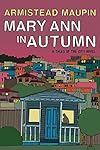
My race through the original six books that make up TALES OF THE CITY can only be described as a reading orgy. I think I went through them all in a week. Then, some years ago I read book #7 before losing track of Armistead Maupin. When I discovered he had written two more books in the series, I decided to save them for a vacation treat.
I went through Mary Ann in Autumn during the first day of vacation, once again enchanted by the characters of Mary Ann, Mouse, and Anna Madrigal. There was show more Maupin's same easy, conversational style and humor and the same knack for capturing precisely what makes the baby boomer generation (including me) both distinctive and ridiculous.
Now well into middle age, Mary Ann is facing multiple crises -- both personal and health-- when she once again turns to her good friend Michael (aka Mouse) for support. There are some new characters, representing the continuum of sexual identity, all of whom wind up being strangely interconnected in the small town of San Francisco. If you're a baby boomer, this is a MUST read. show less
I went through Mary Ann in Autumn during the first day of vacation, once again enchanted by the characters of Mary Ann, Mouse, and Anna Madrigal. There was show more Maupin's same easy, conversational style and humor and the same knack for capturing precisely what makes the baby boomer generation (including me) both distinctive and ridiculous.
Now well into middle age, Mary Ann is facing multiple crises -- both personal and health-- when she once again turns to her good friend Michael (aka Mouse) for support. There are some new characters, representing the continuum of sexual identity, all of whom wind up being strangely interconnected in the small town of San Francisco. If you're a baby boomer, this is a MUST read. show less
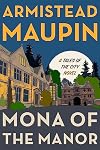
Tenth in the Tales of the City series.
Maupin has announced at least twice that this series was finished, including after the previous book, The Days of Anna Madrigal. (The jacket flap copy identifies this one, too, as the "final episode.") And perhaps this time he really doesn't mean to carry his characters beyond where Days of Anna ended, because this volume is a flashback, filling in a piece of the story from earlier years.
It's set in the early 1990s, during the years that Mona Ramsey show more lived in England after marrying Lord Teddy Raughton. As we begin, Lord Teddy has died, and while he left her a lovely country manor, there wasn't much money. So Mona and her adopted son, Wilfrid, have turned Easley House into a glorified B&B, leaning heavily on the "stay at the home of an actual British Lady" angle.
We follow Mona and Wilfrid through several weeks at Easley House. They host a vacationing couple from North Carolina, and prepare for their annual Midsummer Festival open house/party. And this year, some of Mona's old friends from Barbaby Lane will be coming to visit for Midsummer.
These novels are comfort food for me. I enjoy the way Maupin combines deep, thoughtful consideration of emotional relationships with melodramatic, occasionally absurd plot twists. (As Mona reminds us in passing in this volume, this is a series in which one character spent several years artificially darkening her skin in order to pass for Black because "exotic" fashion models were in style at the time.)
Maupin is, I think, a more skilled writer than he generally gets credit for. He's often dismissed as a writer of pleasant fluff. But look at how quickly the first chapter of this book establishes the relationship between the arriving guests from North Carolina, or the precision of the dialogue in a conversation that exposes a deep divide in attitudes between Mona and her on-again, off-again girlfriend. Light entertainment is harder to pull off than it might seem, and very few do it as well as Maupin. show less
Maupin has announced at least twice that this series was finished, including after the previous book, The Days of Anna Madrigal. (The jacket flap copy identifies this one, too, as the "final episode.") And perhaps this time he really doesn't mean to carry his characters beyond where Days of Anna ended, because this volume is a flashback, filling in a piece of the story from earlier years.
It's set in the early 1990s, during the years that Mona Ramsey show more lived in England after marrying Lord Teddy Raughton. As we begin, Lord Teddy has died, and while he left her a lovely country manor, there wasn't much money. So Mona and her adopted son, Wilfrid, have turned Easley House into a glorified B&B, leaning heavily on the "stay at the home of an actual British Lady" angle.
We follow Mona and Wilfrid through several weeks at Easley House. They host a vacationing couple from North Carolina, and prepare for their annual Midsummer Festival open house/party. And this year, some of Mona's old friends from Barbaby Lane will be coming to visit for Midsummer.
These novels are comfort food for me. I enjoy the way Maupin combines deep, thoughtful consideration of emotional relationships with melodramatic, occasionally absurd plot twists. (As Mona reminds us in passing in this volume, this is a series in which one character spent several years artificially darkening her skin in order to pass for Black because "exotic" fashion models were in style at the time.)
Maupin is, I think, a more skilled writer than he generally gets credit for. He's often dismissed as a writer of pleasant fluff. But look at how quickly the first chapter of this book establishes the relationship between the arriving guests from North Carolina, or the precision of the dialogue in a conversation that exposes a deep divide in attitudes between Mona and her on-again, off-again girlfriend. Light entertainment is harder to pull off than it might seem, and very few do it as well as Maupin. show less
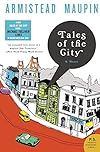
my god, this was SO much fun.
camp, cheeky, sexy and full of drama. the characters all have weird names and there's a LOT of them but they all start to intersect and interact (and interfere) with each other's lives in a way that is totally delicious. i adored it and think it's kind of in the spirit of like queer as folk or the l word only better.
full of twists, turns, lightning-fast dialogue and such a beautiful love letter to san francisco.
a total delight!
camp, cheeky, sexy and full of drama. the characters all have weird names and there's a LOT of them but they all start to intersect and interact (and interfere) with each other's lives in a way that is totally delicious. i adored it and think it's kind of in the spirit of like queer as folk or the l word only better.
full of twists, turns, lightning-fast dialogue and such a beautiful love letter to san francisco.
a total delight!
Lists
Awards


You May Also Like


Associated Authors
Statistics
- Works
- 40
- Also by
- 17
- Members
- 24,025
- Popularity
- #874
- Rating
- 3.9
- Reviews
- 449
- ISBNs
- 424
- Languages
- 12
- Favorited
- 91

