
Robert Jay Lifton (1926–2025)
Author of The Nazi Doctors: Medical Killing and the Psychology of Genocide
About the Author
A distinguished professor of psychology & psychiatry at John Jay College & the Graduate Center of the City University of New York, Robert Jay Lifton is the author of many important works, including "The Nazis Doctors," winner of the "Los Angeles Times" Book Prize, & "Death in Life," winner of a show more National Book Award. (Bowker Author Biography) show less
Series
Works by Robert Jay Lifton
Destroying the World to Save It: Aum Shinrikyo, Apocalyptic Violence, and the New Global Terrorism (1999) 118 copies, 4 reviews
Who Owns Death? Capital Punishment, the American Conscience, and the End of Executions (2000) 73 copies
Losing Reality: On Cults, Cultism, and the Mindset of Political and Religious Zealotry (2019) 72 copies, 1 review
Revolutionary immortality : Mao Tse-tung and the Chinese cultural revolution (1968) 47 copies, 2 reviews
Surviving Our Catastrophes: Resilience and Renewal from Hiroshima to the COVID-19 Pandemic (2023) 28 copies
Medicii Nazisti 1 copy
HIROSHIMA and NAGASAKI 1 copy
Associated Works
Communist China: Revolutionary Reconstruction and International Confrontation 1949 to the Present (1967) — Contributor — 100 copies, 1 review
Wrestling with Zion: Progressive Jewish-American Responses to the Israeli-Palestinian Conflict (2003) — Contributor — 84 copies, 1 review
Survivors, Victims, And Perpetrators: Essays On The Nazi Holocaust (1980) — Contributor — 19 copies, 1 review
Tagged
Common Knowledge
- Birthdate
- 1926-05-16
- Date of death
- 2025-09-04
- Gender
- male
- Education
- Cornell University
New York Medical College
Downstate Medical Center, Brooklyn, New York, USA
Jewish Hospital, Brooklyn, New York, USA - Occupations
- psychiatrist
- Organizations
- John Jay College of Criminal Justice, City University of New York
Yale University
Harvard University - Nationality
- USA
- Birthplace
- Brooklyn, New York, USA
- Places of residence
- New York, New York, USA
Ithaca, New York, USA
New Haven, Connecticut, USA
Cambridge, Massachusetts, USA - Associated Place (for map)
- New York, USA
Members
Reviews

Originally published in 1968 by Vintage Books, this study came out when Mao was a very real figure and China a very different nation on the world stage. I thought to peruse this briskly, even cursorily and pop it into my Little Free Library. However, its psychological study of the man and his people drew me in, especially thinking back on Trump a would-be charismatic demagogue who would like to have Mao's canvas to create on.
Part of that presidency seemed to be an intensification of a latent show more anti-intellectual tendency to even self-destructive ends as it melded with identity and a rural versus urban divide.
In here I see two cases of hero worship separated by decades and hemispheres with "worship" not being allegorical as witness by the reverence seen from QAnon and less radical corners.
Trumps MAGA push and "America First" view presented a vision, rally of the national commune and became, to me, a case when the extreme right meets the extreme left around the bend.
We live at a time of ephemeral folk devils like antifa and border-crossing rapists. These illusive enemies resonated with me in the techniques of Maoist China in rallying concerted effort and thus herd behavior against unseen enemies.
Still trying to work out the meaning and impact of the Trump era I feel some resonance with this concept of "psychism" used here which I don't fully understand but I feel seems to echo a national-scale neuroticism that I can relate to.
Also, understanding the formative history of modern China should be important to us.
Having recently re-read The Analects, I was intrigued to see China's philosophical roots resurgent even during this era in explaining potentially reckless population growth.
Part of that presidency seemed to be an intensification of a latent show more anti-intellectual tendency to even self-destructive ends as it melded with identity and a rural versus urban divide.
A related issue is the heightening during the Cultural Revolution of the longstanding Chinese Communist preoccupation with being "Red" as distinct from "expert." This seemingly simple polarity reflects a crucial confrontation between revolutionary purity and modem technology. Without pausing just yet to explore this confrontation, we may say that the extreme Maoist glorification of "Redness" and undermining of "expertness" (the latter including not only professional skill but learning itself) for a time so threatened the last vestiges in China of dispassionate intellectual endeavor as to virtually eliminate "the intellectuals" as a functioning group. ... Involved here is the implicit assumption that the special revolutionary combination of purity and power could in itself completely nourish the individual mind, and that any additional intellectual needs were suspect.
In the delineation of purity great stress was placed upon what could be considered rural and "Chinese" as opposed to the threatening impurities of the urban and the foreign.
In here I see two cases of hero worship separated by decades and hemispheres with "worship" not being allegorical as witness by the reverence seen from QAnon and less radical corners.
This is by no means the first time that a political leader has been made into a divinity. But few in the past could have matched Mao in the superlatives used, the number of celebrants, or the thoroughness with which the message of glory has been disseminated. Even more unique has been the way in which the leader's words have become vehicles for elevating him, during his lifetime, to a place above that of the state itself or its institutional source of purity and power...
Trumps MAGA push and "America First" view presented a vision, rally of the national commune and became, to me, a case when the extreme right meets the extreme left around the bend.
The psychological and socioeconomic reverberations of the Great Leap are undoubtedly still being felt in China, and one might view the Cultural Revolution itself as a kind of "second Leap" in response to a Maoist need to vindicate the first one. Motivated in part by the urge to outdo Russian and Chinese ideological rivals, the Great Leap Forward was an extraordinarily bold plunge into the communist future. Yet in its reliance upon a psychistic conception of reality, it had a dreamlike premodern, even prehistorical aura.
We live at a time of ephemeral folk devils like antifa and border-crossing rapists. These illusive enemies resonated with me in the techniques of Maoist China in rallying concerted effort and thus herd behavior against unseen enemies.
Ghosts and demons must be slain again and again as fear for the fife of the revolution becomes associated with fear of the dead. To remain calm, to act with measure in the face of such a threat, can be perceived as an intolerable form of inactivation and stasis. The psychological stage is reached in which one cannot dispense with one's hatred. One cannot give up one's enemies.
Still trying to work out the meaning and impact of the Trump era I feel some resonance with this concept of "psychism" used here which I don't fully understand but I feel seems to echo a national-scale neuroticism that I can relate to.
The Cultural Revolution utilized such standard thought reform elements as criticism and self-criticism, group-mediated shame and guilt, and the by now classic Maoist subject matter. But pubhc demonstration was substituted for internal experience, activism for psychic work, violence for persuasion—and ultimately, one suspects, uneasy obedience for significant inner change.
We see now the full paradox of psychism: there is the insistent substitution of the psychic state for the machine; but the psychic work required for authentic inner change is in turn replaced by an image of the change having already taken place. So predominant does the vision of revolutionary immortality become that confusion exists not only between mind and thing but between mentation and external action.
Also, understanding the formative history of modern China should be important to us.
We do well to recognize our ignorance of China. That ignorance has been perpetuated by two decades of virtual absence of either diplomatic or journalistic contact between the United States and China—a situation which, in the not too distant future, will surely be regarded as a historical oddity of the mid-twentieth century. Moreover, even those Westerners and other non-Chinese who have been permitted extensive residence on the mainland have rarely had an opportunity to observe closely the actual states of mind of individual Chinese. Nor has the regime been interested in revealing much more than its own ideal image of what that state of mind should be.
It is nonetheless possible that we have become too accustomed to a stance of ignorance.
Having recently re-read The Analects, I was intrigued to see China's philosophical roots resurgent even during this era in explaining potentially reckless population growth.
Also contributing to a general disinclination toward population control are such divergent influences as the old Confucian stress upon large families and upon the absolute filial obligation to produce posterity...show less
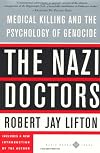
Robert Jay Lifton’s *The Nazi Doctors: Medical Killing and the Psychology of Genocide* is one of the most profound and unsettling examinations of how ordinary professionals became participants in extraordinary evil. Rather than treating Nazi doctors as incomprehensible monsters, Lifton approaches them as human beings shaped by ideology, institutional pressures, and psychological mechanisms. This decision is what gives the book its lasting power: it forces readers to confront the show more uncomfortable reality that the capacity for such actions is not limited to a few aberrant individuals, but can emerge within structured systems and accepted beliefs.
At the heart of Lifton’s analysis is the concept of “doubling,” a psychological process in which individuals create a second self that can carry out actions that would otherwise be morally unacceptable. In the case of Nazi doctors, this meant maintaining one identity as a healer committed to saving lives while simultaneously operating another identity that participated in selection, experimentation, and killing. Lifton argues that this split allowed physicians to reconcile their actions with their professional identity. They were not, in their own minds, abandoning medicine—they were redefining it. Healing was no longer about the individual patient but about the health of the “racial body,” the Volkskörper. Within this framework, killing could be rationalized as a form of treatment.
The book traces how this transformation occurred, beginning with the broader cultural and ideological environment of Nazi Germany. Lifton shows how eugenics, racial hygiene, and nationalist fervor gradually reshaped the ethical foundations of medicine. Physicians were taught to see certain groups—Jews, the disabled, the mentally ill—not as patients but as threats to the health of the nation. This shift was not sudden but incremental, moving from sterilization policies to the so-called “euthanasia” programs and eventually to the mass murder carried out in concentration camps. By presenting this progression, Lifton emphasizes that genocide was not an abrupt rupture but the culmination of a series of morally compromised steps.
One of the most compelling aspects of the book is Lifton’s use of interviews with former Nazi doctors. These firsthand accounts provide insight into how perpetrators understood their own actions. Many did not view themselves as criminals but as professionals fulfilling their duties under difficult circumstances. Some expressed regret, but often in ways that avoided full responsibility, framing their actions as the result of obedience, necessity, or ideological conviction. Lifton does not excuse these individuals, but he seeks to understand them, believing that comprehension is essential to preventing future atrocities.
Lifton also explores the role of bureaucracy and institutional structure in enabling medicalized killing. The Nazi system allowed doctors to operate within a framework that normalized and even rewarded their actions. Decisions about life and death were often reduced to administrative processes, distancing individuals from the consequences of their choices. This bureaucratic environment, combined with ideological indoctrination, created a context in which ethical boundaries were eroded and responsibility was diffused.
Another important theme is the corruption of language. Terms like “euthanasia” and “selection” masked the reality of what was taking place, making it easier for participants to detach from the moral weight of their actions. Lifton shows how language was used not only to deceive others but also to reshape the perceptions of those involved, allowing them to reinterpret killing as a necessary or even benevolent act. This manipulation of language parallels the broader psychological mechanisms that enabled participation in genocide.
What makes *The Nazi Doctors* particularly disturbing is its refusal to offer easy answers or comforting distance. Lifton does not allow readers to dismiss the perpetrators as fundamentally different from themselves. Instead, he highlights the conditions under which ordinary people can become agents of destruction, raising questions about the fragility of ethical norms and the influence of authority and ideology. This approach can be deeply unsettling, as it challenges the reader’s assumptions about human nature and moral stability.
The book is also intellectually demanding. Lifton’s writing is analytical and often dense, blending psychological theory with historical detail. At times, the focus on concepts like doubling can feel repetitive, as he returns to them in multiple contexts. However, this repetition serves to reinforce the central argument and to demonstrate how these mechanisms operated across different individuals and situations. Readers willing to engage with the complexity of the text will find it richly rewarding.
In addition to its historical significance, *The Nazi Doctors* carries important implications for contemporary discussions of ethics, medicine, and authority. Lifton’s work serves as a warning about the dangers of subordinating professional ethics to political or ideological goals. It underscores the importance of maintaining individual moral responsibility, even within hierarchical systems. For medical professionals in particular, the book is a stark reminder that the commitment to do no harm must remain absolute, regardless of external pressures.
Ultimately, *The Nazi Doctors* is not just a study of the past but a meditation on the human capacity for both healing and harm. Lifton’s careful and unflinching analysis forces readers to confront the conditions that make atrocities possible and to consider their own responsibilities within society. It is a challenging and often disturbing work, but one that is essential for understanding how genocide can be carried out not only by fanatics but by professionals who see themselves as simply doing their jobs. show less
At the heart of Lifton’s analysis is the concept of “doubling,” a psychological process in which individuals create a second self that can carry out actions that would otherwise be morally unacceptable. In the case of Nazi doctors, this meant maintaining one identity as a healer committed to saving lives while simultaneously operating another identity that participated in selection, experimentation, and killing. Lifton argues that this split allowed physicians to reconcile their actions with their professional identity. They were not, in their own minds, abandoning medicine—they were redefining it. Healing was no longer about the individual patient but about the health of the “racial body,” the Volkskörper. Within this framework, killing could be rationalized as a form of treatment.
The book traces how this transformation occurred, beginning with the broader cultural and ideological environment of Nazi Germany. Lifton shows how eugenics, racial hygiene, and nationalist fervor gradually reshaped the ethical foundations of medicine. Physicians were taught to see certain groups—Jews, the disabled, the mentally ill—not as patients but as threats to the health of the nation. This shift was not sudden but incremental, moving from sterilization policies to the so-called “euthanasia” programs and eventually to the mass murder carried out in concentration camps. By presenting this progression, Lifton emphasizes that genocide was not an abrupt rupture but the culmination of a series of morally compromised steps.
One of the most compelling aspects of the book is Lifton’s use of interviews with former Nazi doctors. These firsthand accounts provide insight into how perpetrators understood their own actions. Many did not view themselves as criminals but as professionals fulfilling their duties under difficult circumstances. Some expressed regret, but often in ways that avoided full responsibility, framing their actions as the result of obedience, necessity, or ideological conviction. Lifton does not excuse these individuals, but he seeks to understand them, believing that comprehension is essential to preventing future atrocities.
Lifton also explores the role of bureaucracy and institutional structure in enabling medicalized killing. The Nazi system allowed doctors to operate within a framework that normalized and even rewarded their actions. Decisions about life and death were often reduced to administrative processes, distancing individuals from the consequences of their choices. This bureaucratic environment, combined with ideological indoctrination, created a context in which ethical boundaries were eroded and responsibility was diffused.
Another important theme is the corruption of language. Terms like “euthanasia” and “selection” masked the reality of what was taking place, making it easier for participants to detach from the moral weight of their actions. Lifton shows how language was used not only to deceive others but also to reshape the perceptions of those involved, allowing them to reinterpret killing as a necessary or even benevolent act. This manipulation of language parallels the broader psychological mechanisms that enabled participation in genocide.
What makes *The Nazi Doctors* particularly disturbing is its refusal to offer easy answers or comforting distance. Lifton does not allow readers to dismiss the perpetrators as fundamentally different from themselves. Instead, he highlights the conditions under which ordinary people can become agents of destruction, raising questions about the fragility of ethical norms and the influence of authority and ideology. This approach can be deeply unsettling, as it challenges the reader’s assumptions about human nature and moral stability.
The book is also intellectually demanding. Lifton’s writing is analytical and often dense, blending psychological theory with historical detail. At times, the focus on concepts like doubling can feel repetitive, as he returns to them in multiple contexts. However, this repetition serves to reinforce the central argument and to demonstrate how these mechanisms operated across different individuals and situations. Readers willing to engage with the complexity of the text will find it richly rewarding.
In addition to its historical significance, *The Nazi Doctors* carries important implications for contemporary discussions of ethics, medicine, and authority. Lifton’s work serves as a warning about the dangers of subordinating professional ethics to political or ideological goals. It underscores the importance of maintaining individual moral responsibility, even within hierarchical systems. For medical professionals in particular, the book is a stark reminder that the commitment to do no harm must remain absolute, regardless of external pressures.
Ultimately, *The Nazi Doctors* is not just a study of the past but a meditation on the human capacity for both healing and harm. Lifton’s careful and unflinching analysis forces readers to confront the conditions that make atrocities possible and to consider their own responsibilities within society. It is a challenging and often disturbing work, but one that is essential for understanding how genocide can be carried out not only by fanatics but by professionals who see themselves as simply doing their jobs. show less
Destroying the World to Save It: Aum Shinrikyo, Apocalyptic Violence, and the New Global Terrorism by Robert Jay Lifton

This might be the scariest book I have ever read. It was written in 1999... before the Twin Towers attack. Lifton warns us that Aum Shinrikyo would likely be the start... well, a further step in a pattern that would probably just keep expanding. And so it has. Right now, whew, to look at Kim and Trump rattling their nuclear swords. What a world.
Lifton goes through quite carefully the various dimensions of the Aum Shinrikyo phenomenon. I should say, I practice Vajrayana Buddhism, which seems show more to be the main foundation of Aum Shinrikyo. There is a classical perversion of Vajrayana, where emptiness and compassion, the absolute cornerstones of Buddhism, are forgotten, and the visionary outrageousness of Vajrayana is acted out literally. Aum Shinrikyo was a textbook example, with the further extensions into modern weapons of mass destruction, science fiction imagery, etc. But still, to see how the tools of Vajrayana Buddhism can be so misused... actually, there are plenty of warnings in Vajrayana about the potential for misuse, but it is easy not to take those too seriously.... kind of like reading the pages of possible side effects when you pick up some pills from the pharmacy. Whew, that horrible stuff really can happen!
It's a bit like George W. Bush's call for a war against evil... something like that. Lifton I think makes the crucial point, though he doesn't elaborate it. The real value of a book like this is that it can alert us to what is possible. Lifton does a good job of showing how this kind of thing could happen anywhere, it's not just some strange Japanese one-off. The real way to fight evil is to start with the awareness that the potential for evil exists in all of us. Real evil starts with the assumption that I myself am inherently not evil. That opens the door to every evil.
It is so utterly sad to reflect on how the horrible predictions suggested by this book have been fulfilled. These are not any sort of unique special events, but just instances of a general pattern. Whew, what a dark place we have gotten to! Yeah, okay, to see that darkness is itself a glimmer of light. I sure wouldn't mind a bit more than a glimmer! show less
Lifton goes through quite carefully the various dimensions of the Aum Shinrikyo phenomenon. I should say, I practice Vajrayana Buddhism, which seems show more to be the main foundation of Aum Shinrikyo. There is a classical perversion of Vajrayana, where emptiness and compassion, the absolute cornerstones of Buddhism, are forgotten, and the visionary outrageousness of Vajrayana is acted out literally. Aum Shinrikyo was a textbook example, with the further extensions into modern weapons of mass destruction, science fiction imagery, etc. But still, to see how the tools of Vajrayana Buddhism can be so misused... actually, there are plenty of warnings in Vajrayana about the potential for misuse, but it is easy not to take those too seriously.... kind of like reading the pages of possible side effects when you pick up some pills from the pharmacy. Whew, that horrible stuff really can happen!
It's a bit like George W. Bush's call for a war against evil... something like that. Lifton I think makes the crucial point, though he doesn't elaborate it. The real value of a book like this is that it can alert us to what is possible. Lifton does a good job of showing how this kind of thing could happen anywhere, it's not just some strange Japanese one-off. The real way to fight evil is to start with the awareness that the potential for evil exists in all of us. Real evil starts with the assumption that I myself am inherently not evil. That opens the door to every evil.
It is so utterly sad to reflect on how the horrible predictions suggested by this book have been fulfilled. These are not any sort of unique special events, but just instances of a general pattern. Whew, what a dark place we have gotten to! Yeah, okay, to see that darkness is itself a glimmer of light. I sure wouldn't mind a bit more than a glimmer! show less
This is a new take on the Holocaust. The thesis is that the policy of the "final solution" was evolutionary, growing out of prior programs, such as euthanasia. A haunting phrase is used to describe Jews (and other subhumans): "Life Unworthy of Life." Lifton's point is that from the very beginning--forced sterilizations--physicians were the point people for every subsequent escalation of death, culminating in Auschwitz. The author provides context and research gathered from multiple sources, show more including interviews with survivors and SS doctors. The role of Jewish and Polish doctors is examined as well. Nazi doctors believed that the Fuhrer oath supplanted the Hippocratic oath; their patient was deemed to be the German volk, rather than individuals. Given that mindset, it made selections at the death campus (conducted almost exclusively by physcians) an acceptable activity. Lifton notes the reversal of reality: from healing people to killing them. His perceptive psychological profiles of people like Mengele are alone worth the price of admission. The medical dimension of the Holocaust seems to be central to the entire Nazi effort to exterminate the Jews. Doctors were the ones, for example, who supervised the delivery of Zyklon B pellets into the showers. Lifton has done history a major service by plumbing this heretofore under-appreciated aspect of Holocaust studies. The last section is devoted to a rather difficult examination of links between psychology and genocide. I couldn't get through that, and it seemed too specialized for someone more interested in history. show less
Lists
Awards


You May Also Like


Associated Authors
Statistics
- Works
- 37
- Also by
- 8
- Members
- 2,791
- Popularity
- #9,209
- Rating
- 3.9
- Reviews
- 27
- ISBNs
- 119
- Languages
- 7
- Favorited
- 2


