

Ernest Becker (1924–1974)
Author of The Denial of Death
About the Author
Image credit: Owen Barfield World Wide Website
Works by Ernest Becker
The Birth and Death of Meaning: An Interdisciplinary Perspective on the Problem of Man (1971) 360 copies, 5 reviews
Beyond Alienation 1 copy
Zaprzeczanie śmierci 1 copy
Tagged
Common Knowledge
- Canonical name
- Becker, Ernest
- Birthdate
- 1924-09-27
- Date of death
- 1974-03-06
- Gender
- male
- Education
- Syracuse University (Ph.D|1960)
- Occupations
- professor
cultural anthropologist - Organizations
- University of California, Berkeley
San Francisco State College
Simon Fraser University
United States Army (WWII) - Awards and honors
- Pulitzer Prize (1974)
- Short biography
- Professor Ernest Becker was a Jewish-American cultural anthropologist and writer. He is noted for his 1974 Pulitzer Prize-winning book, “The Denial of Death”.
- Cause of death
- colon cancer
- Nationality
- USA
- Birthplace
- Springfield, Massachusetts, USA
- Places of residence
- Burnaby, British Columbia, Canada
- Place of death
- Burnaby, British Columbia, Canada
- Burial location
- Kesser Israel Cemetery, Springfield, Hampden County, Massachusetts, USA
- Associated Place (for map)
- USA
Members
Reviews
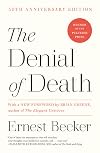
Last year I turned 31. For whatever reason, right around the time of my birthday, I began to feel anxious about death. I was getting older. My girlfriend and I had gotten a kitten last spring - it suddenly was a full grown animal and despite it being only a year old, I was already losing sleep over the fact that we maybe had 15 good years with the cat before we'd have to give it up to death. I began to perform baroque mental calculations; I'd be 45 when the cat was fifteen. Suddenly, 15 show more years stretched out into the future and it didn't feel very long. My parents are approaching 6o, would they live as long as the cat? What about children? I'd always wanted them in the abstract, but now biology was bearing down on us, despite the fact that financially I'm not much different than I was in my mid-20s and certainly not ready to provide for a child. Overnight, there seemed to be a dramatic foreshortening of the future that came from no where. It seems obvious, but for the first time I really felt the fact that I would never again be as young as I was yesterday. Following this line of thinking to it's natural conclusion, I began to spiral into the idea that it was only downhill from here.
Despite the title of this book, I don't think I'd been in "denial" about death; I can remember multiple debates with multiple friends who claimed to have "peace" with the idea of mortality, something I have always been suspicious of. It always seemed more likely to me that the people that say this kind of thing, especially while still young, didn't really realize what was going to happen to them, that they were paying the same lip-service to the ultimate of ultimates that has become so common in our culture. As this language down-playing death has become more common, what people actually do reveals how the fear remains with us; plastic surgery and anti-aging treatments proliferate, expensive medical treatments are developed with symptoms worse than the diseases they remedy, and social media profiles allow us all to build idealized monuments to ourselves which will persist longer than the greatest statues and busts of antiquity. So much of the problem of 21st century life comes down to the general dulling of sensation by means of technology and consumption - the dulling of the fear of death is no different. The dilemma we find ourselves in is that such fears and sensations, forming the essential basis of the human experience as they do, cannot be extirpated without also extirpating humanity, and however dull we make them, they will eventually hulk up and burst through.
I sought out this book seeking some kind of enlightenment. I didn't expect it to bring me peace so to speak, but rather give me some clarity on what I was going through, help me put it in perspective as a process that has played out at some point in every person's life who has ever grown old enough to go through it. For whatever its flaws might be, I did get somethings from this book that have already been helpful and for that it was worth reading.
That being said, this book was a lot different than I though it would be. You can definitely feel the 50 years that have passed since its publication. Becker seems to fancy himself on the cutting edge of psychology, and he is ready to criticize juggernauts of intellectual history as out of step with the times, and rightly so; perhaps he anticipated that this would one day happen to his ideas as well. We have here a kind of neo-psychoanalysis, and for all his perceptive criticisms of Freud (his sexual obsession, his overconfidence in his ideas and the powers of science) Becker sometimes ends up sounding as dated in 2023 as Freud and Co. did in 1972. Becker treats all mental illness as a purely intellectual issue, ignoring any conception of brain science or neurochemical relationships that play a vital role in understanding why some people suffer from mental disorders. He even goes as far as to quote Adler in his proclamation that mental illness at its base stems from cowardliness, a lack of strength to face the world as it is and so requiring a retreat into delusion and hallucination. In my limited understanding of psychoanalysis, it seems that it sets up a conception of the mind that is very different from the mainstream perspective today, and if we engage with it on those terms, what Becker is doing here is a bit more understandable. My recommendation to readers that are turned off by these parts of the book is to stop seeing the depressives, schizophrenics, and neurotics that Becker discusses in a real clinical sense, and instead imagine them as different personality types or ways of viewing the world. In this way, you might imagine how the "schizophrenic" or the "depressive" in this book could be a version of you. Part of the message of this book (and psychoanalysis as whole) is how people can carry on living what we call a normal life while actually having the darkest, most terrifying, and most destructive concepts and feelings lurking just below the surface. Indeed, Becker lays out how a certain amount of delusion is necessary to being a "sane" person - as such we all have our place on the spectrum of mental illness, and being aware of where you lie can help you live a healthier life.
Another reason this book is different than what I thought is that Becker is not in the slightest offering any kind of encouragement or sense of peace. He is, in fact recommending the exact opposite. From the closing of the book:
How's that for edification? The irony of the situation is that I would expect most people would pick up this book in an attempt to come to terms with death. Instead, after a couple hundred pages of meditation on life's apparent meaninglessness, the lies men tell themselves about life, and the neuroses that arise from the firmament of dread, we are treated to an exceedingly pessimistic concept of what being alive is. I don't mean any of this as a criticism. I happened to think Becker's is as right as any other plausible explanation about how we are to live on this Earth. I think we must respect the bravery to close his book on this note, when he could have just as easily tied it up with some more optimistic (if hollow) perspective on life and death.
Everything I learned from this book was similarly bitter. The section on the neurotic as artiste manque is one of the most perceptive analyses of how some people interact with the world (myself included) and it alone is worth the effort of reading this book. Here, Becker lays out an extremely compelling argument for why art is important, and if you struggle with inspiration I highly recommend you carefully read it as a reminder of art's value as totem of meaning, and the profound loss that can come with abandoning the creative impulse. The sections on religion were similarly upsetting - Becker lays out a handful of extremely compelling arguments for the superiority of religion in giving man a healthy conception of death and life's limits. He also admits, however, that this route is more and more difficult to credulously follow as expanding human knowledge continues to tear down the mythic framework necessary for supporting religion's influence. In the past year or so, I (atheistic) also happened upon this idea, and felt confounded by the fact it seemed impossible to go back to a healthy religious conception with out willfully ignoring the modern world. It was disheartening to find that someone as learned as Becker was similarly in the dark.
My main problem with Becker's system of thought is that it all centers on the idea that every man has in him the in-born desire to be a hero. It is only by indulging in this heroic impulse that man can come to terms with death - this is why martyrs exist, or soldiers that march willingly to their own destruction. Becker recognizes that this hero complex is as illusory as any other trick we play on ourselves to get out of bed in the morning, but he seems to believe that this hero complex, if not outright good, is the most widespread and practical path towards fulfillment. He criticizes any conception of life and death that doesn't allow men to realize their own individual heroism, and believes that without a widespread path to heroism, society is doomed to malaise and eventual widespread violence in an attempt to reclaim this heroic possibility. Too often in the book, Becker falls into this trap, that heroism is the way, and that a life without it is nothing. Perhaps this is expected from a published author, someone who spent their life pursuing academic excellence and clarity of thought - one could only achieve so much by being armed with a sense of heroic ambition. What Becker didn't seem ready to entertain is that perhaps the age of heroes is over. Certainly, heroic figures will continue to exist, but the popular conception of what it means to be a hero isn't open to the vast majority of people, and even if it was, we would soon exhaust our available resources, both abstract and physical. Part of the problem of the world we are living in now is that people have been enabled by technology and society to enlarge their own existence out of proportion with its natural limits. We've all become the hero of our own story, and so too easily deny the reality of others, or even seen them as outright enemies. Our desire, our prosperity is framed as a heroic struggle by the system that wants to sell us endless heaps of accessories to take with us on our heroic quest - when really life is both more mundane and more beautiful in its mundanity than we are led to believe. To me, to forsake the path towards heroism is, paradoxically, the higher path.
Becker was still relatively young when he wrote this book, in his 4os. In one of those outrageous ironies of fate, he died soon after its publication. I'm not sure if he was aware of his impending death while he was working on it. I think you could interpret the dark and rather bitter tone of the book as evidence of either possibility: Becker knew he was going to die at a cruelly young age and so truly understood the random fickleness of life; or, not knowing, he felt no need yet to search for some kind of closure or peaceful denouement to his existence. I do wonder how the ideas in this book would have developed if the author had lived to old age, or if it had been written when he was older. show less
Despite the title of this book, I don't think I'd been in "denial" about death; I can remember multiple debates with multiple friends who claimed to have "peace" with the idea of mortality, something I have always been suspicious of. It always seemed more likely to me that the people that say this kind of thing, especially while still young, didn't really realize what was going to happen to them, that they were paying the same lip-service to the ultimate of ultimates that has become so common in our culture. As this language down-playing death has become more common, what people actually do reveals how the fear remains with us; plastic surgery and anti-aging treatments proliferate, expensive medical treatments are developed with symptoms worse than the diseases they remedy, and social media profiles allow us all to build idealized monuments to ourselves which will persist longer than the greatest statues and busts of antiquity. So much of the problem of 21st century life comes down to the general dulling of sensation by means of technology and consumption - the dulling of the fear of death is no different. The dilemma we find ourselves in is that such fears and sensations, forming the essential basis of the human experience as they do, cannot be extirpated without also extirpating humanity, and however dull we make them, they will eventually hulk up and burst through.
I sought out this book seeking some kind of enlightenment. I didn't expect it to bring me peace so to speak, but rather give me some clarity on what I was going through, help me put it in perspective as a process that has played out at some point in every person's life who has ever grown old enough to go through it. For whatever its flaws might be, I did get somethings from this book that have already been helpful and for that it was worth reading.
That being said, this book was a lot different than I though it would be. You can definitely feel the 50 years that have passed since its publication. Becker seems to fancy himself on the cutting edge of psychology, and he is ready to criticize juggernauts of intellectual history as out of step with the times, and rightly so; perhaps he anticipated that this would one day happen to his ideas as well. We have here a kind of neo-psychoanalysis, and for all his perceptive criticisms of Freud (his sexual obsession, his overconfidence in his ideas and the powers of science) Becker sometimes ends up sounding as dated in 2023 as Freud and Co. did in 1972. Becker treats all mental illness as a purely intellectual issue, ignoring any conception of brain science or neurochemical relationships that play a vital role in understanding why some people suffer from mental disorders. He even goes as far as to quote Adler in his proclamation that mental illness at its base stems from cowardliness, a lack of strength to face the world as it is and so requiring a retreat into delusion and hallucination. In my limited understanding of psychoanalysis, it seems that it sets up a conception of the mind that is very different from the mainstream perspective today, and if we engage with it on those terms, what Becker is doing here is a bit more understandable. My recommendation to readers that are turned off by these parts of the book is to stop seeing the depressives, schizophrenics, and neurotics that Becker discusses in a real clinical sense, and instead imagine them as different personality types or ways of viewing the world. In this way, you might imagine how the "schizophrenic" or the "depressive" in this book could be a version of you. Part of the message of this book (and psychoanalysis as whole) is how people can carry on living what we call a normal life while actually having the darkest, most terrifying, and most destructive concepts and feelings lurking just below the surface. Indeed, Becker lays out how a certain amount of delusion is necessary to being a "sane" person - as such we all have our place on the spectrum of mental illness, and being aware of where you lie can help you live a healthier life.
Another reason this book is different than what I thought is that Becker is not in the slightest offering any kind of encouragement or sense of peace. He is, in fact recommending the exact opposite. From the closing of the book:
I think that taking life seriously means something like this: that whatever man does on this planet has to be done in the lived truth of the terror of creation, of the grotesque, of the rumble of panic underneath everything.
How's that for edification? The irony of the situation is that I would expect most people would pick up this book in an attempt to come to terms with death. Instead, after a couple hundred pages of meditation on life's apparent meaninglessness, the lies men tell themselves about life, and the neuroses that arise from the firmament of dread, we are treated to an exceedingly pessimistic concept of what being alive is. I don't mean any of this as a criticism. I happened to think Becker's is as right as any other plausible explanation about how we are to live on this Earth. I think we must respect the bravery to close his book on this note, when he could have just as easily tied it up with some more optimistic (if hollow) perspective on life and death.
Everything I learned from this book was similarly bitter. The section on the neurotic as artiste manque is one of the most perceptive analyses of how some people interact with the world (myself included) and it alone is worth the effort of reading this book. Here, Becker lays out an extremely compelling argument for why art is important, and if you struggle with inspiration I highly recommend you carefully read it as a reminder of art's value as totem of meaning, and the profound loss that can come with abandoning the creative impulse. The sections on religion were similarly upsetting - Becker lays out a handful of extremely compelling arguments for the superiority of religion in giving man a healthy conception of death and life's limits. He also admits, however, that this route is more and more difficult to credulously follow as expanding human knowledge continues to tear down the mythic framework necessary for supporting religion's influence. In the past year or so, I (atheistic) also happened upon this idea, and felt confounded by the fact it seemed impossible to go back to a healthy religious conception with out willfully ignoring the modern world. It was disheartening to find that someone as learned as Becker was similarly in the dark.
My main problem with Becker's system of thought is that it all centers on the idea that every man has in him the in-born desire to be a hero. It is only by indulging in this heroic impulse that man can come to terms with death - this is why martyrs exist, or soldiers that march willingly to their own destruction. Becker recognizes that this hero complex is as illusory as any other trick we play on ourselves to get out of bed in the morning, but he seems to believe that this hero complex, if not outright good, is the most widespread and practical path towards fulfillment. He criticizes any conception of life and death that doesn't allow men to realize their own individual heroism, and believes that without a widespread path to heroism, society is doomed to malaise and eventual widespread violence in an attempt to reclaim this heroic possibility. Too often in the book, Becker falls into this trap, that heroism is the way, and that a life without it is nothing. Perhaps this is expected from a published author, someone who spent their life pursuing academic excellence and clarity of thought - one could only achieve so much by being armed with a sense of heroic ambition. What Becker didn't seem ready to entertain is that perhaps the age of heroes is over. Certainly, heroic figures will continue to exist, but the popular conception of what it means to be a hero isn't open to the vast majority of people, and even if it was, we would soon exhaust our available resources, both abstract and physical. Part of the problem of the world we are living in now is that people have been enabled by technology and society to enlarge their own existence out of proportion with its natural limits. We've all become the hero of our own story, and so too easily deny the reality of others, or even seen them as outright enemies. Our desire, our prosperity is framed as a heroic struggle by the system that wants to sell us endless heaps of accessories to take with us on our heroic quest - when really life is both more mundane and more beautiful in its mundanity than we are led to believe. To me, to forsake the path towards heroism is, paradoxically, the higher path.
Becker was still relatively young when he wrote this book, in his 4os. In one of those outrageous ironies of fate, he died soon after its publication. I'm not sure if he was aware of his impending death while he was working on it. I think you could interpret the dark and rather bitter tone of the book as evidence of either possibility: Becker knew he was going to die at a cruelly young age and so truly understood the random fickleness of life; or, not knowing, he felt no need yet to search for some kind of closure or peaceful denouement to his existence. I do wonder how the ideas in this book would have developed if the author had lived to old age, or if it had been written when he was older. show less

I find Becker's work to be fair, but lacking in depth for he failed to consider significant Jungian contributions to psychology. Becker claims Jung resorted to "needless esoterism" which is his way of tacitly admitting he didn't really understand Jung. What's more if he had understood Jung's theory of individuation and the nature of the hero archetype he could have condensed his book into 75 pages or less because an honest understanding of Jung either negates a fair portion of his own show more speculations or makes them redundant. I also think Becker's popularity and Pulitzer had more to do with good cultural timing than good analysis or writing. In the 1970's psychology was popular and people were looking for any scientific or scholarly excuse to justify explaining away religion as little more than superstitious fears of death. Simultaneously, the feminists were looking to make fun of Freud. By over relying on the works of Otto Rank while criticizing Freud, Becker was able to provide a book that did both. Had Becker published his book in the 1950s or in the 1980s, I'm confident it wouldn't have had such a positive reception. For certain, the denial of mortality by the human ego is a defense mechanism that gives extra energy to certain belief systems like the afterlife and heroic resurrections, but that is by far not the only understanding of the origin of such stories and beliefs and Becker never explored any of them very far despite the considerably lengthy ramblings of his book. show less

Li esse livro porque influenciou muito a Hilda Hilst, mas a verdade é que as teorias psicanalíticas nele contidas estão deveras ultrapassadas, mesmo ele tendo ganho o pulitzer nos anos 70 me parece que já naquela época ele estaria defasado em relação aos seminários já publicados de Lacan. A psicanálise hoje não tem nada a ver com as coisas descritas alí, sobretudo o discurso altamente preconceituoso em relação aos neuróticos que me incomodou deveras.
Um livro que me serviu para show more o estudo de como pensava Hilda Hilst, mas que me foi totalmente descartável como psicóloga, leia com cuidado, considerando todas as bobagens defasadas nele contidos, assim há como retirar algum proveito de seus escritos. show less
Um livro que me serviu para show more o estudo de como pensava Hilda Hilst, mas que me foi totalmente descartável como psicóloga, leia com cuidado, considerando todas as bobagens defasadas nele contidos, assim há como retirar algum proveito de seus escritos. show less

There are rational things to say about Zen, a method of consciousness transformation that eschews the rational, but you're not going to get to them by insisting that irrationality is ipso facto a bad thing. If you want to understand how rationality imprisons you, the koan you should look at is "show me your original face." You weren't originally rational but now it's hard to be otherwise, though it's less about rationality, ultimately and more about convention and pattern and fear of show more change.
Becker acknowledges his fear of death and his fear of losing the gains of western civilization which he sees under attack. This "attachment" as Buddhists would have it is what Zen aims to get you to give up--not to replace with an attachment to irrationalism but to surrender. Becker sees surrender in the old political way as giving in to a tyranny. He see's all change as a change from one attachment to another. If you're attached by therapy, that can help you but because the therapists does it all for you (as they put it at McDonalds). Otherwise, you're attached to someone doing it all for themselves--a dictator--a brain washer. That's not really rational but looks that way to someone with his attachments.
We all have our attachments--things we identify with--things we believe ourselves to be--ways we claim to be hard wired.
Satori is the experience that we needn't be wired at all. show less
Becker acknowledges his fear of death and his fear of losing the gains of western civilization which he sees under attack. This "attachment" as Buddhists would have it is what Zen aims to get you to give up--not to replace with an attachment to irrationalism but to surrender. Becker sees surrender in the old political way as giving in to a tyranny. He see's all change as a change from one attachment to another. If you're attached by therapy, that can help you but because the therapists does it all for you (as they put it at McDonalds). Otherwise, you're attached to someone doing it all for themselves--a dictator--a brain washer. That's not really rational but looks that way to someone with his attachments.
We all have our attachments--things we identify with--things we believe ourselves to be--ways we claim to be hard wired.
Satori is the experience that we needn't be wired at all. show less
Lists
My List (1)
Deathreads (1)
Awards


You May Also Like


Associated Authors
Statistics
- Works
- 14
- Members
- 3,466
- Popularity
- #7,335
- Rating
- 4.1
- Reviews
- 44
- ISBNs
- 54
- Languages
- 8
- Favorited
- 5