
Deborah E. Lipstadt
Author of Denying the Holocaust: The Growing Assault on Truth and Memory
About the Author
Deborah E. Lipstadt is Dorot Professor of Modern Jewish and Holocaust Studies and director of the Institute for Jewish Studies at Emory University.
Works by Deborah E. Lipstadt
Associated Works
The Irving Judgment : David Irving v. Penguin Books and Professor Deborah Lipstadt (2000) — Subject — 34 copies, 1 review
Tagged
Common Knowledge
- Birthdate
- 1947-03-18
- Gender
- female
- Education
- Brandeis University (MA ∙ 1972 ∙ PhD ∙ 1976)
City College of New York - Occupations
- historian
Professor of Modern Jewish History and Holocaust Studies - Organizations
- American Historical Association
Association for Jewish Studies
American Association for Religion
Phi Beta Kappa
Emory University - Relationships
- Julius, Anthony (lawyer)
- Nationality
- USA
- Birthplace
- New York, New York, USA
- Places of residence
- New York, New York, USA
- Associated Place (for map)
- New York, New York, USA
Members
Reviews
****.5
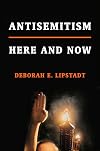
An excellent and highly accessible discussion of the current state of antisemitism, primarily in the US and Europe. She deliberately avoids an overly theoretical scholarly approach, and instead adopts a more conversational tone. For instance, she starts off the section on defining antisemitism with the rather droll statement that "an antisemite is someone who hates Jews more than is absolutely necessary."
She does a great job pointing out how trump in the US and Corbin in the UK are show more both guilty of fostering antisemitism, regardless of whether or not they are themselves antisemitic. As with other recent books on the subject, she goes on to examine various facets and expressions of antisemitism, as well as the prominent sources (right wing, left wing, Islamic extremism). As a professor, she spends a good deal of time exploring antisemitism on campus, the links between anti-Zionism and antisemitism, and the alienation that many progressive Jewish students (and faculty) feel when their own peer groups turn against them (a phenomenon that has continued to worsen since the book was written).
One point that I appreciated was the way that "antisemitism" should be written, i.e. lower case with no hyphen, with a well-considered rationale. show less
An excellent and highly accessible discussion of the current state of antisemitism, primarily in the US and Europe. She deliberately avoids an overly theoretical scholarly approach, and instead adopts a more conversational tone. For instance, she starts off the section on defining antisemitism with the rather droll statement that "an antisemite is someone who hates Jews more than is absolutely necessary."
She does a great job pointing out how trump in the US and Corbin in the UK are show more both guilty of fostering antisemitism, regardless of whether or not they are themselves antisemitic. As with other recent books on the subject, she goes on to examine various facets and expressions of antisemitism, as well as the prominent sources (right wing, left wing, Islamic extremism). As a professor, she spends a good deal of time exploring antisemitism on campus, the links between anti-Zionism and antisemitism, and the alienation that many progressive Jewish students (and faculty) feel when their own peer groups turn against them (a phenomenon that has continued to worsen since the book was written).
One point that I appreciated was the way that "antisemitism" should be written, i.e. lower case with no hyphen, with a well-considered rationale. show less
Dr. Lipstadt's timely book calls out antisemitism in all its iterations. She examines its growth on the far right and on the far left. One of the most unusual and disturbing aspects of the book was her analysis of Holocaust denial and its role in enabling antisemitism. She also demonstrates how Trump, and Corbyn enable antisemitism through witting or unwitting use of tropes and/ or failure to call out antisemitism when it comes from members of their base. Lipstadt argues that this "myopia" show more extends to members of the far right and far left as well, in that the far left only sees and condemns right wing antisemitism and vice versa. Neither, she believes, are willing to acknowledge in their own ranks.
Lipstadt's writing is lucid and accessible. The book is well written and sadly more timely than it was a year ago when it first came out. show less
Lipstadt's writing is lucid and accessible. The book is well written and sadly more timely than it was a year ago when it first came out. show less
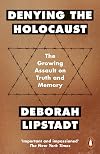
The 1993 book that annoyed the infamous David Irving enough to take its author to court for libel. I was unsurprised to read that Holocaust deniers like Irving have used the same tactics as creationists, climate change deniers, moon hoaxers, 9/11 thruthers, and every conspiracy theorist ever, namely: the ignoring of evidence that doesn't fit their narrative, presenting themselves as one side of a debate that is actually no debate at all, (mis)quoting out of context knowing most people will show more never bother to check original sources, claiming a credibility or authority for themselves that they do no have, bullying witnesses, just plain lying, etc. No surprise either that, almost without exception, it's easy to find strong links between Holocaust deniers and far-right and/or antisemitic organisations. In this book Lipstadt calls them out on their bullshit in clear, unequivocal terms, with numerous appalling examples of their mendacity... and gets dragged through the UK libel courts for her trouble, as if historical truth can be determined in a court of law. As we know, Irving lost spectacularly. show less
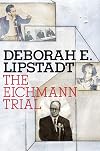
A competently constructed account of an important cultural and legal episode. Aiming for a popular audience, it will bring to the attention of a new audience the significance of the Eichmann trial, and the events that preceded it. For that reason, however, it fails to consider many of the crucial controversies -- concerning both the questions that arose at the time, and the ramifications of those events for today -- in sufficient depth, at times reading more like a gripping novel or a script show more for an episode of Law and Order. The definitive historical account remains to be written.
Readers may find problematic many of the positions she asserts, especially when they are unnecessary to her more important arguments. She is by no means an impartial chronicler, and her personal beliefs at times blind her to some of the more complex implications of the events she reports. For example, having explained that much of the debate concerned whether Eichmann was a clerk or a master engineer of the Final Solution, she tells of one witness's explanation: One judged asked whether her committee -- one of the Jewish Councils who helped organize the local population for better deportation -- "had considered assassinating Eichmann. Implicit in his question was the accusation that those at the top, the leaders who knew precisely what faced their fellow Jews, had failed to take actions that might have stopped the process. Brand seemed flummoxed by Halevi's question. She recognized, as he seemed not to, that such action would probably not have materially changed matters. 'Let us assume...one of us shoots him. What would we achieve by that?'" This witness appears to be supporting Eichmann's claim that he was but a "cog" in a bigger machine over which he had no control, a reading Lipstadt does not pause to consider. The reason, of course, is that were she to allow that possibility, then the question being asked makes perfect sense, and the Jewish collaborators liable to be held responsible for their support of Eichmann's hideous project. Yet as her characterization suggests -- "she recognized, as he seemed not to" -- this was a possibility that she had ruled out a priori. One quickly senses that there is something going on here that is not history, but something much closer to apologia.
Similarly facile is her treatment of the arguments that Israel had no authority to kidnap and try Eichmann: he was a German, forcibly taken from Argentina, accused of murdering people in Hungary who were not citizens of Israel. She recognizes the claims, but turns them aside with but little discussion of the major points of international law that are being asserted. Even if the concerns were satisfactorily resolved at the time -- and her description shows this not to have been uniformly the case -- as an historian she should have considered the kind of precedent such action has set for contemporary society, wherein one country feels justified in violating the sovereignty of another in order to pursue its own ends, without first even attempting to achieve the extradition through legal means. In this case Israel advanced a "the ends justified the means" argument, which can be extraordinarily problematic in any context, much less in a world as volatile as ours today. The cause of the rule of law is rarely advanced by nonlawful actions.
Finally, I find personally disappointing Lipstadt's support of the characterization of the Holocaust not as a unfathomable atrocity of which Jews were the primary victims, but rather as an episode whose victims were *exclusively* Jews. This is one of the disagreements over which she castigates Hannah Arendt, who favored the former perspective that the Holocaust was a crime against humanity, inflicted on the Jews. In contrast, as Lipstadt reports with apparent approval, all other civilian populations targeted by the Nazis were only "ancillary items". Such callous diminishment of the sufferings of others, merely because they were not Jewish, seems unfortunate, and certainly undermines her overt claims to wish to teach the evils of such blindness to the shared humanity of us all.
In the end, if you wish a description about some facts about the Holocaust, this is a fine place to begin; if, however, you seek a more subtle understanding of the Holocaust, continue to read Arendt. show less
Readers may find problematic many of the positions she asserts, especially when they are unnecessary to her more important arguments. She is by no means an impartial chronicler, and her personal beliefs at times blind her to some of the more complex implications of the events she reports. For example, having explained that much of the debate concerned whether Eichmann was a clerk or a master engineer of the Final Solution, she tells of one witness's explanation: One judged asked whether her committee -- one of the Jewish Councils who helped organize the local population for better deportation -- "had considered assassinating Eichmann. Implicit in his question was the accusation that those at the top, the leaders who knew precisely what faced their fellow Jews, had failed to take actions that might have stopped the process. Brand seemed flummoxed by Halevi's question. She recognized, as he seemed not to, that such action would probably not have materially changed matters. 'Let us assume...one of us shoots him. What would we achieve by that?'" This witness appears to be supporting Eichmann's claim that he was but a "cog" in a bigger machine over which he had no control, a reading Lipstadt does not pause to consider. The reason, of course, is that were she to allow that possibility, then the question being asked makes perfect sense, and the Jewish collaborators liable to be held responsible for their support of Eichmann's hideous project. Yet as her characterization suggests -- "she recognized, as he seemed not to" -- this was a possibility that she had ruled out a priori. One quickly senses that there is something going on here that is not history, but something much closer to apologia.
Similarly facile is her treatment of the arguments that Israel had no authority to kidnap and try Eichmann: he was a German, forcibly taken from Argentina, accused of murdering people in Hungary who were not citizens of Israel. She recognizes the claims, but turns them aside with but little discussion of the major points of international law that are being asserted. Even if the concerns were satisfactorily resolved at the time -- and her description shows this not to have been uniformly the case -- as an historian she should have considered the kind of precedent such action has set for contemporary society, wherein one country feels justified in violating the sovereignty of another in order to pursue its own ends, without first even attempting to achieve the extradition through legal means. In this case Israel advanced a "the ends justified the means" argument, which can be extraordinarily problematic in any context, much less in a world as volatile as ours today. The cause of the rule of law is rarely advanced by nonlawful actions.
Finally, I find personally disappointing Lipstadt's support of the characterization of the Holocaust not as a unfathomable atrocity of which Jews were the primary victims, but rather as an episode whose victims were *exclusively* Jews. This is one of the disagreements over which she castigates Hannah Arendt, who favored the former perspective that the Holocaust was a crime against humanity, inflicted on the Jews. In contrast, as Lipstadt reports with apparent approval, all other civilian populations targeted by the Nazis were only "ancillary items". Such callous diminishment of the sufferings of others, merely because they were not Jewish, seems unfortunate, and certainly undermines her overt claims to wish to teach the evils of such blindness to the shared humanity of us all.
In the end, if you wish a description about some facts about the Holocaust, this is a fine place to begin; if, however, you seek a more subtle understanding of the Holocaust, continue to read Arendt. show less
Lists
Awards


You May Also Like


Associated Authors
Statistics
- Works
- 10
- Also by
- 6
- Members
- 1,996
- Popularity
- #12,896
- Rating
- 4.0
- Reviews
- 39
- ISBNs
- 51
- Languages
- 7
- Favorited
- 1