
Rena Kornreich Gelissen (1920–2006)
Author of Rena's Promise: A Story of Sisters in Auschwitz
About the Author
Works by Rena Kornreich Gelissen
Tagged
Common Knowledge
- Birthdate
- 1920-08-24
- Date of death
- 2006-04-08
- Gender
- female
- Occupations
- Holocaust survivor
memoirist - Short biography
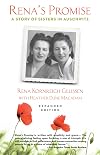
- Rena Kornreich was born to a Jewish family in Voivodeship, Poland. She and her three sisters, Gertrude, Zosia and Danka, grew up in Tylicz. Gertrude emigrated to the USA in 1921. After the Nazi invasion of Poland in World War II, the family fled to Slovakia. To protect the people hiding her, Rena turned herself in. At age 21, she was on the first transport of Jewish women into the concentration camp at Auschwitz on 26 March 1942. Three days later, she was joined by her younger sister Danka. The sisters endured forced labor, hunger, and abuse, and narrowly escaped Nazi experimentation for three years in the camp. In January 1945, they were sent on a death march to the Ravensbrück concentration camp and then put on coal cars for transport to Germany for more forced labor. They survived and were liberated by Russian and Allied troops in May in Neustadt Glewe, Germany. Their parents had been murdered in Auschwitz but the fate of Zosia and her children was unknown. In 1947, Rena married John Gelissen, commander of the Dutch Red Cross relief team that had given her and her sister food and shelter at the end of the war. In 1954, Rena and her family emigrated to the USA, settling in Norwalk, Connecticut. Danka and her husband Elias Brandel also came to the USA. With writer Heather Dune Macadam, Rena told the story of her experiences in a memoir called Rena's Promise: A Story of Sisters in Auschwitz, published in 1995.
- Nationality
- Poland
- Birthplace
- Tylicz, Poland
- Places of residence
- Tylicz, Poland
Slovakia
Norwalk, Connecticut, USA
Hendersonville, North Carolina, USA - Place of death
- Connecticut, USA
- Burial location
- Bethel, Connecticut, USA
- Associated Place (for map)
- Connecticut, USA
Members
Reviews

Every Holocaust survivor memoir is a difficult but important read. When she was writing Rena′s Promise, Heather Macadam was asked, ″What′s it to you?″ I find that both an easy and difficult question to answer. To never forget. To honor those lost and those who survived. To try and understand. But I also feel a personal imperative that is difficult to put in words. It′s a self-directed reflection. What would I have done when faced with impossible choices? Where would I have fallen show more on the moral spectrum? Rena Kornreich′s focus was clear: everything she did and the choices she made were to save her little sister, Danka, and bring her home.
Rena was the third oldest of four sisters in a conservative Jewish family living in a small village in Poland. Danka was the baby of the family. When Nazi soldiers began harassing the girls, their parents sent them to stay with relatives in nearby Slovakia where conditions for Jews were slightly better. Unfortunately they ended up on the first registered transport of Jewish women to Auschwitz on March 25, 1942. The two sisters spent the next three years first in Auschwitz, then Birkenau. As liberating armies neared, they were forced on a death march to Ravensbruck in January 1945. These two facts—being on the first transport and surviving three years in the camps—make this memoir stand out from others, but the reason as to why they survived intrigues me too.
In The Train in Winter, Caroline Moorehead discusses how women who were communist were more likely to survive in prison and the concentration camps because they organized for each other. Similarly I think Rena survived in part because she was driven by the thought of bringing her baby sister home to her parents. Protecting her sister gave her a reason to life and continue to fight, when she might otherwise have given up. Nationality also played a cohesive role; several male Polish prisoners were instrumental in supplying the sisters with food and warmer clothing. Finding commonality was key to survival.
Although Rena′s Promise is of necessity dark, it was not a dismal read. Rena focuses on all the people that helped them: from Andrzej, who guided her across the border to Slovakia; to Emma, the work kapo who protected her; to Malek, the Polish captain who provided food and clothing. She also focuses on the love she found before, during, and after the war. Upon finishing the book, I was left with a feeling of hope and happiness, not despair. That's not always the case with these types of memoirs. Recommended. show less
Rena was the third oldest of four sisters in a conservative Jewish family living in a small village in Poland. Danka was the baby of the family. When Nazi soldiers began harassing the girls, their parents sent them to stay with relatives in nearby Slovakia where conditions for Jews were slightly better. Unfortunately they ended up on the first registered transport of Jewish women to Auschwitz on March 25, 1942. The two sisters spent the next three years first in Auschwitz, then Birkenau. As liberating armies neared, they were forced on a death march to Ravensbruck in January 1945. These two facts—being on the first transport and surviving three years in the camps—make this memoir stand out from others, but the reason as to why they survived intrigues me too.
In The Train in Winter, Caroline Moorehead discusses how women who were communist were more likely to survive in prison and the concentration camps because they organized for each other. Similarly I think Rena survived in part because she was driven by the thought of bringing her baby sister home to her parents. Protecting her sister gave her a reason to life and continue to fight, when she might otherwise have given up. Nationality also played a cohesive role; several male Polish prisoners were instrumental in supplying the sisters with food and warmer clothing. Finding commonality was key to survival.
Although Rena′s Promise is of necessity dark, it was not a dismal read. Rena focuses on all the people that helped them: from Andrzej, who guided her across the border to Slovakia; to Emma, the work kapo who protected her; to Malek, the Polish captain who provided food and clothing. She also focuses on the love she found before, during, and after the war. Upon finishing the book, I was left with a feeling of hope and happiness, not despair. That's not always the case with these types of memoirs. Recommended. show less
 This review was written for LibraryThing Early Reviewers.
[Rena's Promise] by [[Rena Kornreich Gelissen]] and [[Heather Dune Macadam]]
This is an expanded edition of a memoir that was initially released in 1995. New information and verifications have been added, as much more information is available now.
Rena Kornreich was among the first registered transport of Jewish women to Auschwitz (998 women). She was taken there in 1942, at the age of 21, her sister Danka soon followed. They had been illegally in Slovakia (they were Polish), but Rena feared show more what would happen to the people harboring her and turned herself in. Danka followed her example, feeling they should stay together. Both had been fooled as to what life in the camp would entail.
They survived over three years in the camp, including the death march to Ravensbrück. Rena did everything in her power to keep her sister's spirits up, and promised that they would get out. She was resourceful and wise beyond her years, and while her sister came first, she helped others as much as she could, and would not directly harm anyone just to live.
The book is done extremely well. Macadam recorded Rena's story and manages to capture the directness of it without sacrificing readability or quality of writing. The sense of how our memories fracture and compartmentalize and connect is preserved, and footnotes let you know the precise dates of events Rena describes. Even though you know that she and Danka survive, it's a book it's a book you don't want to put down. Rena seems to have been one of those people who is liked by everyone, and the reasons for that come through, I think.
Absolutely recommended. show less
This review was written for LibraryThing Early Reviewers.
So painful to read, but somehow necessary and mesmerizing. I had to read it quickly so that my courage didn't fail me. A story of survival for the sake of survival and the well-being of her sister, finally rewarded by liberation and a life with loved ones. A life that never forgets the loved ones lost from childhood and those who managed to show good will and kindness in the face of immeasurable and unimaginable cruelty. Truly incredible.
When the preface makes you cry you know it's going to be a good book.
I don't have words eloquent enough to describe and praise this book. I know I couldn't put it down. Once I started, I was pulled into the story with my heart in my mouth waiting for what was going to happen next. I dreaded each turn of the page because I didn't want to witness any further atrocities or horror these women had to endure, and yet I longed to know what happened next because it was a story of hope and love. I show more think it helps that you know the heroines are going to survive.
The strength and vivacity of the women in this book is amazing. Their will to live is a lesson to everyone. If they could get through Auschwitz, people today can get through their problems that are so trivial in comparison.
That any of the women could have faith in humanity after their ordeal is astounding. They suffered daily at the hands of the absolute worst of humanity. The captors were, in truth, everything they called their captives and worse. However, there were beacons of light and hope strewn among the filth. Not all the captors were completely depraved.
Everyone should have to read this book. The lessons it teaches about all aspects of humanity, good and bad, are invaluable. We must never forget. show less
I don't have words eloquent enough to describe and praise this book. I know I couldn't put it down. Once I started, I was pulled into the story with my heart in my mouth waiting for what was going to happen next. I dreaded each turn of the page because I didn't want to witness any further atrocities or horror these women had to endure, and yet I longed to know what happened next because it was a story of hope and love. I show more think it helps that you know the heroines are going to survive.
The strength and vivacity of the women in this book is amazing. Their will to live is a lesson to everyone. If they could get through Auschwitz, people today can get through their problems that are so trivial in comparison.
That any of the women could have faith in humanity after their ordeal is astounding. They suffered daily at the hands of the absolute worst of humanity. The captors were, in truth, everything they called their captives and worse. However, there were beacons of light and hope strewn among the filth. Not all the captors were completely depraved.
Everyone should have to read this book. The lessons it teaches about all aspects of humanity, good and bad, are invaluable. We must never forget. show less
This review was written for LibraryThing Early Reviewers.Lists
You May Also Like


Associated Authors
Statistics
- Works
- 4
- Members
- 490
- Popularity
- #50,415
- Rating
- 4.5
- Reviews
- 16
- ISBNs
- 17
- Languages
- 4
- Favorited
- 2
