
Diane Ackerman
Author of The Zookeeper's Wife: A War Story
About the Author
Diane Ackerman was born on October 7, 1948 in Waukegan, Illinois. She received a B.A. in English from Pennsylvania State University and her M.A., M.F.A., and Ph.D. in English from Cornell University. Poet, author, educator, adventurer, and naturalist, she tries to bridge science and art in her show more writing, exploring questions of who we are, where we come from, and how we fit into the fabric of the world. She has written many books of poetry including The Planets: A Cosmic Pastoral; Wife of Light; Jaguar of Sweet Laughter: New and Selected Poems; Origami Bridges: Poems of Psychoanalysis and Fire; and I Praise My Destroyer. Her nonfiction works include A Natural History of the Senses; A Natural History of Love; The Moon by Whale Light: And Other Adventures Among Bats, Crocodilians, Penguins, and Whales; An Alchemy of Mind; and On Extended Wings. She also writes nature books for children including Animal Sense; Monk Seal Hideaway; and Bats: Shadows in the Night. She is coeditor of a Norton anthology, The Book of Love. Her essays about nature and human nature have appeared in Parade, National Geographic, The New York Times, and The New Yorker magazines. She hosted a five-hour PBS television series inspired by A Natural History of the Senses. She received the Orion Book Award for The Zookeepers Wife. Her other awards include the Abbie Copps Poetry Prize, Black Warrior Poetry Prize, Pushcart Prize, Peter I. B. Lavan award, and the Wordsmith award. She has taught at a variety of universities, including Columbia and Cornell. (Bowker Author Biography) show less
Image credit: Diane Ackerman At New York State Writers Institute On 2017/03/07
Series
Works by Diane Ackerman
The Moon by Whale Light and Other Adventures Among Bats, Penguins, Crocodilians, and Whales (1991) — Author — 493 copies, 15 reviews
One Hundred Names for Love: A Stroke, a Marriage, and the Language of Healing (2011) 332 copies, 11 reviews
Ackerman, Diane Archive 1 copy
In Praise of Squirrels 1 copy
Associated Works
For the Love of Books: 115 Celebrated Writers on the Books They Love Most (1999) — Contributor — 479 copies, 4 reviews
Sisters of the Earth: Women's Prose and Poetry About Nature (1991) — Contributor — 443 copies, 5 reviews
A Convergence of Birds: Original Fiction and Poetry Inspired by Joseph Cornell (2001) — Contributor — 208 copies, 2 reviews
Writers on Writing, 2: More Collected Essays from the New York Times (2003) — Contributor — 202 copies, 3 reviews
The Universe in Verse: 15 Portals to Wonder through Science and Poetry (2024) — Contributor — 167 copies, 8 reviews
The Ends of the Earth: An Anthology of the Finest Writing on the Arctic and the Antarctic (2007) — Contributor — 139 copies, 8 reviews
The Sweet Breathing of Plants: Women Writing on the Green World (2001) — Contributor — 101 copies, 1 review
Who's Writing This? Notations on the Authorial I, with Self-Portraits {not Antæus} (1995) — Contributor — 76 copies
Blue Planet Run: The Race to Provide Safe Drinking Water to the World (2007) — some editions — 60 copies
Face to Face: Women Writers on Faith, Mysticism, and Awakening (2004) — Contributor — 39 copies, 1 review
Conjunctions: 46, Selected Subversions: Essays on the World at Large (2006) — Contributor — 10 copies
Tagged
Common Knowledge
- Legal name
- Ackerman, Diane
- Other names
- Ackermann, Diane
- Birthdate
- 1948-10-07
- Gender
- female
- Education
- Pennsylvania State University (BA | 1970 - English)
Cornell University (MFA | 1973 | MA | 1976 | PhD | 1978 - English) - Occupations
- English professor
naturalist
author
poet - Organizations
- Authors Guild
Columbia University
Cornell University
The New Yorker
University of Pittsburgh - Awards and honors
- Guggenheim Fellowship
John Burroughs Nature Award
Lavan Poetry Prize
New York Public Library Literary Lion
Peter I. B. Lavan Younger Poets Award (1985)
Fellow, New York Institute for the Humanities (show all 7)
American Academy of Arts and Sciences (2016) - Agent
- Suzanne Gluck (William Morris Agency)
Alison Granucci (Blue Flower Arts) - Relationships
- West, Paul (husband) (1)
Sagan, Carl (doctoral advisor) - Short biography
- Diane Ackerman is the author of two dozen highly-acclaimed works of poetry and nonfiction, including the bestsellers "The Zookeeper's Wife" and "A Natural History of the Senses," and the Pulitzer Prize Finalist, "One Hundred Names for Love."
In her most recent book, "The Human Age: the World Shaped by Us," she confronts the unprecedented fact that the human race is now the single dominant force of change on the whole planet. Humans have "subdued 75 percent of the land surface, concocted a wizardry of industrial and medical marvels, strung lights all across the darkness." Ackerman takes us on an exciting journey to understand this bewildering new reality, introducing us to many of the inspiring people and ideas now creating, and perhaps saving, our future
A note from the author: "I find that writing each book becomes a mystery trip, one filled with mental (and sometimes physical) adventures. The world revealing itself, human nature revealing itself, is seductive and startling, and that's always been fascinating enough to send words down my spine. Please join me on my travels. I'd enjoy the company."
Contact me or follow my posts here: www.dianeackerman.com, @dianesackerman, www.facebook.com/dianeackerman.aut - Nationality
- USA
- Birthplace
- Waukegan, Illinois, USA
- Places of residence
- Ithaca, New York, USA
Allentown, Pennsylvania, USA - Associated Place (for map)
- USA
Members
Discussions
The Zookeeper's Wife in Book talk (March 2010)
Reviews
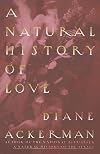
This book is very flawed.
Ackerman contradicts herself about how the Old Testament god loved (in one passage it's unconditionally, a hundred pages later it's only if you've proven yourself worthy); she's only interested in heterosexual desire; her parental gender roles are set in stone (and in the 1950s); she gets the origin myth of the narcissus wrong; she messes up the chronology of the plot of Hamlet; she uses Pyramus and Thisbe as an example of a tragic romantic couple, when anyone who's show more ever seen a good production of Midsummer will go into a helpless giggling fit at the phrase "Ninus' tomb"; and she occasionally writes sentences like, "Why do we need a duvet cover for the warm, rich, feather comforter of sensuality?"
These are problems. The sloppy ones are especially problematic because they cast retrospective doubt on the research done for the first section, which is the history of love, sexuality, and marriage throughout the Western world, and which is really quite fascinating. I enjoyed this first third of the book very much, but later wondered about it once I'd seen that she couldn't even be bothered to glance back at Hamlet and find out if "Get thee to a nunnery" comes before or after "Lady, shall I lie in your lap?"
But it went off the rails for me entirely in the middle section, which she fills with:
1. Six pages about how a woman's hair is the only secondary sexual characteristic which matters, and that the longer and more wild the hair is (how much like Diane Ackerman's it is, in other words; this whole middle section is all about her personal experiences) the more sensual a woman is, that cutting off a woman's hair desexualizes her, and how women with children cut off their hair to signal that they are no longer sexually available. Ohhh-kay. Setting aside that this book was written in 1994, before the widespread development of the pixie haircut, some women (like me, showing my own bias here) have always looked better with shorter hair, and what about the exposure of the neck? Ackerman never once, in the entire book, mentions the neck as an erogenous zone. She's too busy talking about the times she's been considered dangerously erotic and womanly because of her hair.
2. Twenty-two pages (fully 7% of the book) about women and horses. Ackerman claims that all little girls not only go through a phase of being wild about horses but that all little girls have access to horses recreationally. Seriously. She looks back on her privileged Pennsylvania childhood and is incapable of thinking that a different type of childhood exists. And then we get 22 pages about having a big sweaty animal between one's legs (yeah, yeah, we've all read "Jane Austen and the Masturbating Girl", this is not news) and how every eight-year-old girl wants this (ewww) and how every eight-year-old girl can just buy jodhpurs and riding boots and head down to her local stable. I don't know, maybe it would be interesting to a woman who did have a passionate relationship with horses in her childhood. I have never cared about horses one way or the other. Ackerman does say that given her age, there were no sports really available for girls when she was growing up, so she turned to horses. But a better use of page space would have been a couple about horses and then a lot more about what exercise and sport in general means for girls coming into their sexuality and their bodies. The book at this point was rapidly turning into "Diane Ackerman's Personal History of Love and No One Else's".
3. Ten pages about the Indy 500, because all men love is cars. And only men love cars. Also, Diane Ackerman gets leered at by drunk men a lot, because her breasts are so amazing. After the horses, and because I adore my car and adore driving, I skimmed this part.
4. Four pages about flying in dreams and how wonderful it is and always about sex. Some of us are terrified of heights and only dream about falling, never flying, and I am just going to leave that in the hands of Freud.
...
These issues made me as angry as they did because the book really had potential. When Ackerman isn't going off the rails with duvet metaphors, she writes quite well, and like I said, the first third of the book was fascinating, until I started doubting the research. And it read quite quickly, and was often hard to put down. But she just comes at it far too much as if it were a memoir, instead of a piece of reportage. She tacks on a bit about pets at the end, and it's immediately obvious she's never had one in her life; after the pages and pages rhapsodizing about the bond between women and horses, the best she can say about a cat or dog is that its owner is holding it prisoner and what seems to be the pet's love is just Stockholm Syndrome. For heaven's sake.
So, alas, this book frustrated and irritated me, and yet it's not badly written, and the idea of a book on this topic pleases me. I imagine that there are probably better ones out there. show less
Ackerman contradicts herself about how the Old Testament god loved (in one passage it's unconditionally, a hundred pages later it's only if you've proven yourself worthy); she's only interested in heterosexual desire; her parental gender roles are set in stone (and in the 1950s); she gets the origin myth of the narcissus wrong; she messes up the chronology of the plot of Hamlet; she uses Pyramus and Thisbe as an example of a tragic romantic couple, when anyone who's show more ever seen a good production of Midsummer will go into a helpless giggling fit at the phrase "Ninus' tomb"; and she occasionally writes sentences like, "Why do we need a duvet cover for the warm, rich, feather comforter of sensuality?"
These are problems. The sloppy ones are especially problematic because they cast retrospective doubt on the research done for the first section, which is the history of love, sexuality, and marriage throughout the Western world, and which is really quite fascinating. I enjoyed this first third of the book very much, but later wondered about it once I'd seen that she couldn't even be bothered to glance back at Hamlet and find out if "Get thee to a nunnery" comes before or after "Lady, shall I lie in your lap?"
But it went off the rails for me entirely in the middle section, which she fills with:
1. Six pages about how a woman's hair is the only secondary sexual characteristic which matters, and that the longer and more wild the hair is (how much like Diane Ackerman's it is, in other words; this whole middle section is all about her personal experiences) the more sensual a woman is, that cutting off a woman's hair desexualizes her, and how women with children cut off their hair to signal that they are no longer sexually available. Ohhh-kay. Setting aside that this book was written in 1994, before the widespread development of the pixie haircut, some women (like me, showing my own bias here) have always looked better with shorter hair, and what about the exposure of the neck? Ackerman never once, in the entire book, mentions the neck as an erogenous zone. She's too busy talking about the times she's been considered dangerously erotic and womanly because of her hair.
2. Twenty-two pages (fully 7% of the book) about women and horses. Ackerman claims that all little girls not only go through a phase of being wild about horses but that all little girls have access to horses recreationally. Seriously. She looks back on her privileged Pennsylvania childhood and is incapable of thinking that a different type of childhood exists. And then we get 22 pages about having a big sweaty animal between one's legs (yeah, yeah, we've all read "Jane Austen and the Masturbating Girl", this is not news) and how every eight-year-old girl wants this (ewww) and how every eight-year-old girl can just buy jodhpurs and riding boots and head down to her local stable. I don't know, maybe it would be interesting to a woman who did have a passionate relationship with horses in her childhood. I have never cared about horses one way or the other. Ackerman does say that given her age, there were no sports really available for girls when she was growing up, so she turned to horses. But a better use of page space would have been a couple about horses and then a lot more about what exercise and sport in general means for girls coming into their sexuality and their bodies. The book at this point was rapidly turning into "Diane Ackerman's Personal History of Love and No One Else's".
3. Ten pages about the Indy 500, because all men love is cars. And only men love cars. Also, Diane Ackerman gets leered at by drunk men a lot, because her breasts are so amazing. After the horses, and because I adore my car and adore driving, I skimmed this part.
4. Four pages about flying in dreams and how wonderful it is and always about sex. Some of us are terrified of heights and only dream about falling, never flying, and I am just going to leave that in the hands of Freud.
...
These issues made me as angry as they did because the book really had potential. When Ackerman isn't going off the rails with duvet metaphors, she writes quite well, and like I said, the first third of the book was fascinating, until I started doubting the research. And it read quite quickly, and was often hard to put down. But she just comes at it far too much as if it were a memoir, instead of a piece of reportage. She tacks on a bit about pets at the end, and it's immediately obvious she's never had one in her life; after the pages and pages rhapsodizing about the bond between women and horses, the best she can say about a cat or dog is that its owner is holding it prisoner and what seems to be the pet's love is just Stockholm Syndrome. For heaven's sake.
So, alas, this book frustrated and irritated me, and yet it's not badly written, and the idea of a book on this topic pleases me. I imagine that there are probably better ones out there. show less
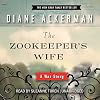
This book tells the true story of a brave couple - Jan and Antonina Zabinski - who use their home at the Warsaw zoo as a waystation to hide Polish resistance fighters and Jewish refugees (both friends and strangers) during the Nazi occupation of Poland. Throughout the war, Jan and Antonina are besieged by fears real and imagined, from bombings to enlistments to SS soldiers encamping nearby. Their efforts to hide others means risking their own lives and that of their young son. Nevertheless, show more they feel it is their duty to help save a life when they can, and they continue to find inventive ways to smuggle Jews out of the Warsaw ghetto and move them onwards to safer locations.
Ackerman uses the story of the Zabinskis as a baseline and then sometimes meanders from there to explore other aspects of the war or of Nazi ideology. In this way, this historical time period and place are brought to life, often through personal stories. While it appears some readers did not enjoy these "tangents," I felt they were really interesting and I learned a lot more about certain aspects of World War II that I didn't previously know. The main story of the Zabinskis and their resistance work is fascinating and full of interesting people and moments. In all parts, the book is obviously well researched and is constructed from past biographies, Antonina's journal, interviews, etc.
For the audiobook listener, Suzanne Toren does an excellent job presenting this book. Nonfiction can be a bit dull when read aloud, but Toren does her best to make the narration interesting. In particular, she's very good at doing the number of accents required and adding emotion as needed. show less
Ackerman uses the story of the Zabinskis as a baseline and then sometimes meanders from there to explore other aspects of the war or of Nazi ideology. In this way, this historical time period and place are brought to life, often through personal stories. While it appears some readers did not enjoy these "tangents," I felt they were really interesting and I learned a lot more about certain aspects of World War II that I didn't previously know. The main story of the Zabinskis and their resistance work is fascinating and full of interesting people and moments. In all parts, the book is obviously well researched and is constructed from past biographies, Antonina's journal, interviews, etc.
For the audiobook listener, Suzanne Toren does an excellent job presenting this book. Nonfiction can be a bit dull when read aloud, but Toren does her best to make the narration interesting. In particular, she's very good at doing the number of accents required and adding emotion as needed. show less
'The Moon by Whale Light: And Other Adventures Among Bats, Penguins, Crocodilians, and Whales by Diane Ackerman
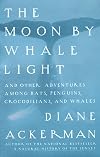
This book had been on my reading list for a while, ever since I read The Rarest of the Rare: Vanishing Animals, Timeless Worlds, which I loved. I finally got a hold of it through my library's inter-library exchange. (I love my library!)
The book has 4 main sections focusing on 4 different animals: bats, crocodilians (alligators and crocodiles), whales, and penguins. I was really looking forward to the whale chapter, especially since part of it took place in Hawaii - and I really enjoyed it. show more But the surprise for me was the bat chapter. It was really informative and interesting, and I learned a lot.
The one thing that's missing, which I think I mentioned in Rarest of the Rare as well, is photography. I'm not sure if she just never takes photos on her expeditions, but I really wish I could see some of the stuff she saw.
Because to be honest, and I thought this throughout much of the book - I don't think I'll/we'll ever again see the scenes that Ackerman was lucky enough to experience. Just the sheer number of animals, often in rural or uninhabited places. I think that experience is gone, depressingly. For example, during the bats chapter, in my notes I wrote: 20 million bats all in one location? That would be quite a sight to see though I imagine you can't find something like that anymore. That makes me really sad.
Even during the 80s, when Ackerman did most of the travel presented in the book, Merlin Tuttle, ecologist and bat researcher, says, "I personally know of caves where people have wiped out millions of bats in one day." Sigh. That being said, Dr. Tuttle is such an awesome scientist. And his words really resonated with me. A couple of choice quotes from him:
"I never had any ambition to be anything but a good scientist. I was content to be a member of other conservation organizations and support their efforts. But for years the traditional organizations just ignored bats as too hopeless. If you couldn't raise money for an animal, it couldn't be helped. That's unfortunate. Part of our problems today come from the fact that even scientists and conservationists tend to take the easy ride and find an animal that's very popular with the public. They raise funds to help that animal, but often that's so easy and tempting that other animals that are just as valuable, and sometimes much *more* valuable, remain completely ignored." (p44)
"It's a shame that people want to view animals as either good or bad. But as Emerson pointed out, a weed is just a flower out of place." (p44)
"But this is often the case when it comes to animals – by the time you eliminate them down to the point when everyone can agree that the species is officially endangered, it's already too late." (p47)
One thing I really liked was reading about these scientists and researchers that Ackerman presented. I kept interrupting myself while reading to look up the names, and added books and articles to my reading lists. It was really informative. When I googled Dr. Tuttle, I found his Facebook page and did a bit of stalking. It's amazing the access the Internet has given us. Even just 10 years ago I wouldn't have been able to do this!
I loved Ackerman's enthusiasm, which is always present in her books: "But a carnival of bats inhabits the world!"
And her writing is so lyrical and expressive. She paints a picture of the world for you that I really love:
There was nothing to do but wait. It is always like this for naturalists, and for poets - the long hours of travel and preparation, and then the longer hours of waiting. All for that one electric, pulse–revving vision when the universe suddenly declares itself. A ravishing tug on the sleeve of our mortality. A view of life so astonishing as to make all of life newly astonishing: a spotted bat. (p33)
On each side, sandstone cliffs, striped like sherbet, revealed layer after compressed layer of time. How can time be so rigid in rock and so molten as we live it? Underfoot, sheets of rock swirled red, yellow, white, blue. Life blooms in such unlikely places: tufts of grass jutting out from a rock; slabs of cactus sprouting from sheer cliffside high above us, where you'd think no dirt could have settled. (p51)
I loved her description of the past: "the pious fiction we call history." (p141)
I didn't gather any quotes from the whale chapter, maybe because I was engrossed. But I really enjoyed reading about the right whales in Patagonia. That was amazing - I wonder if they are still there? Further research is required! I love books that get me excited to find out more.
Each chapter reads like a short book which I really liked. As each ended I would take a few minutes to pause and soak it in.
The one thing that was a bit odd to me were the sections in the crocodilian and penguins chapters that focused on the non-wild places: namely, the alligator parks/farms and Sea World. I guess these were the best places to see those animals at the time? I know it's a can of worms, but that was off to me, because they weren't exactly zoos so it wasn't for conservation per se. Also it was the 80s so I don't know how the sentiment towards places like these was at the time. It was kind of weird to me that she chose to end the book - or technically the penguin essay, since I just said each chapter was like a short book - focusing on the baby penguin at Sea World who, while it would never see the wild place that its parents and family came from, would always be safe because it was in captivity. That just didn't sit well with me.
Other than that gripe, yes, I'm totally jealous of all these adventures in which she's been able to participate - it's all a bunch of stuff I will never get to see, or at least not in the same way she has, what with the declines in wildlife and wild places. At least I get to read about it in these wonderful books. If Ackerman comes out with any more animal-related books, I'm there!
A couple more of my favorite quotes:
Kent Vliet, biologist, crocodilian researcher: "You see, their whole philosophy is that a wild animal is being wasted if it has economic potential that isn't being used. That's a rather mercenary way to think about wild animals." (p93)
Vliet: "Alligators are big crocodilians, but they're shy and retiring, very passive creatures, even the largest males. Crocodiles, on the other hand, are agile and mean and fast, superpredators that consider humans prey items. Alligators just aren't like that. They're real pussycats." (p95)
Roger Payne, biologist, whale researcher: "I had a grandfather, a lumberman, who cut nothing but walnut trees, sometimes for whole years at a time, and that excess on his part, and on the part of his contemporaries, ensured that I would never have walnut except as the most exotic of woods. He was shortsighted. Was anyone warning him? I bet there was. Going on with the destruction of a species until it's brought to the point of extinction is madness - not just a little mad or slightly mad. It's authentic madness." (p163)
Ackerman:
As far as I could see in any direction, icebergs meandered against a backdrop of tall, crumbly Antarctic glaciers, which were still pure and unexplored. Human feet had not touched the glaciers I saw; nor had many pairs of eyes beheld them. In many ways, the Antarctic is a world of suspended animation. Suspended between outer space and the fertile continents. Suspended in time - without a local civilization to make history. Civilization has been brought to it; it has never sustained any of its own. It sits suspended in a hanging nest of world politics. When things die in the Antarctic, they decay slowly. What has been is still there and will always be, unless we interfere. (p209)
"Tenacity," I said, thinking out loud - and not meaning the macaroni penguin's tenacity, exactly, but life's. Life hangs on in such out-of-the-way places, pushes on with such ingenuity and bravado. Turning over a mother-of-pearl-lined limpet shell on Elephant Island a few days earlier, I had seen a hundred squirming wingless flies. Life just seemed to keep reinventing itself - inside a limpet shell, or hundreds of feet up on a rocky cliff above a roaring ocean. (p336) show less
The book has 4 main sections focusing on 4 different animals: bats, crocodilians (alligators and crocodiles), whales, and penguins. I was really looking forward to the whale chapter, especially since part of it took place in Hawaii - and I really enjoyed it. show more But the surprise for me was the bat chapter. It was really informative and interesting, and I learned a lot.
The one thing that's missing, which I think I mentioned in Rarest of the Rare as well, is photography. I'm not sure if she just never takes photos on her expeditions, but I really wish I could see some of the stuff she saw.
Because to be honest, and I thought this throughout much of the book - I don't think I'll/we'll ever again see the scenes that Ackerman was lucky enough to experience. Just the sheer number of animals, often in rural or uninhabited places. I think that experience is gone, depressingly. For example, during the bats chapter, in my notes I wrote: 20 million bats all in one location? That would be quite a sight to see though I imagine you can't find something like that anymore. That makes me really sad.
Even during the 80s, when Ackerman did most of the travel presented in the book, Merlin Tuttle, ecologist and bat researcher, says, "I personally know of caves where people have wiped out millions of bats in one day." Sigh. That being said, Dr. Tuttle is such an awesome scientist. And his words really resonated with me. A couple of choice quotes from him:
"I never had any ambition to be anything but a good scientist. I was content to be a member of other conservation organizations and support their efforts. But for years the traditional organizations just ignored bats as too hopeless. If you couldn't raise money for an animal, it couldn't be helped. That's unfortunate. Part of our problems today come from the fact that even scientists and conservationists tend to take the easy ride and find an animal that's very popular with the public. They raise funds to help that animal, but often that's so easy and tempting that other animals that are just as valuable, and sometimes much *more* valuable, remain completely ignored." (p44)
"It's a shame that people want to view animals as either good or bad. But as Emerson pointed out, a weed is just a flower out of place." (p44)
"But this is often the case when it comes to animals – by the time you eliminate them down to the point when everyone can agree that the species is officially endangered, it's already too late." (p47)
One thing I really liked was reading about these scientists and researchers that Ackerman presented. I kept interrupting myself while reading to look up the names, and added books and articles to my reading lists. It was really informative. When I googled Dr. Tuttle, I found his Facebook page and did a bit of stalking. It's amazing the access the Internet has given us. Even just 10 years ago I wouldn't have been able to do this!
I loved Ackerman's enthusiasm, which is always present in her books: "But a carnival of bats inhabits the world!"
And her writing is so lyrical and expressive. She paints a picture of the world for you that I really love:
There was nothing to do but wait. It is always like this for naturalists, and for poets - the long hours of travel and preparation, and then the longer hours of waiting. All for that one electric, pulse–revving vision when the universe suddenly declares itself. A ravishing tug on the sleeve of our mortality. A view of life so astonishing as to make all of life newly astonishing: a spotted bat. (p33)
On each side, sandstone cliffs, striped like sherbet, revealed layer after compressed layer of time. How can time be so rigid in rock and so molten as we live it? Underfoot, sheets of rock swirled red, yellow, white, blue. Life blooms in such unlikely places: tufts of grass jutting out from a rock; slabs of cactus sprouting from sheer cliffside high above us, where you'd think no dirt could have settled. (p51)
I loved her description of the past: "the pious fiction we call history." (p141)
I didn't gather any quotes from the whale chapter, maybe because I was engrossed. But I really enjoyed reading about the right whales in Patagonia. That was amazing - I wonder if they are still there? Further research is required! I love books that get me excited to find out more.
Each chapter reads like a short book which I really liked. As each ended I would take a few minutes to pause and soak it in.
The one thing that was a bit odd to me were the sections in the crocodilian and penguins chapters that focused on the non-wild places: namely, the alligator parks/farms and Sea World. I guess these were the best places to see those animals at the time? I know it's a can of worms, but that was off to me, because they weren't exactly zoos so it wasn't for conservation per se. Also it was the 80s so I don't know how the sentiment towards places like these was at the time. It was kind of weird to me that she chose to end the book - or technically the penguin essay, since I just said each chapter was like a short book - focusing on the baby penguin at Sea World who, while it would never see the wild place that its parents and family came from, would always be safe because it was in captivity. That just didn't sit well with me.
Other than that gripe, yes, I'm totally jealous of all these adventures in which she's been able to participate - it's all a bunch of stuff I will never get to see, or at least not in the same way she has, what with the declines in wildlife and wild places. At least I get to read about it in these wonderful books. If Ackerman comes out with any more animal-related books, I'm there!
A couple more of my favorite quotes:
Kent Vliet, biologist, crocodilian researcher: "You see, their whole philosophy is that a wild animal is being wasted if it has economic potential that isn't being used. That's a rather mercenary way to think about wild animals." (p93)
Vliet: "Alligators are big crocodilians, but they're shy and retiring, very passive creatures, even the largest males. Crocodiles, on the other hand, are agile and mean and fast, superpredators that consider humans prey items. Alligators just aren't like that. They're real pussycats." (p95)
Roger Payne, biologist, whale researcher: "I had a grandfather, a lumberman, who cut nothing but walnut trees, sometimes for whole years at a time, and that excess on his part, and on the part of his contemporaries, ensured that I would never have walnut except as the most exotic of woods. He was shortsighted. Was anyone warning him? I bet there was. Going on with the destruction of a species until it's brought to the point of extinction is madness - not just a little mad or slightly mad. It's authentic madness." (p163)
Ackerman:
As far as I could see in any direction, icebergs meandered against a backdrop of tall, crumbly Antarctic glaciers, which were still pure and unexplored. Human feet had not touched the glaciers I saw; nor had many pairs of eyes beheld them. In many ways, the Antarctic is a world of suspended animation. Suspended between outer space and the fertile continents. Suspended in time - without a local civilization to make history. Civilization has been brought to it; it has never sustained any of its own. It sits suspended in a hanging nest of world politics. When things die in the Antarctic, they decay slowly. What has been is still there and will always be, unless we interfere. (p209)
"Tenacity," I said, thinking out loud - and not meaning the macaroni penguin's tenacity, exactly, but life's. Life hangs on in such out-of-the-way places, pushes on with such ingenuity and bravado. Turning over a mother-of-pearl-lined limpet shell on Elephant Island a few days earlier, I had seen a hundred squirming wingless flies. Life just seemed to keep reinventing itself - inside a limpet shell, or hundreds of feet up on a rocky cliff above a roaring ocean. (p336) show less
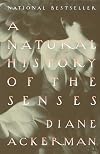
This book is my bible. I've read it a number of times and plan to read it again, and again, and again.
Ackerman sums up her intention for this book wonderfully in her introduction--
"To begin to understand the gorgeous fever that is consciousness, we must try to understand the senses--how they evolved, how they can be extended, what their limits are, to which one we have attached taboos, and what they can teach us about the ravishing world we have the privilege to inhabit."
We are connected to show more the world around us through our senses. The more aware we are of this connection, the better our appreciation of our world. Awareness improves our focus on our senses and teaches us how to better utilize them. Ackerman improves our awareness by exploring each sense from both biological and historical aspects. Ackerman's use of language infuses poetry into these analyses, likened to the experience of exploring an environment.
Your food will taste better and the air will smell sweeter after reading this book. We seem to take our senses for granted when in fact they are one of the keys to happiness and love for life. If anything, this book should be in the self-help section.
Take a deep breath and taste each molecule you take in. The world is a beautiful place. show less
Ackerman sums up her intention for this book wonderfully in her introduction--
"To begin to understand the gorgeous fever that is consciousness, we must try to understand the senses--how they evolved, how they can be extended, what their limits are, to which one we have attached taboos, and what they can teach us about the ravishing world we have the privilege to inhabit."
We are connected to show more the world around us through our senses. The more aware we are of this connection, the better our appreciation of our world. Awareness improves our focus on our senses and teaches us how to better utilize them. Ackerman improves our awareness by exploring each sense from both biological and historical aspects. Ackerman's use of language infuses poetry into these analyses, likened to the experience of exploring an environment.
Your food will taste better and the air will smell sweeter after reading this book. We seem to take our senses for granted when in fact they are one of the keys to happiness and love for life. If anything, this book should be in the self-help section.
Take a deep breath and taste each molecule you take in. The world is a beautiful place. show less
Lists
Awards


You May Also Like


Associated Authors
Statistics
- Works
- 39
- Also by
- 28
- Members
- 13,502
- Popularity
- #1,719
- Rating
- 3.7
- Reviews
- 344
- ISBNs
- 217
- Languages
- 14
- Favorited
- 45


